
Multiplication Worksheets
Make equal groups and connect an array to a multiplication equation. Use fact practice when the operation is clear, then choose a word-problem set to decide what the story asks you to find.
Help choosing multiplication practice
Whole numbers
 Calculation practice
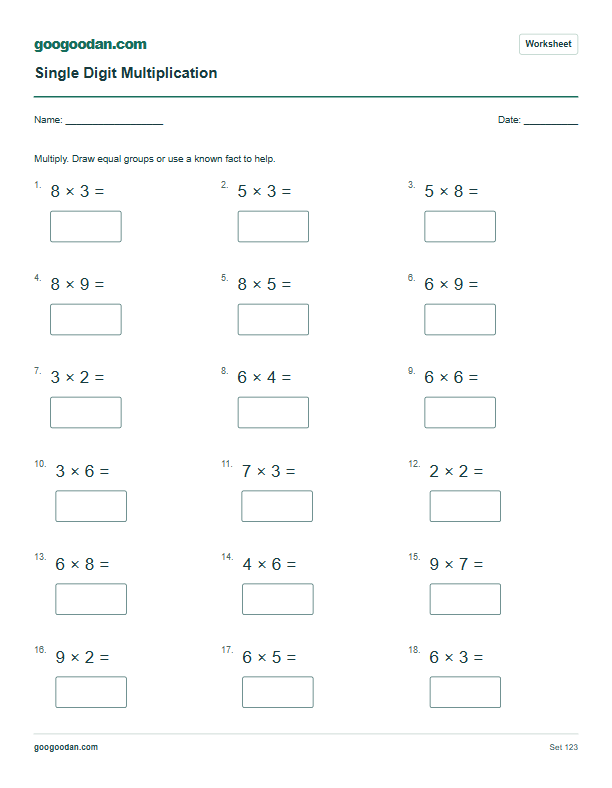
Single Digit Multiplication Worksheets
Use equal groups and arrays to practise multiplication facts with factors from 2 to 9.
18 problems · Answer key included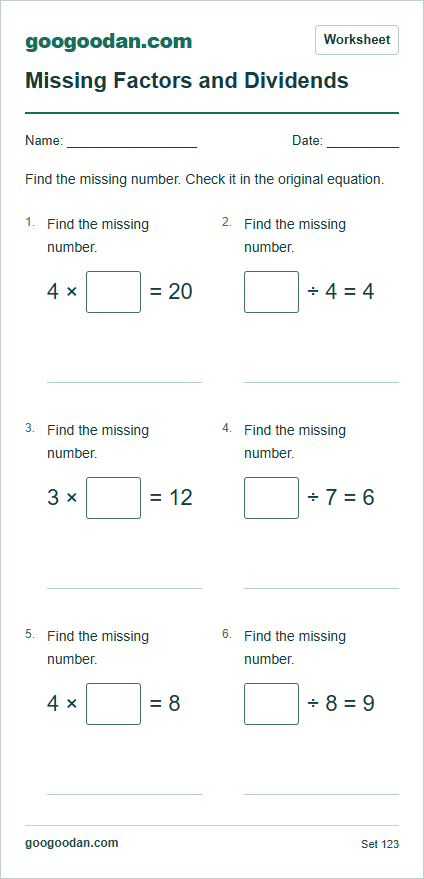 Calculation practice
Missing Factors and Dividends
Use related multiplication and division facts to find the missing number.
6 problems · Answer key included
Whole-number word problems
 Word problems
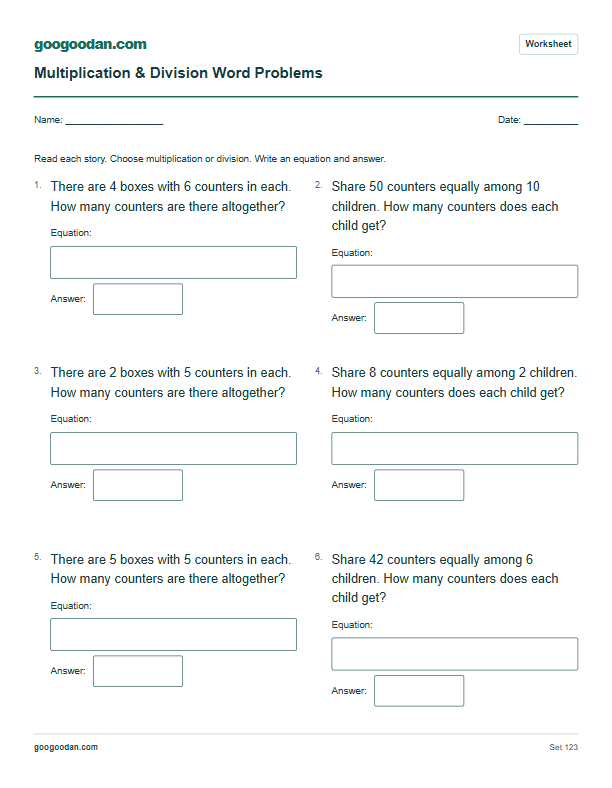
3rd Grade Multiplication and Division Word Problems
Choose mixed facts, zero-and-one groups, or two- and three-digit group amounts. Explain what the answer counts.
6 mixed stories or 4 focused multiplication stories · Answer key included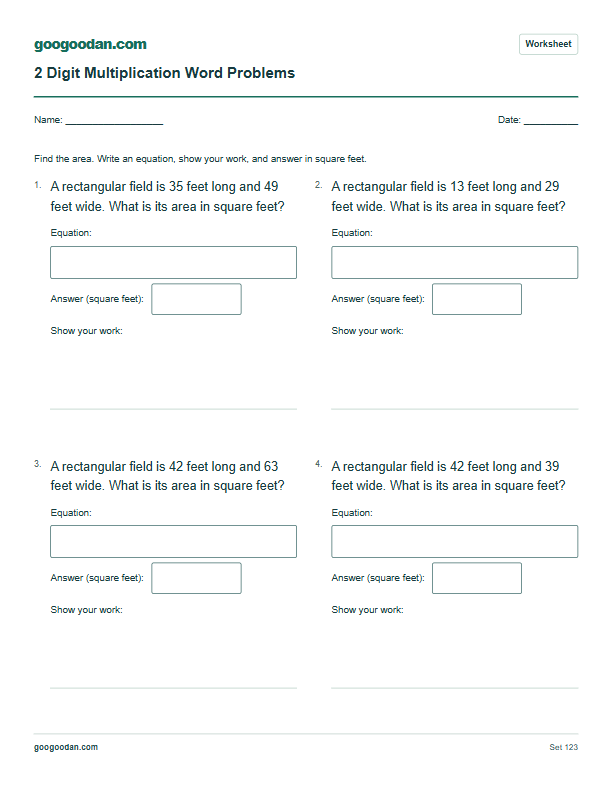 Word problems
2 Digit Multiplication Word Problems: Rectangle Area
Multiply two two-digit side lengths to find a rectangular field’s area in square feet.
4 problems · Answer key included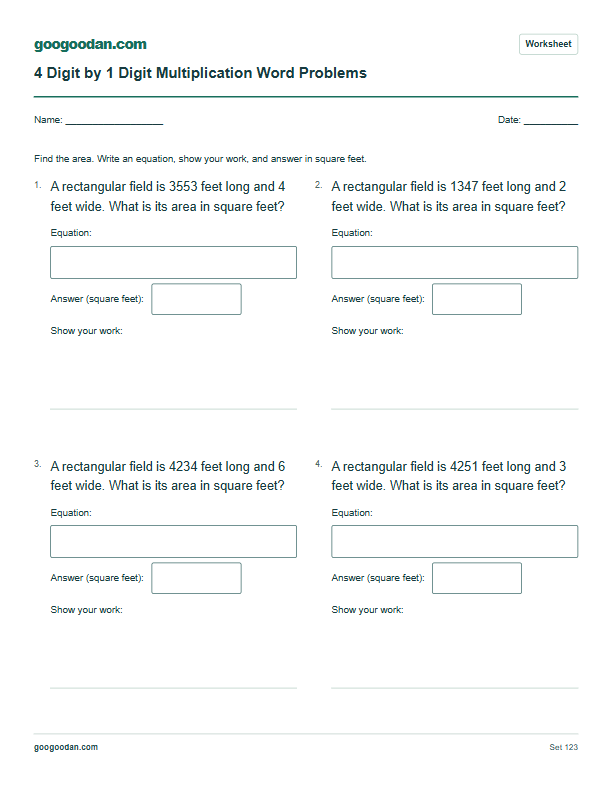 Word problems
4 Digit by 1 Digit Multiplication Word Problems
Use place-value partial products to find rectangle area from a four-digit length and a one-digit width.
4 problems · Answer key included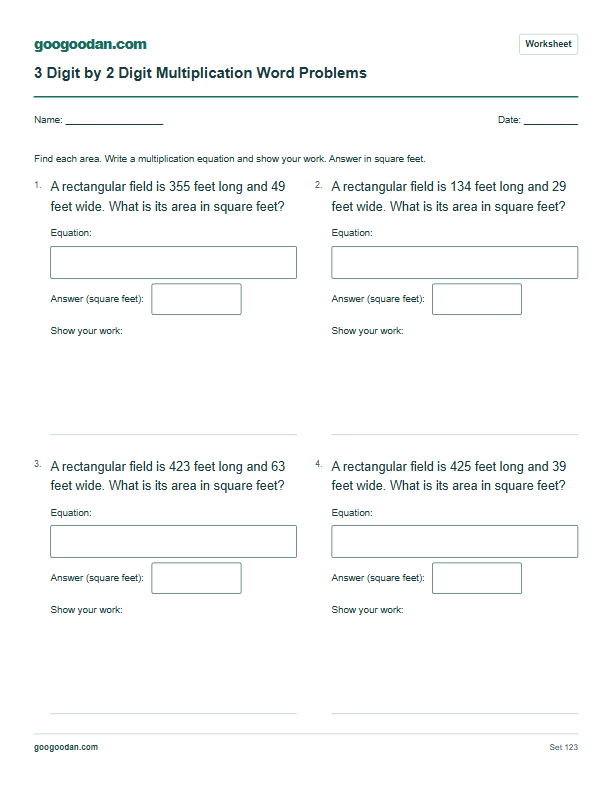 Word problems
3 Digit by 2 Digit Multiplication Word Problems
Find rectangle area using a three-digit length and two-digit width; connect partial products to the written multiplication method.
4 problems · Answer key included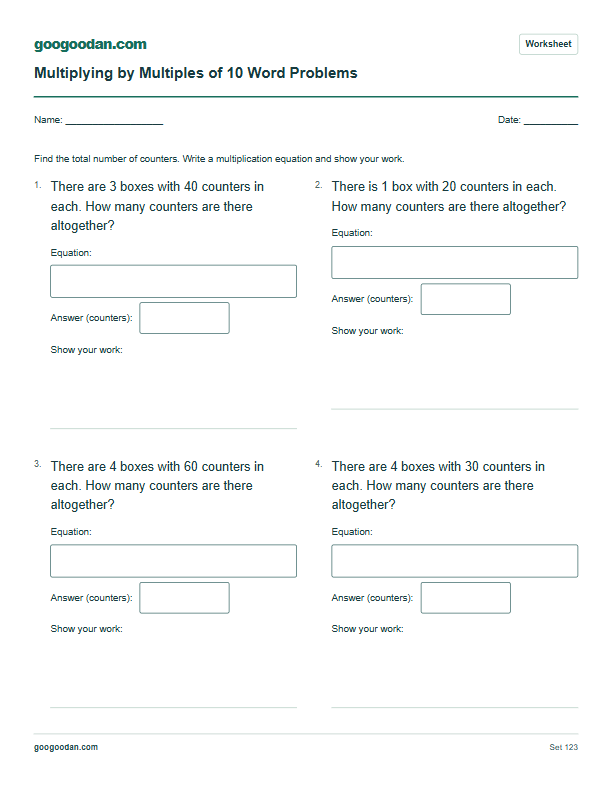 Word problems
Multiplying by Multiples of 10 Word Problems
Count equal boxes of 10–90 counters. Use a known multiplication fact to find the number of tens, then express the total in ones.
4 problems · Answer key included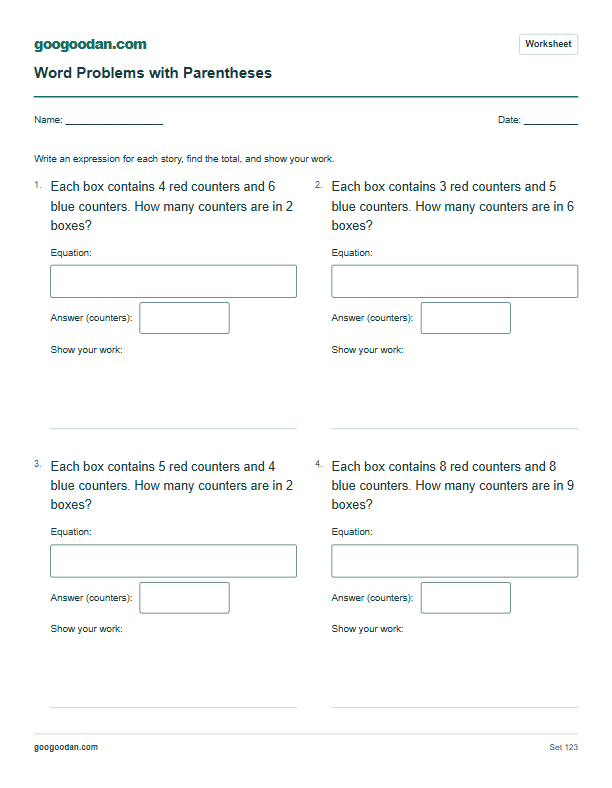 Word problems
Order of Operations Word Problems with Parentheses
Add two colors of counters in each box, then multiply by the number of boxes. Explain what the parentheses group together.
4 problems · Answer key included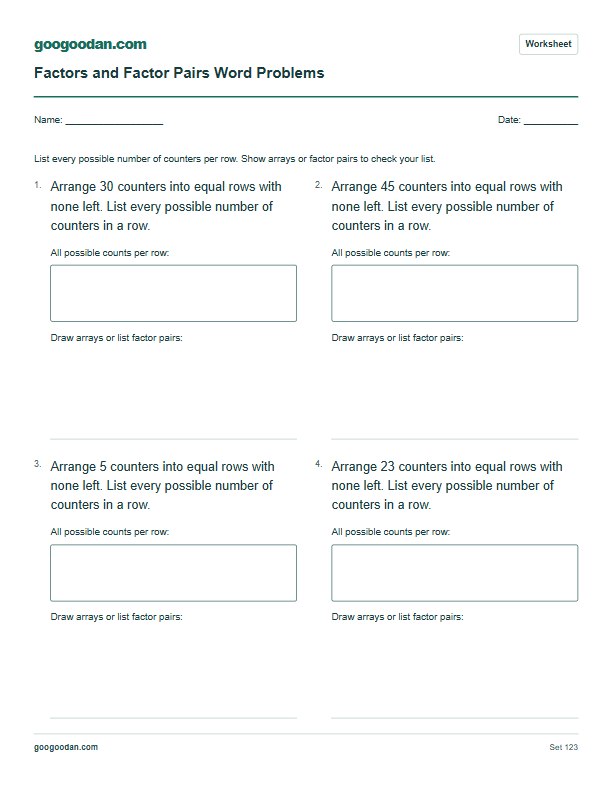 Word problems
Factors and Factor Pairs Word Problems
Arrange counters into equal rows with none left. Find every possible count per row and check that the factor list is complete.
4 problems · Answer key included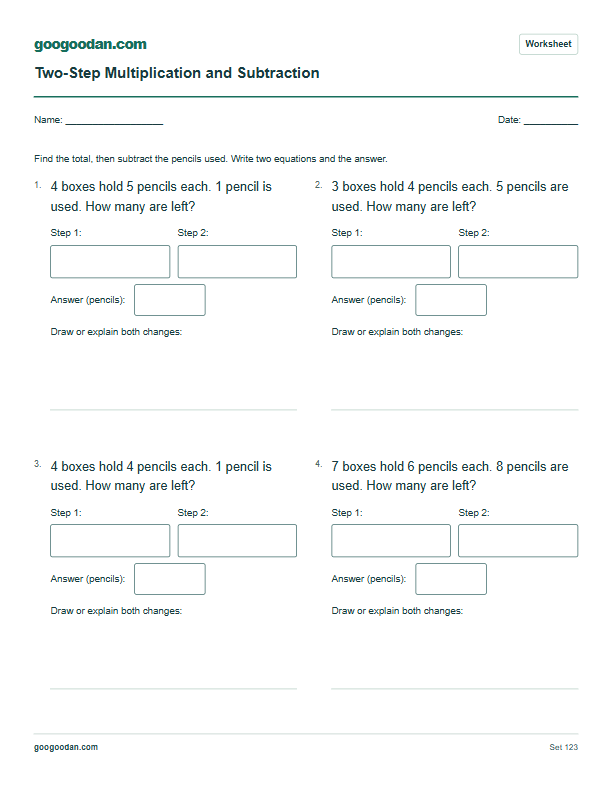 Word problems
Two-Step Multiplication and Subtraction Word Problems
Find the number of pencils in equal boxes, then subtract the pencils used. Explain both steps.
4 problems · Answer key included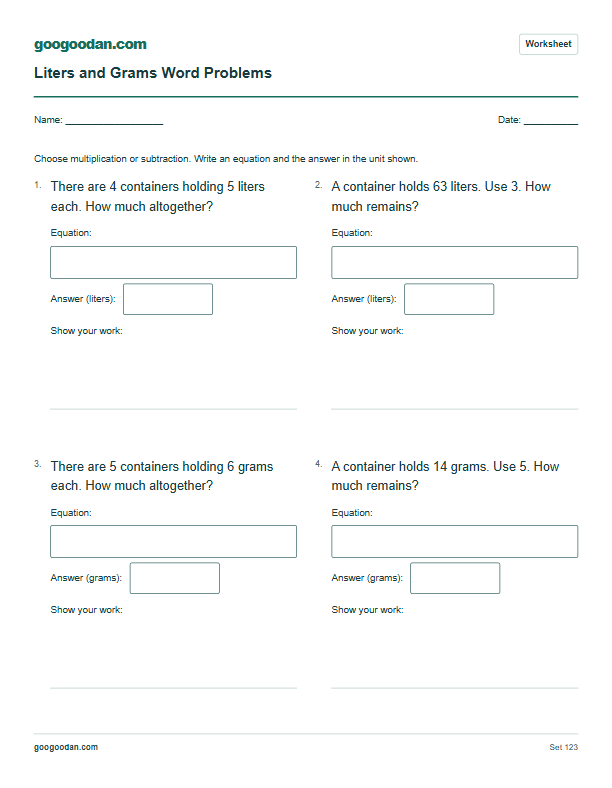 Word problems
Liters and Grams Word Problems
Find the total in equal containers or the amount left after use. Keep liters and grams in separate problems.
4 problems · Answer key included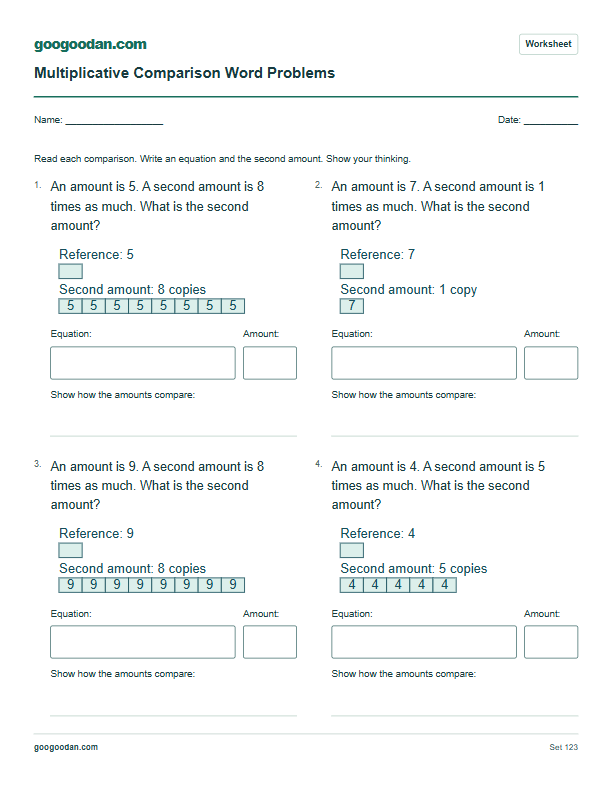 Word problems
Multiplicative Comparison Word Problems
Compare one- or two-digit reference amounts using equal bar units and whole-number multipliers.
4 problems · Answer key included
Fractions
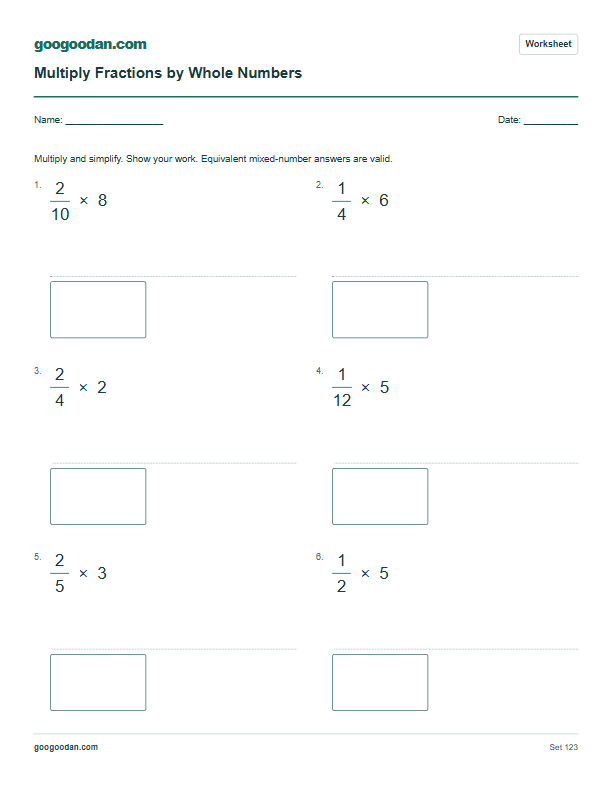 Calculation practice
Multiplying Fractions by Whole Numbers Worksheets
Count repeated groups of equal fraction parts and simplify the product.
6 problems · Answer key included
Fraction word problems
 Word problems
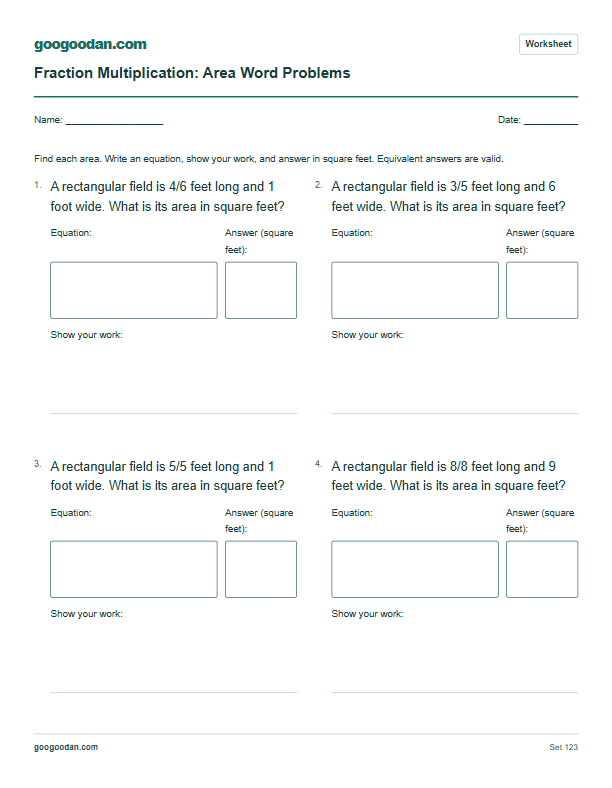
Fraction Multiplication Word Problems: Rectangle Area
Multiply a fractional side length by a whole-number side to find area in square feet.
4 problems · Answer key included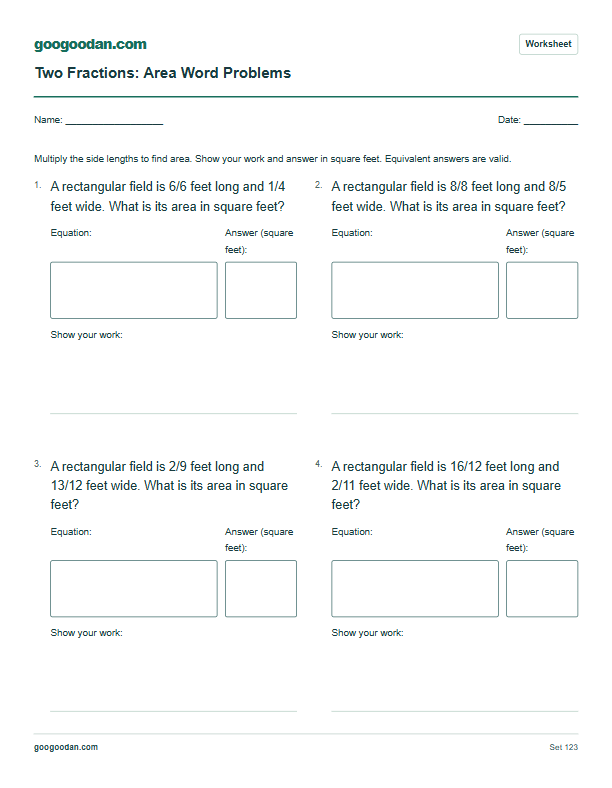 Word problems
Multiplying Two Fractions Word Problems: Area
Find rectangle area when both side lengths are written as fractions; include lengths greater than one foot.
4 problems · Answer key included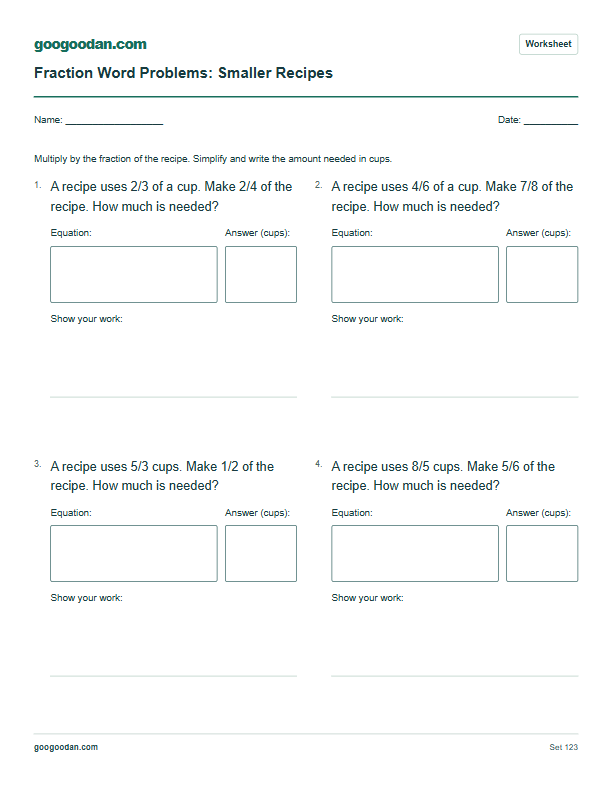 Word problems
Fraction Multiplication Word Problems: Recipes
Make a fraction of a recipe. Scale amounts below and above one cup while keeping the cup unit.
4 problems · Answer key included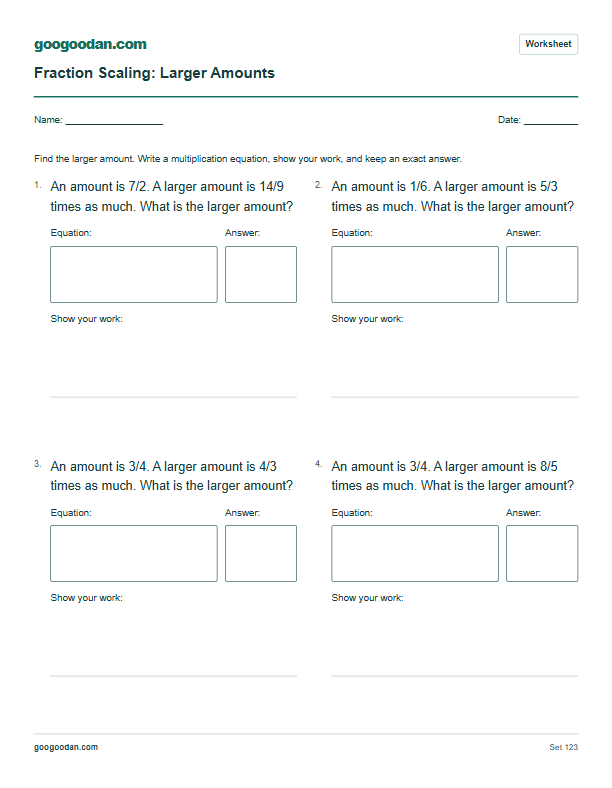 Word problems
Fraction Scaling Word Problems: Making Amounts Larger
Multiply by a fraction greater than one. Separate the original amount, extra amount, and new total.
4 problems · Answer key included
Decimals
 Calculation practice
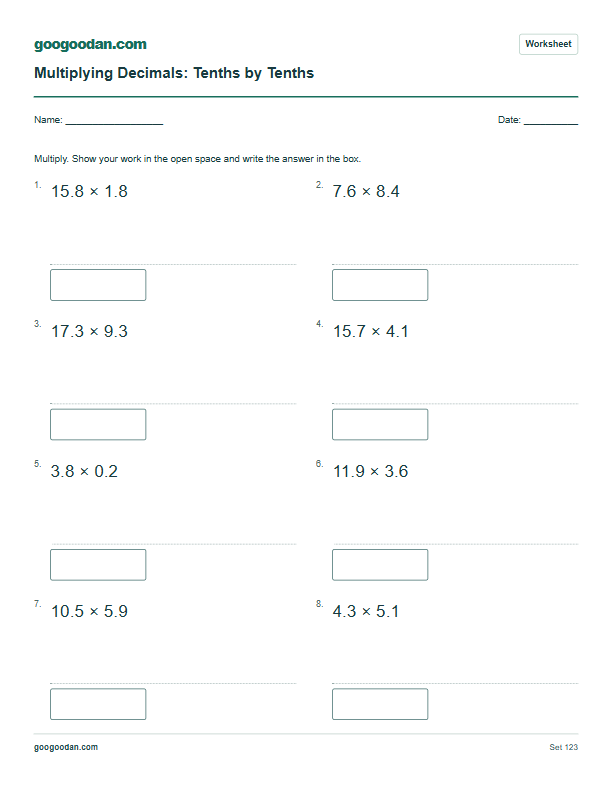
Multiplying Decimals Worksheets – Tenths by Tenths
Use tenths and hundredths to explain the product, then show your work.
8 problems · Answer key included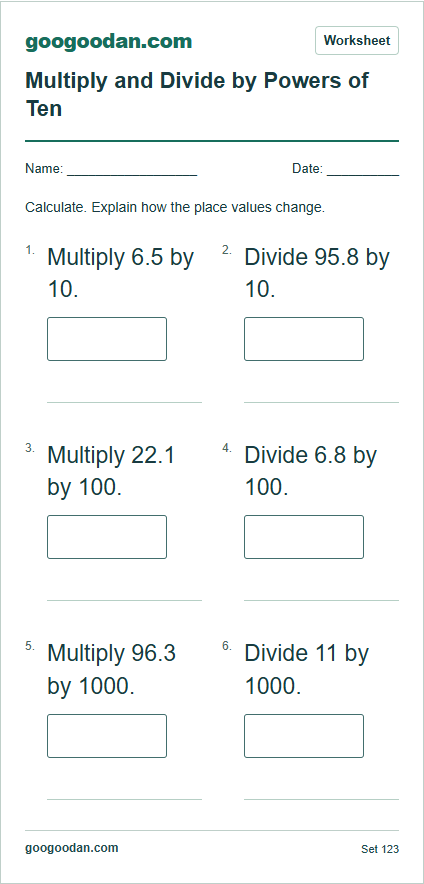 Calculation practice
Multiply and Divide by 10, 100, and 1,000
Explain place-value changes when multiplying and dividing by powers of ten.
6 problems · Answer key included
Decimal word problems
 Word problems
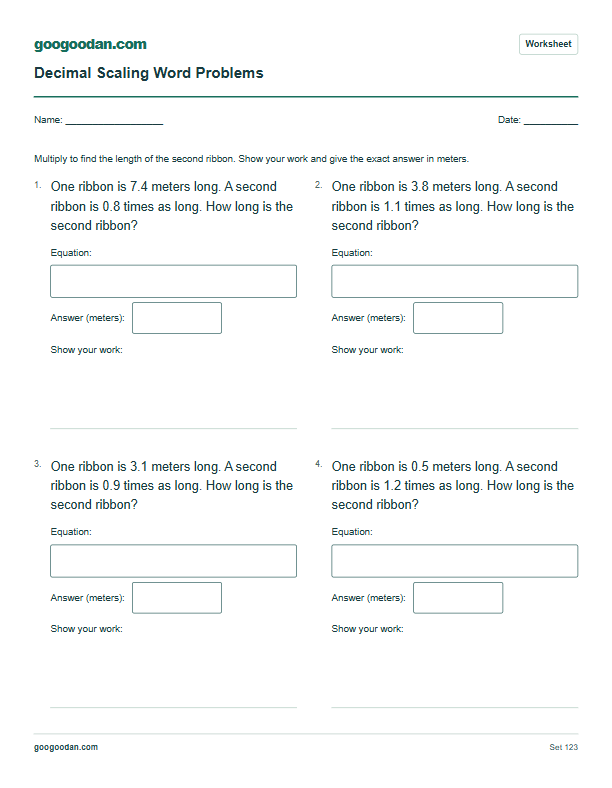
Decimal Scaling Word Problems
Compare ribbon lengths using decimal multipliers below and above one. Explain the scale and keep exact answers.
4 problems · Answer key included
Choose the story before choosing a calculation
Two questions can both use multiplication while describing different relationships. First ask the child what is known and what the answer will count. A correct fact is useful, but a picture helps explain why that fact fits the question.
Equal groups: find the total
Owen has three boxes, with four counters in each box. He knows how many groups there are and the size of each group. He needs the total number of counters. Point to one whole box before counting the four counters inside it.
4 + 4 + 4 = 12
3 × 4 = 12
The three groups give three equal addends: 4 + 4 + 4 = 12. Using a groups-first reading, 3 × 4 describes the picture. The equation 4 × 3 also has the correct product; ask the child to explain the factors rather than marking a correct calculation wrong just because their order differs.
Use the multiplication and division word problems for equal-group totals and equal sharing. For more work distinguishing the number of groups from the amount in each group, use equal-groups division word problems.
For empty groups, one group, and one item per group, choose the zero-and-one equal-group activity on that same worksheet page. It provides four multiplication stories with pictures; the default six-story activity still mixes multiplication and division.
Multiplicative comparison: find an amount that is several times as large
Now start with an amount of four. A second amount is seven times as large. The first amount gives a unit of comparison, and the second amount contains seven copies of that unit. The question asks for the second amount, not the number of copies.
Writing 4 + 7 = 11 would add seven to the reference amount. That is a different relationship. “Seven times as much” means seven copies of four; “seven more” means four plus seven. Have the child point to the repeated segments and say what each one stands for.
The check 28 ÷ 7 = 4 recovers the reference amount. The check 28 ÷ 4 = 7 counts how many copies fit. Both checks are correct, but their answers describe different quantities.
One times an amount leaves it unchanged: 7 × 1 = 7. One copy of seven still contains seven, so multiplication does not always make a number larger.
Match the printable to the model
Use multiplicative comparison word problems for the whole-number comparison model. Each sheet finds the second amount from a reference and a multiplier from one through nine, including one times as much. The equal-group worksheet above uses boxes and sharing; these are related but different story structures. Unknown references, unknown multipliers, and zero factors are not included in this comparison set.
For children already working confidently with fractions, fraction scaling-up word problems use a related comparison with fractional factors greater than one. This is a later fraction skill, not a replacement for beginning whole-number practice.
Before printing, ask the child to name the known quantities, point to the unknown in the model, and say what unit the answer will have. If the child can explain the relationship but makes a fact error, practice the calculation. If the fact is correct but the drawing answers a different question, return to the story first.