Multiplication and Division Worksheets
Use these sheets for multiplying by one or two digits and for dividing with and without remainders. Area models and partial products show why the written methods work, and the division sheets run from equal sharing up to short and long division.
Times table facts make all of this easier, so check the times tables worksheets first if answers come slowly. Press New Numbers for another set and print the answer page when you finish.
Multiplication Worksheets
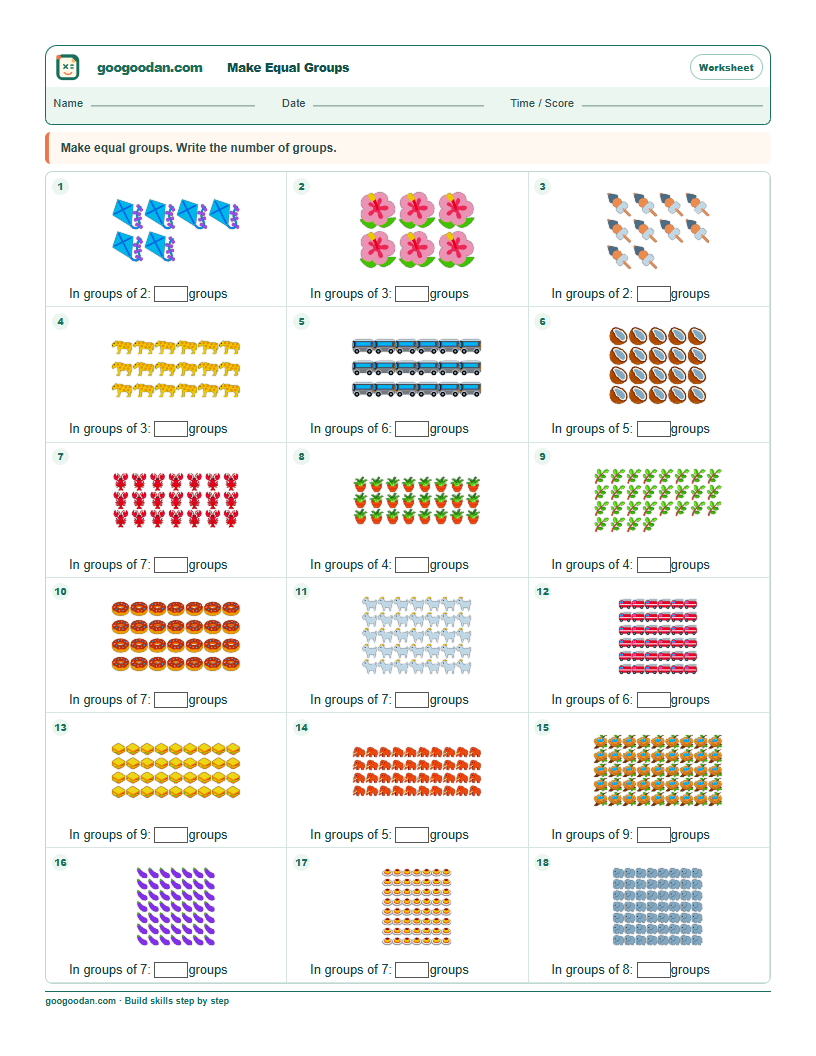 Multiplication: Equal Groups Worksheet — Make Equal Groups
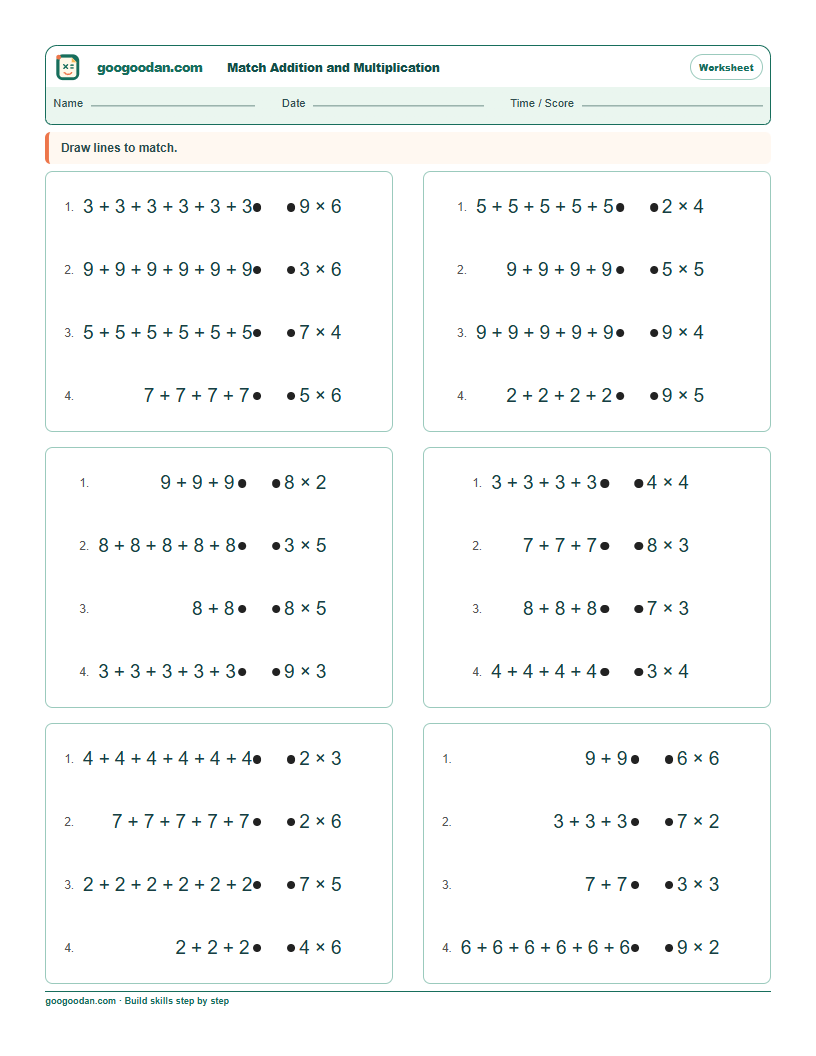 Multiplication Arrays Worksheet — Match Addition and Multiplication
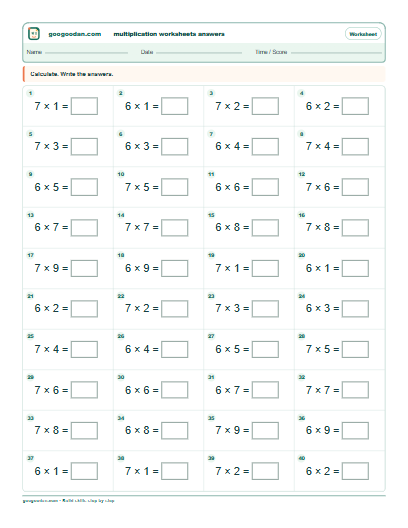 6 and 7 Times Tables Worksheet — Multiplication Facts
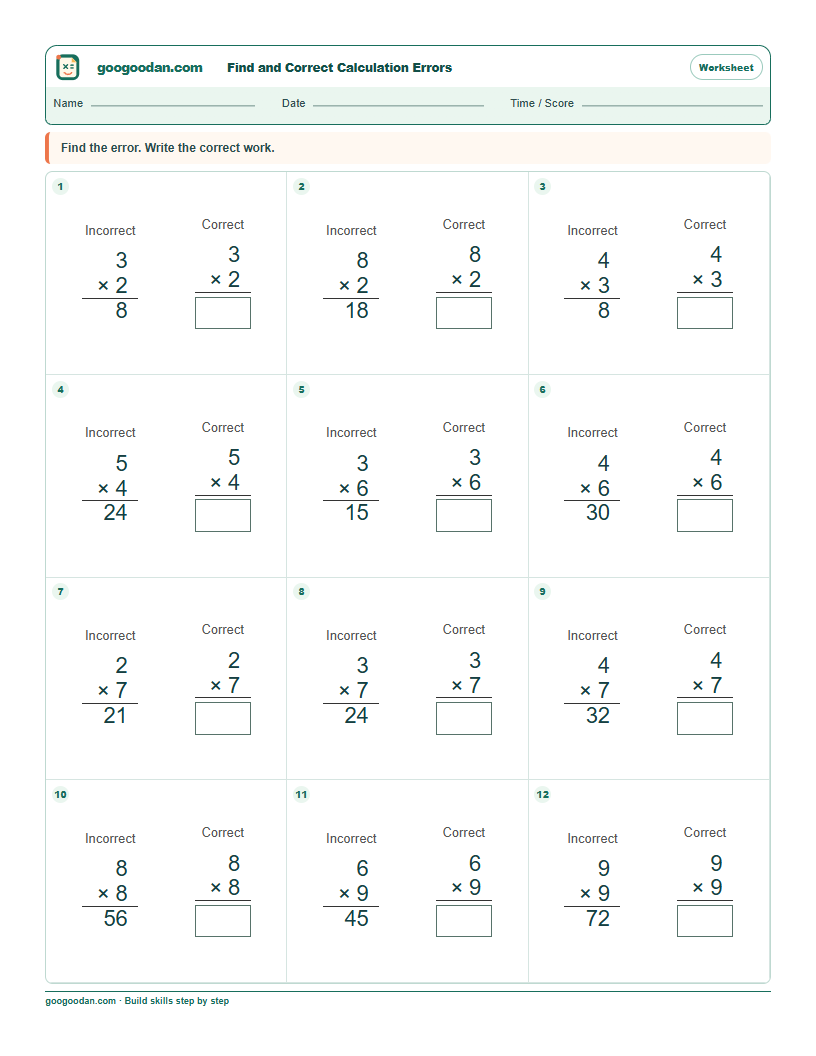 Mixed Multiplication Facts Worksheet — Error Analysis
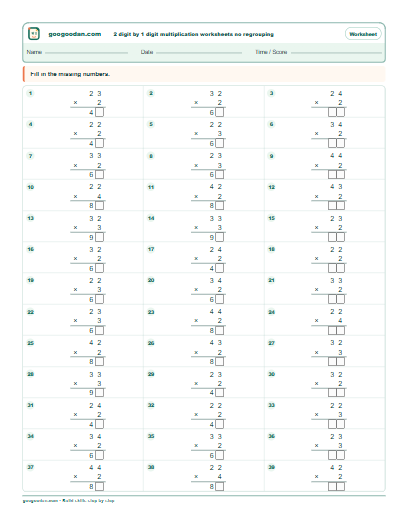 2-Digit × 1-Digit Multiplication: No Regrouping — Vertical Blanks
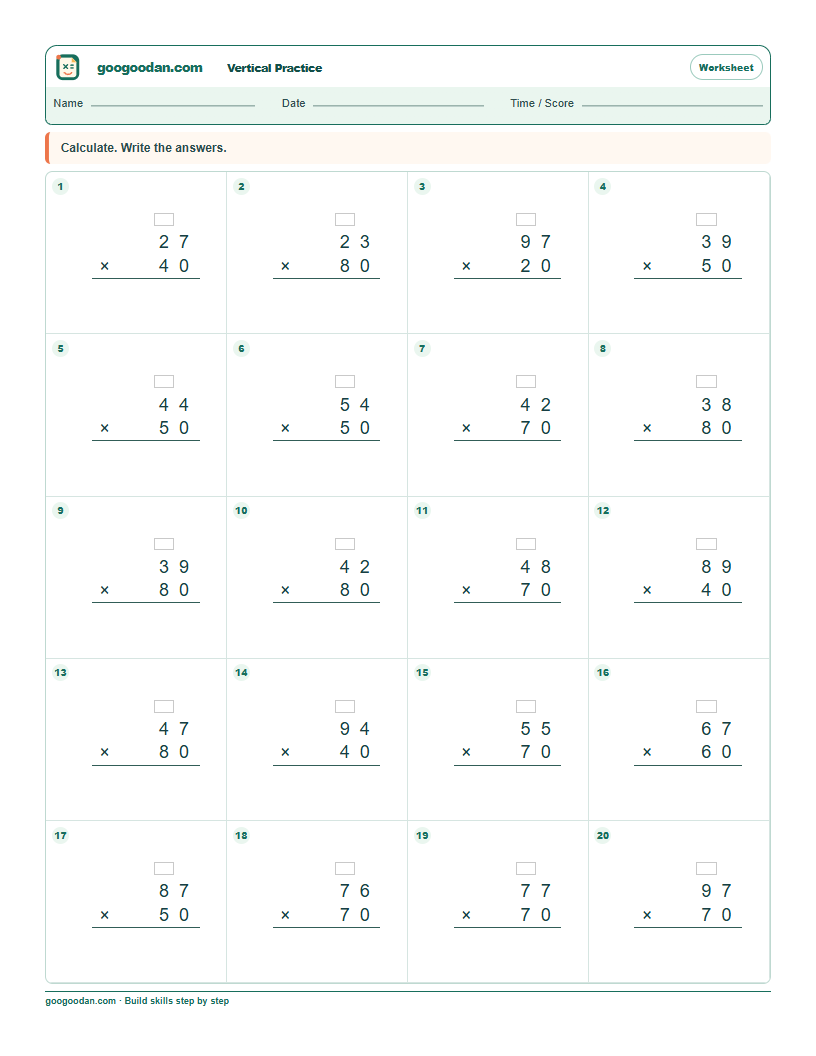 2-Digit × Multiples of Ten Multiplication Worksheet — Vertical
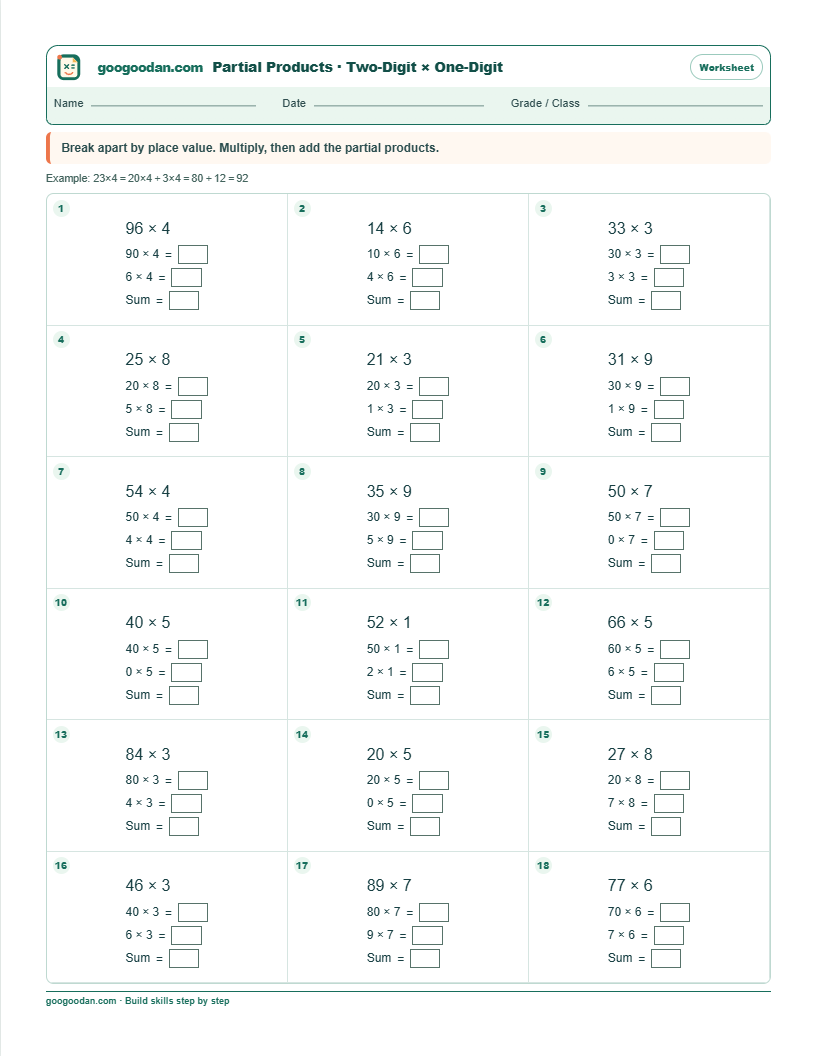
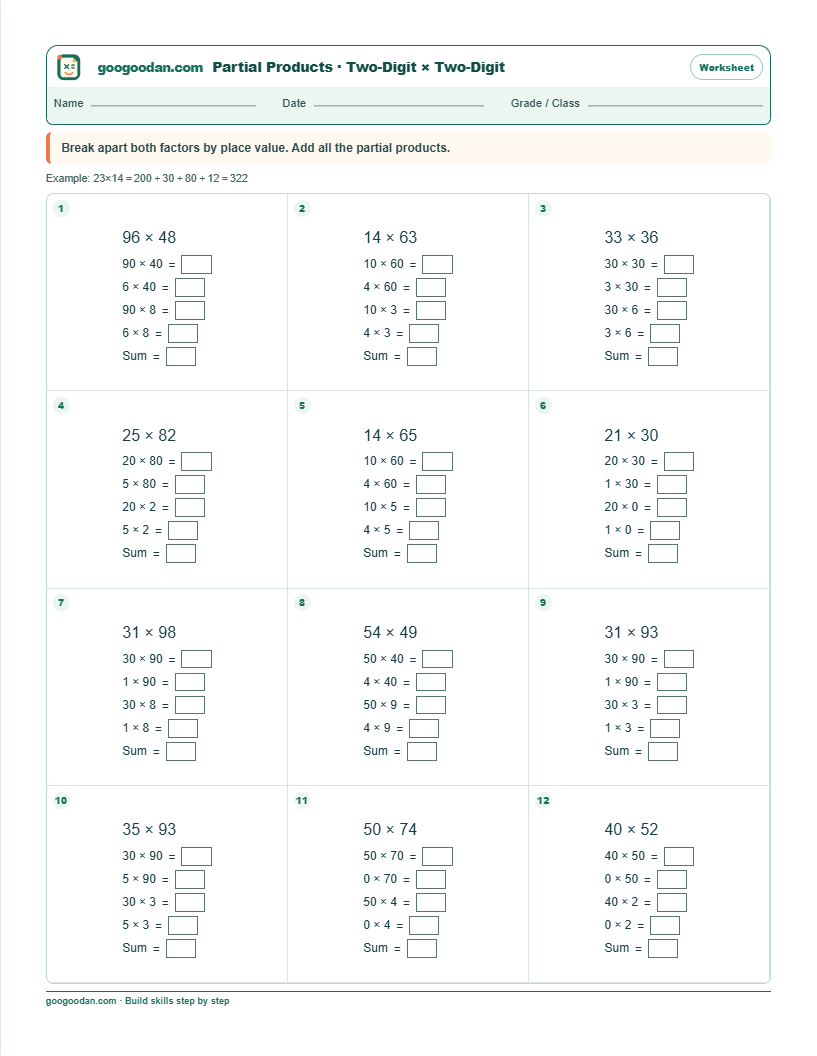
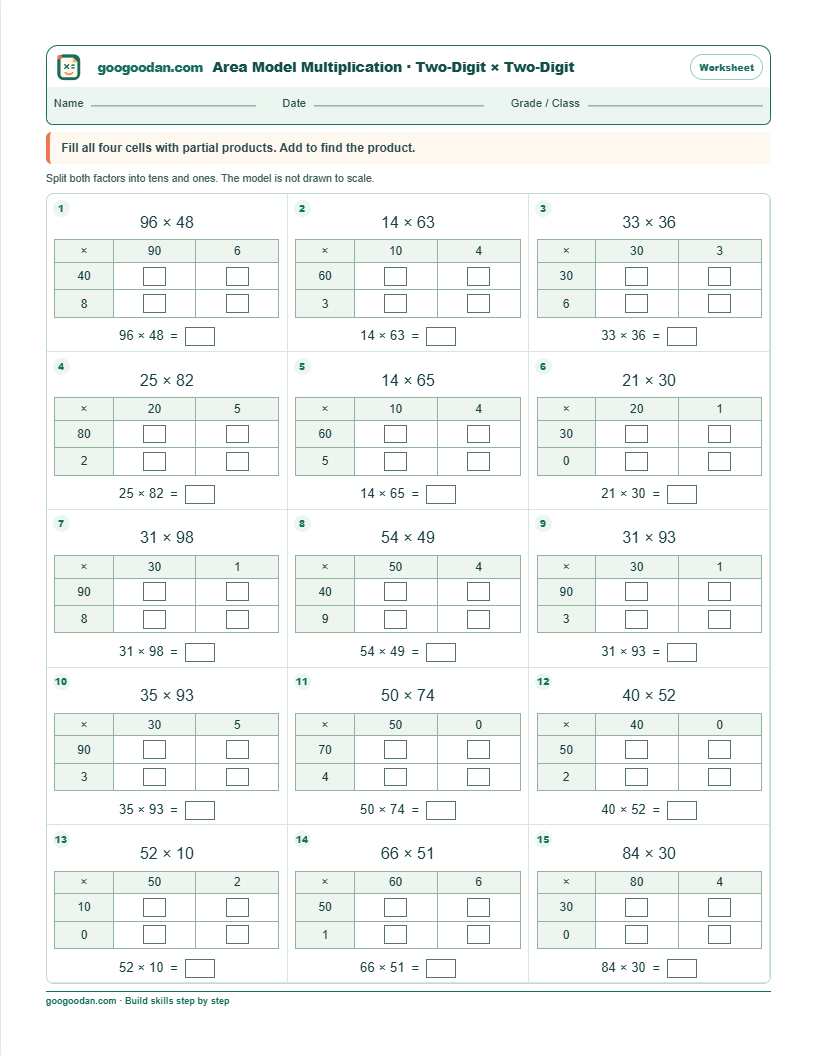
Area Model and Partial Product Worksheets
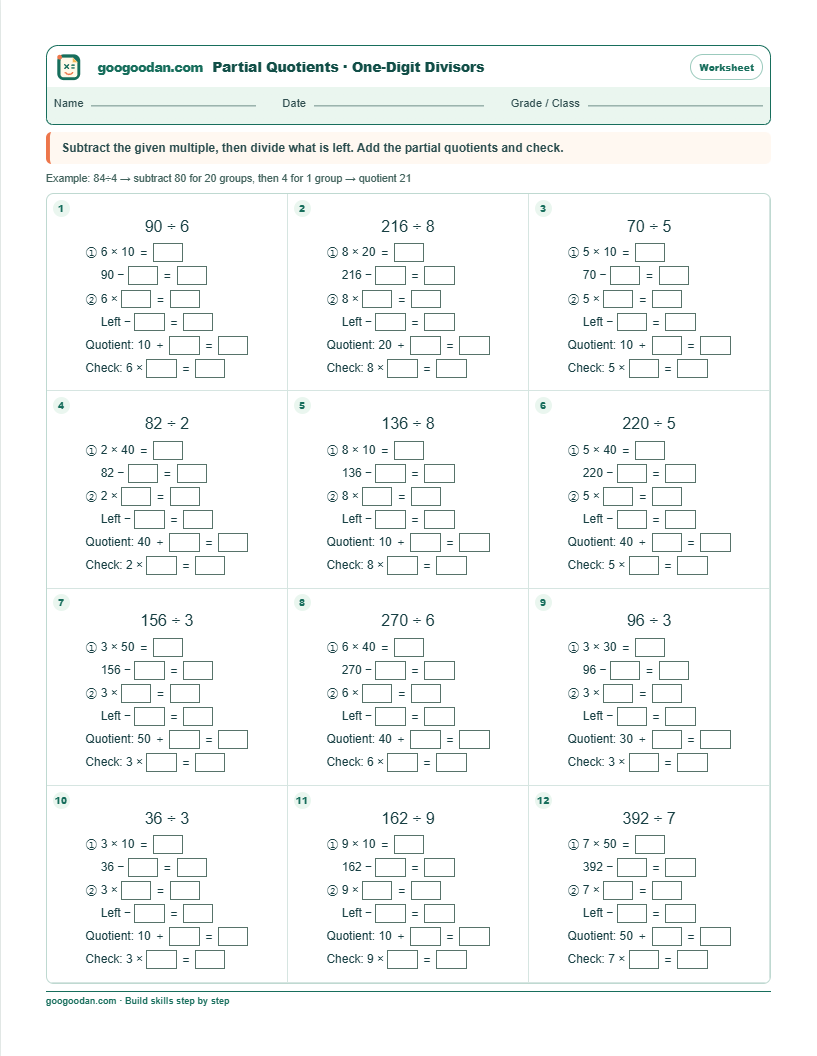
Division Worksheets
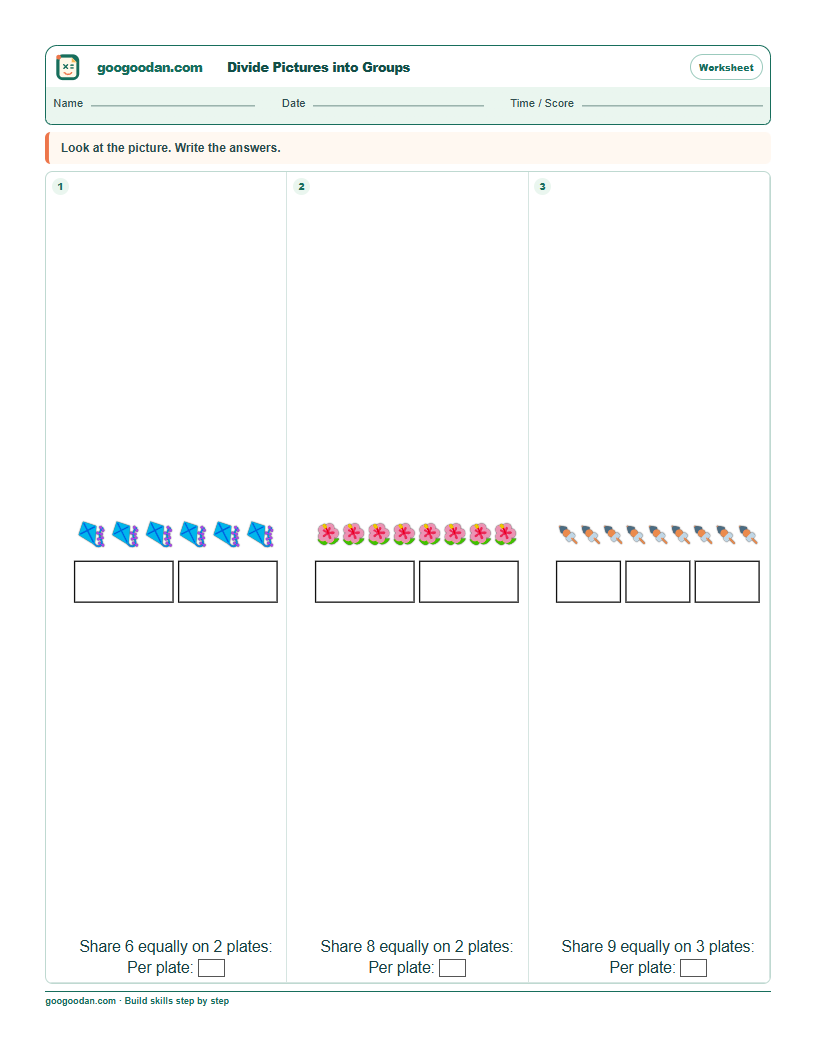 Division by Equal Sharing Worksheet — Divide Pictures into Groups
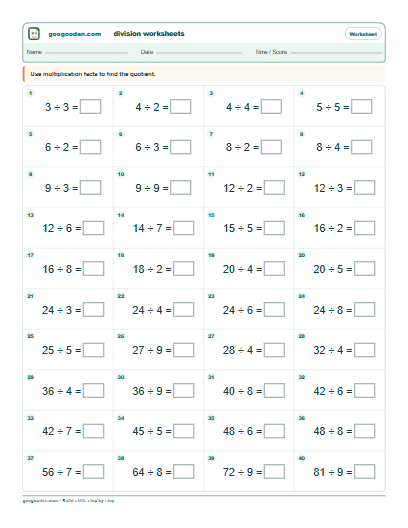 Division Facts Worksheet — Horizontal
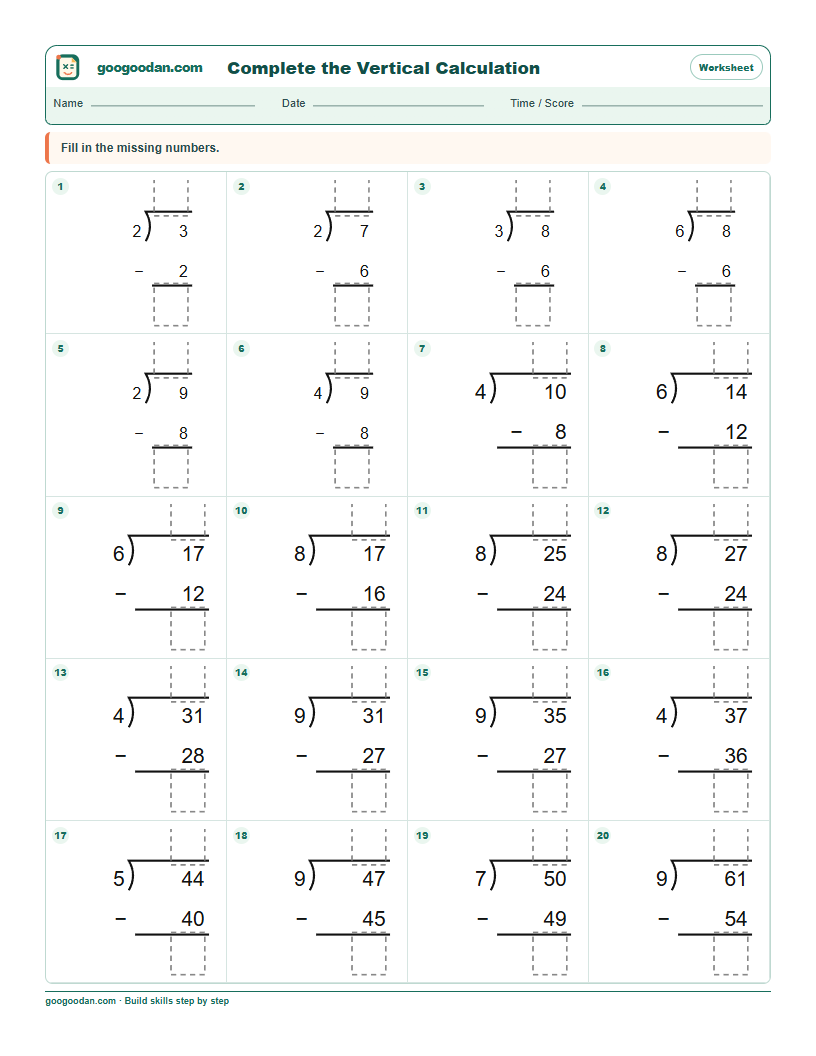 Division with Remainders Worksheet — Vertical Blanks
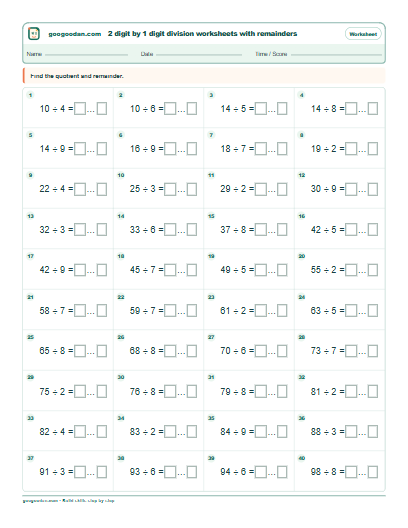 2-Digit ÷ 1-Digit Division: With Remainders Worksheet — Horizontal
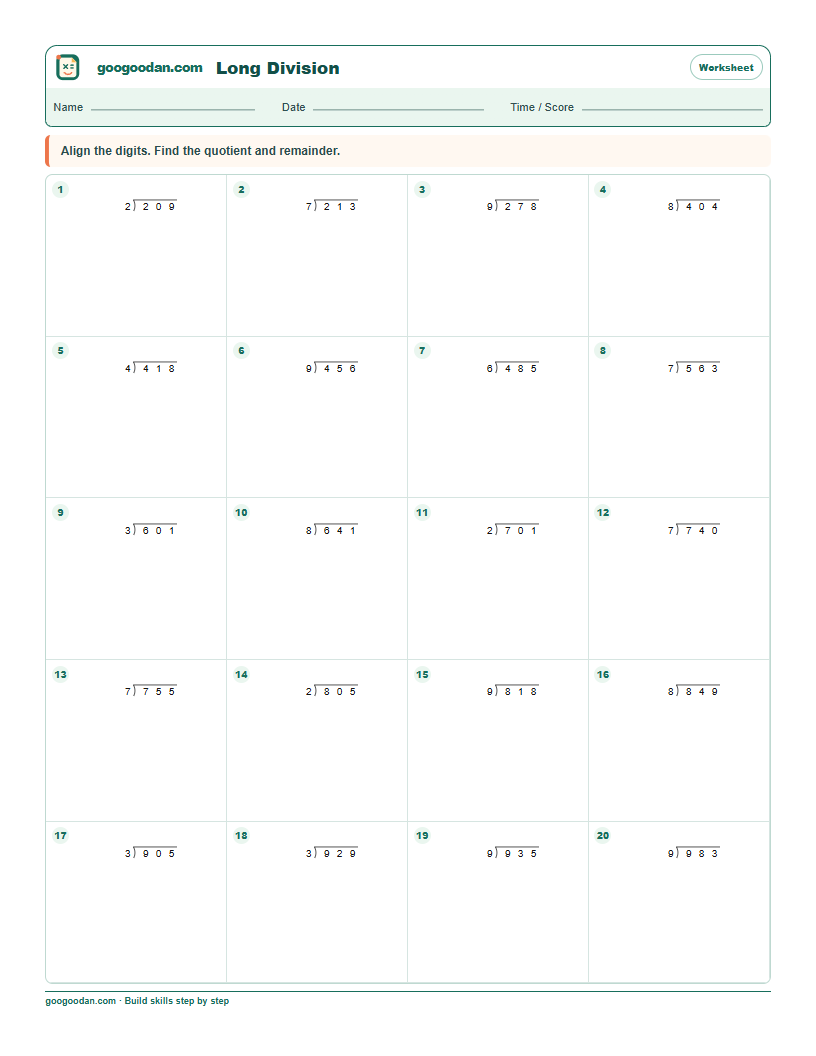 Division: Zero in the Quotient, Remainders Worksheet — Long Division
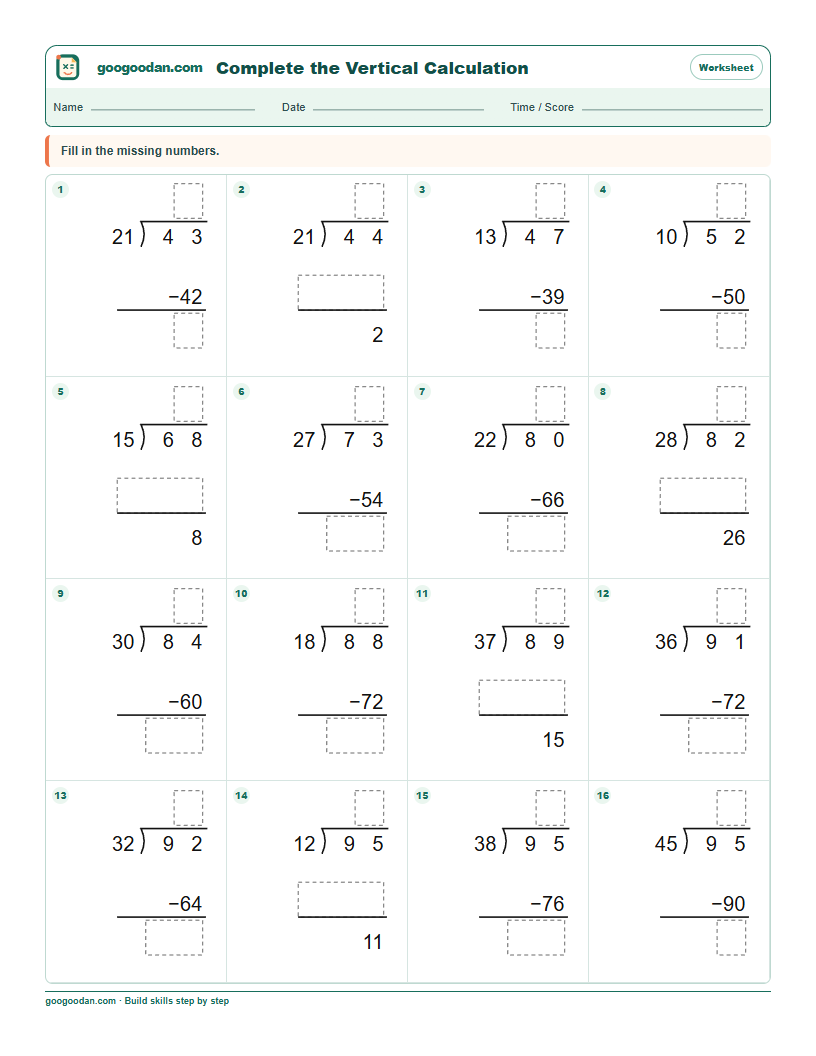 2-Digit ÷ 2-Digit Division, Remainders Worksheet — Vertical Blanks
More worksheet collections
- Free Printable Math Worksheets
- Times Tables Worksheets
- Addition and Subtraction Worksheets
- Fractions and Decimals Worksheets
- Grade 3 Math Worksheets
- Shape Worksheets for Elementary Math Practice
- Measurement Worksheets for Elementary Math Practice
- Kindergarten Math Worksheets: Counting and Number Facts
Choosing multiplication and division practice
Multiplication and division pages can look similar while asking for different information. A product question asks for the total in equal groups; a division question may ask how many groups fit or how many items belong in each group. Choose a worksheet by the unknown, not only by the numbers shown. Arrays and area models make the structure visible, while a written algorithm is useful once place value and the intermediate steps are understood. Check a few sample questions before printing to confirm the task matches the learner's goal.
Represent the unknown before calculating
Use Worksheet for a first attempt and Answer Key to check the reasoning. If the page is unfamiliar, draw a quick box or array for one question before solving the rest. New Numbers refreshes the same format for another round. For division with a remainder, keep the context in view: the remainder may represent leftover items, or the question may require one additional group. That decision comes from what is being counted, not from the calculation alone. Select Letter paper in the print dialog if you are printing the worksheet.
Check a sharing example
Suppose 95 markers are shared equally among 6 groups. Since 6 x 15 = 90, each group receives 15 markers and 5 remain. The check is 6 x 15 + 5 = 95, and the remainder 5 is less than the divisor 6. If the question asks how many boxes are needed for all the markers, five leftovers require another box, so the answer is 16 boxes. A context changes how a quotient and remainder should be described.
Common errors to notice
Students sometimes report the remainder without answering the question, or they reverse the number of groups and the size of each group. Label both quantities in a drawing before writing a number sentence. In a multiplication algorithm, partial products must reflect the place value of each digit. In division, check each subtraction and bring-down step, then multiply the quotient by the divisor and add the remainder. If that total does not return the original number, locate the first step where the values stopped matching.