Free Printable Math Worksheets
These math worksheets are for children who need regular written practice at home or in class, from number facts to fractions and decimals. Choose a topic below, open any sheet and press New Numbers to get a fresh set of questions.
Every sheet has an answer page. Pick Worksheet, Answer Key or both, then print. Each page is set up for Letter paper, and your browser’s Save as PDF option gives a PDF copy.
Choose a topic
- Addition and Subtraction Worksheets
Pictures and number facts first, then column methods with and without carrying or exchanging. - Times Tables Worksheets
One section for each table from 1 to 10, plus mixed tables up to 12. - Multiplication and Division Worksheets
Multiplying by one or two digits, area models, short division and remainders. - Fractions and Decimals Worksheets
Equivalent and mixed fractions, then adding, subtracting and multiplying fractions and decimals. - Grade 3 Math Worksheets
Sheets for Grade 3 addition, subtraction, multiplication and division. - Shape Worksheets for Elementary Math Practice
- Measurement Worksheets for Elementary Math Practice
- Kindergarten Math Worksheets: Counting and Number Facts
A few popular sheets
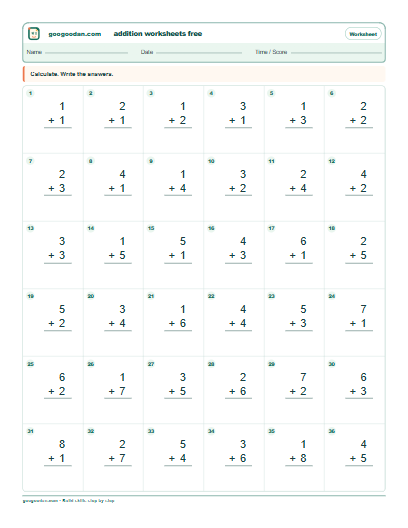 Addition with Sums to 9 Worksheet — Vertical
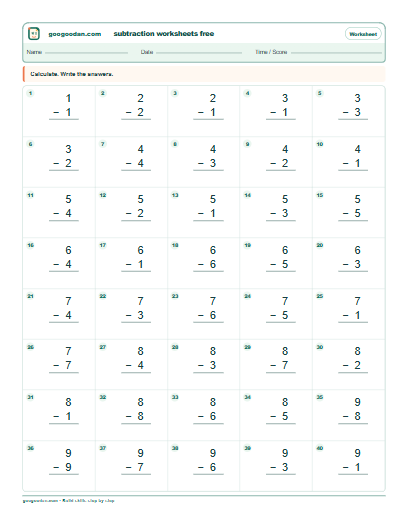 Subtraction Within 9 Worksheet — Vertical
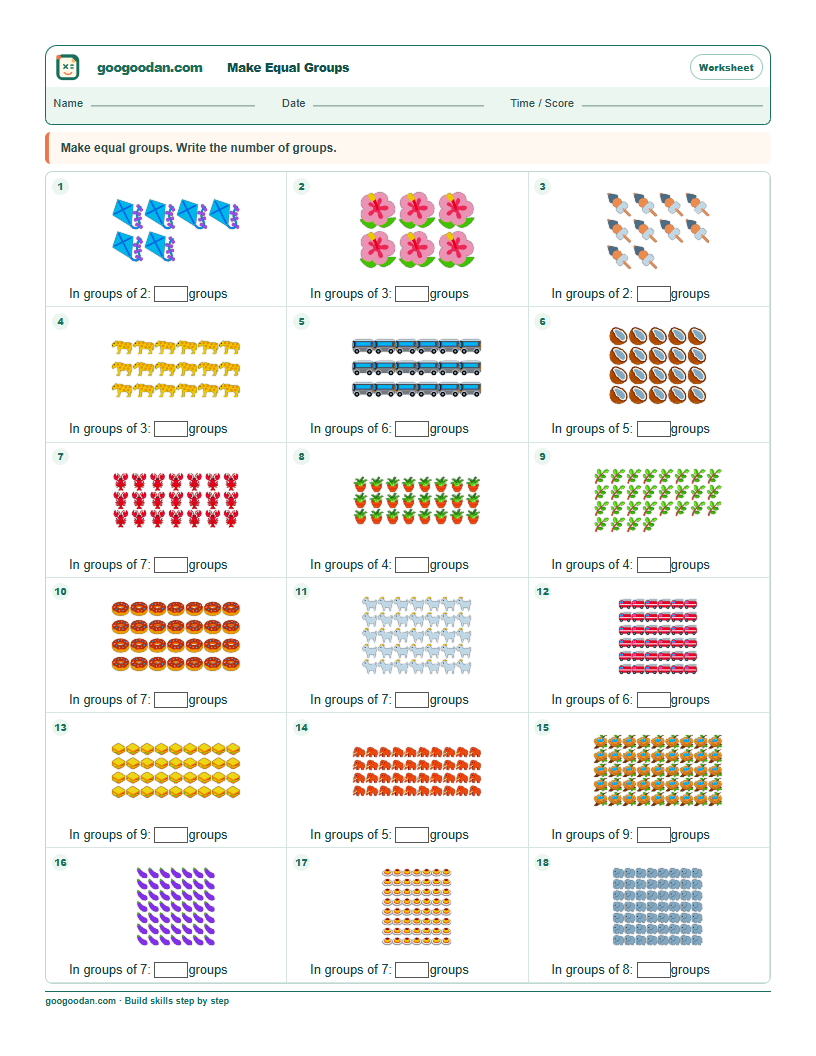 Multiplication: Equal Groups Worksheet — Make Equal Groups
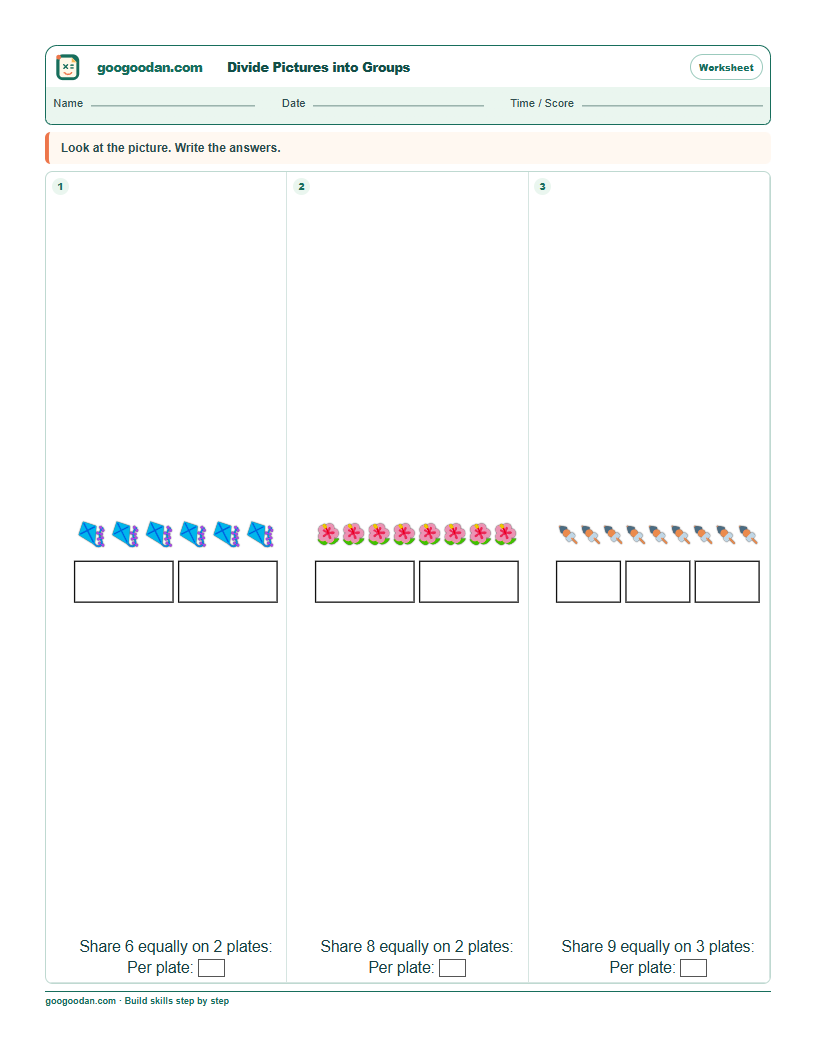 Division by Equal Sharing Worksheet — Divide Pictures into Groups
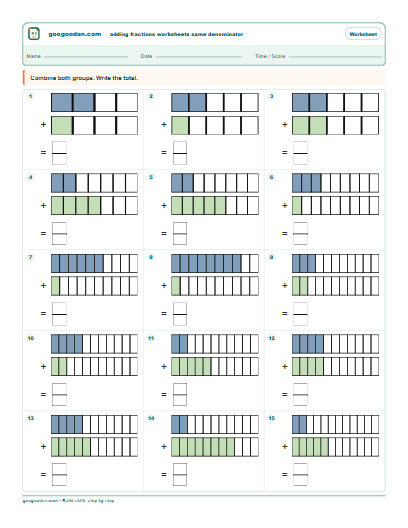 Adding Unit Fractions with Models Worksheet — Combine Picture Groups
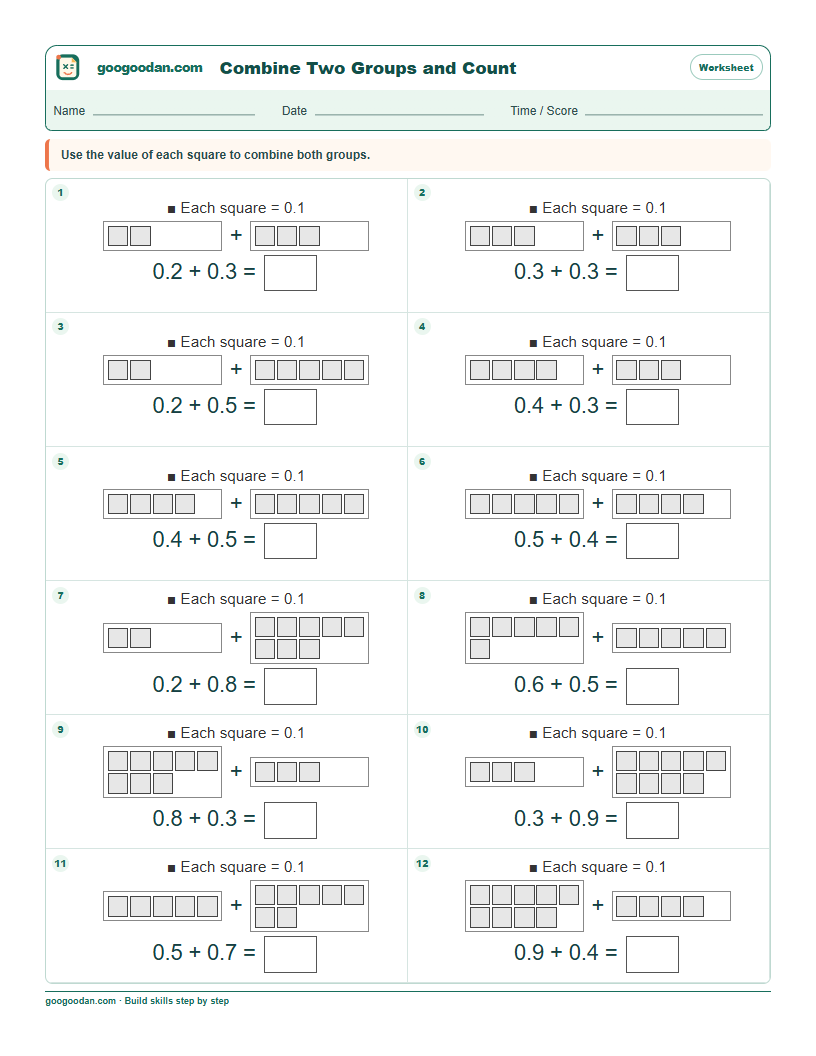 Adding Tenths with Models Worksheet — Combine Picture Groups
More worksheet collections
- Times Tables Worksheets
- Addition and Subtraction Worksheets
- Multiplication and Division Worksheets
- Fractions and Decimals Worksheets
- Grade 3 Math Worksheets
Choosing a worksheet for a Canadian classroom or home
Start with the collection that matches the lesson: whole numbers, fractions, or decimals. Within that collection, choose the operation and the kind of thinking the learner needs, such as preparing with place value, calculating, or checking an answer. The cards let you compare the question style before opening a sheet. This is useful when a class is working on one strategy but students need different number ranges. Use the preview to check how much writing space the page gives before assigning it.
The detail page separates questions from answers and can create a fresh number set for the same worksheet type. For classroom use, decide whether students will work independently or compare methods with a partner. A short set can support a quick check for understanding; a longer set can be divided across two sessions. If a learner makes the same error several times, note the exact step and return to that idea with a visual model before printing more questions. A correct total matters, but the explanation shows whether the method is secure.
Letter paper is the default for these Canadian worksheets. In the print dialog, choose Letter and keep the scale at 100% so the question layout remains readable and fits on one page. Check the preview before printing; browser headers and footers can reduce the available space. If the answer key is needed, select it separately from the question sheet. This makes it easier to hand out practice without answers and keep a checking copy for the adult or teacher.
Use local course materials to decide which topic comes next, since provincial programs and classroom pacing can differ. These worksheets provide extra practice for a selected skill rather than a prescribed sequence. Keep a brief note of which representation helped: a place-value chart, an array, a number line, or a written calculation. On the next session, begin with that representation and change only one feature, such as the number range or the position of the unknown. This keeps practice focused while allowing each learner to build confidence at a suitable pace.