Fractions and Decimals Worksheets
Fractions come first: pictures, equivalent fractions and mixed numbers, then adding and subtracting with the same and different denominators. Decimals follow, from place value to the four operations.
Some of these sheets are hard, so read each title for the exact skill before printing. New Numbers gives fresh questions, and the answer page shows each result so you can check the working.
Fraction Basics Worksheets
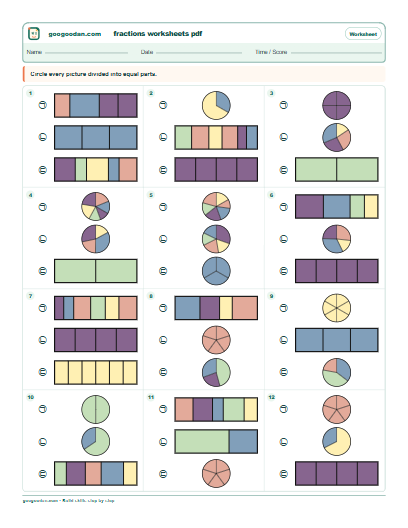 Fractions: Equal Parts Worksheet — Choose Equal Part Models
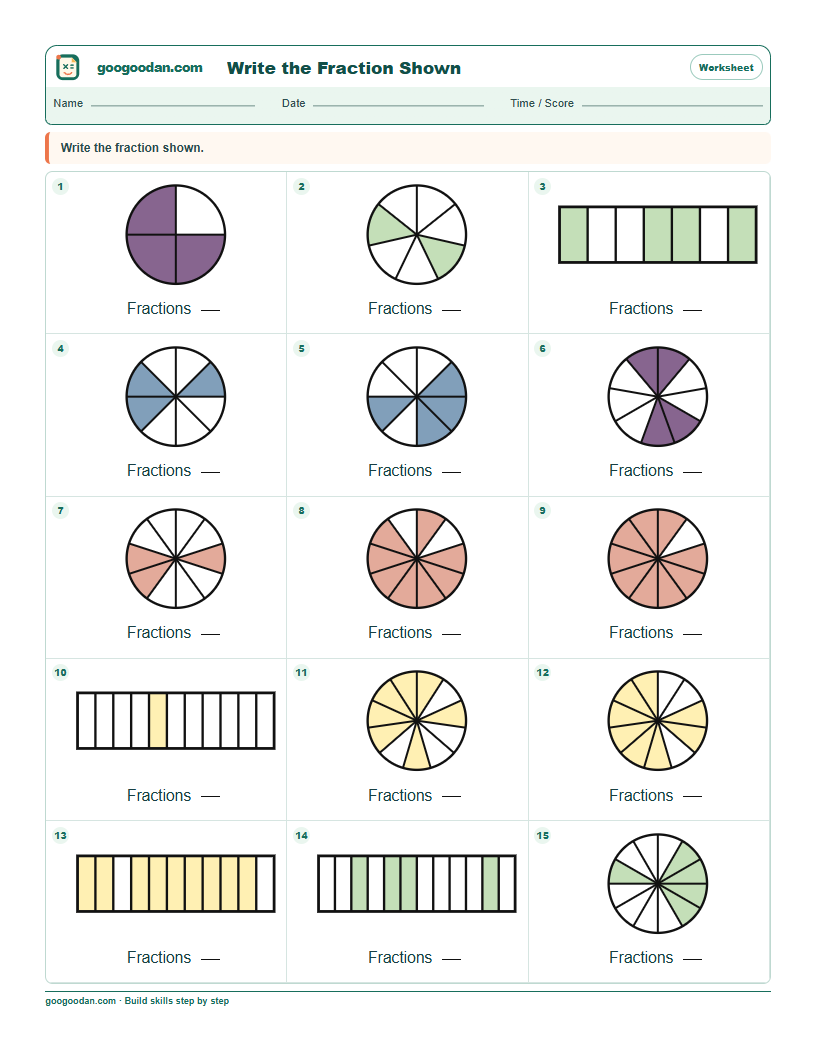 Fraction Models Worksheet — Write the Fraction Shown
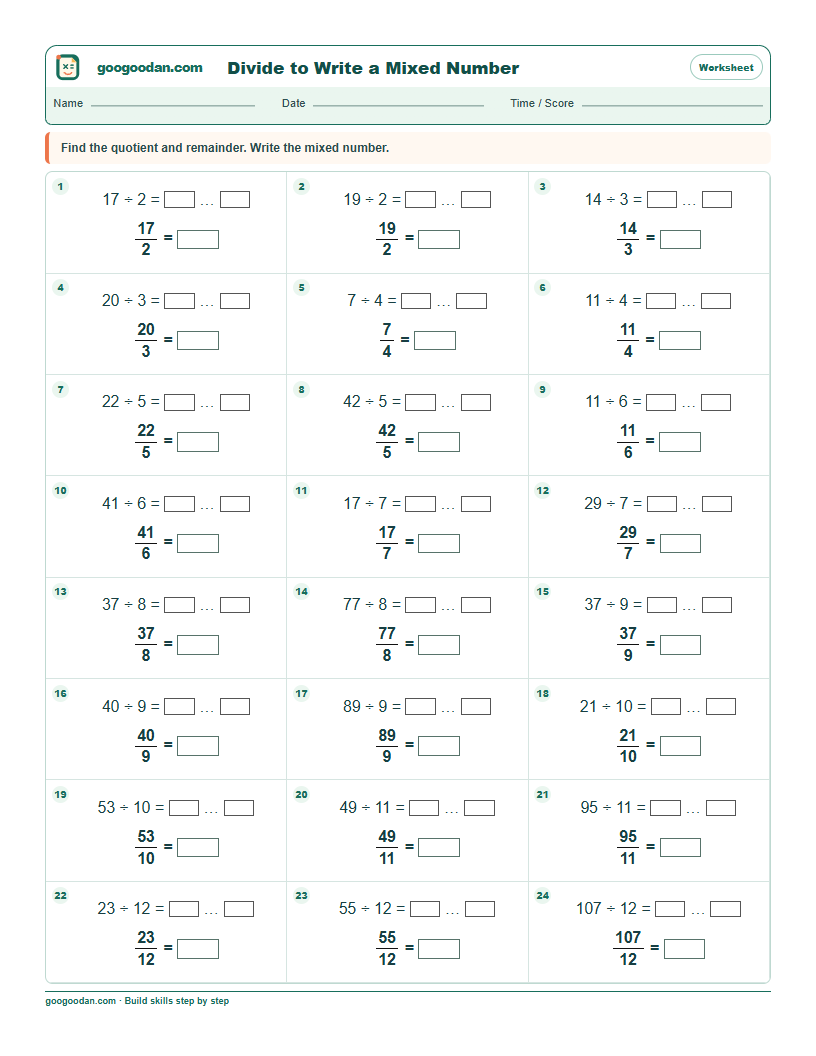 Improper Fractions to Mixed Numbers — Divide to Write a Mixed Number
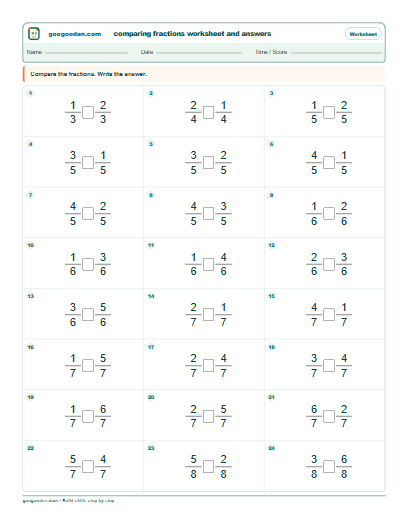 Comparing Like Fractions Worksheet — Compare with Signs
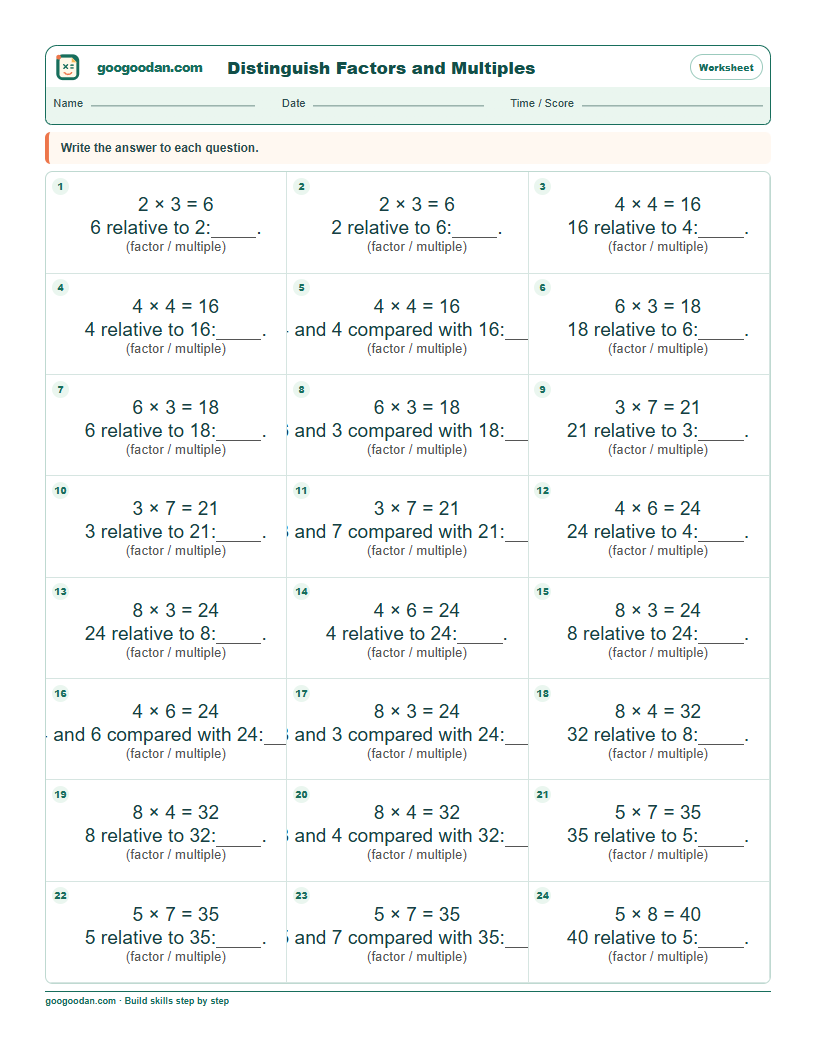 Factors and Multiples for Fractions — Distinguish Factors and Multiples
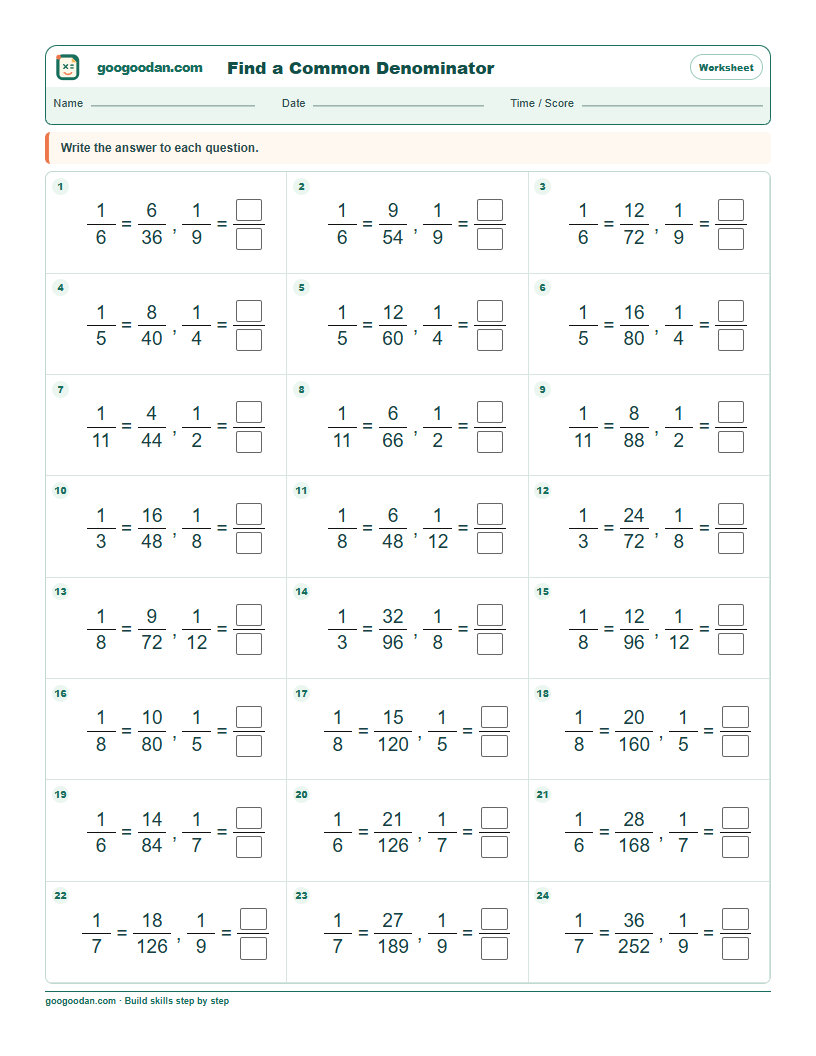 Common Denominators: Common Multiples — Find a Common Denominator
Adding and Subtracting Fractions Worksheets
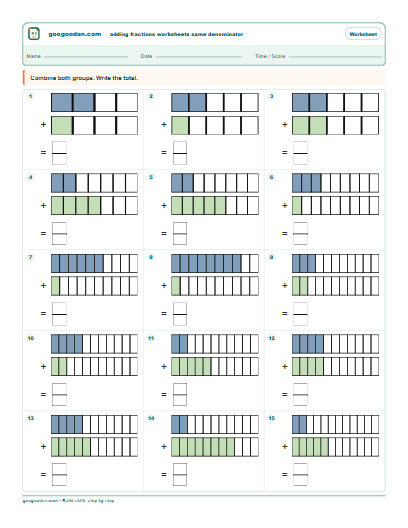 Adding Unit Fractions with Models Worksheet — Combine Picture Groups
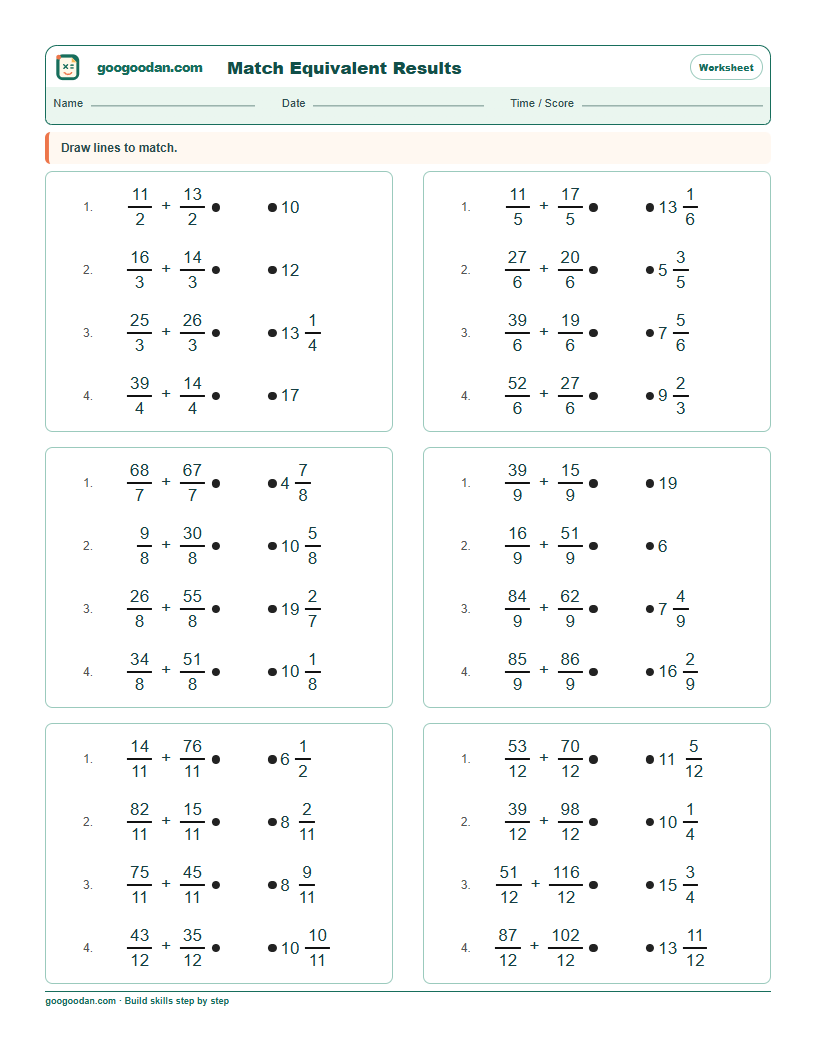 Like Denominators: Improper Fraction Addition Worksheet — Match Answers
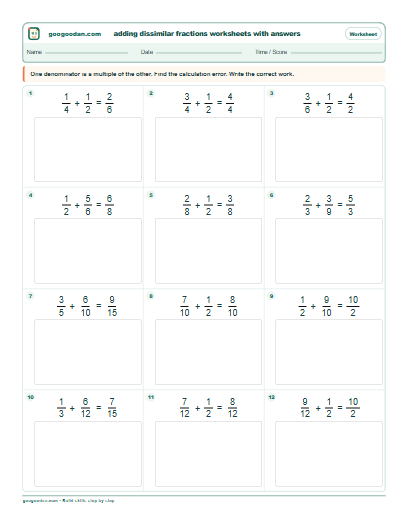 Adding Fractions: Related Denominators Worksheet — Fix Errors
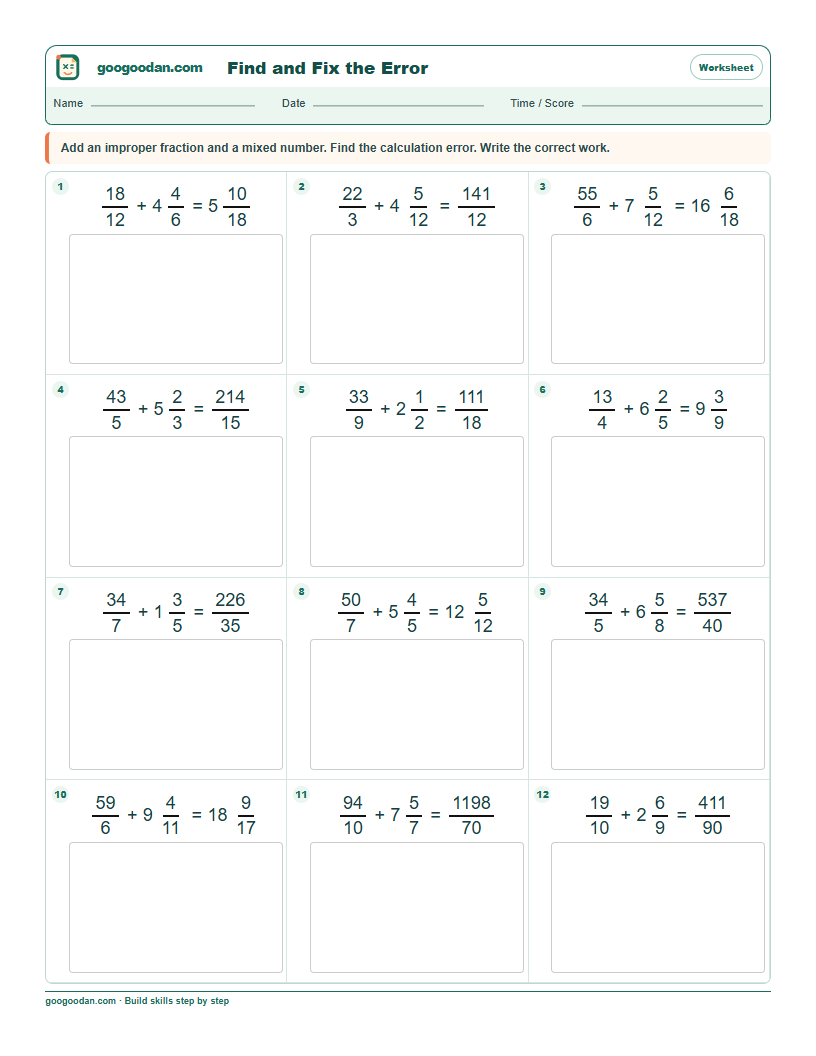 Unlike Denominators: Improper Fraction + Mixed Number — Fix Errors
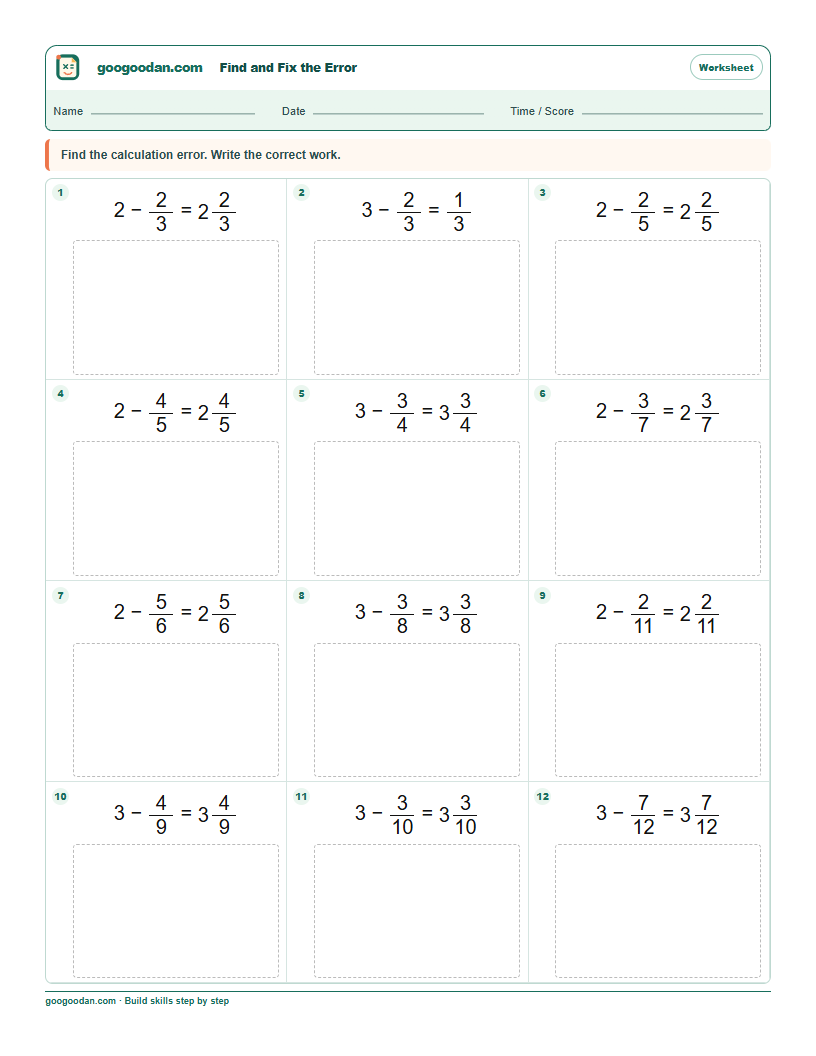 Like Denominators: Whole Number − Proper Fraction Worksheet — Fix Errors
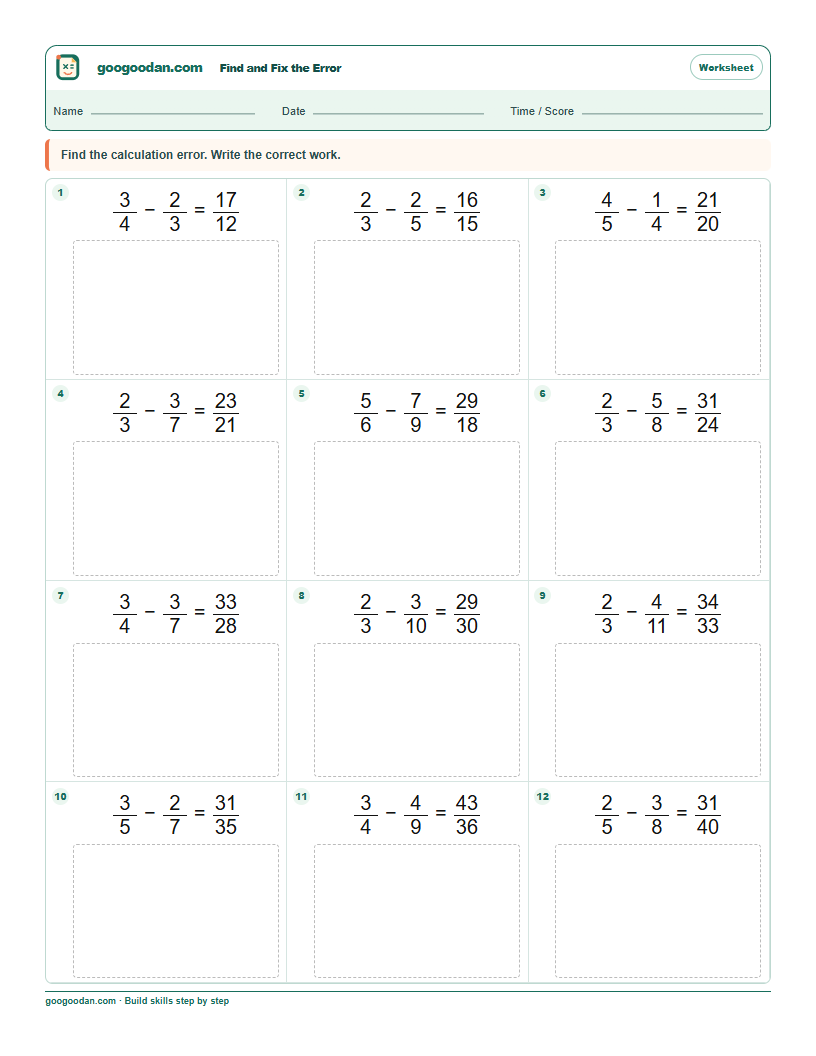 Subtracting Fractions: Common Denominators Worksheet — Fix Errors
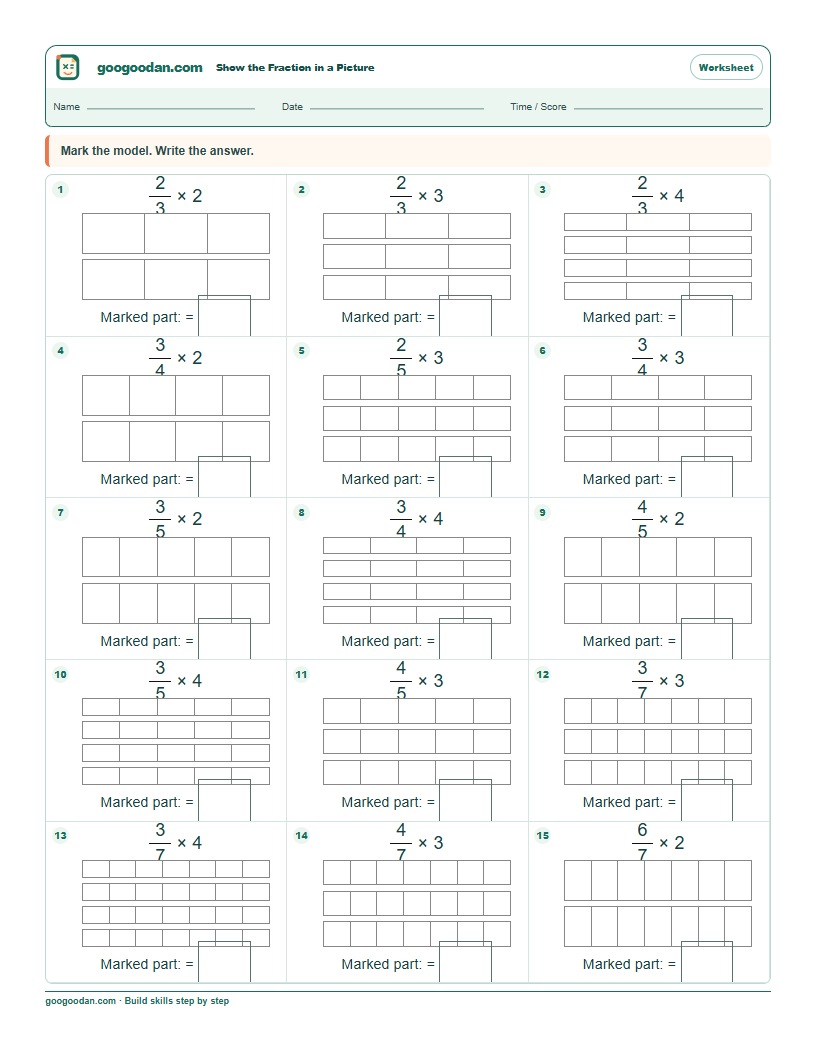
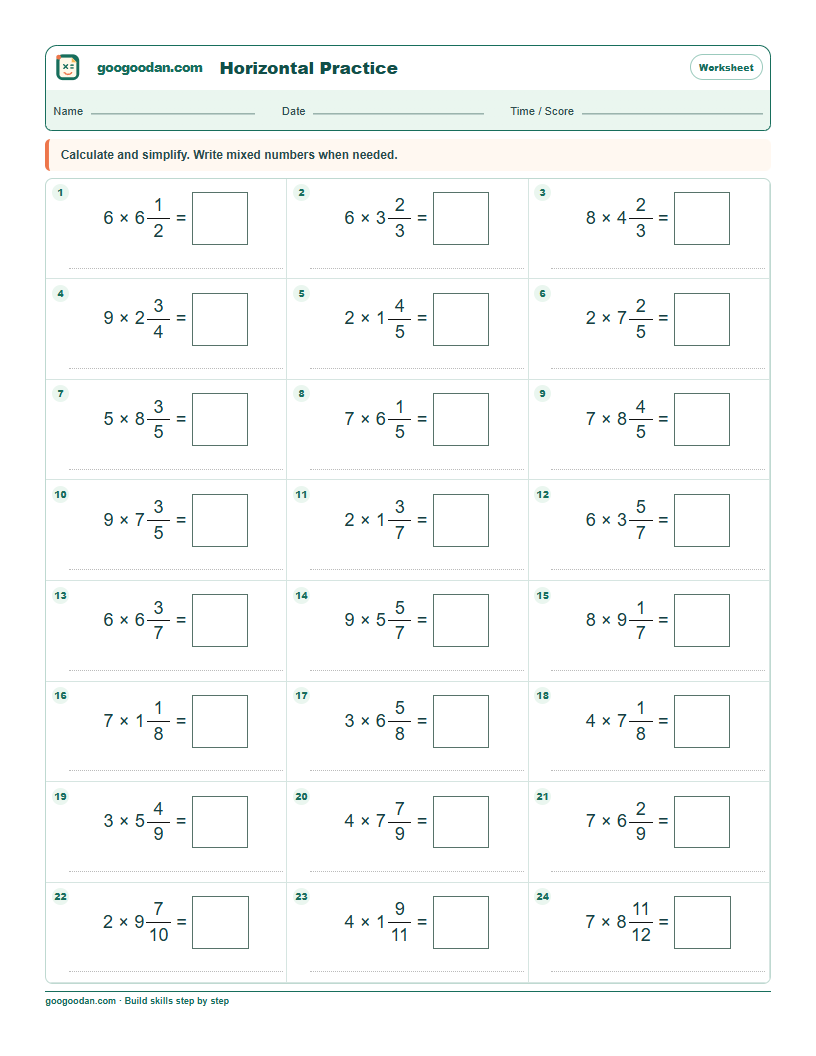
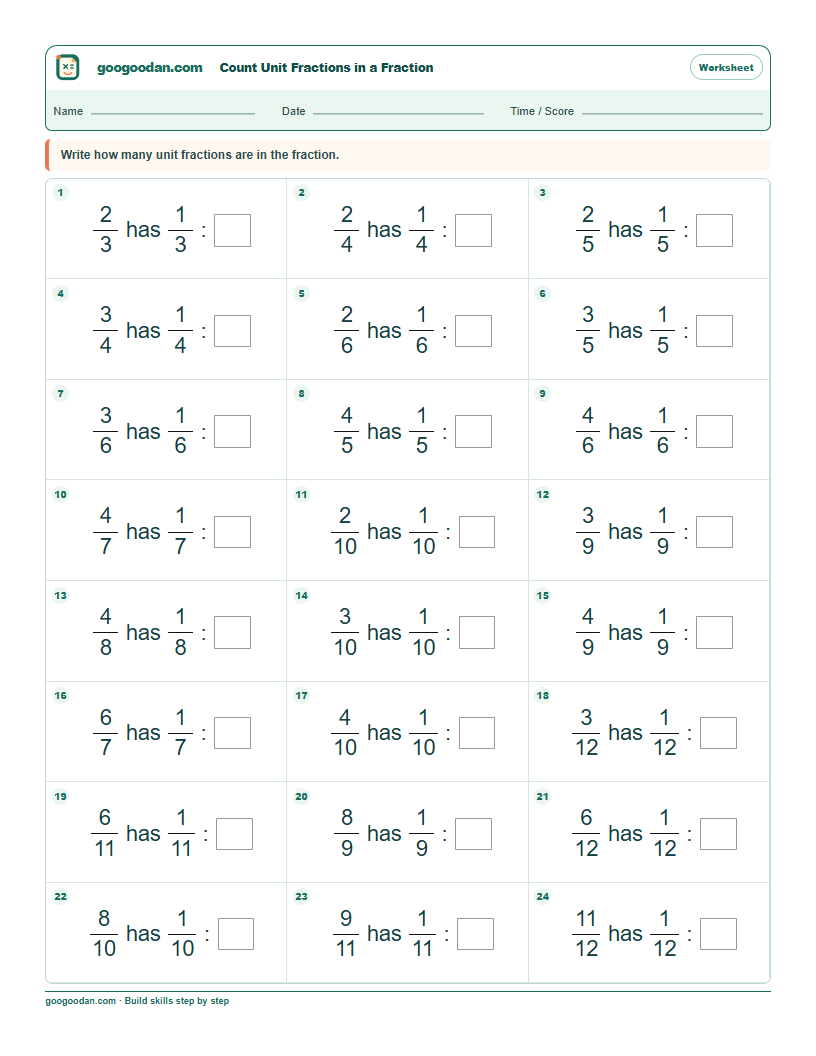
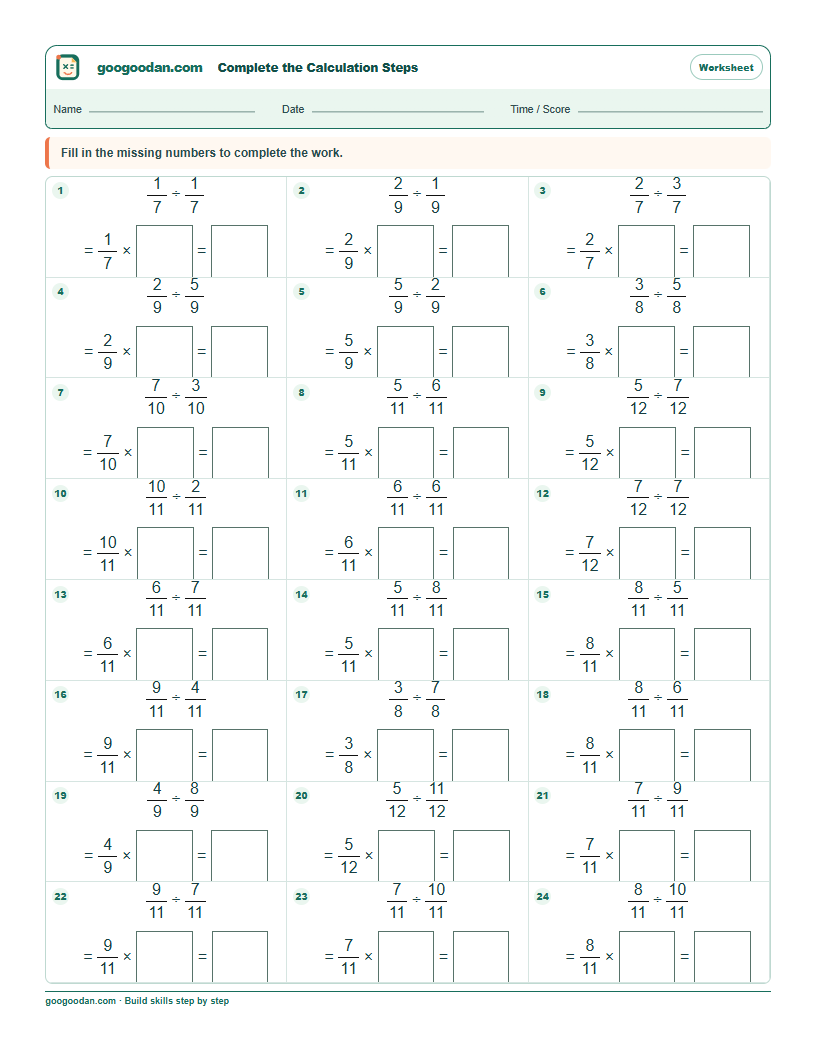
Multiplying and Dividing Fractions Worksheets
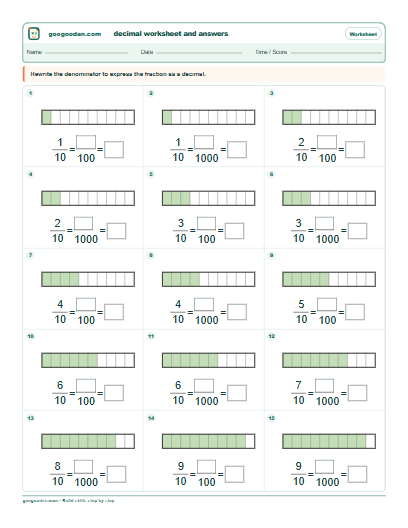
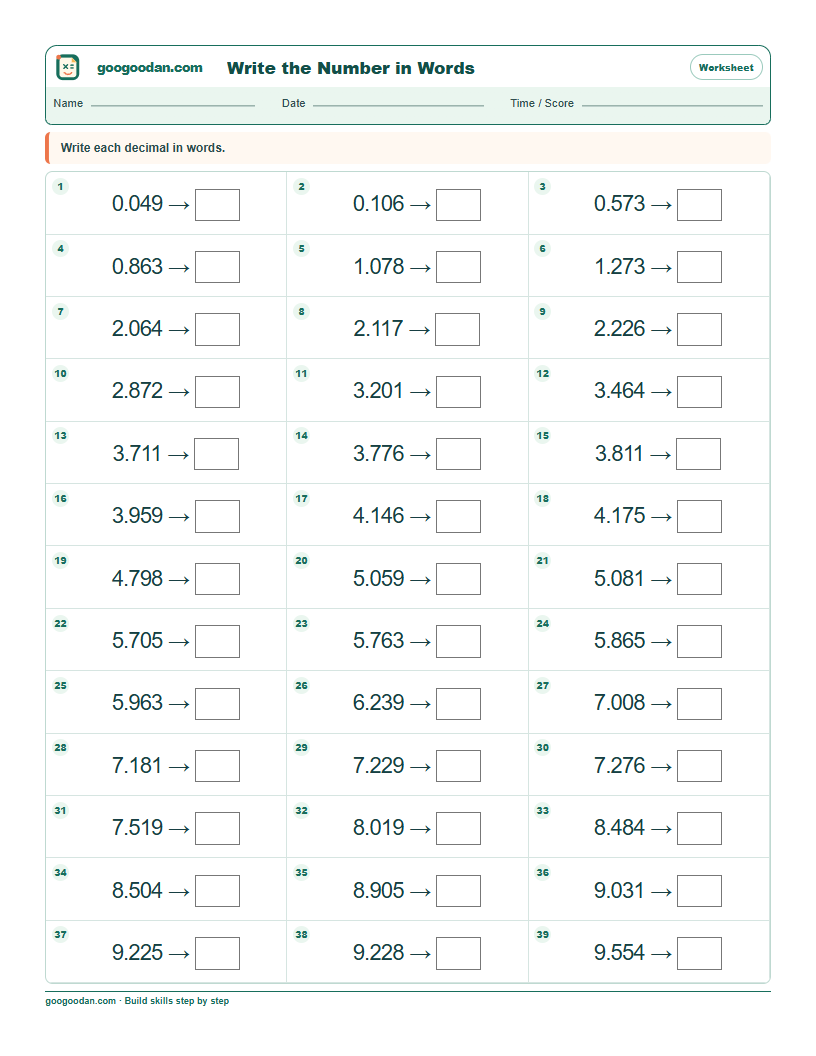
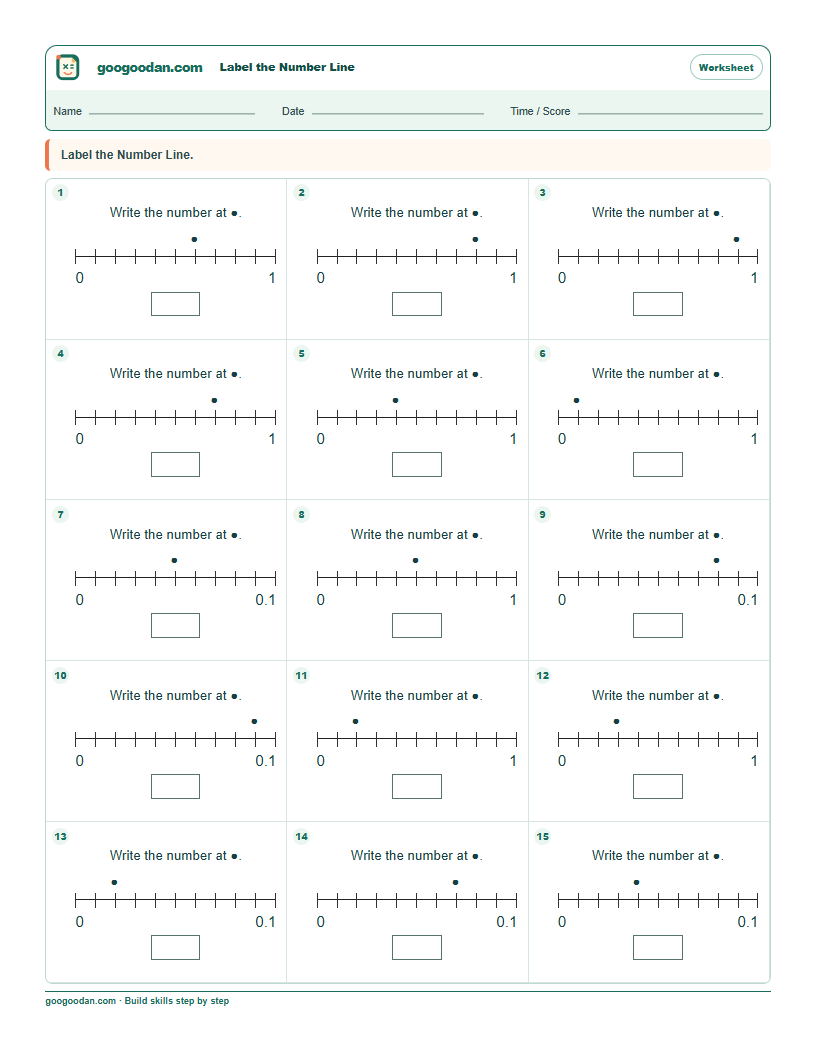
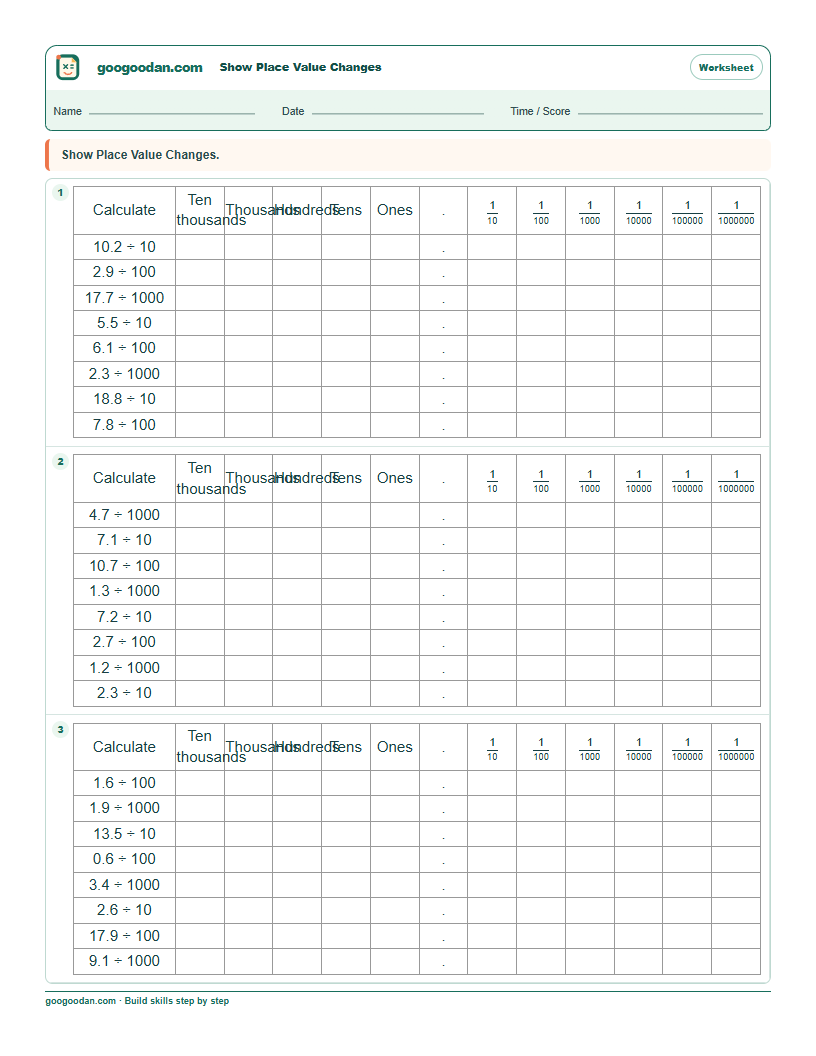
Decimal Place Value Worksheets
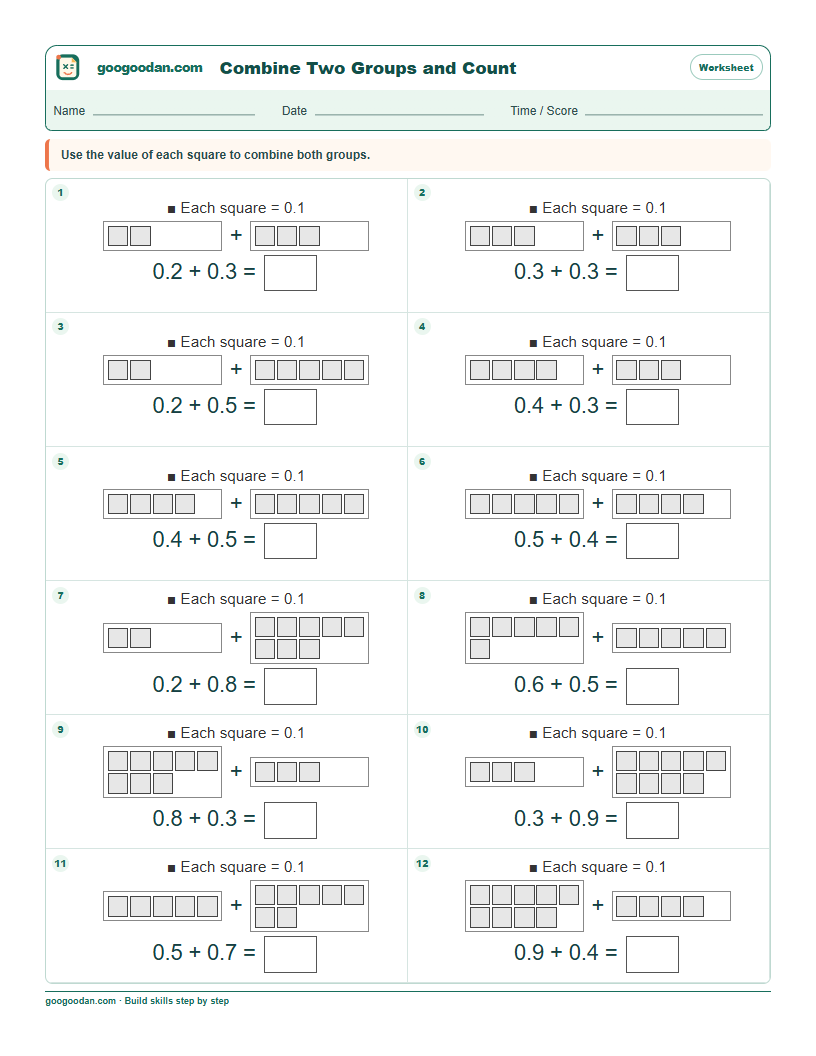
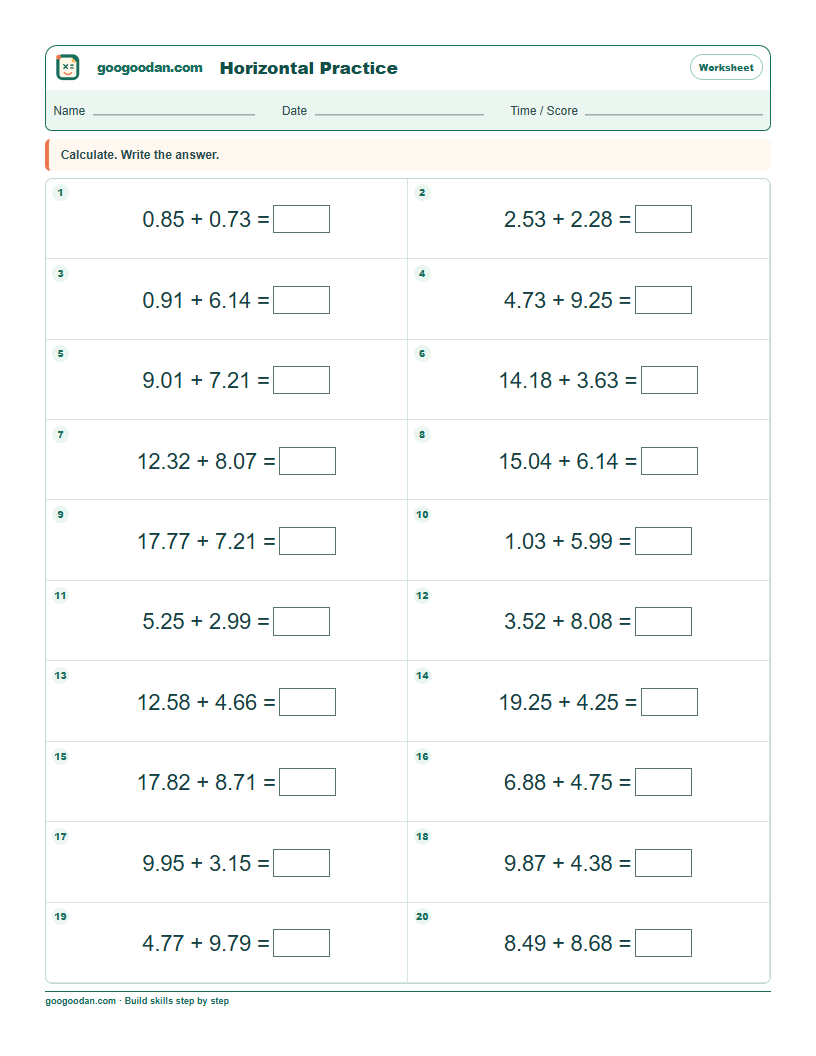
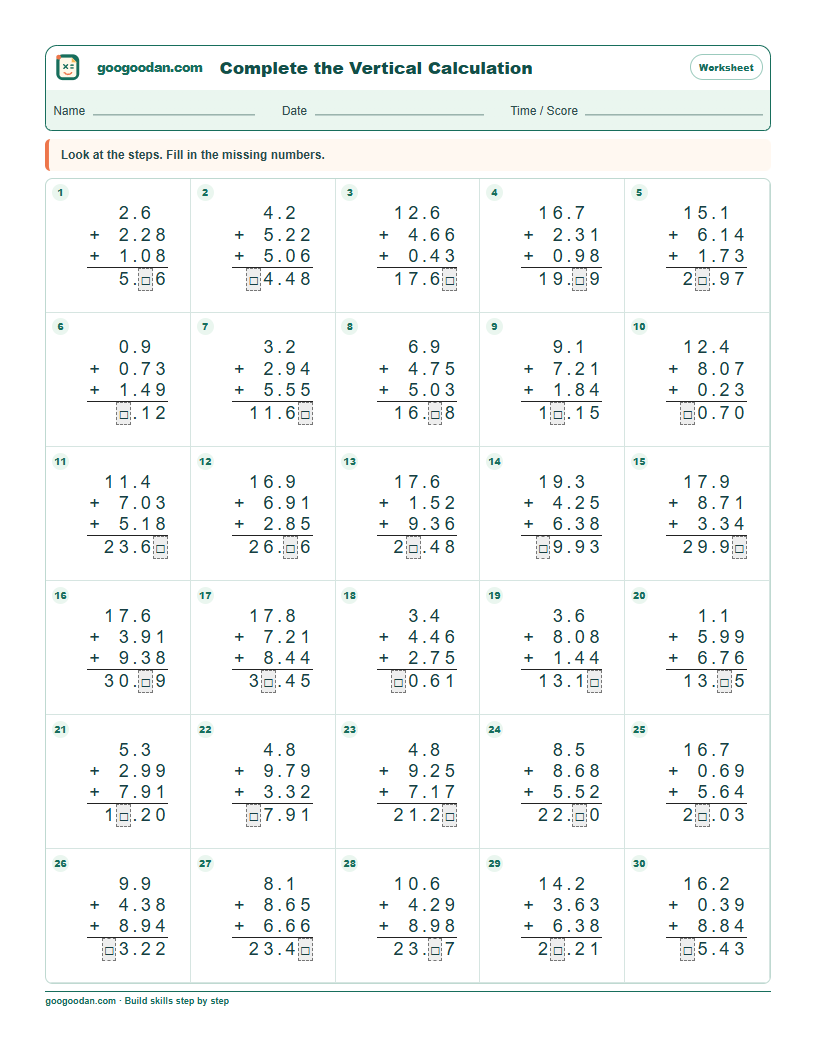
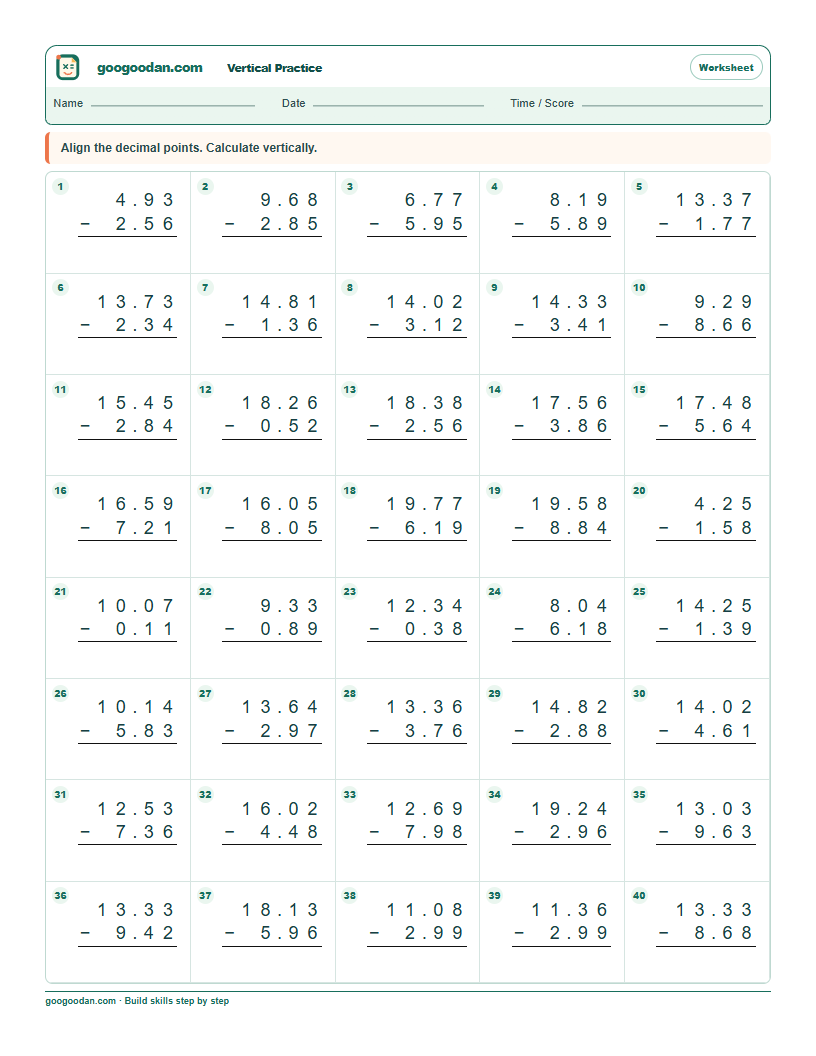
Adding and Subtracting Decimals Worksheets
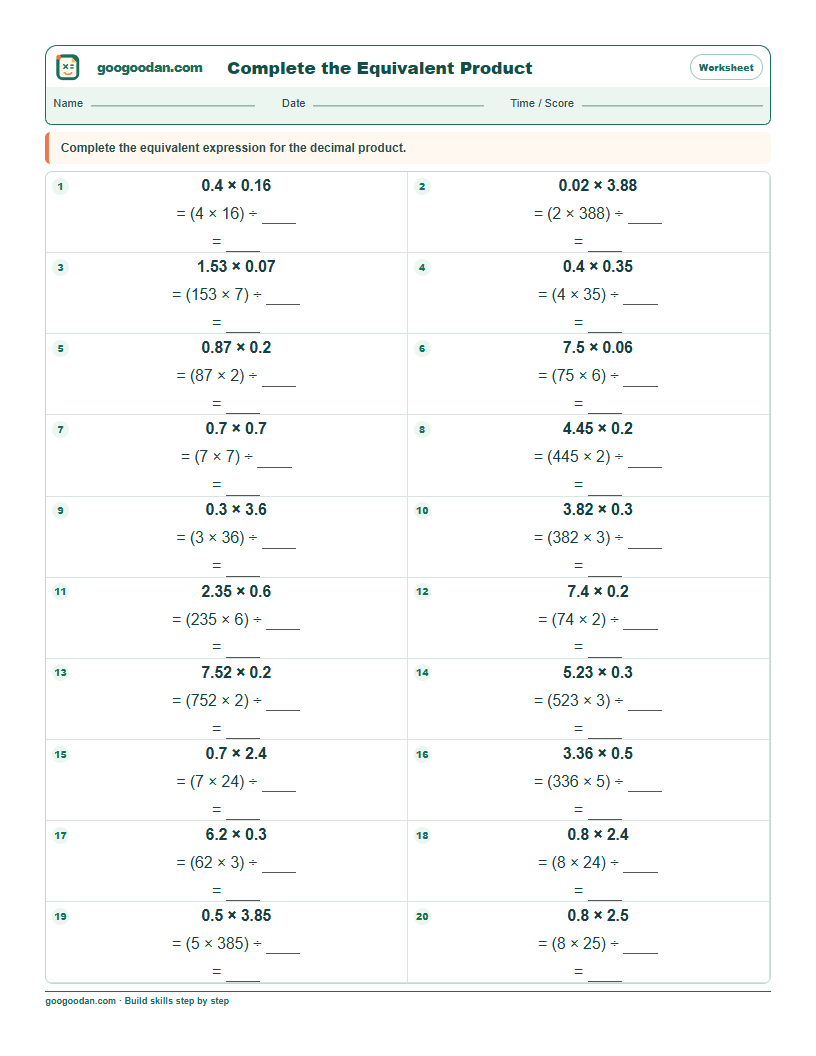
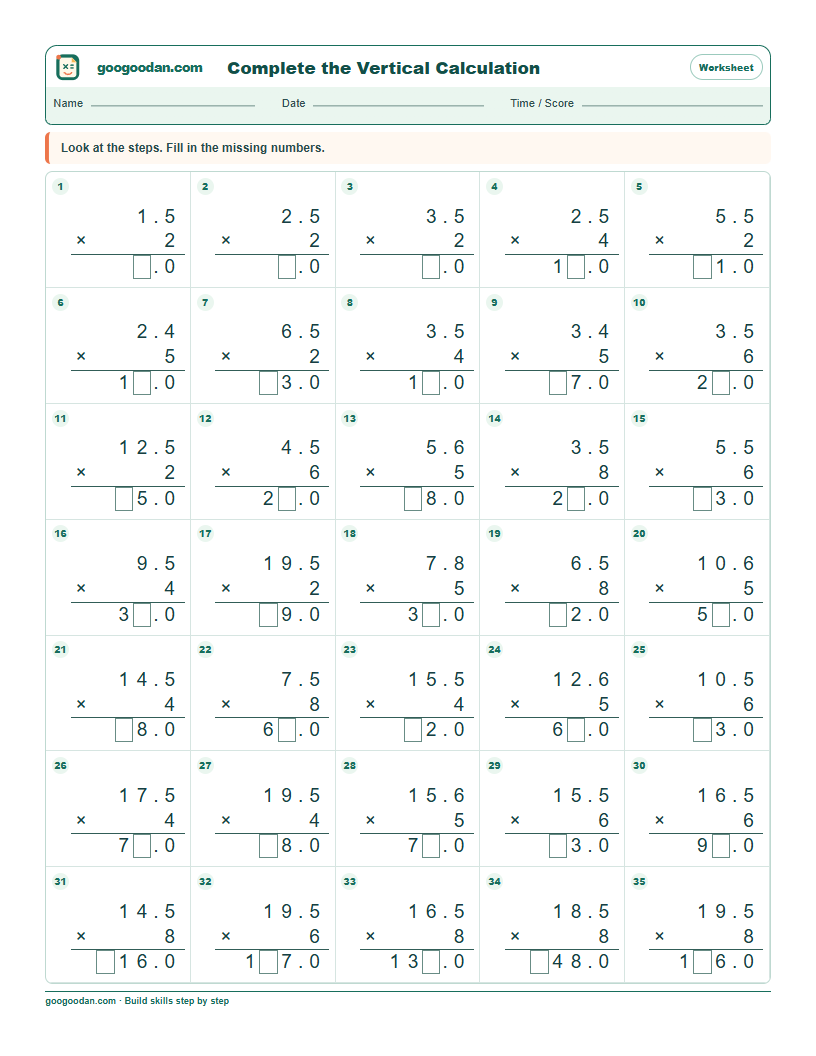
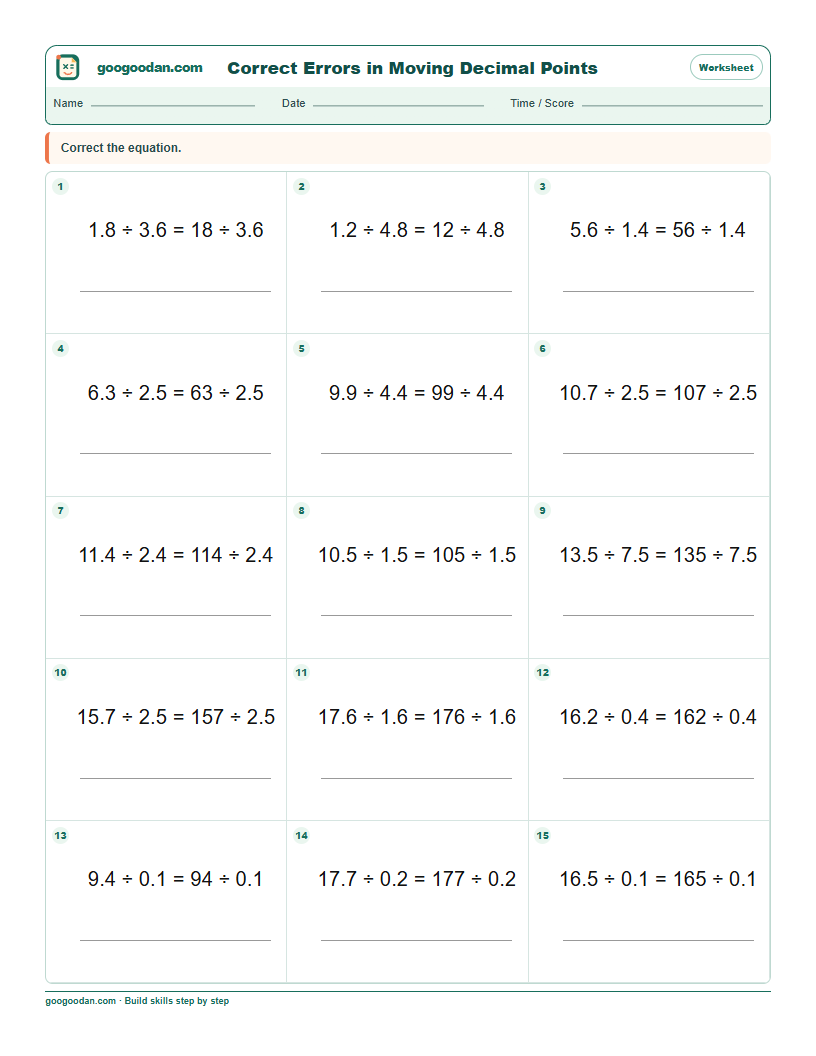
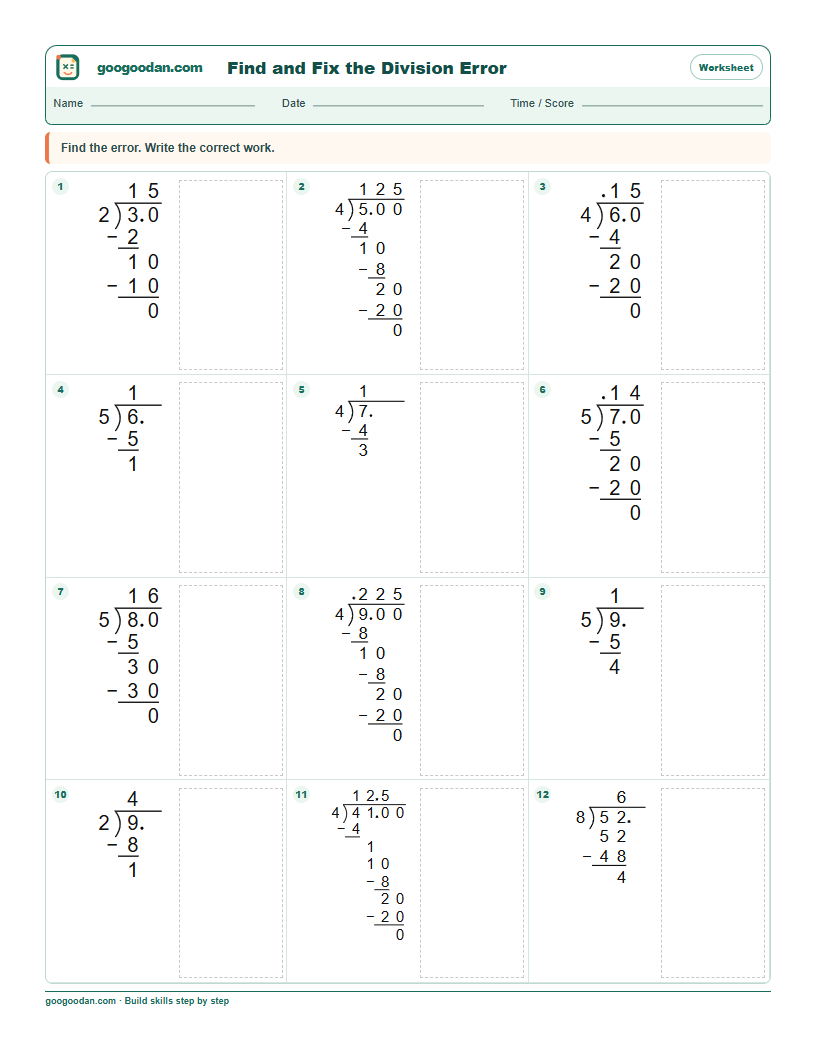
Multiplying and Dividing Decimals Worksheets
More worksheet collections
- Free Printable Math Worksheets
- Times Tables Worksheets
- Addition and Subtraction Worksheets
- Multiplication and Division Worksheets
- Grade 3 Math Worksheets
- Shape Worksheets for Elementary Math Practice
- Measurement Worksheets for Elementary Math Practice
- Kindergarten Math Worksheets: Counting and Number Facts
Choosing fraction and decimal worksheets
Fractions and decimals describe parts of a whole in different forms. Choose a worksheet by the representation it uses: shaded parts, a number line, equivalent fractions, decimal notation, or a calculation. A picture page can make the size of a part visible; a number line helps compare values; a calculation sheet requires the learner to keep the parts or place values aligned. Look at one example before printing so the worksheet matches the idea being reviewed rather than introducing several unfamiliar steps at once.
Move between a fraction and a decimal
Select Worksheet to attempt the questions, Answer Key to check, or both for guided practice. Use scrap paper to draw a model for one question, then see whether the remaining questions use the same idea. New Numbers gives another set in the same format. For tenths and hundredths, a place-value chart can help the learner name what each digit means. For fractions, label the whole and make equal parts before comparing how many parts are selected. For a hard copy, select Letter paper in the print dialog.
Try a quarter and hundredths example
One quarter is the same as 25 hundredths, or 0.25. To see why, divide a whole into four equal parts and then into one hundred equal parts; one of the four large parts covers 25 of the hundredths. Compare 0.25 with 0.3 by writing 0.3 as 0.30. Since 30 hundredths is greater than 25 hundredths, 0.3 is larger. The extra zero does not change a decimal's value; it makes the columns easier to compare.
Common errors to notice
Do not add denominators when adding fractions with equal-sized parts; first check whether the pieces are the same size. A fraction such as 3/8 is not larger than 1/2 just because 8 exceeds 2. Compare the parts using a picture, common denominator or number line. In decimal work, align the decimal points and compare equal place values, not just the first digits. If the answer seems surprising, shade the fraction or estimate its location between zero and one before checking the answer key.