Measurement Worksheets for Elementary Math Practice
Practise reading clocks, comparing lengths and choosing suitable ways to measure. The worksheets cover early measurement ideas through upper primary units.
Choose a worksheet to open the printable practice and answer key. The collection includes 14 worksheets for Canadian primary learners.
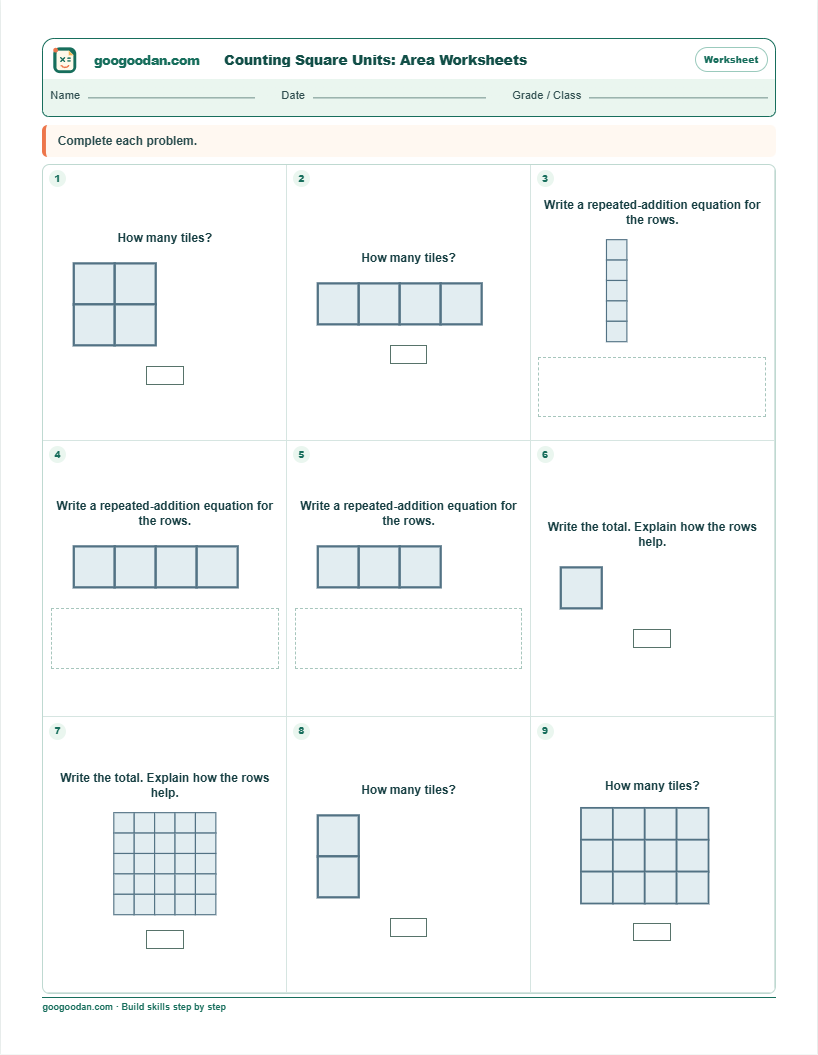 Area Worksheet: Count Square Tiles in Rectangles
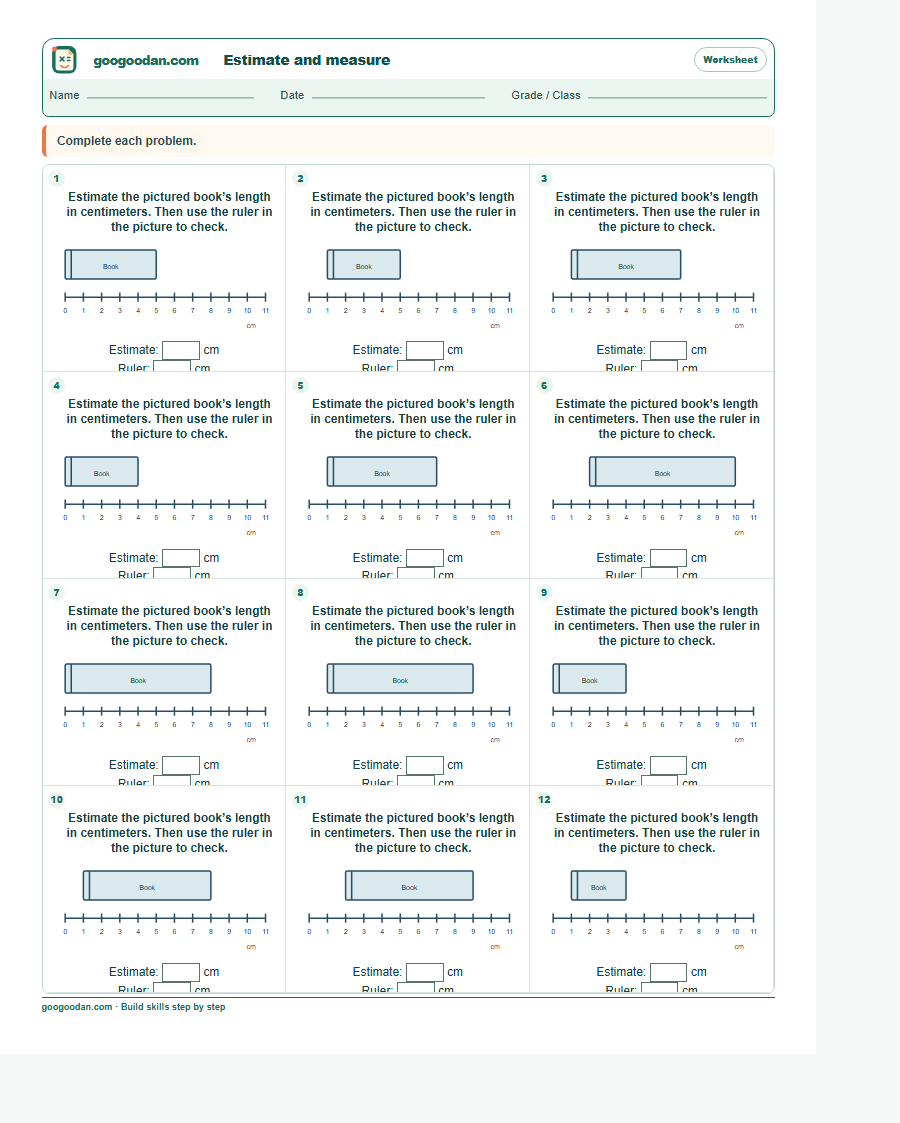 Book Length Worksheet: Estimate and Read a Ruler in cm
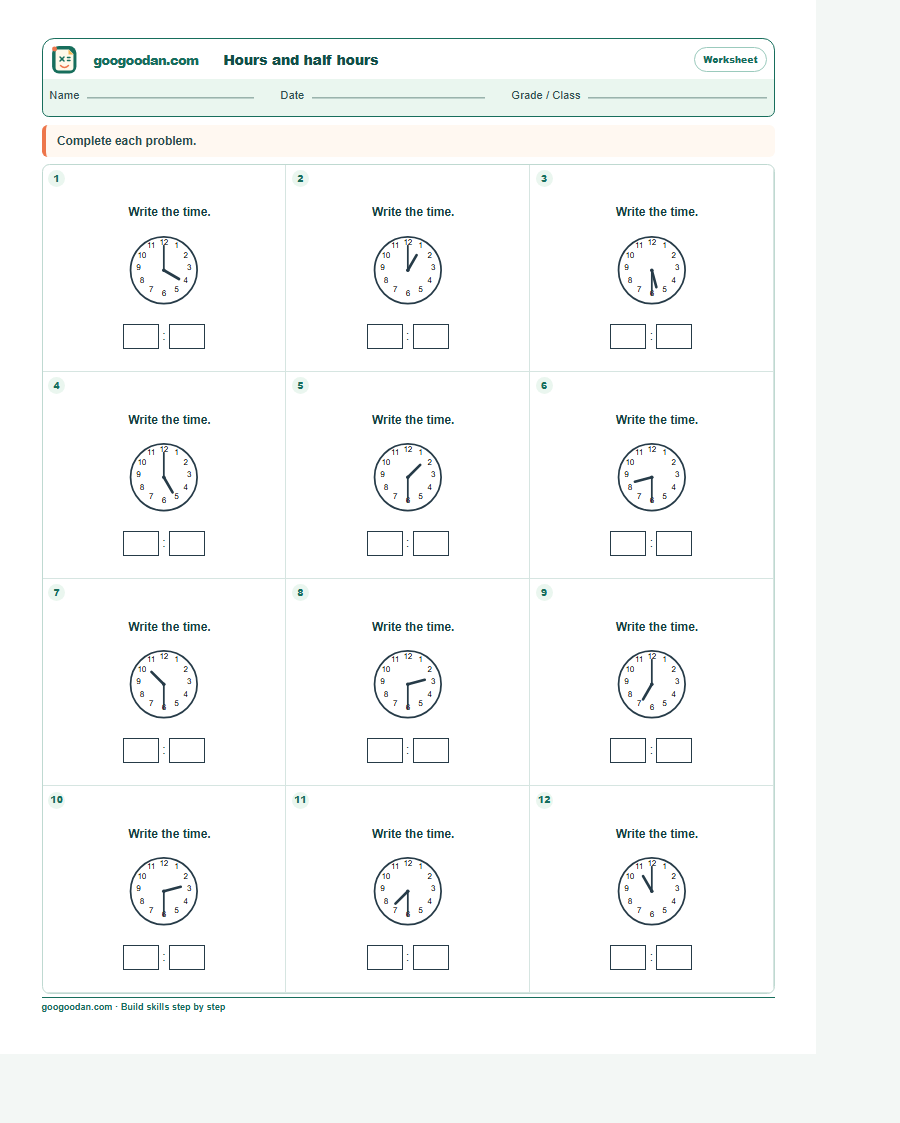 Clock Reading Worksheet: Write Hours and Half Hours
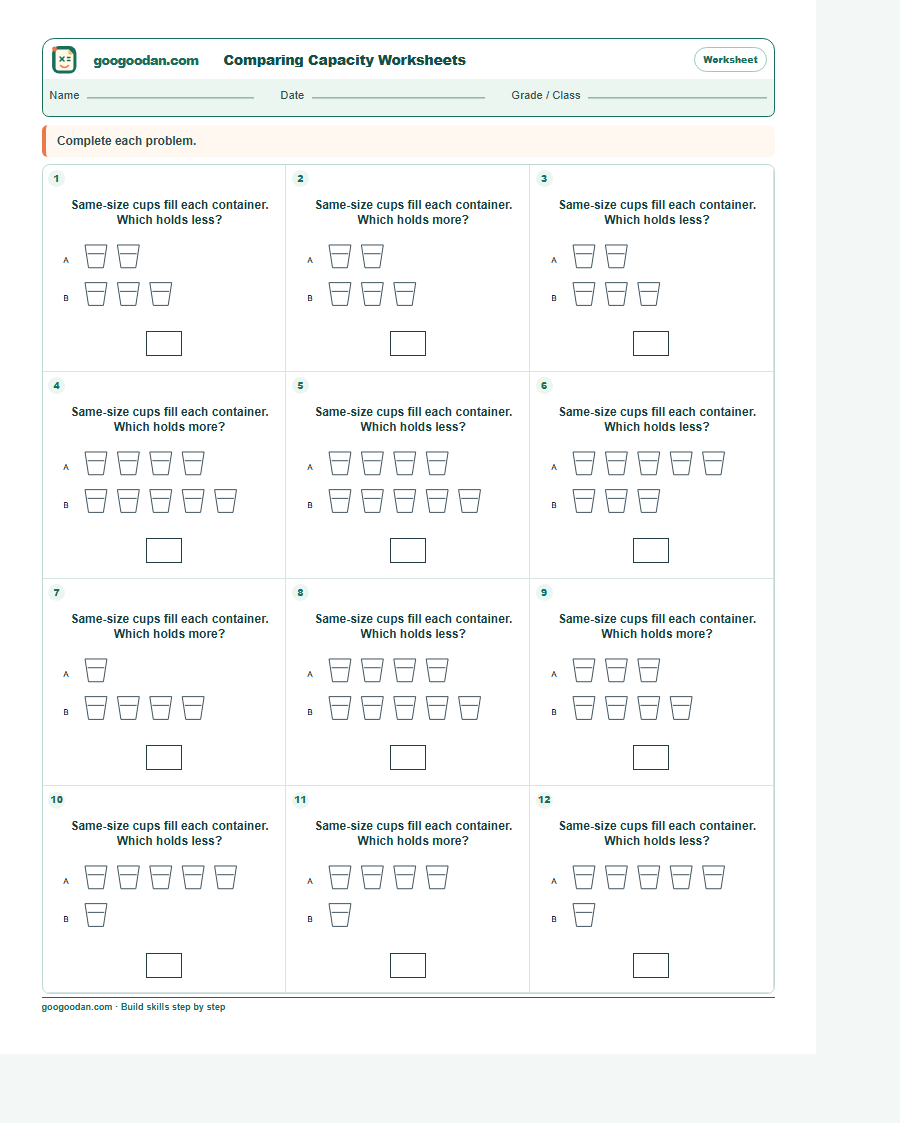 Comparing Capacity Worksheet: Count Equal-Sized Cups
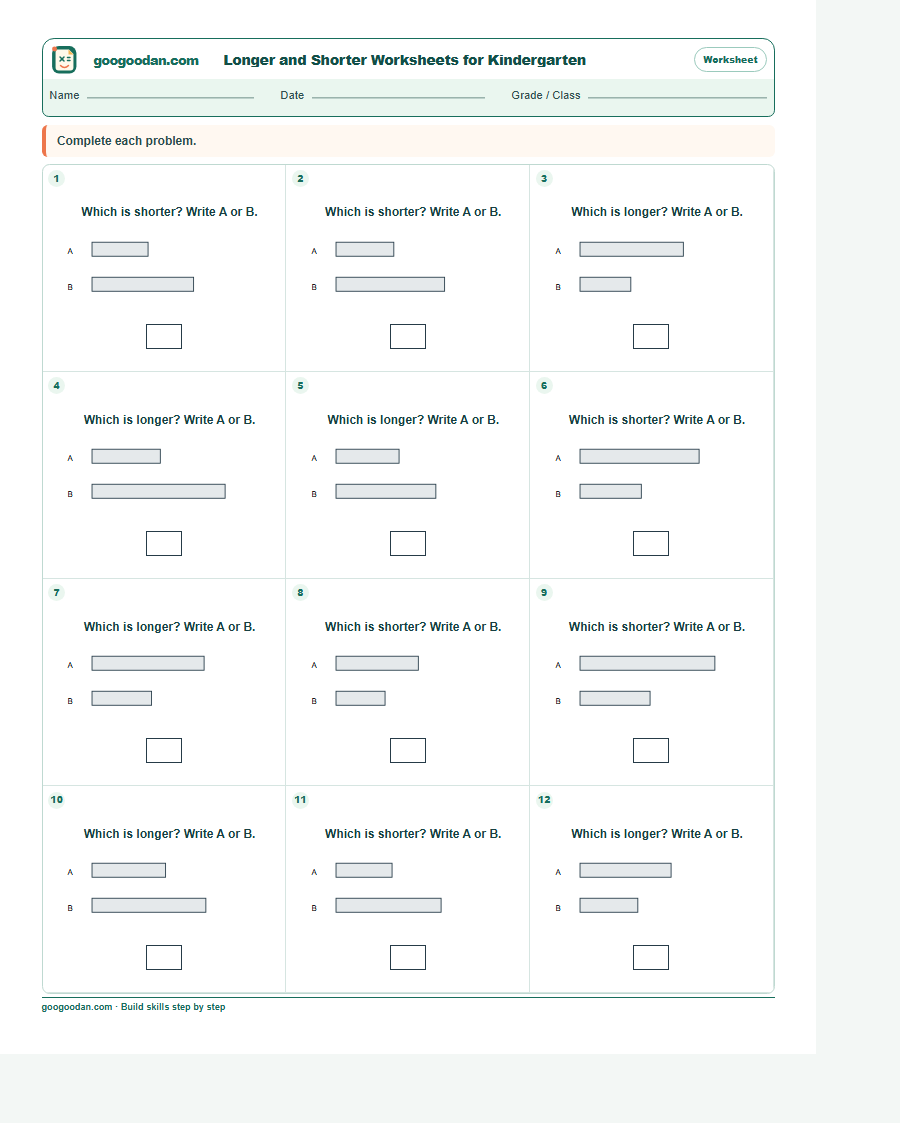 Comparing Length Worksheet: Choose Longer or Shorter
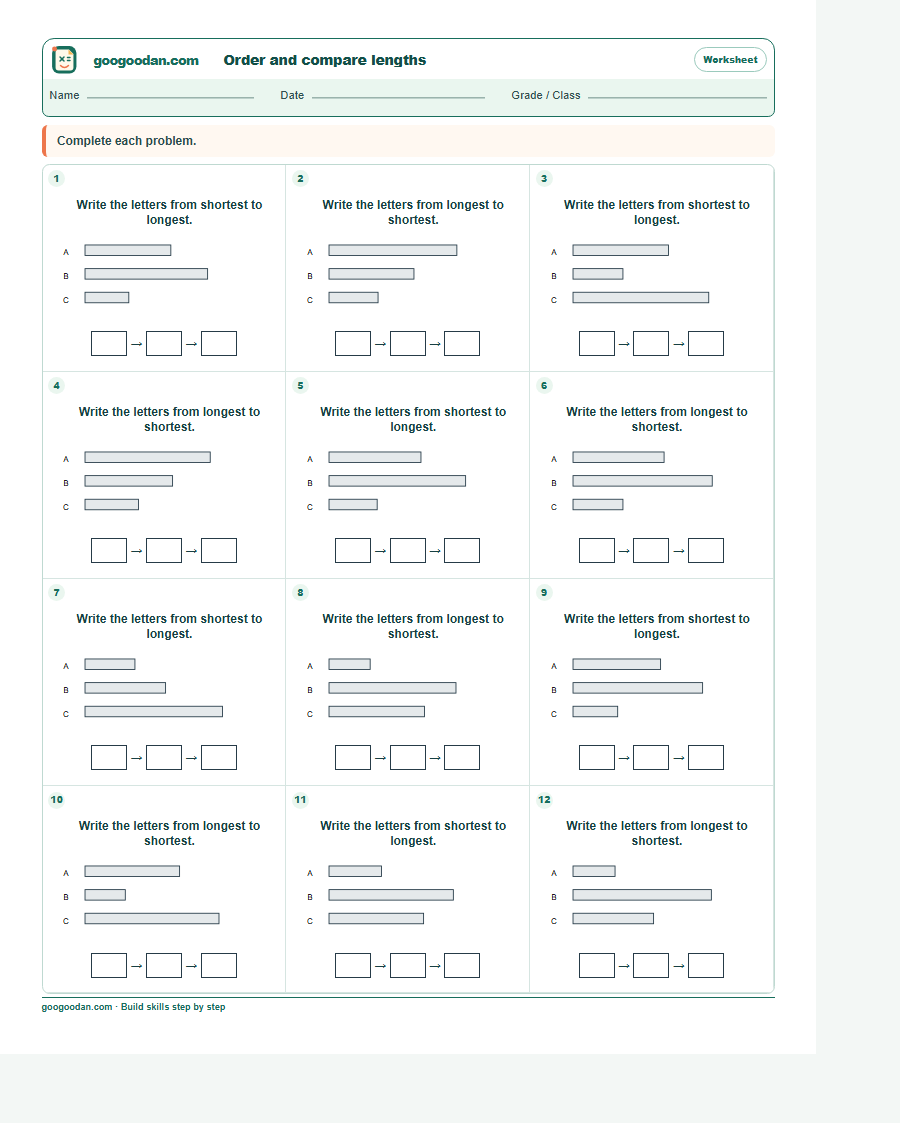 Comparing Three Lengths: Order Shortest and Longest
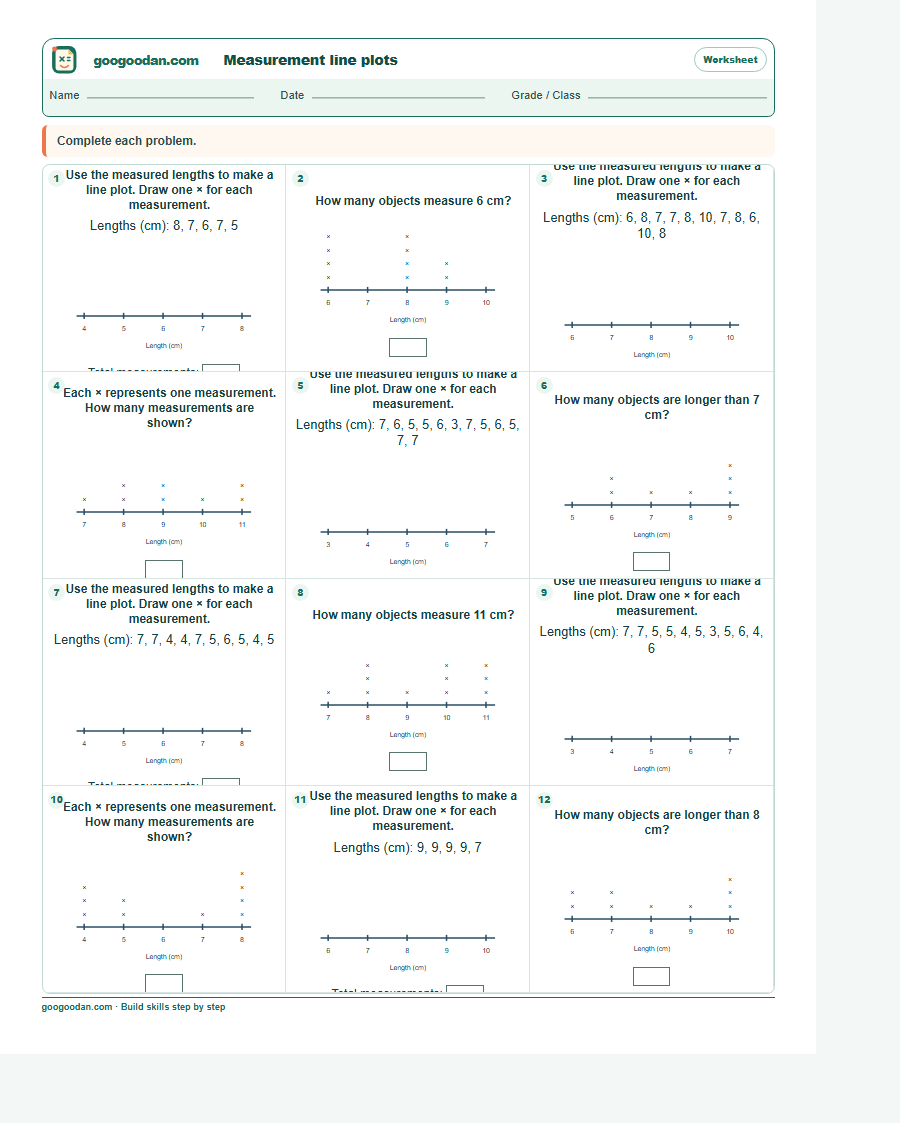 Measurement Line Plots: Draw Marks and Read Frequencies
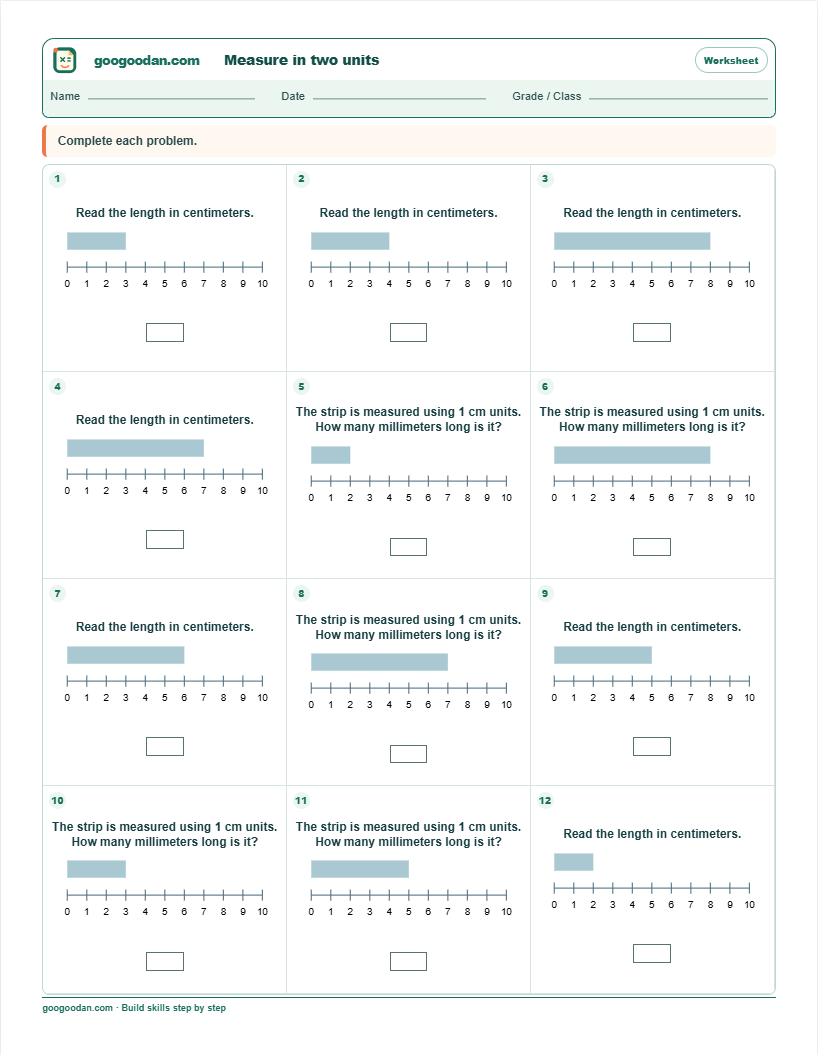 Measuring Length Worksheet: Read and Compare Two Units
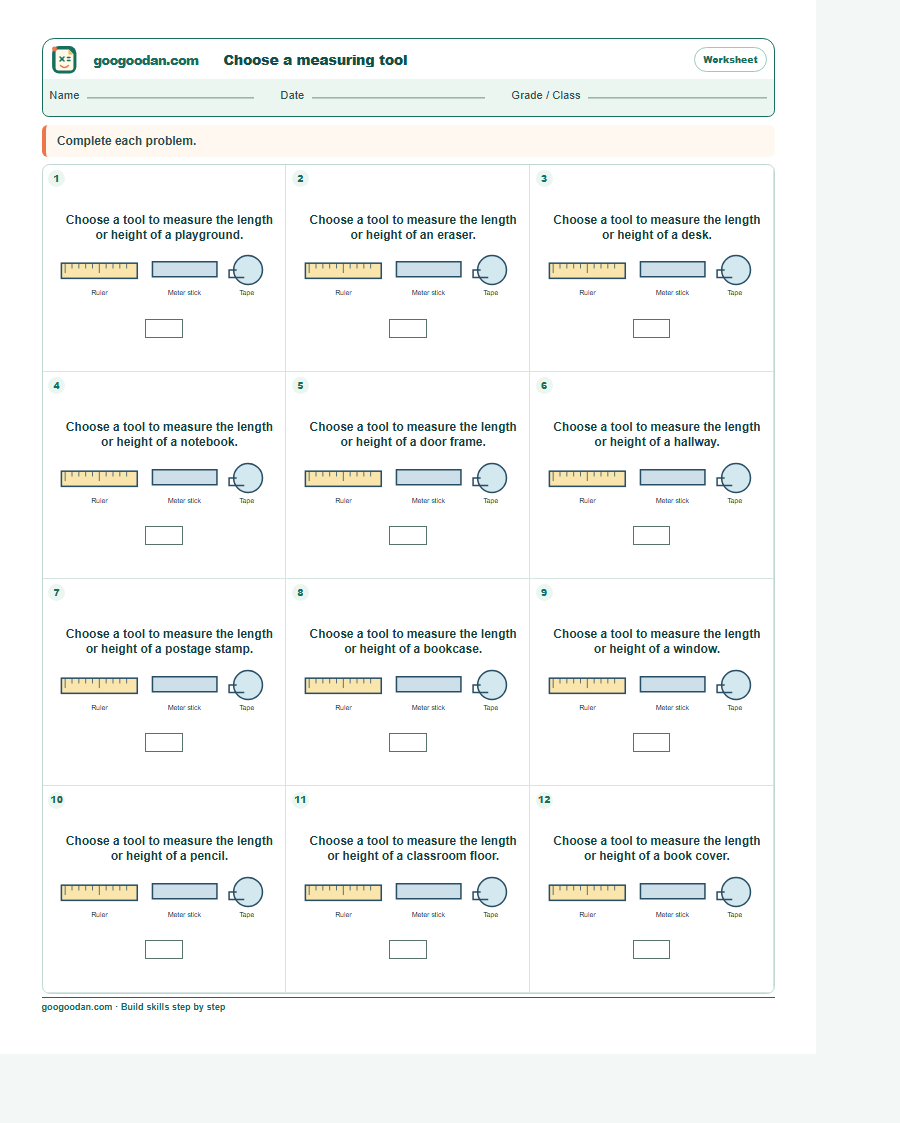 Measuring Tools Worksheet: Ruler, Tape or Metre Stick
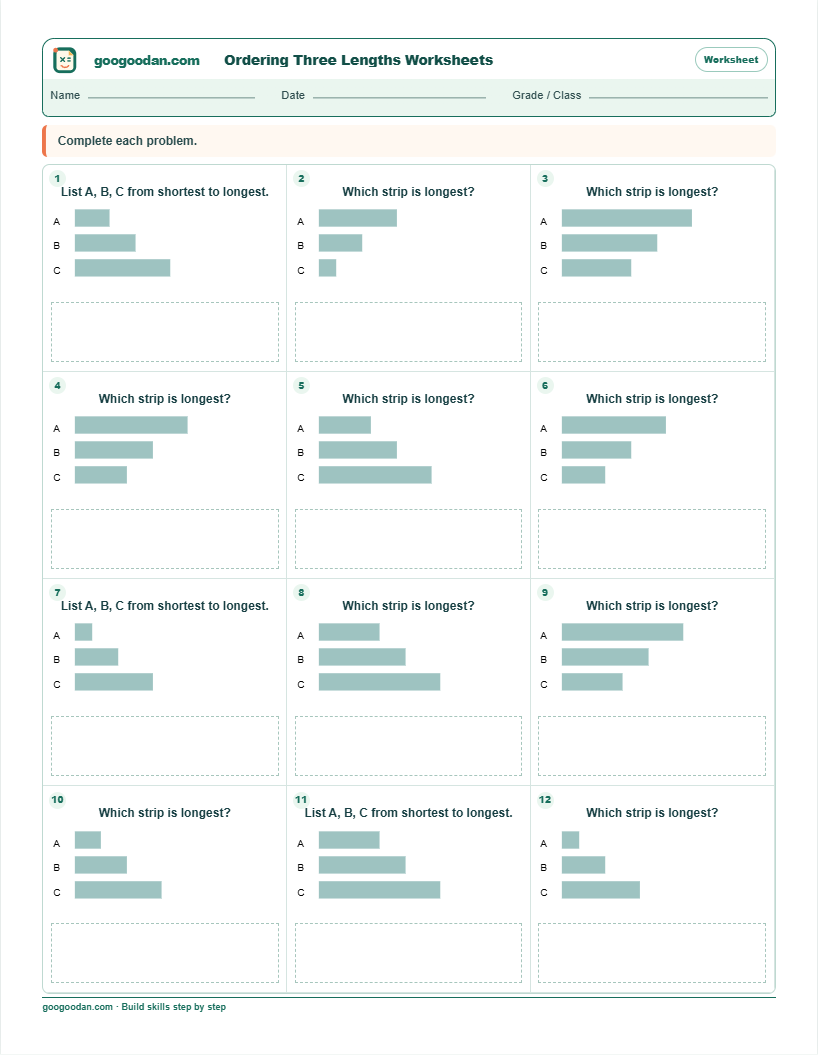 Ordering Three Lengths Worksheet: Compare Labelled Strips
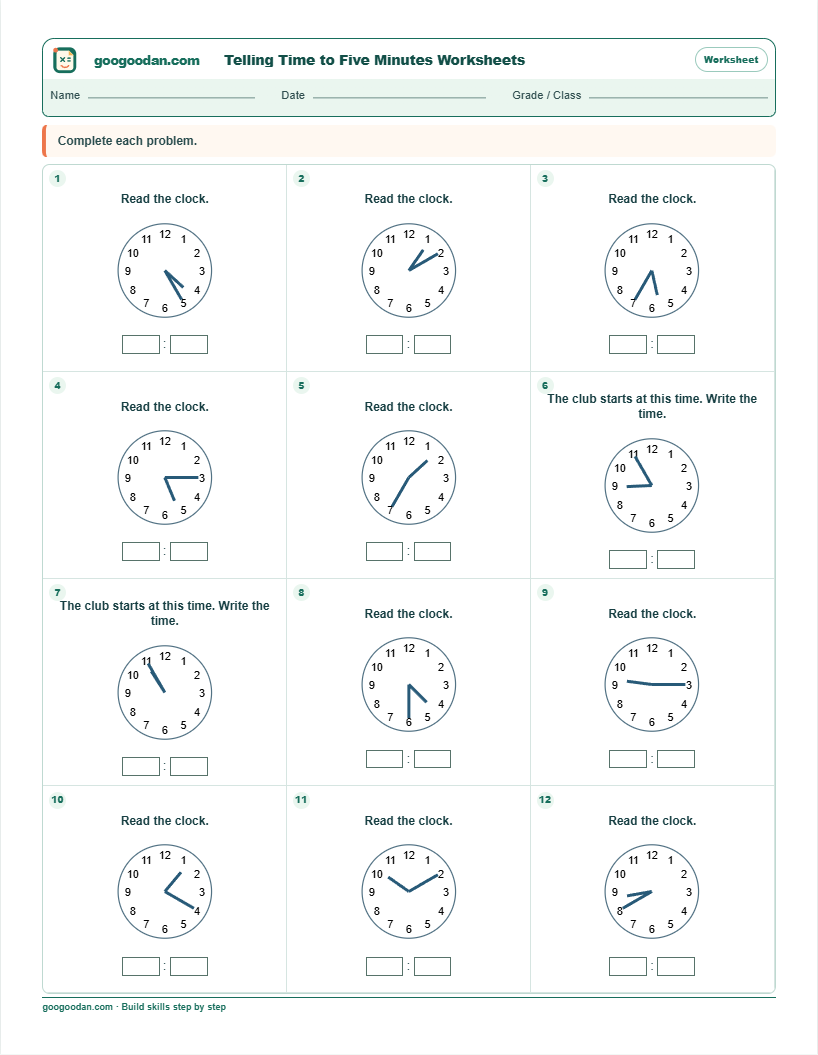 Telling Time Worksheet: Five-Minute Clock Faces
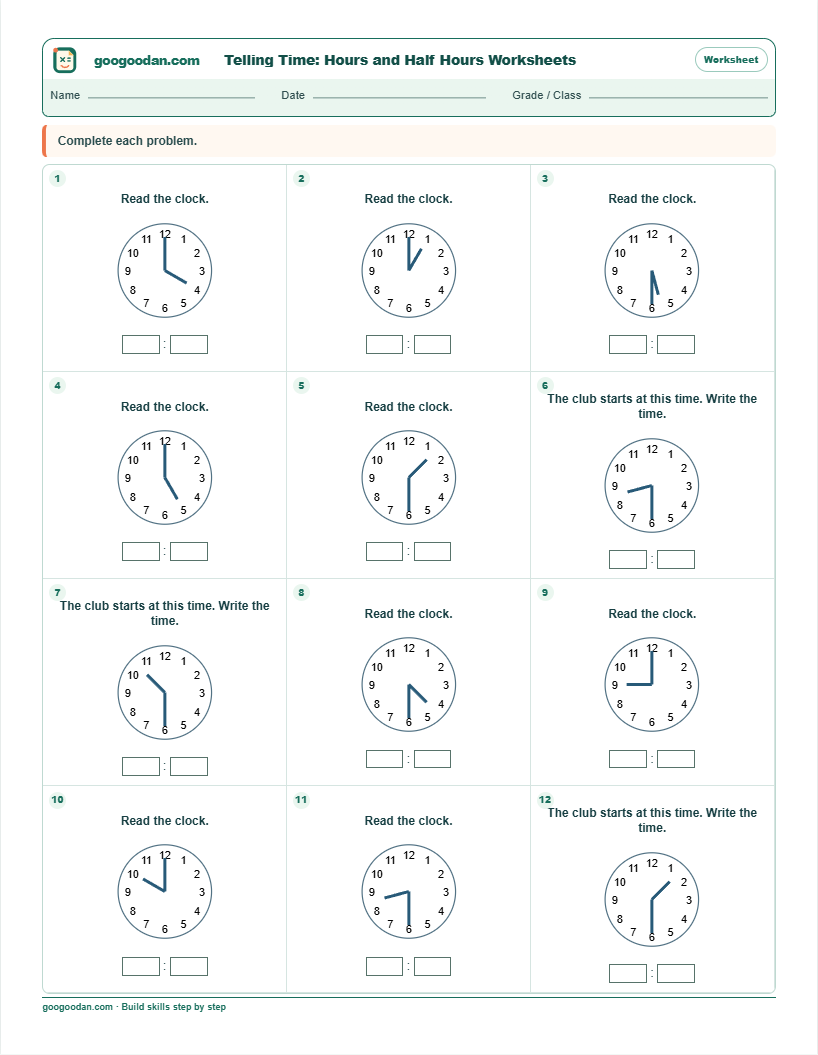 Telling Time Worksheet: Hour and Half-Hour Clock Faces
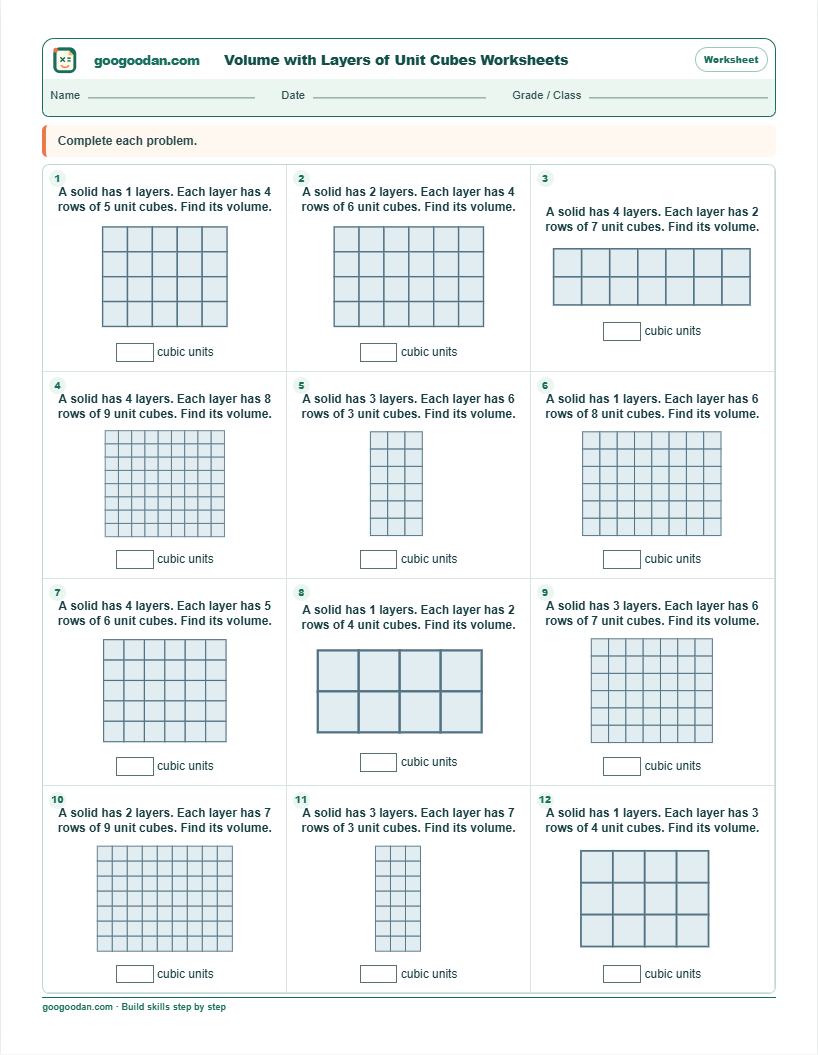 Volume Worksheet: Layers, Rows and Columns of Unit Cubes
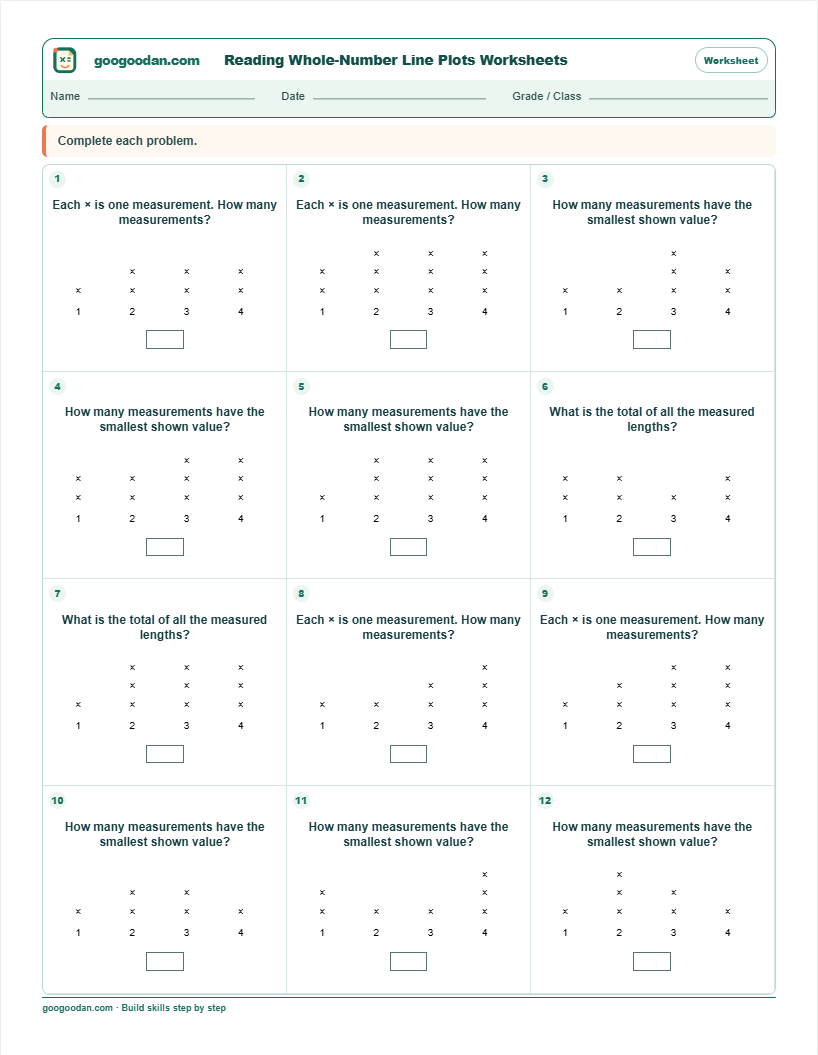 Whole Number Line Plots Worksheet: Count Measurement Marks
More worksheet collections
- Shape Worksheets for Elementary Math Practice
- Kindergarten Math Worksheets: Counting and Number Facts
- Measurement Worksheets for Elementary Math Practice
Choosing measurement practice
Before choosing a measurement page, name the quantity being considered: length, mass, capacity, time or a combination of these. Then inspect the units and picture in the worksheet preview. A task about a scale may require careful reading of marks; a conversion page asks what those marks mean in another unit. If a learner is unsure whether to multiply or divide, begin with a real object, such as a meter stick or a one-liter container, and describe the size represented by one unit.
Keep units beside every value
Open one worksheet and note whether a ruler, clock or measuring container is needed. Choose Worksheet for the attempt and Answer Key to check after working. When a question uses more than one unit, write each unit beside the number before doing any arithmetic. This small habit makes an incomplete conversion easier to spot. Fresh numbers can support a repeat attempt, but change the type of measurement only when the learner can explain the relationship used in the first set. When printing, use Letter paper for these Canadian worksheets.
Convert a length in two steps
For example, 3 meters 42 centimeters is 342 centimeters because each meter contains 100 centimeters. First rewrite the meters as 300 centimeters, then add the remaining 42 centimeters. To compare 2.4 meters with 235 centimeters, convert 2.4 meters to 240 centimeters; 240 is greater than 235. The same approach can check a sum of lengths: convert to one unit, add, then decide whether the result should be restated in meters and centimeters.
Common errors to notice
A frequent mistake is multiplying by 100 when the value should be divided, or changing the number while leaving the unit unchanged. Use a benchmark: a length written in centimeters should have a larger numeral than the same length written in meters. On a drawn scale, identify the value of each interval before counting marks. For elapsed time, count forward from the start to the end instead of treating the two clock readings as ordinary decimal numbers. Write a final unit with the answer.