Geometry and Shape Worksheets for Elementary Math Practice
Build confidence with flat and solid shapes by naming them, noticing their features and comparing how they are put together. These activities suit elementary learners working with shape names and properties.
Choose a worksheet to open the printable practice and answer key. The collection includes 17 worksheets for elementary learners.
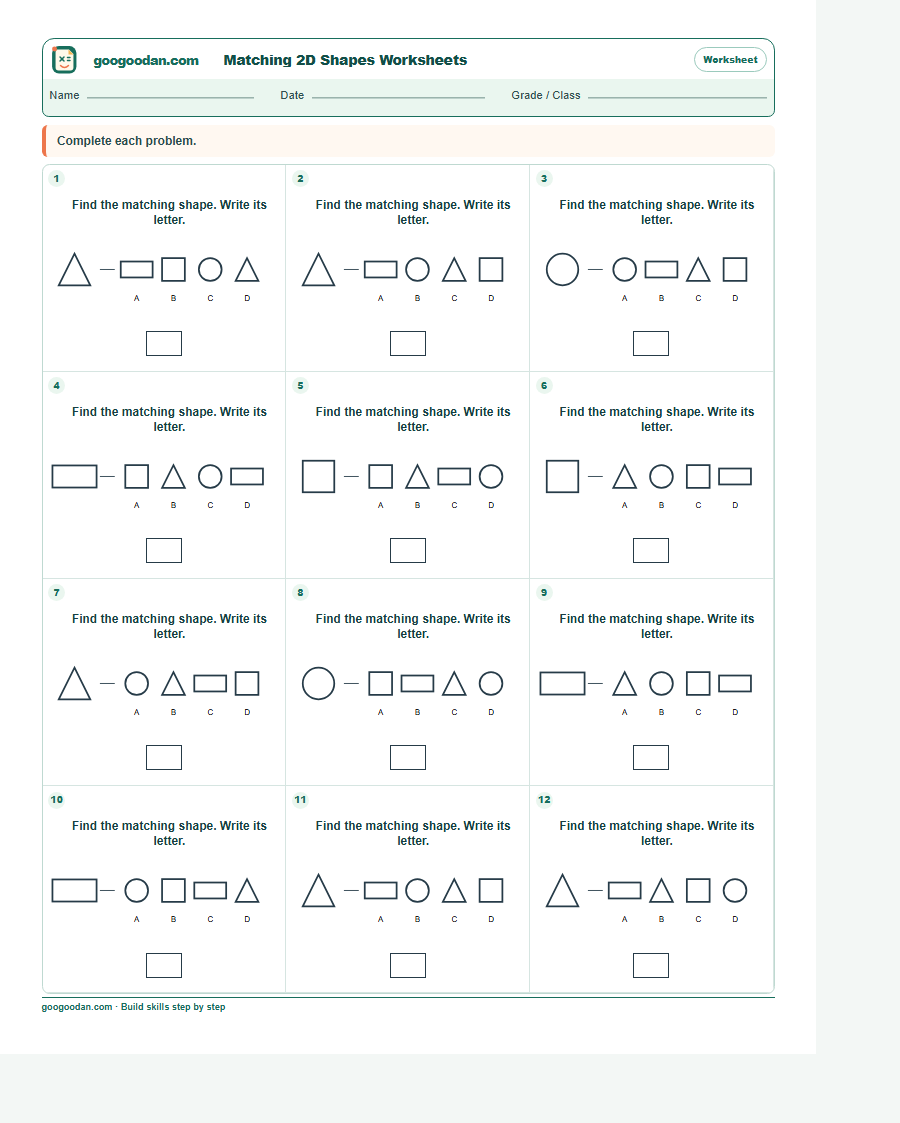 2D Shape Matching Worksheet: Choose the Matching Letter
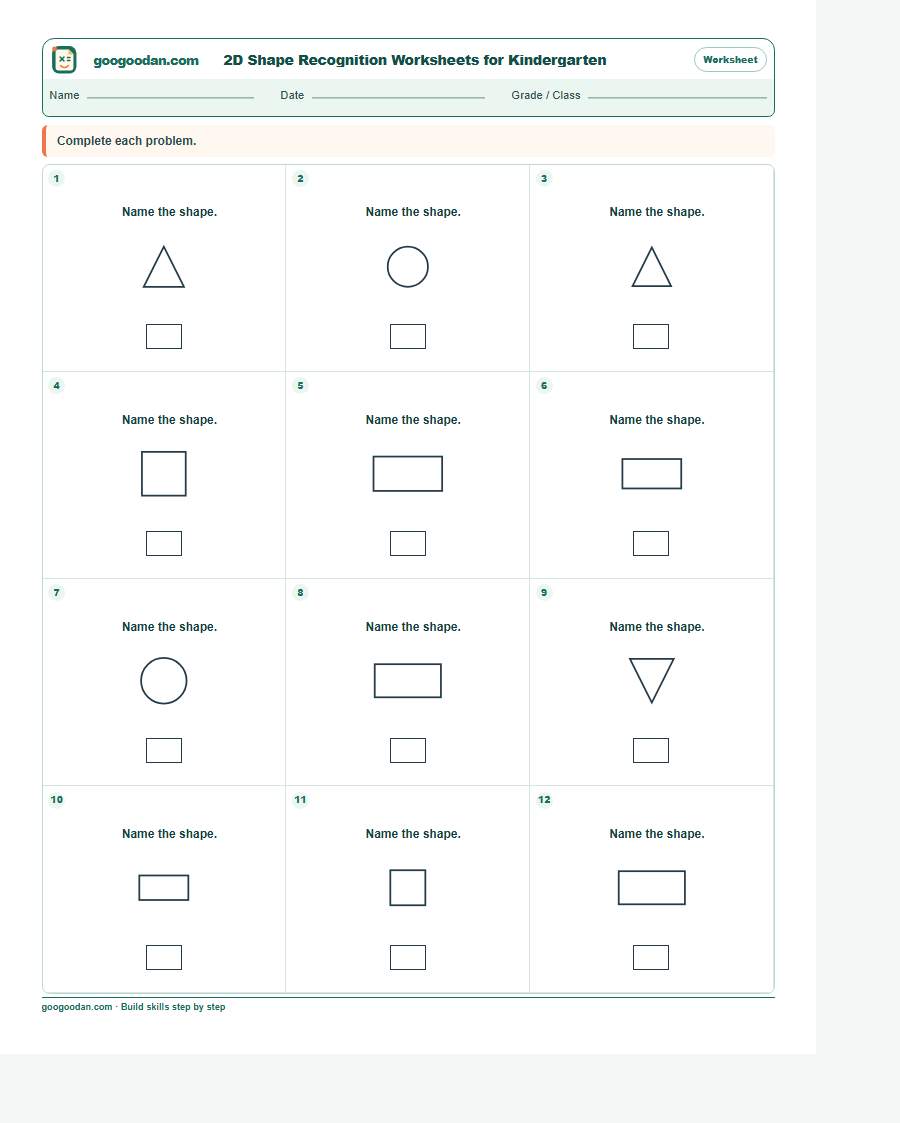 2D Shape Recognition Worksheet: Write the Shape Name
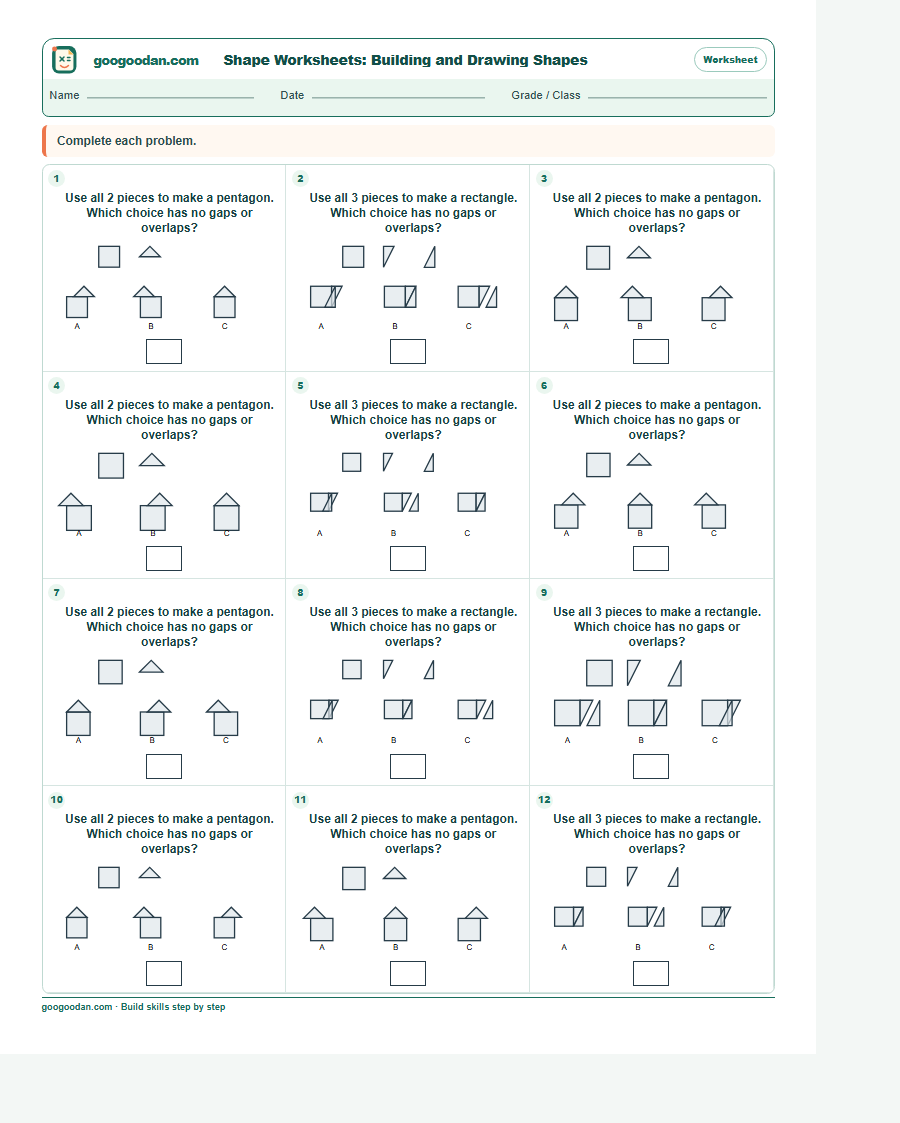 Building 2D Shapes: Choose the Correct Piece Arrangement
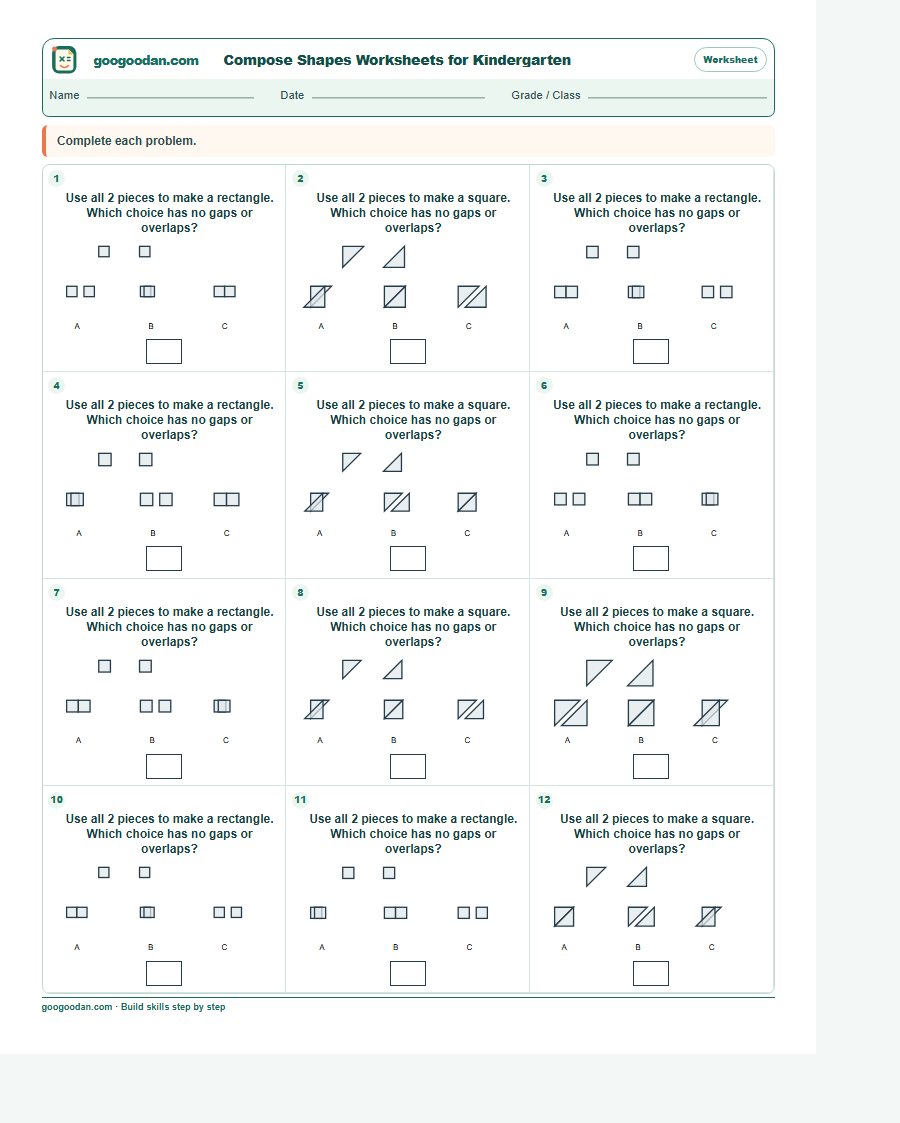 Compose 2D Shapes Worksheet: Join Two Matching Pieces
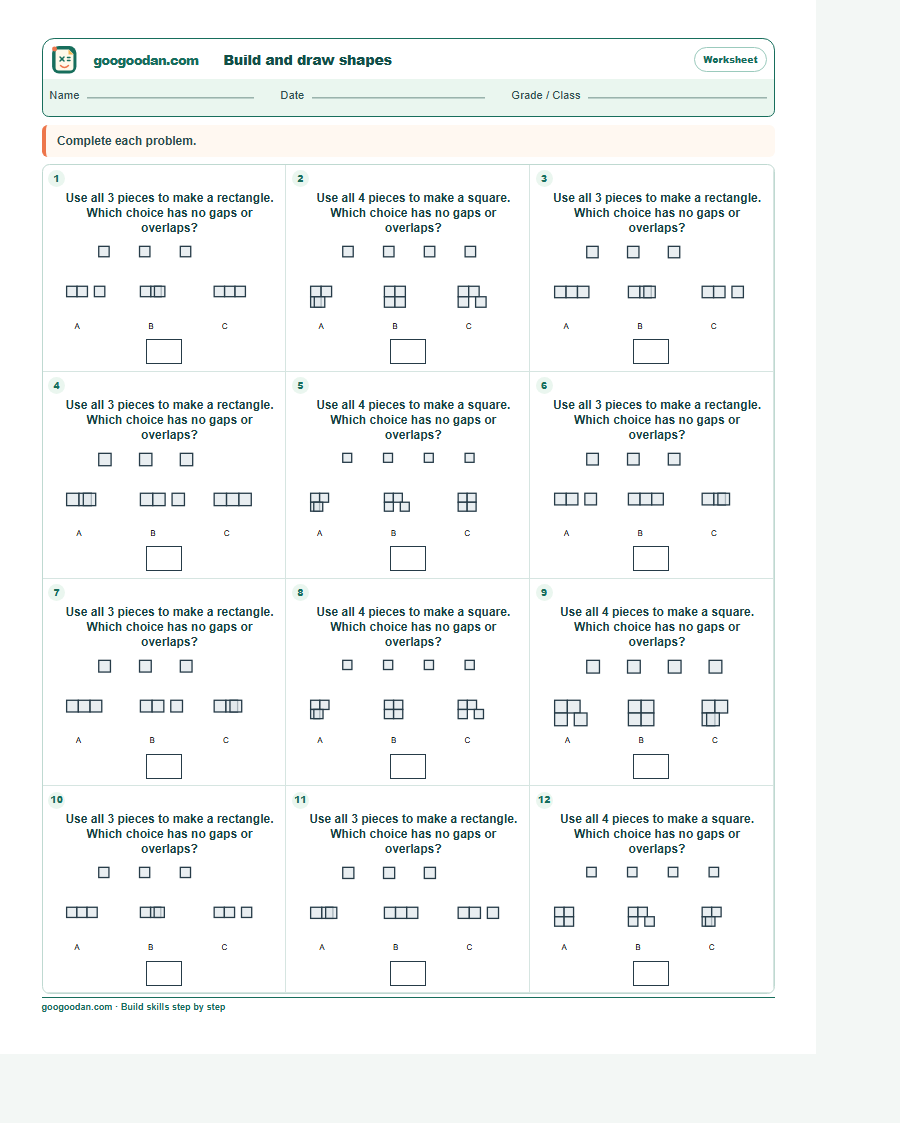 Compose Shapes Worksheet: Join Three and Four Pieces
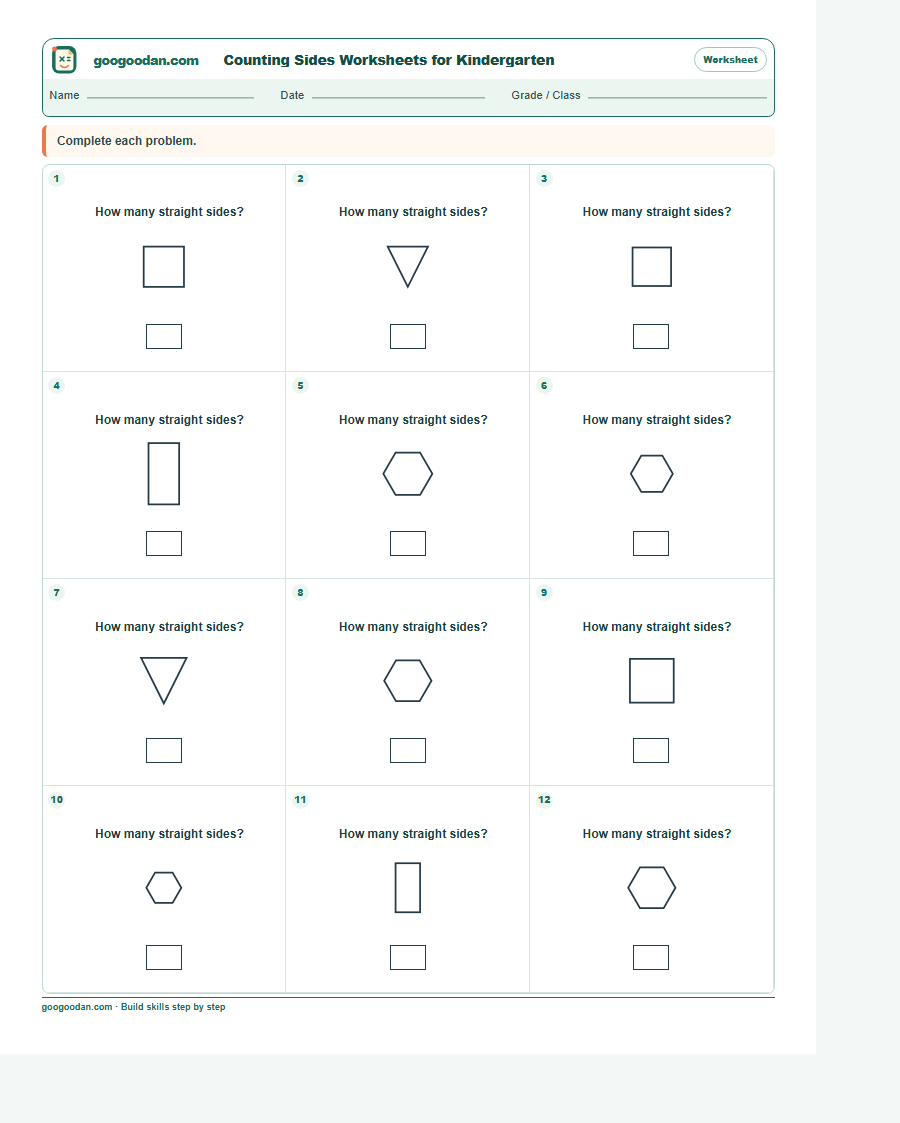 Counting Sides Worksheet: Straight Edges of 2D Shapes
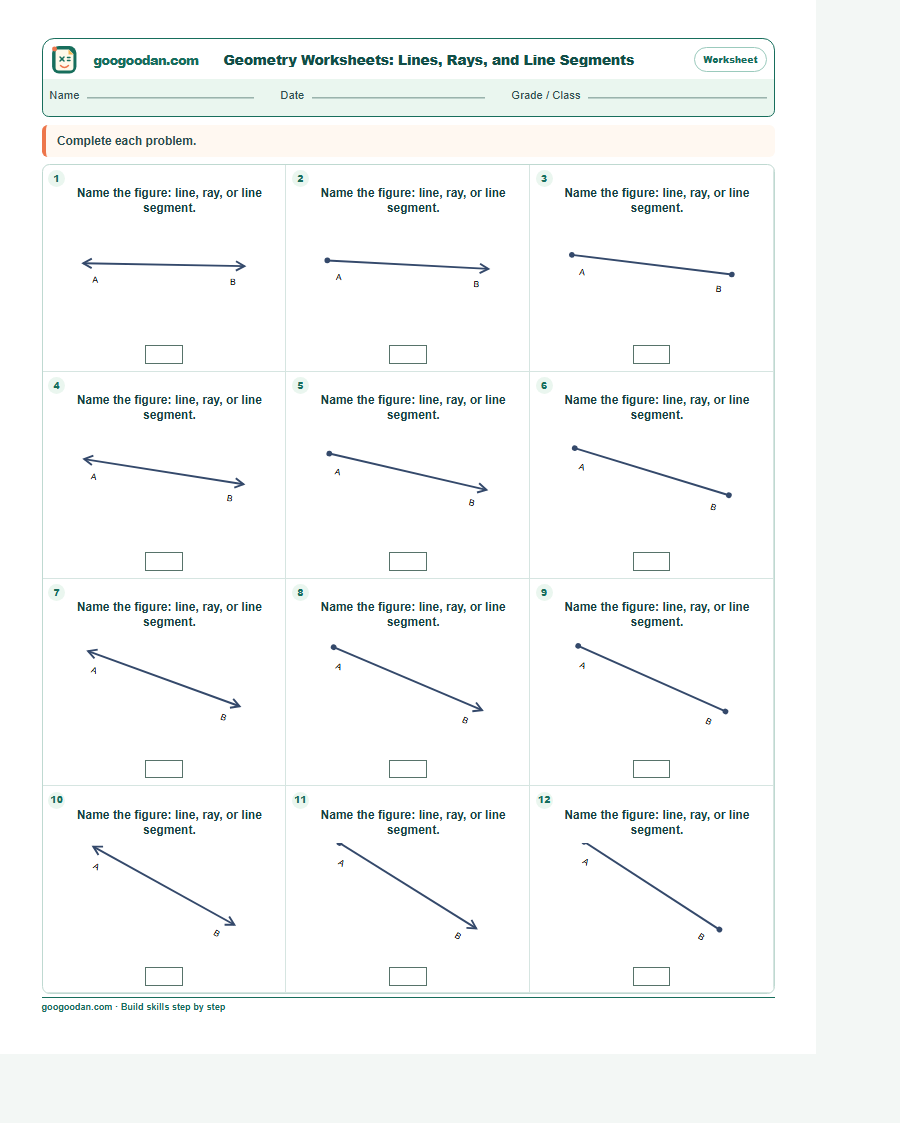 Geometry Worksheet: Identify Lines, Rays and Segments
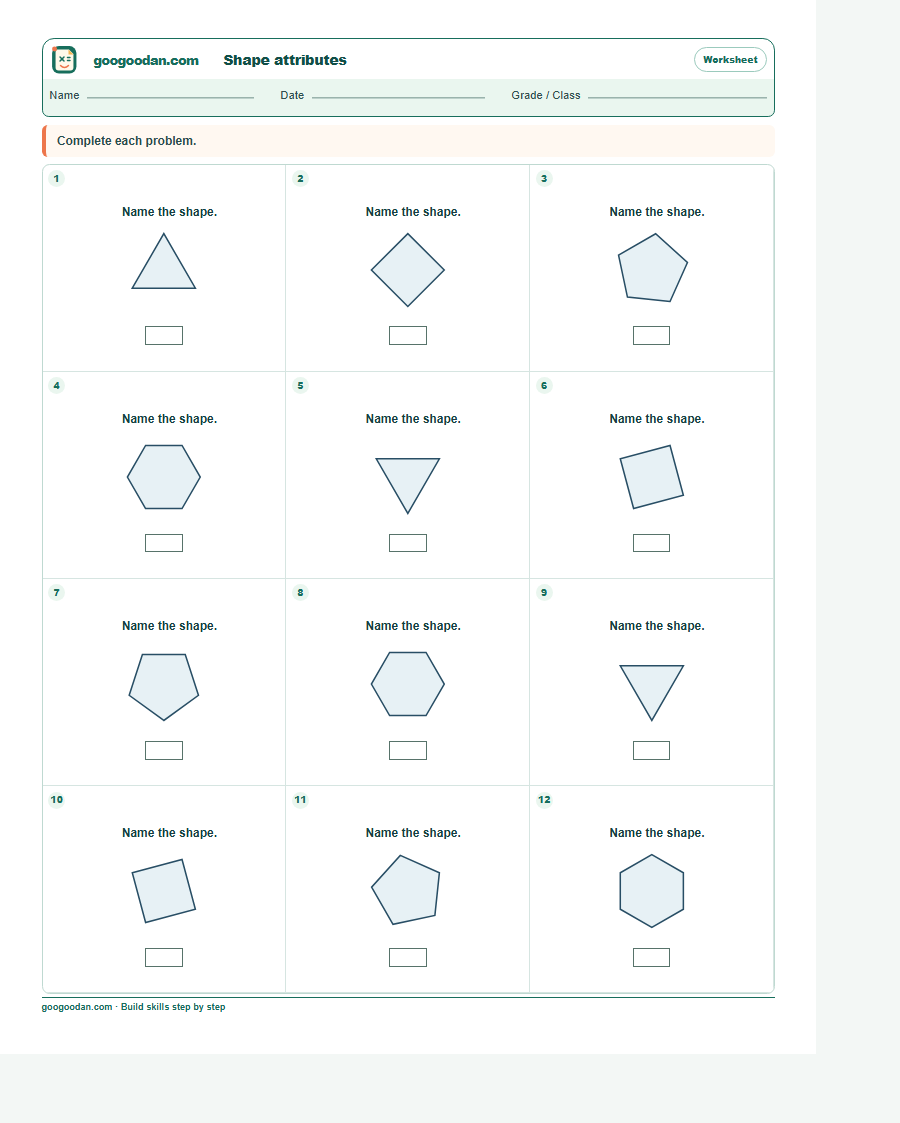 Identifying Shapes Worksheet: Names and Attributes
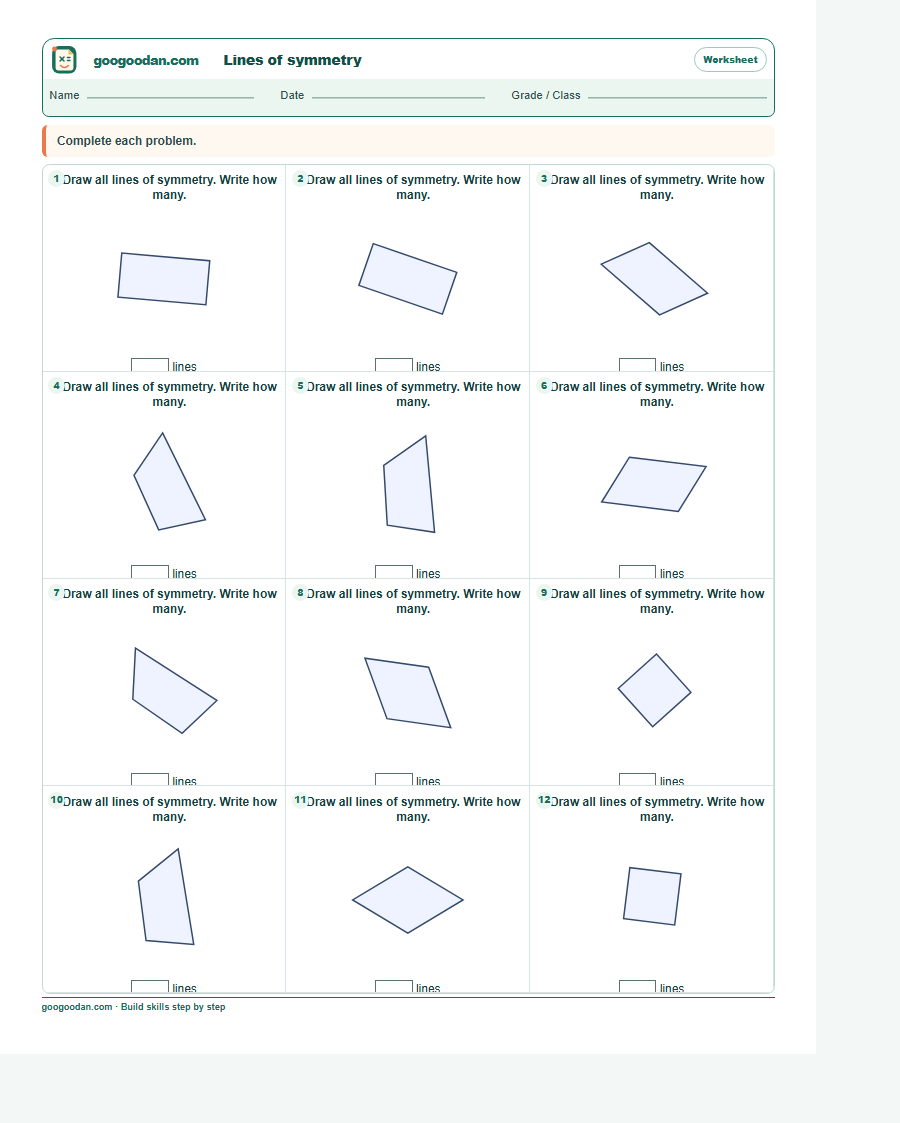 Lines of Symmetry Worksheet: Draw and Count All Lines
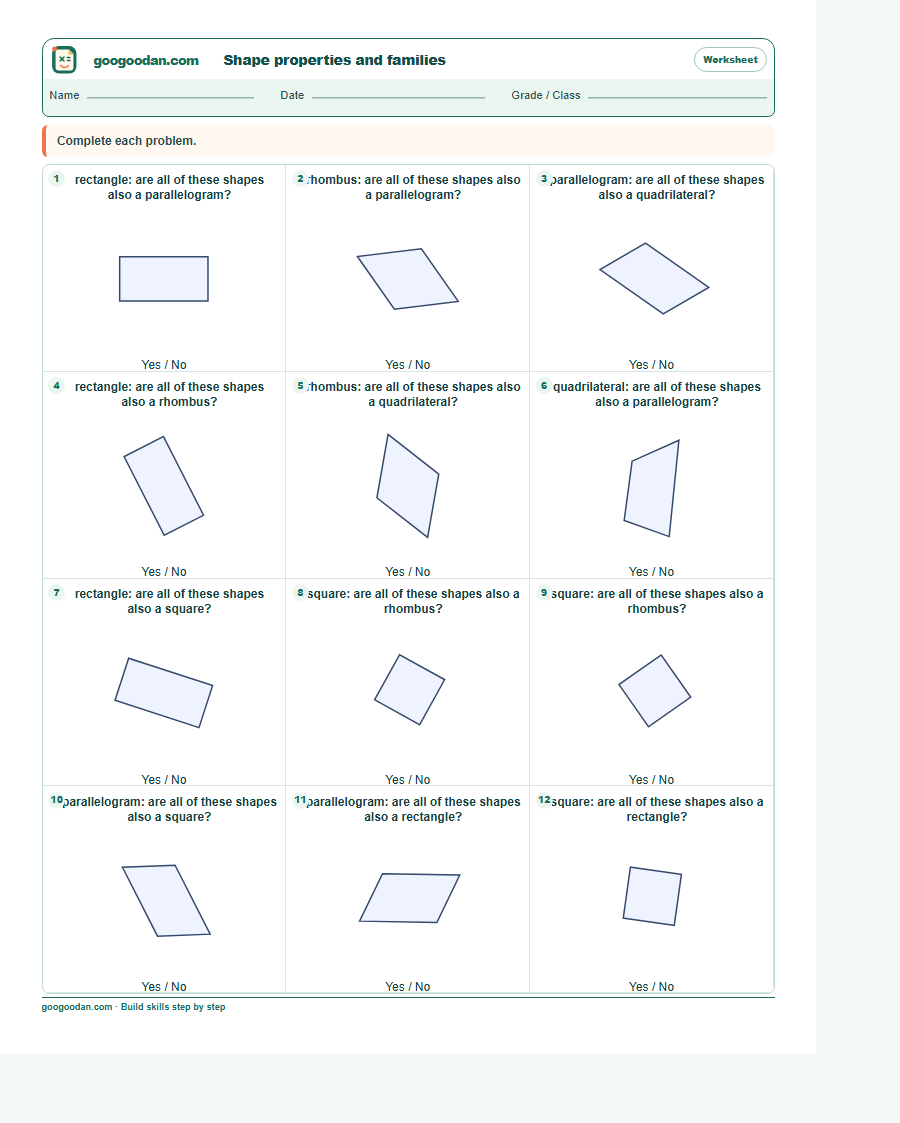 Quadrilateral Properties: Which Shape Families Include It?
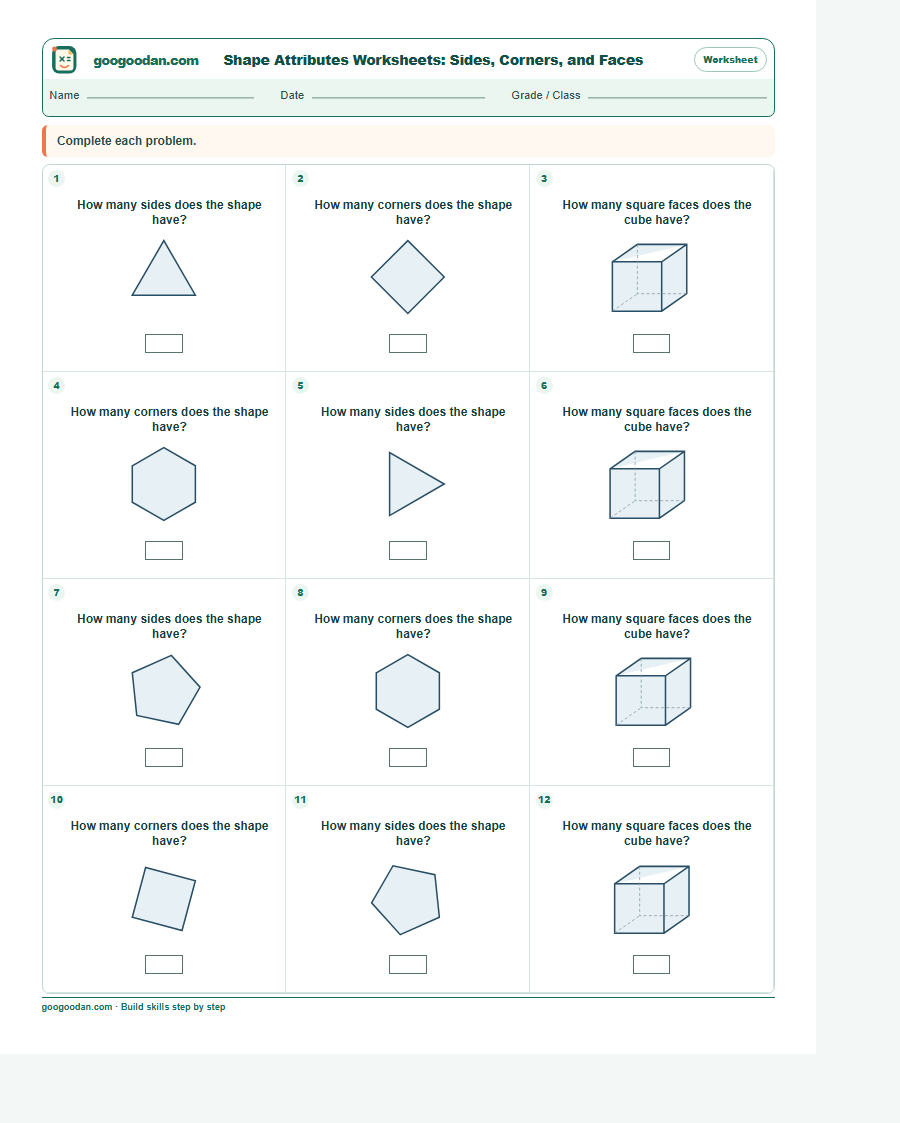 Shape Attributes Worksheet: Count Sides, Corners and Faces
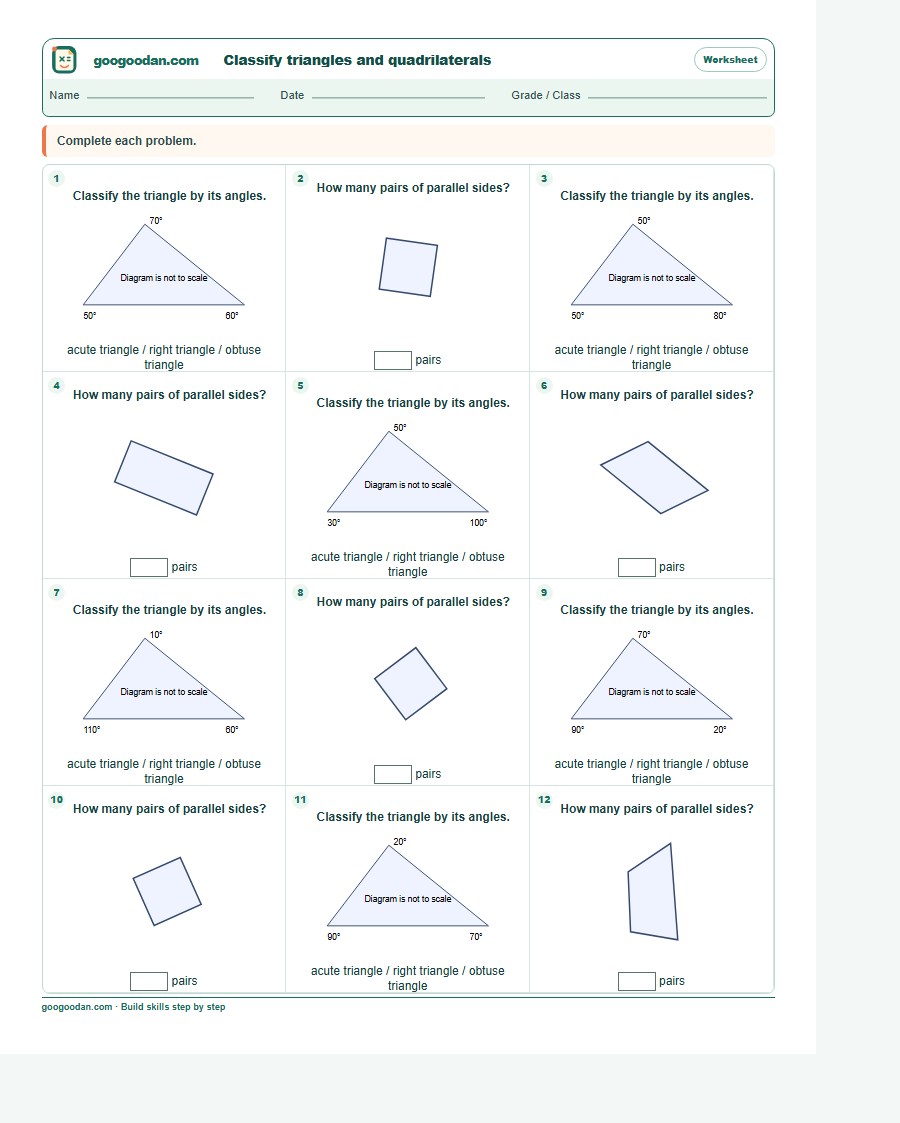 Shape Classification: Triangle Angles and Parallel Sides
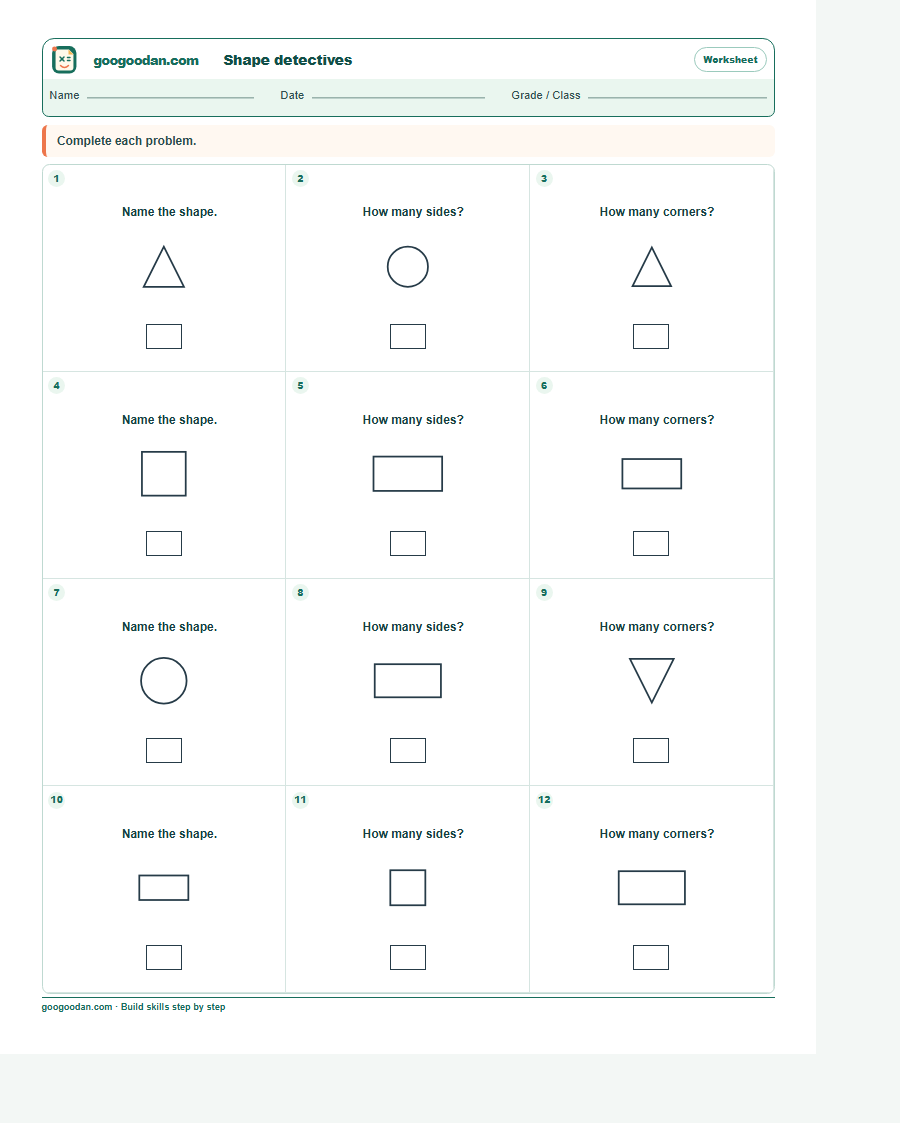 Shape Names and Attributes: Sides, Corners and Faces
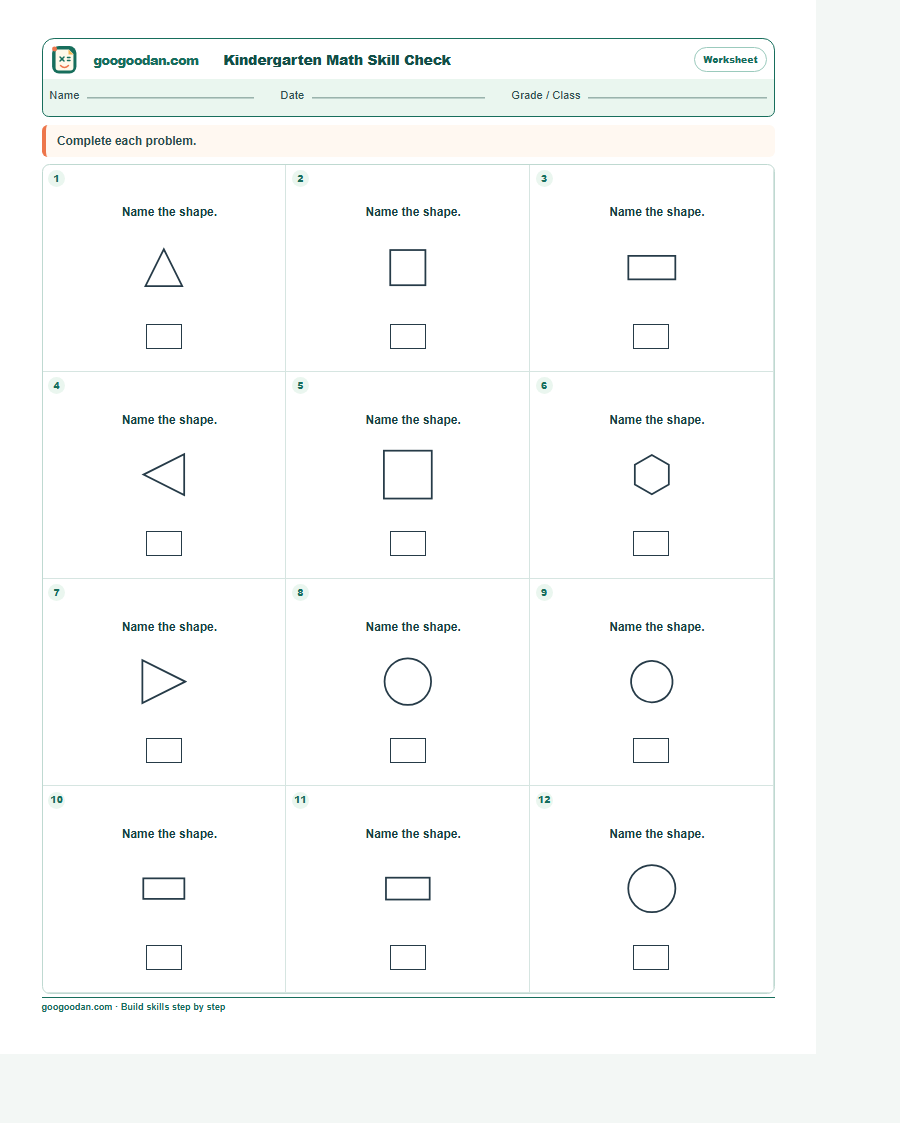 Shape Skill Check Worksheet: Identify Flat Shapes
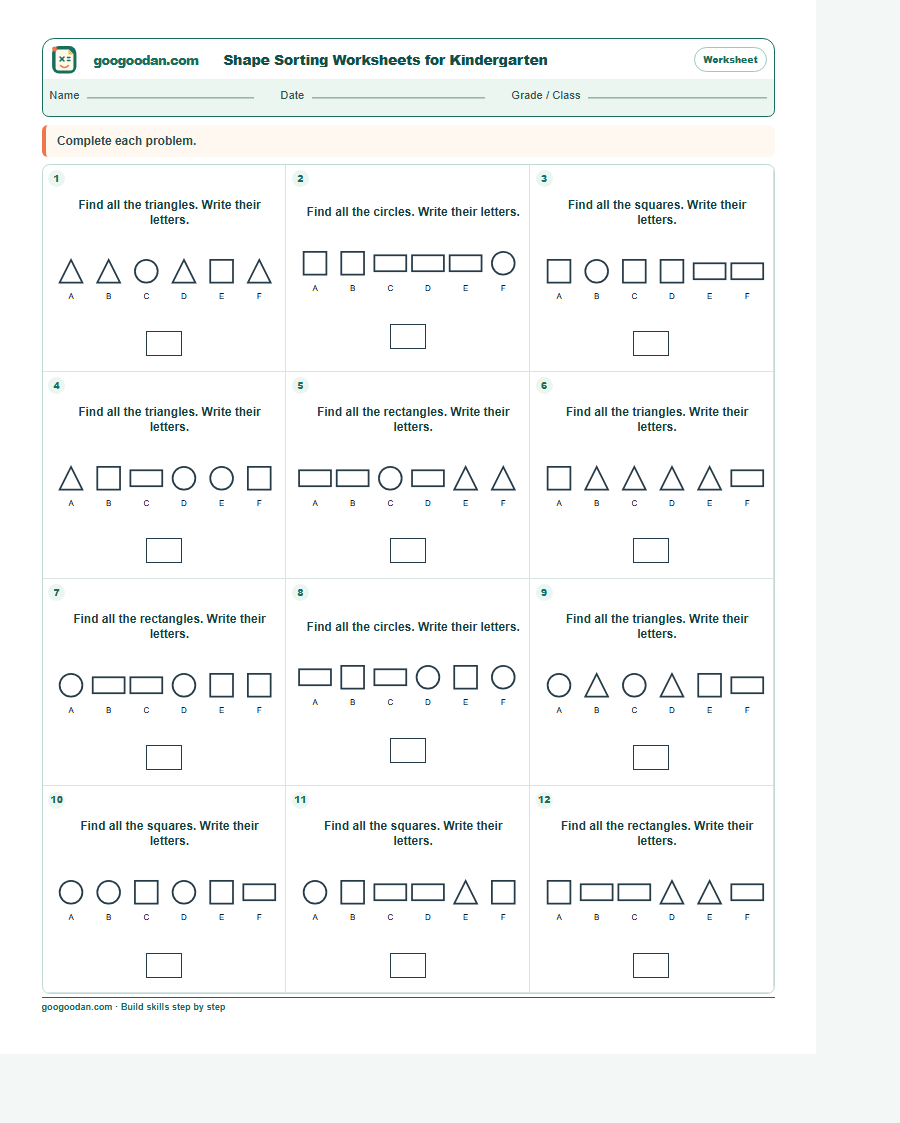 Sorting 2D Shapes Worksheet: Find All Matching Shapes
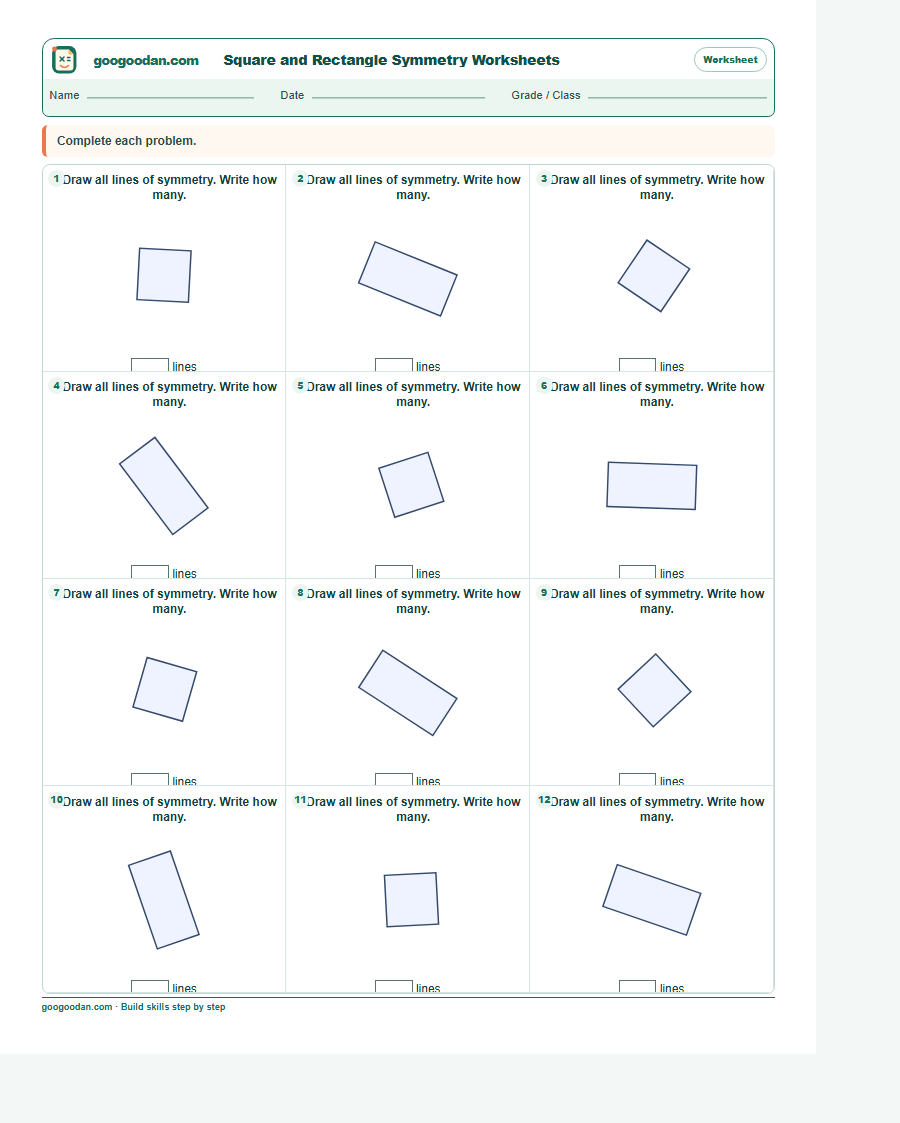 Square and Rectangle Symmetry: Draw Every Symmetry Line
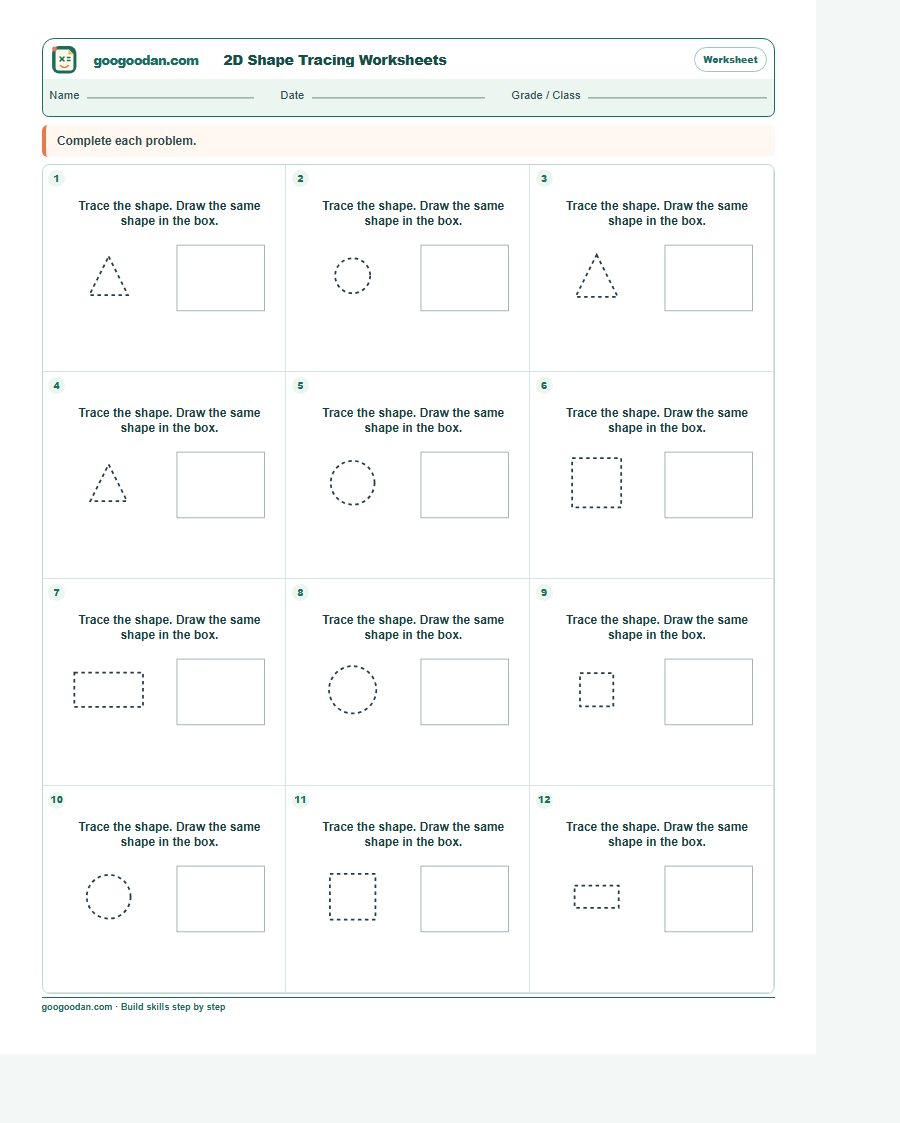 Trace and Draw 2D Shapes Worksheet: Copy the Outline
More worksheet collections
- Measurement Worksheets for Primary Math Practice
- Reception Math Worksheets: Counting and Number Facts
- Geometry and Shape Worksheets for Elementary Math Practice
- Measurement Worksheets for Primary Math Practice
- Reception Math Worksheets: Counting and Number Facts
- Kindergarten Math Worksheets: Counting and Number Facts
Choosing shape and geometry practice
A geometry worksheet can ask a learner to name a shape, compare its features, sort examples, or describe how it can be changed. Choose the page that matches the action rather than relying on the word geometry alone. If vocabulary is new, start by pointing to sides, corners, faces or edges in a picture. A sorting activity is helpful when the learner can explain the rule for each group. A drawing task adds another step because the stated properties must be followed while making the shape.
Use a feature list to sort
Preview the diagrams and check whether a ruler or pencil is needed. Choose Worksheet for the activity and use Answer Key after the learner has described a reason. For each shape, make a small feature list: number of sides, equal lengths, right angles, or lines of symmetry. This makes comparisons more precise than saying a shape looks wider or more familiar. If the worksheet includes solids, use a small box or can as a real example and identify its flat faces and the edges where they meet. Print on Letter paper when preparing a copy of the worksheet.
Test a rule with a square
A square has four equal sides and four right angles. A rectangle has four right angles, but its opposite sides need to be equal rather than all four. Since a square meets the rectangle conditions, it belongs to both categories. Turn the square so that one corner points upward and check whether its features change; its orientation changes, but its side lengths and angles do not. Stating the rule before sorting helps the learner see why the example belongs in a category.
Common errors to notice
Do not classify a shape only by how it is turned or by whether it matches a familiar picture. Count each boundary segment once and distinguish a vertex from an edge. For a three-dimensional object, a face is flat while an edge is where two faces meet. Some diagrams are illustrative and not drawn to scale, so use the marked information instead of measuring the screen or page. Ask the learner to point to evidence for a label; that explanation often reveals a mistaken rule even when the selected name happens to be right.