Kindergarten Math Worksheets: Counting and Number Facts
These early activities focus on counting small groups, recognising numerals and building number bonds. Number facts stay within 10 to support first steps in addition and subtraction.
Choose a worksheet to open the printable practice and answer key. The collection includes 13 worksheets for Canadian primary learners.
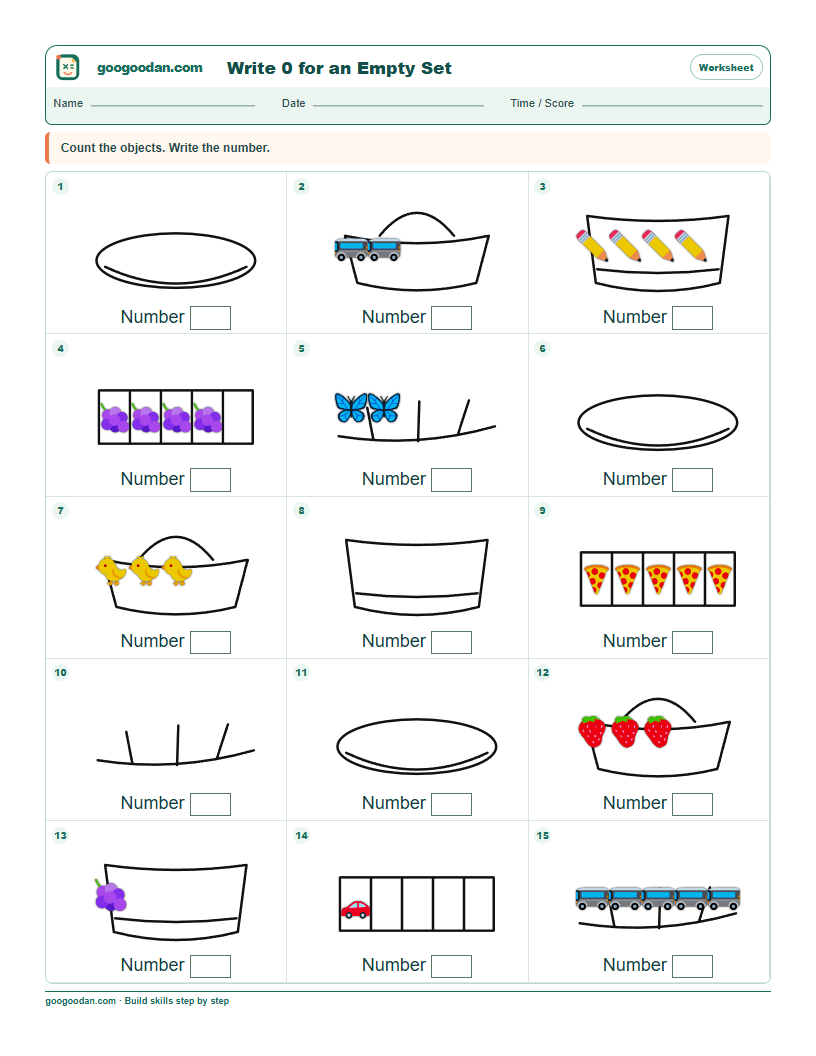 Counting 0–5: Empty and Filled Sets Worksheet — Count Pictures
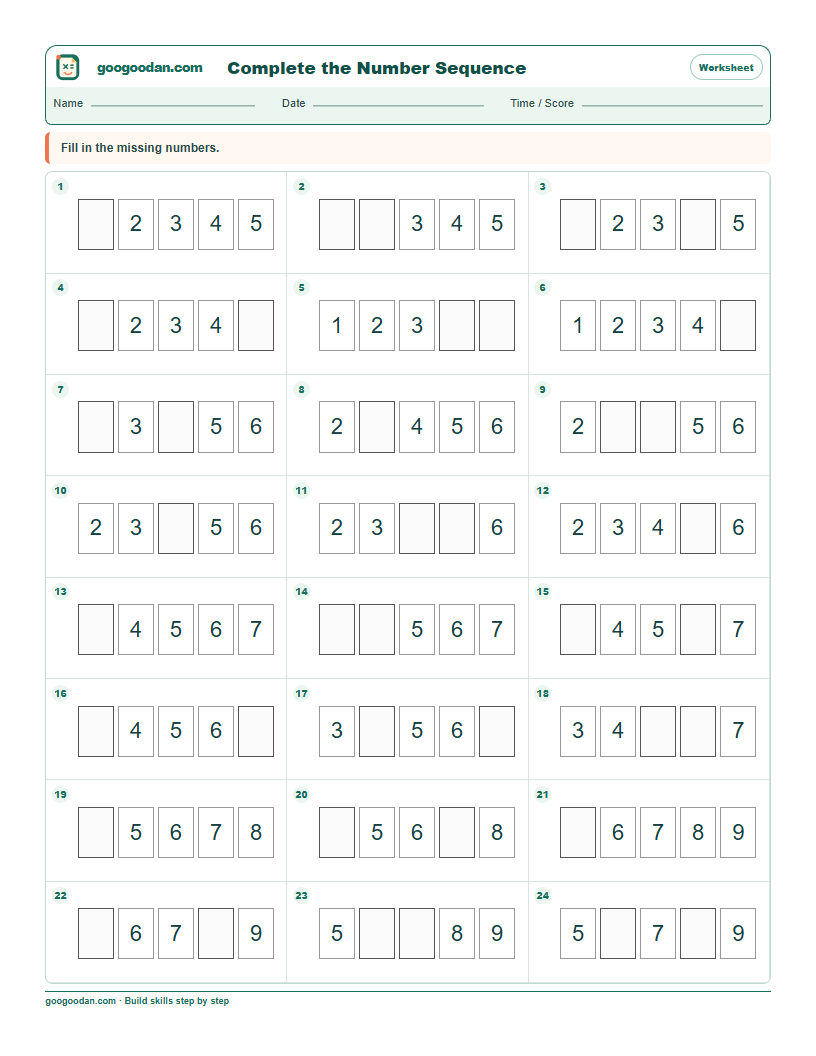 Counting 1–9 Worksheet — Complete the Number Sequence
 Counting 1–9 Worksheet — Draw the Given Number
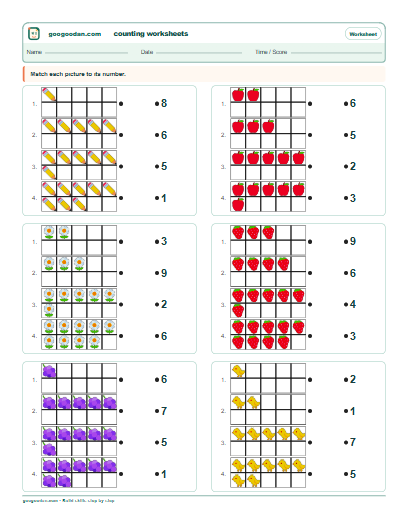 Counting 1–9 Worksheet — Match Pictures and Numbers
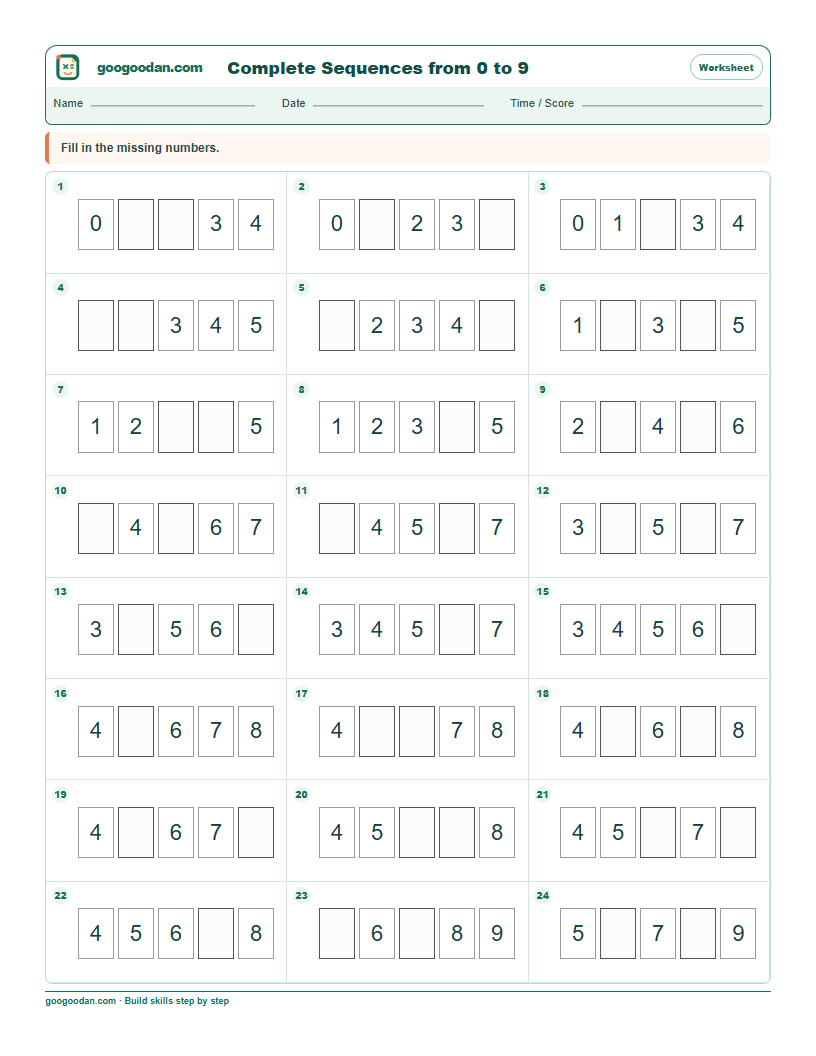 Zero and Numbers 0–9 Worksheet — Complete Sequences from 0 to 9
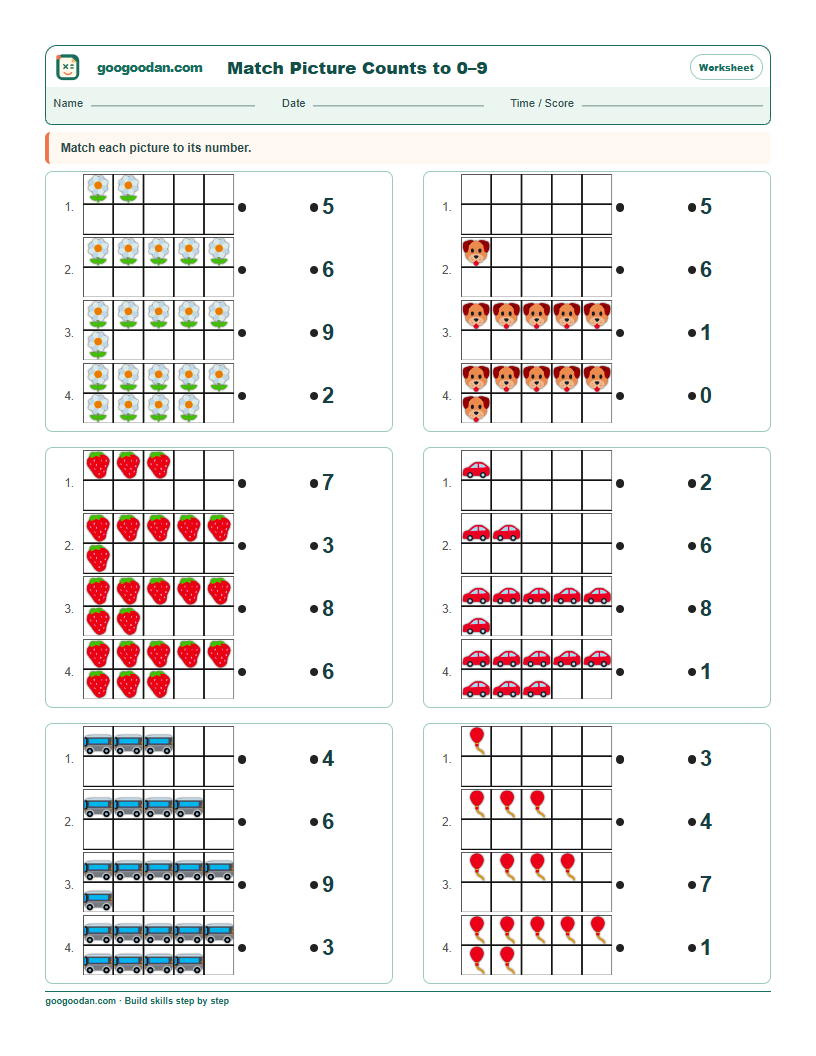 Zero and Numbers 0–9 Worksheet — Match Picture Counts to 0–9
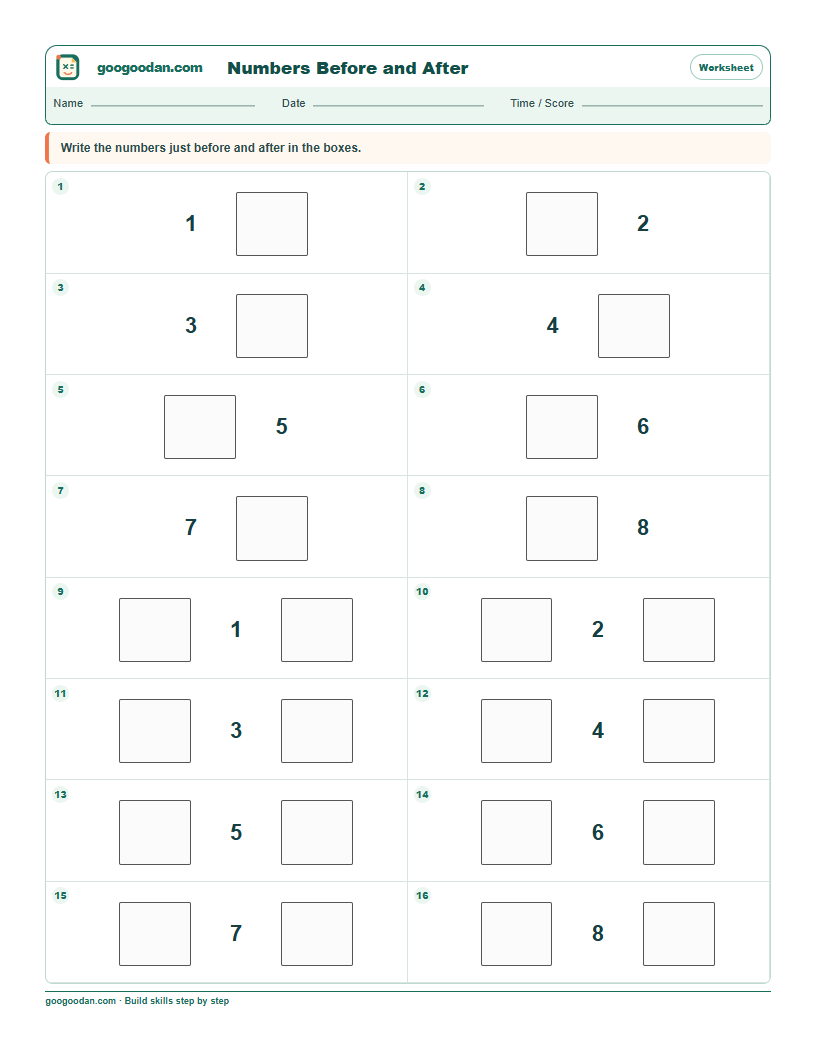 Zero and Numbers 0–9 Worksheet — Numbers Before and After
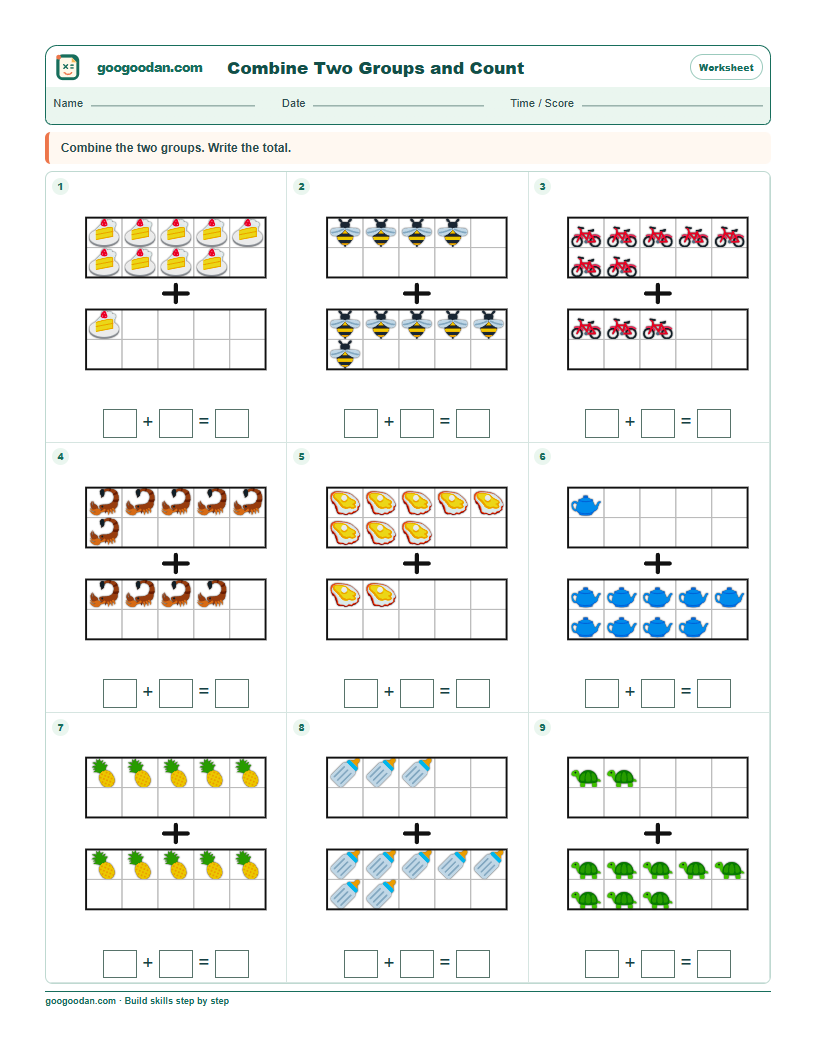 Number Bonds to 10 Worksheet — Combine Picture Groups
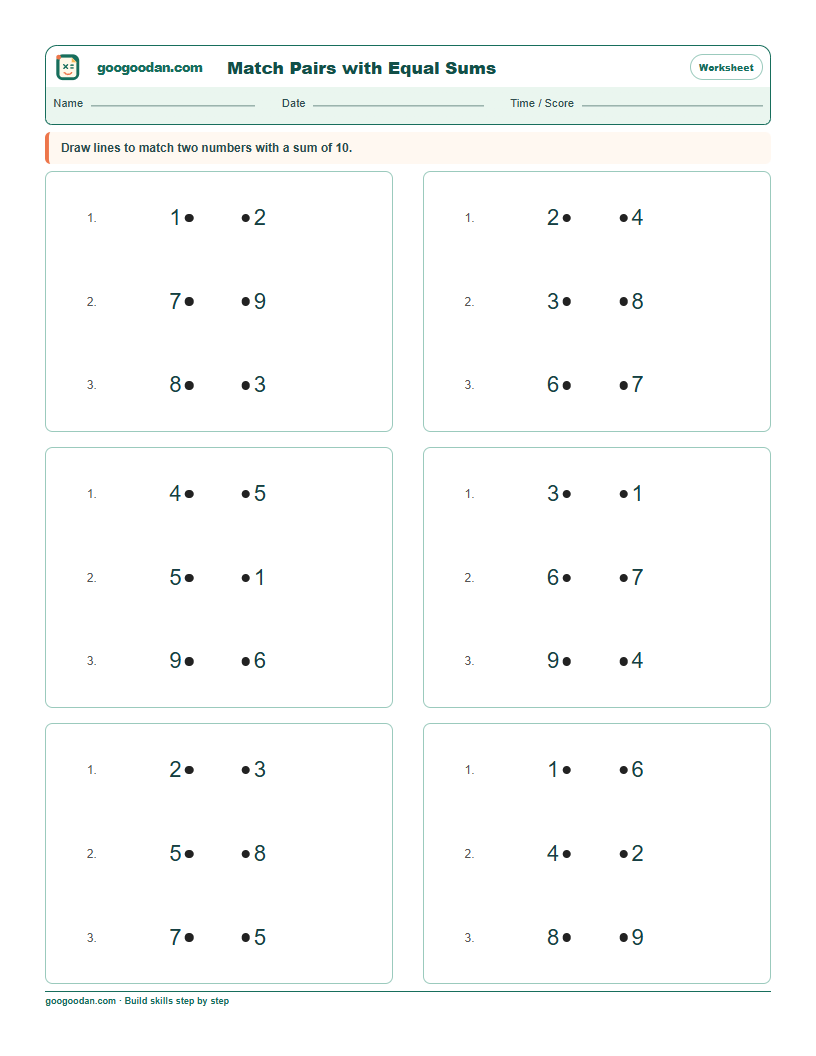 Number Bonds to 10 Worksheet — Match Equal Sums
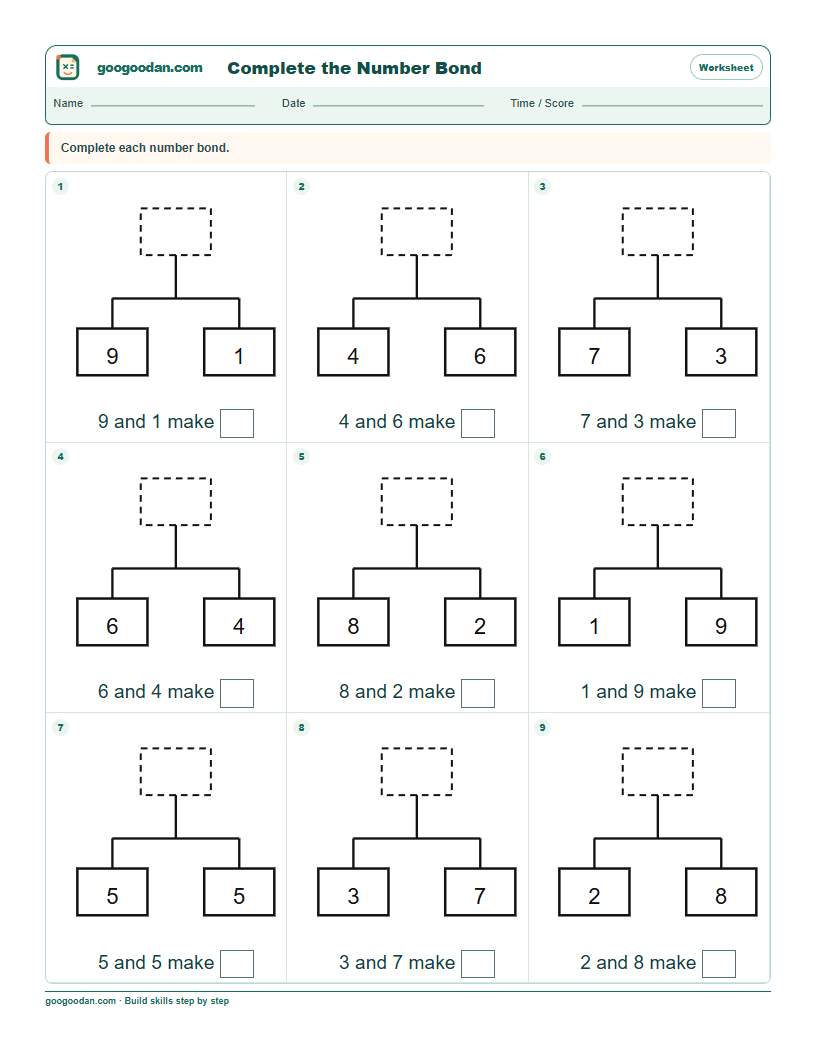 Number Bonds to 10 Worksheet: Fill in the Missing Parts
 Addition Sums Within 9: Horizontal Facts Worksheet
 Subtraction Below 10: Horizontal Worksheet with Answers
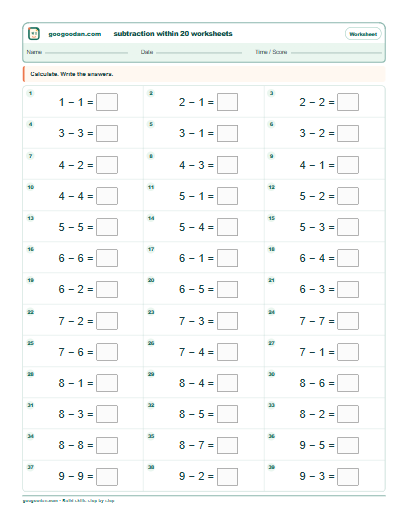 Subtraction Within 9 Worksheet — Horizontal
More worksheet collections
- Shape Worksheets for Elementary Math Practice
- Measurement Worksheets for Elementary Math Practice
- Kindergarten Math Worksheets: Counting and Number Facts
Choosing early number practice
Early number practice can be spoken, pointed to and moved before a child is ready to write every answer. Choose a page that matches the action: naming numerals, counting objects, comparing two groups, continuing a sequence or finding two parts that make a whole. A small number range helps a child focus on one idea. If the first page includes too many symbols or instructions, use an adult to read the prompt and let the child show the answer with counters or a finger point.
Use the printed page as a prompt
Preview the worksheet and decide what the child will do for each question. Choose Worksheet to try it and keep Answer Key for a later check; an adult can write a response when pencil control is not the goal. New Numbers may refresh a familiar format, but a different skill should be introduced only when the current one is understood. A brief session with a few careful answers is often easier to discuss than a full page completed in a hurry. Ask the child to tell how they counted. Choose Letter as the paper size when printing, so the worksheet uses the intended Canadian page format.
Show the same total in two ways
Put eight counters in a line, then separate them into a group of five and a group of three. Count each group and then count all eight. Rearrange the same counters as four and four: the parts changed but the total did not. This is a concrete way to explore 5 + 3 = 8 and 4 + 4 = 8. For a missing number, show six counters and add enough to make ten; count the added counters and say the number sentence aloud before writing it.
Common errors to notice
When counting objects, children may say the number sequence correctly while pointing twice to one object or skipping another. Slide each counted object into a new space so the count has a clear path. When matching a numeral to a group, check the symbol after counting rather than relying on its shape alone. If the child loses track, start the group again instead of guessing. Avoid correcting every response at once; ask one clear question, demonstrate a careful count, and let the child try a similar example.