Grade 3 Math Worksheets
Grade 3 children usually add and subtract within 1000, learn multiplication and division facts, and begin multiplying two-digit numbers. Each sheet below practises one of those skills.
Open a sheet, press New Numbers for fresh questions and print the answer page to check the work on Letter paper. For other grades, use Curriculum math and Curriculum topics.
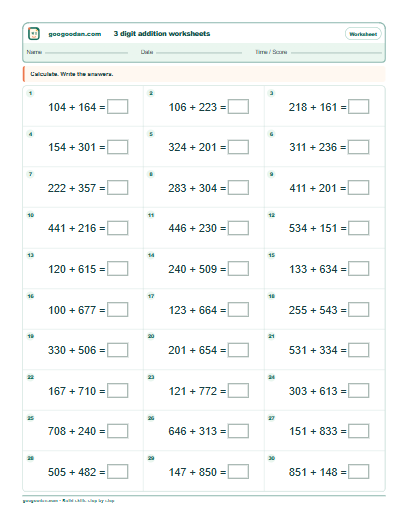
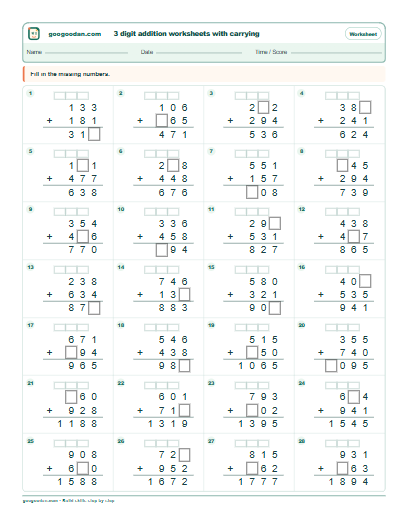
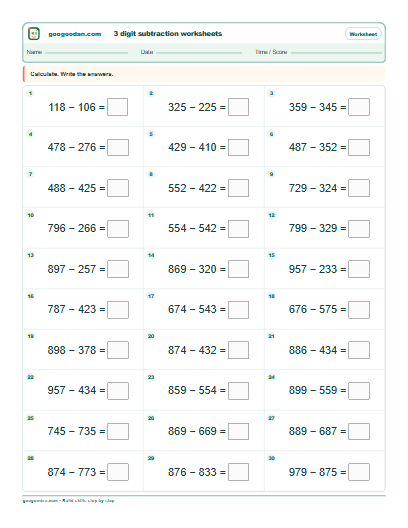
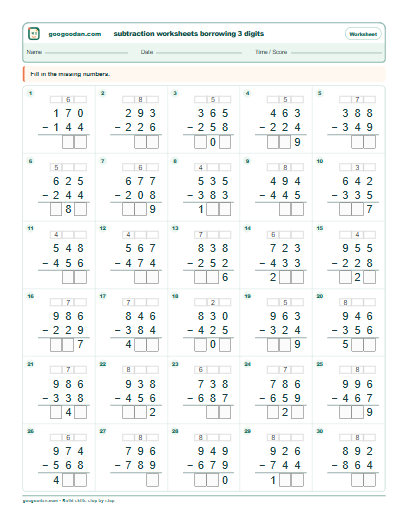
Addition and subtraction within 1000
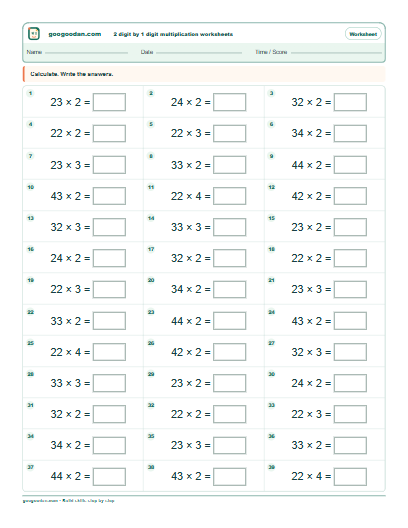
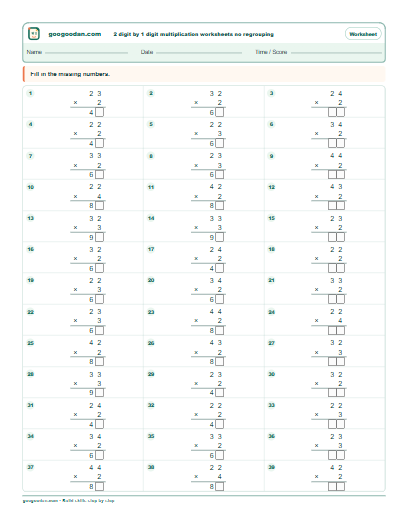
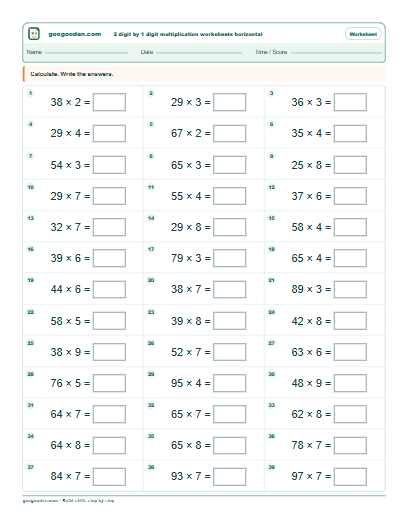
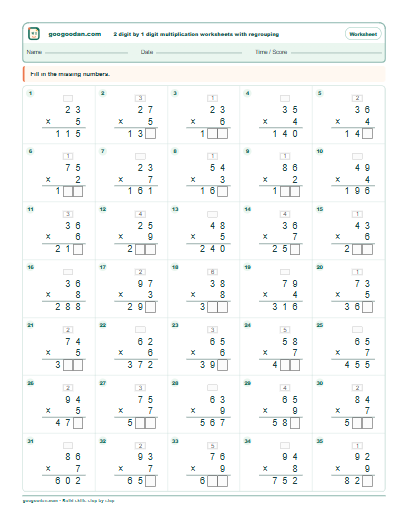
Multiplying two digits by one digit
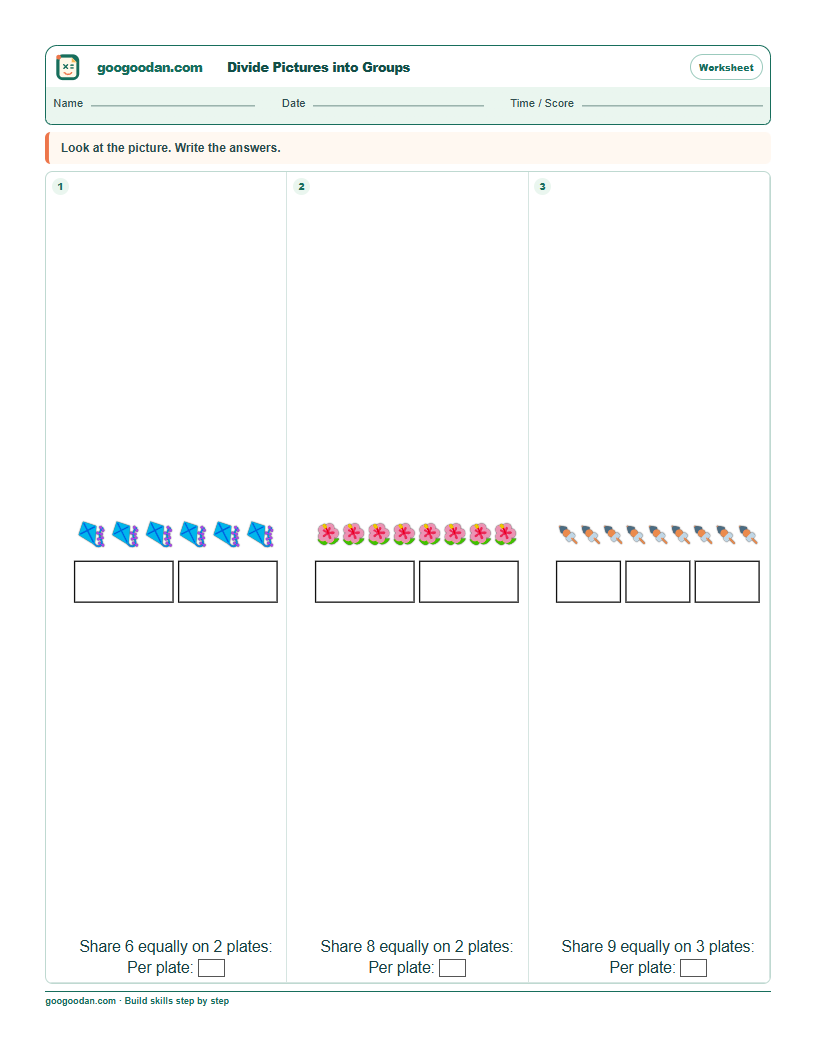
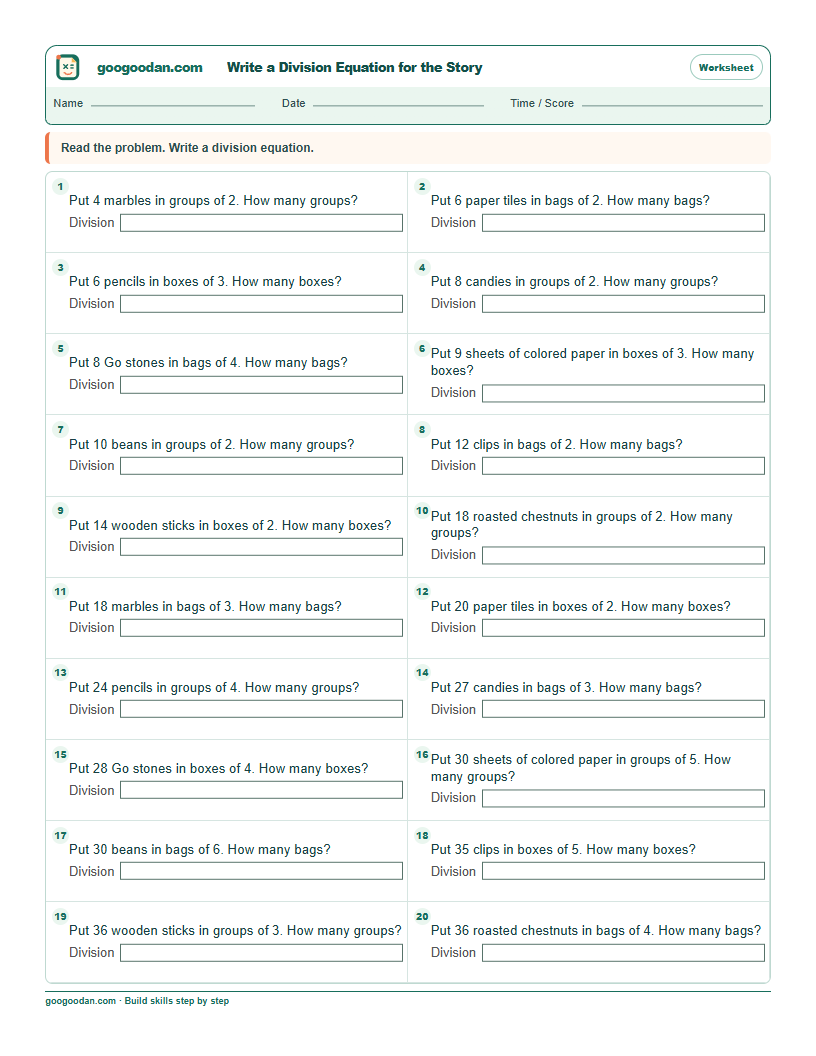
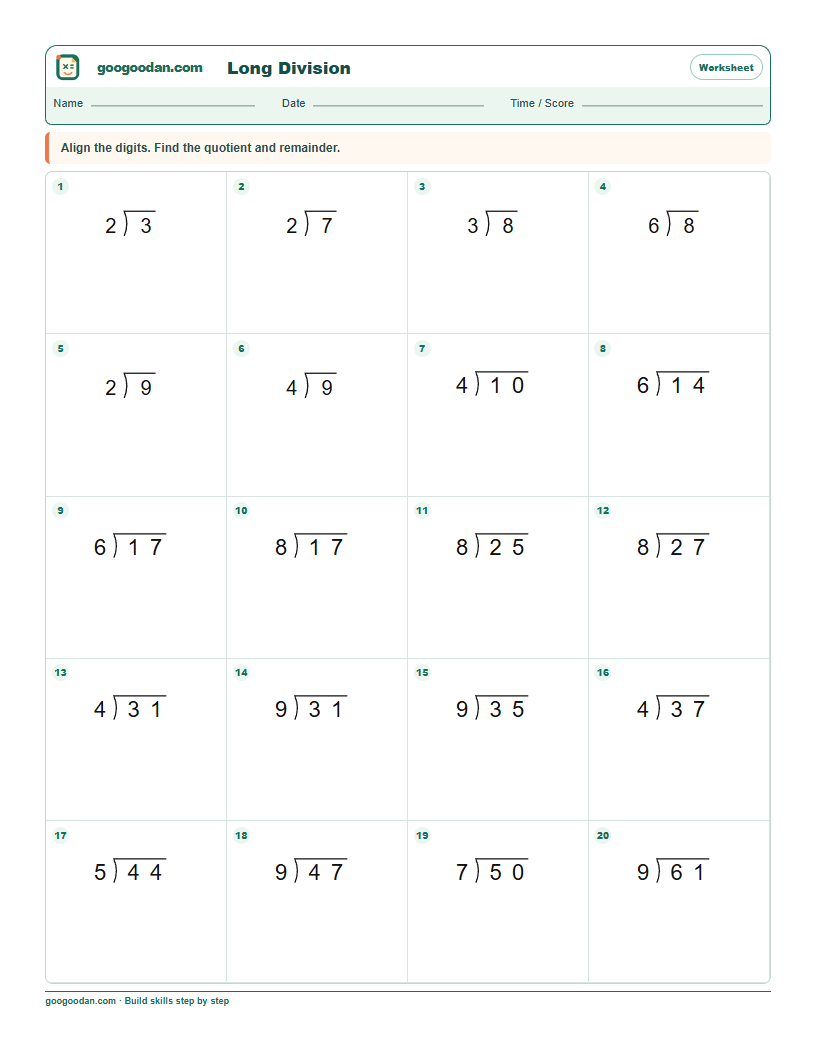
Division facts and equal sharing
Multiplication and division to 10 × 10
Practise the facts on the times tables worksheets page.
More worksheet collections
- Free Printable Math Worksheets
- Times Tables Worksheets
- Addition and Subtraction Worksheets
- Multiplication and Division Worksheets
- Fractions and Decimals Worksheets
- Shape Worksheets for Elementary Math Practice
- Measurement Worksheets for Elementary Math Practice
- Kindergarten Math Worksheets: Counting and Number Facts
Choosing Grade 3 math practice
Grade 3 pages cover a range of arithmetic tasks, so use the worksheet title to identify the exact skill to review. A learner might need more practice adding larger numbers, building multiplication facts, or understanding how equal groups work. Choose a page that makes the task visible and avoid combining several unfamiliar features in the same first attempt. The topics on this site are practice options, not a statement about what every class studies at a particular point in the year; follow the learner's current materials.
Choose an example before a full set
Open the sheet and read two or three questions before printing. Decide whether the learner will draw a model, write a calculation or explain a choice. Select Worksheet for the attempt and Answer Key for checking. New Numbers refreshes the same activity, which is useful after the method is understood. If the learner is working independently, ask them to mark one question they found easy and one that needs another look. That makes the next page choice more precise than simply assigning a longer set. If you print the page, choose Letter in the paper-size menu.
Read a group situation carefully
Suppose three tables each have six place settings. An array with three rows of six shows 3 x 6 = 18. If the situation changes to sharing 18 settings equally among three tables, the question asks how many go on each table: 18 divided by 3 = 6. The same numbers appear, but the story determines which value is unknown. Before calculating, circle the number of groups and underline how many are in each group, or draw a quick picture to show the relationship.
Common errors to notice
In an array, keep track of both rows and items in each row so the factors are not reversed accidentally in a worded explanation. In column work, line up the place values before adding or subtracting. Avoid choosing an operation from one word alone; read the whole situation and identify what is unknown. Check a product by making a nearby estimate or by using a related division fact. If the model is confusing, return to smaller groups and draw them before attempting the worksheet again.