Addition and Subtraction Worksheets
Start with sheets that use pictures and small numbers, then move to column methods once the number facts are secure. Each section mixes layouts, so you can choose horizontal questions, column questions, missing digits or error-fixing tasks.
Look at the carrying or exchanging in the title: some sheets have none, others need one or two. Open a sheet, press New Numbers for fresh questions, and print the answer page to check.
Addition Worksheets
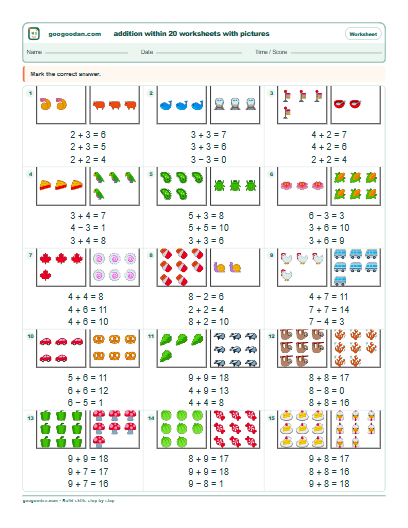 Picture Addition Worksheet — Choose an Equation for the Picture
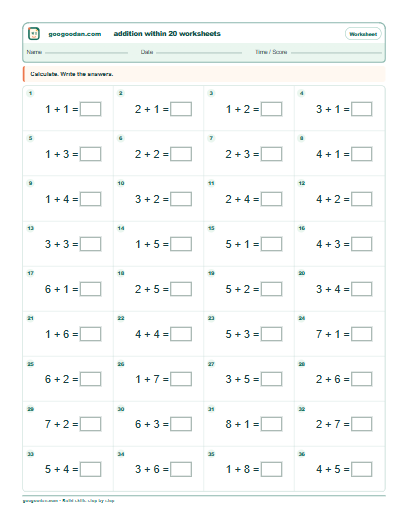 Addition with Sums to 9 Worksheet — Horizontal
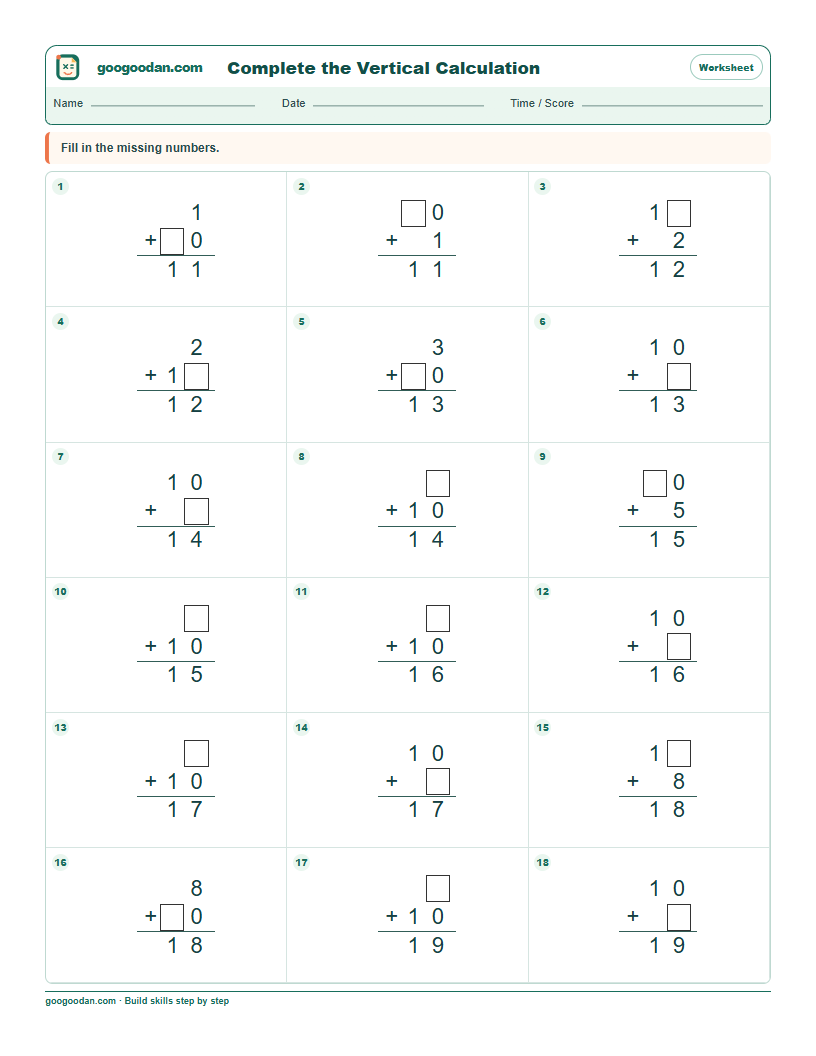 10 + 1-Digit Addition Worksheet — Vertical Blanks
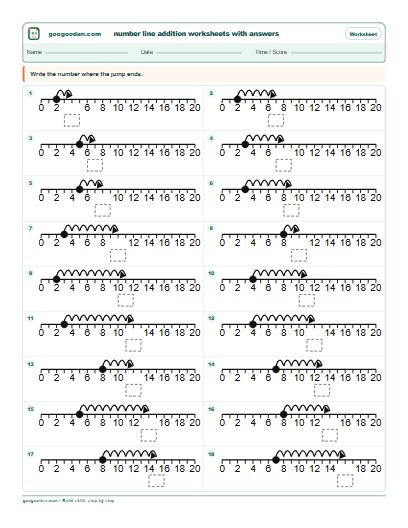 Number Line Addition Worksheet — Write Landing Points
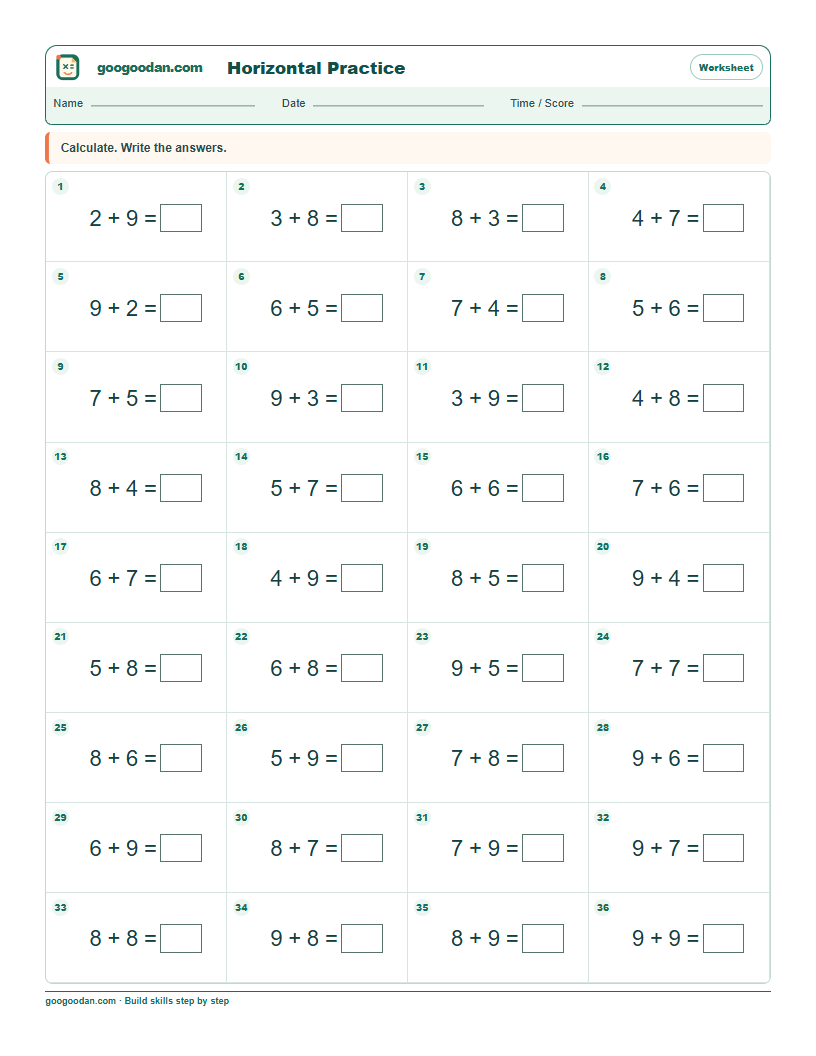 1-Digit Addition: Make 10 Worksheet — Horizontal
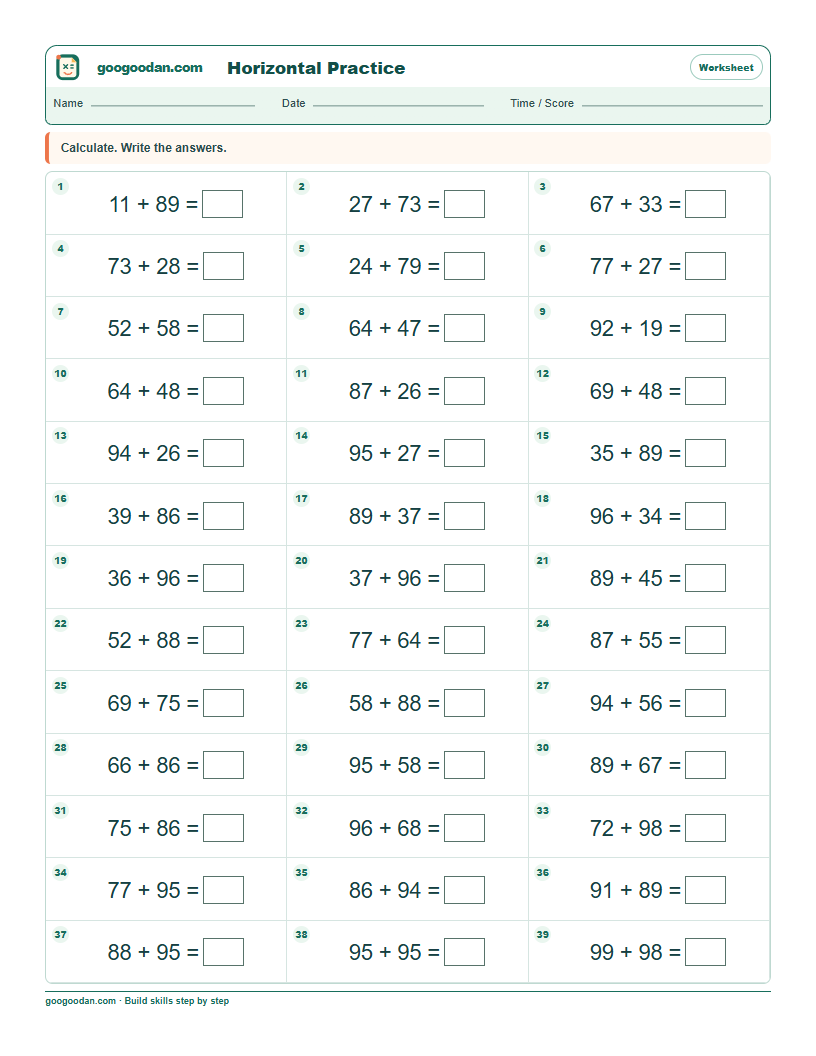 2-Digit + 2-Digit Addition: Regroup Twice Worksheet — Horizontal
Column Addition Worksheets
 Addition with Sums to 9 Worksheet — Vertical
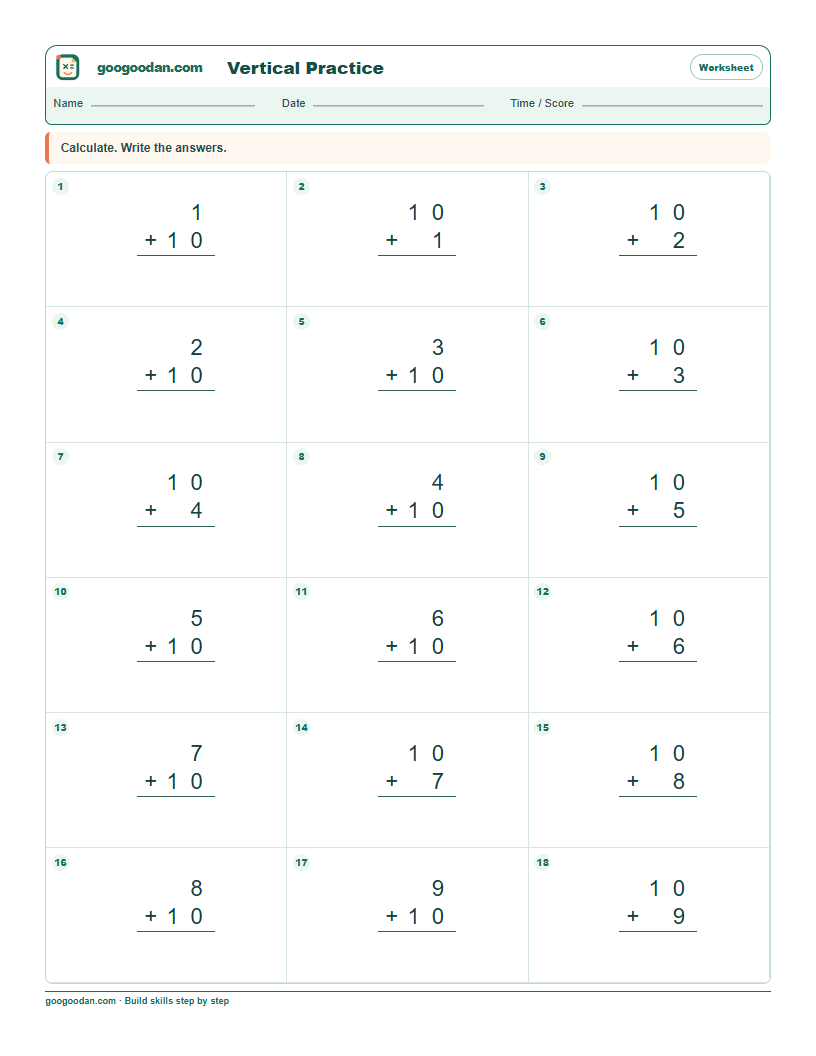 10 + 1-Digit Addition Worksheet — Vertical
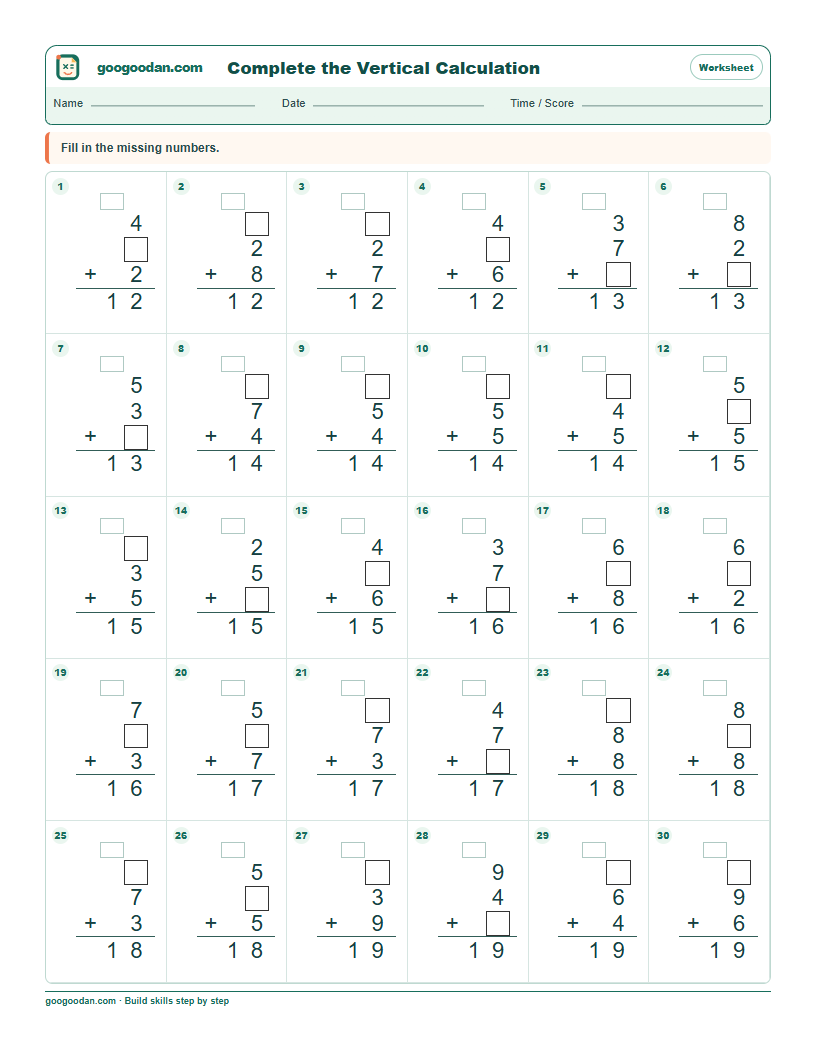 Three-Number Addition: Make 10 Worksheet — Vertical Blanks
 2-Digit + 2-Digit Addition: No Regrouping Worksheet — Vertical
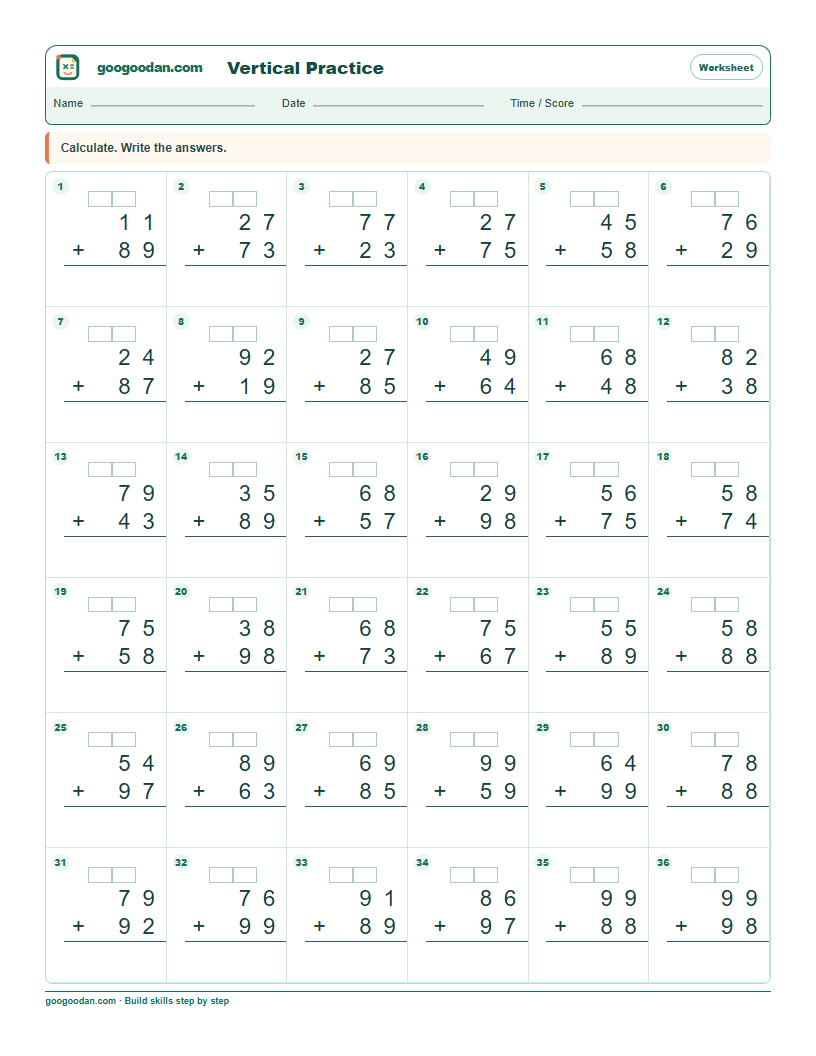 2-Digit + 2-Digit Addition: Regroup Twice Worksheet — Vertical
 3-Digit Addition: Regroup Once Worksheet — Vertical Blanks
Subtraction Worksheets
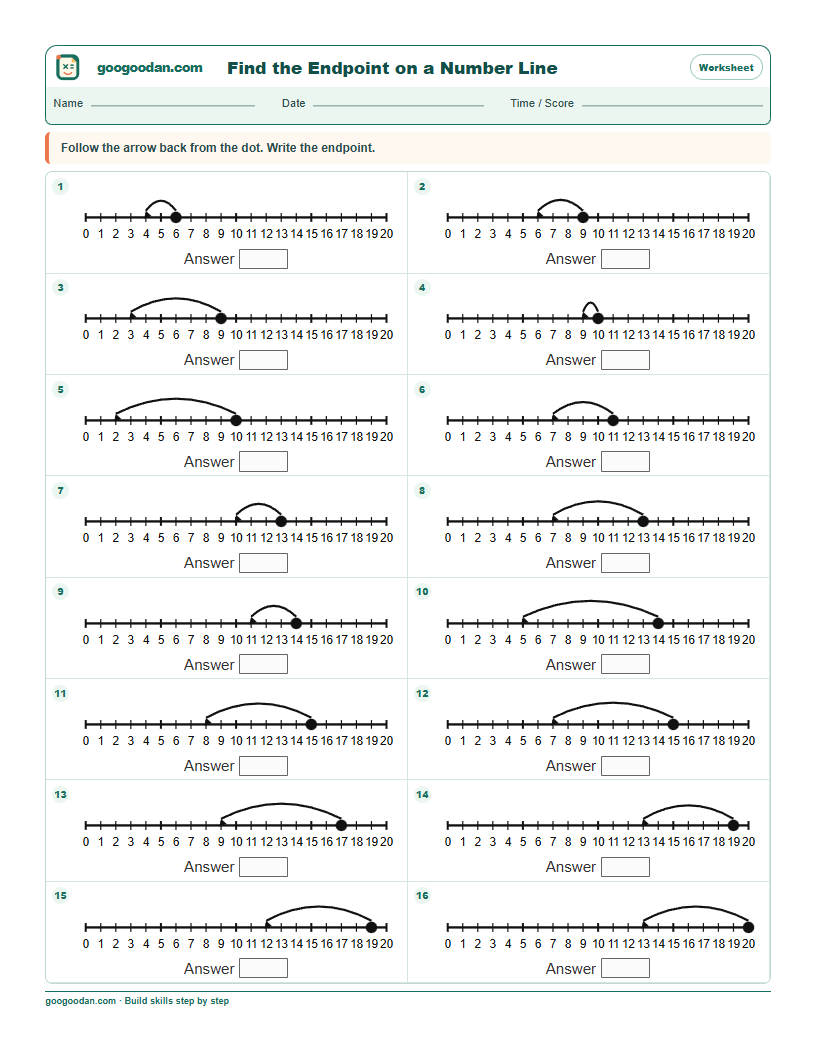 Number Line Subtraction Worksheet — Write Landing Points
 Subtraction Within 9 Worksheet — Horizontal
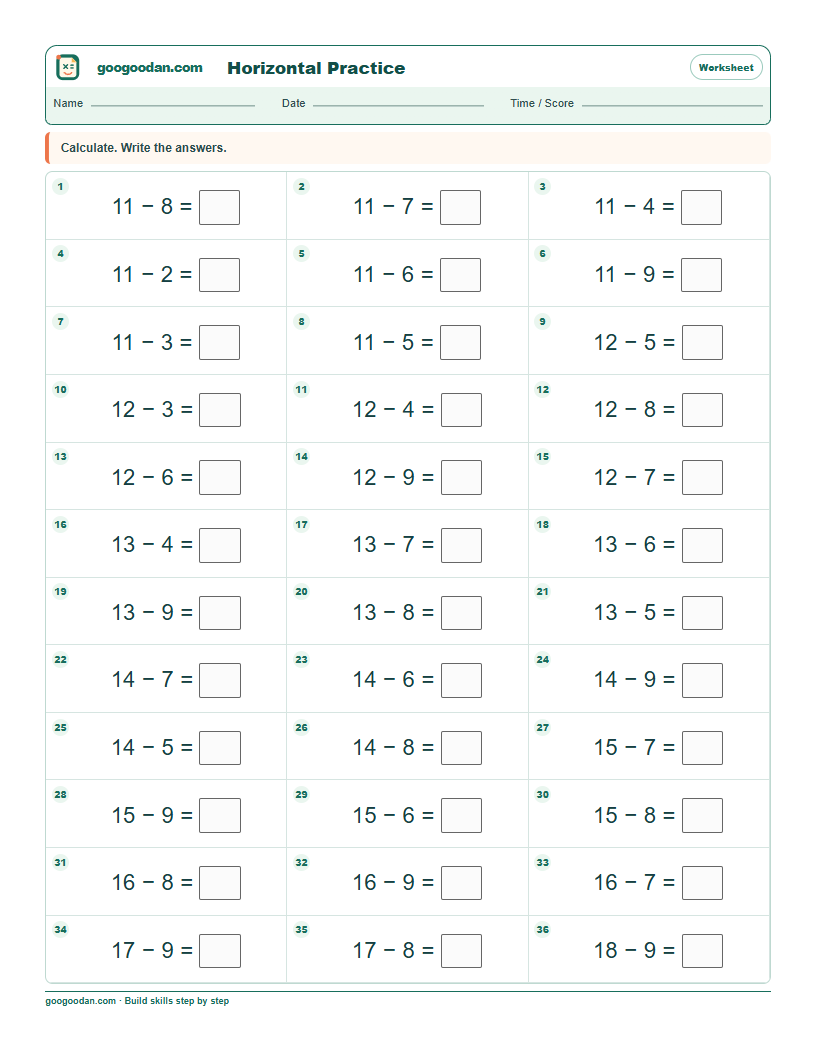 Teen Subtraction: Regrouping Worksheet — Horizontal
 2-Digit − 2-Digit Subtraction: No Regrouping Worksheet — Horizontal
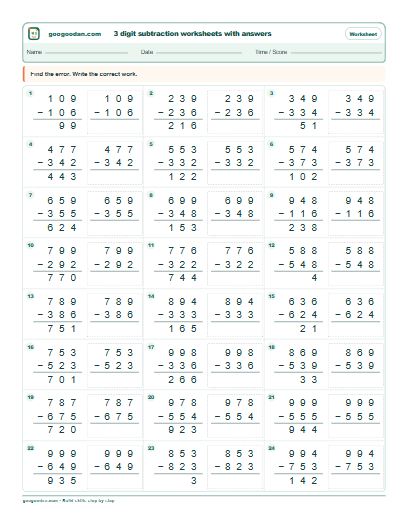 3-Digit Subtraction: No Regrouping Worksheet — Fix Errors
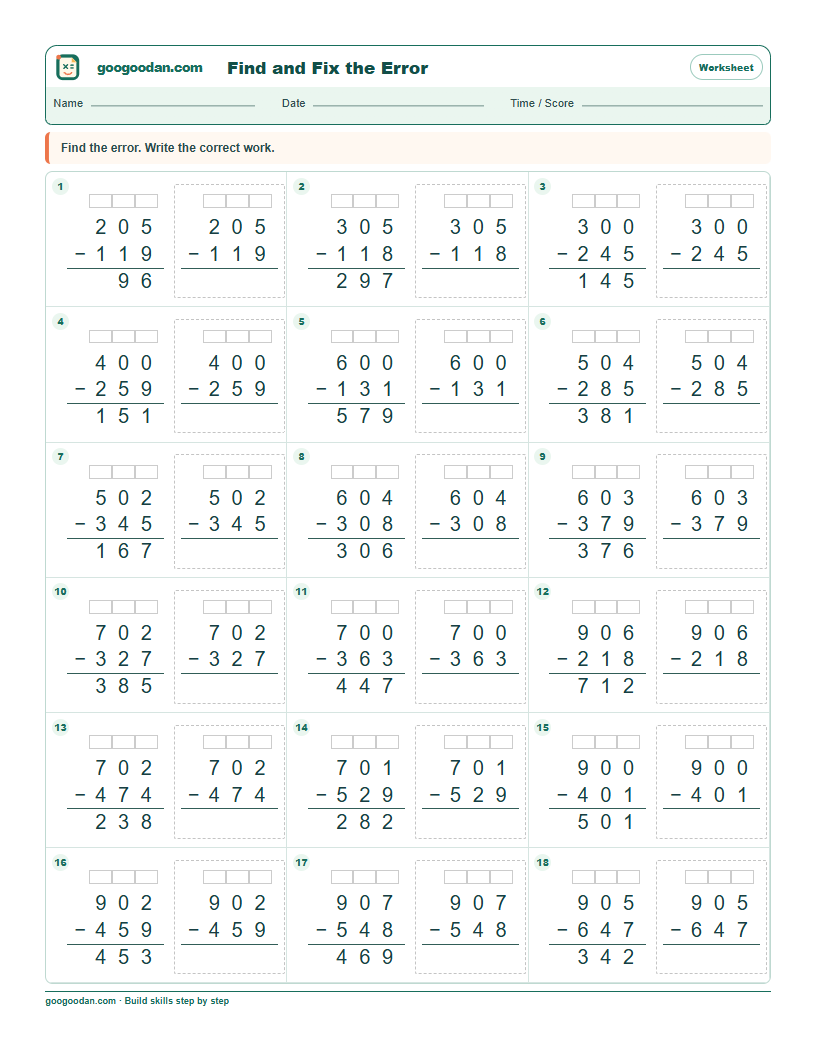 Subtraction Across Zeros Worksheet — Fix Errors
Column Subtraction Worksheets
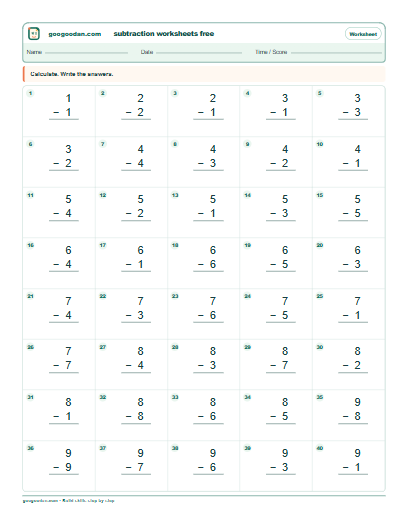 Subtraction Within 9 Worksheet — Vertical
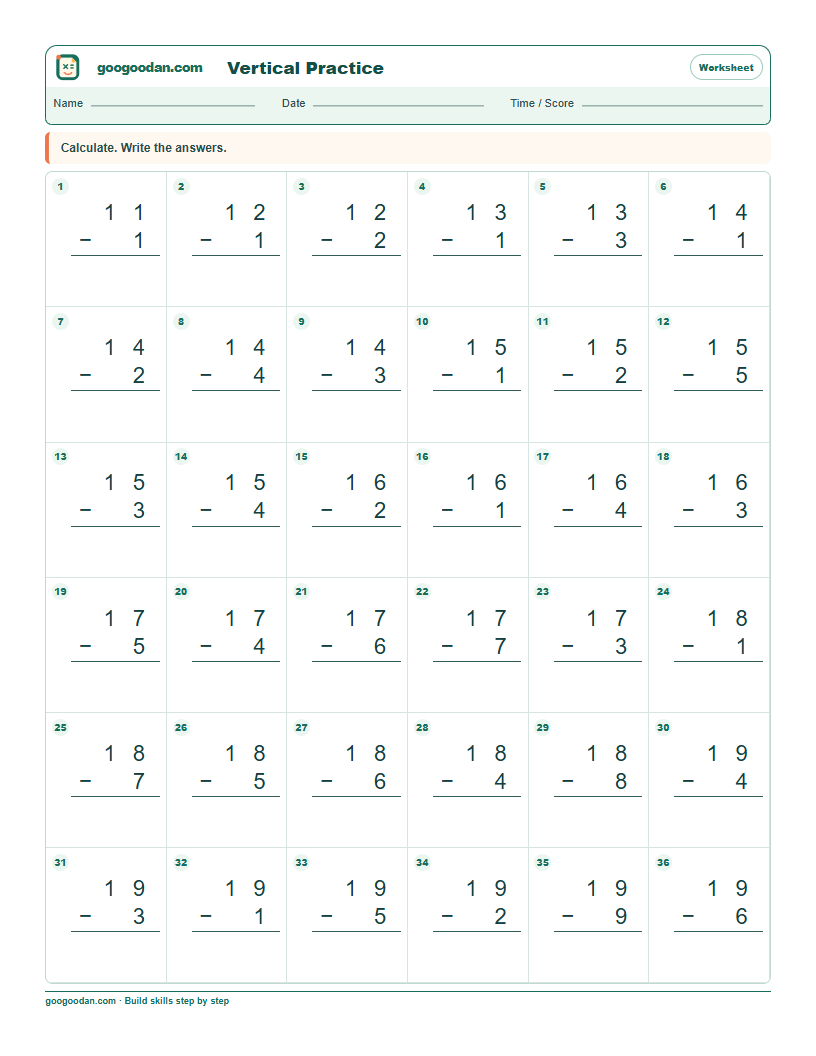 Teen Subtraction: No Regrouping Worksheet — Vertical
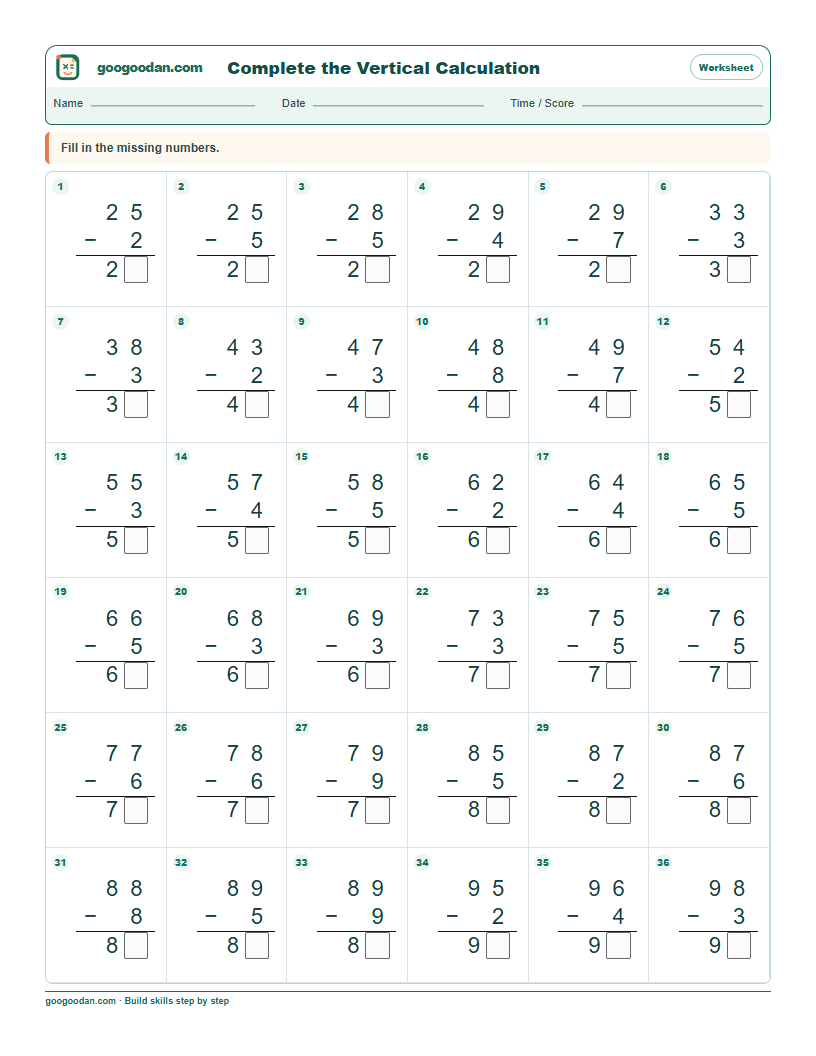 2-Digit − 1-Digit Subtraction: No Regrouping Worksheet — Vertical Blanks
 2-Digit − 2-Digit Subtraction: Regrouping Worksheet — Vertical
 3-Digit Subtraction: No Regrouping Worksheet — Vertical
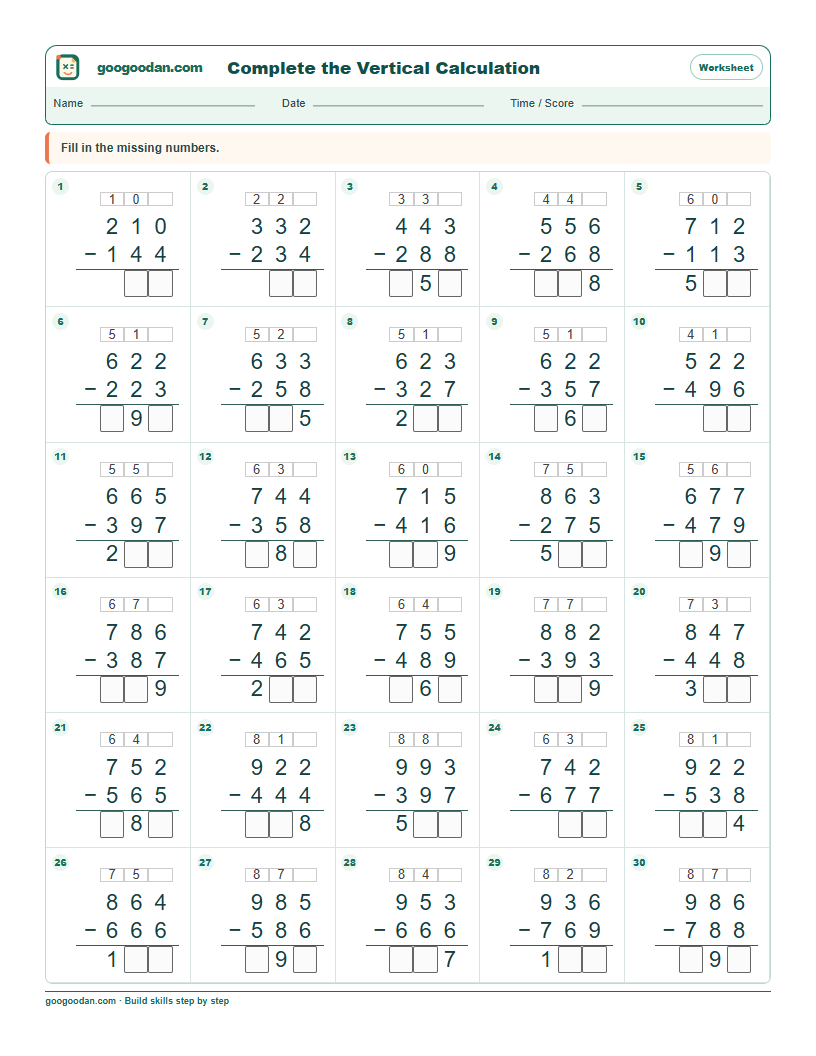 3-Digit Subtraction: Consecutive Regrouping Worksheet — Vertical Blanks
More worksheet collections
- Free Printable Math Worksheets
- Times Tables Worksheets
- Multiplication and Division Worksheets
- Fractions and Decimals Worksheets
- Grade 3 Math Worksheets
- Shape Worksheets for Elementary Math Practice
- Measurement Worksheets for Elementary Math Practice
- Kindergarten Math Worksheets: Counting and Number Facts
Choosing addition and subtraction worksheets
Use this collection when a learner needs to make written calculations clearer, not simply longer. The worksheet titles distinguish horizontal questions, column work, regrouping, missing values and error spotting. Choose the narrowest match for the current goal. If the learner is still deciding what addition and subtraction mean, use smaller numbers and draw the quantities. If the operation is understood but place values drift, choose a column layout. A missing-value page is useful after the learner can explain how the known numbers are related.
Set up the page for a useful review
Open a sheet and look at how many questions fit on one page before printing. Select Worksheet for a first attempt, Answer Key to check, or both when an adult will review the work. Fresh numbers can make a familiar layout useful again. Ask the learner to circle the operation sign and estimate the first answer before calculating. After a small group of questions, look for a repeated kind of error and choose the next sheet to practice that point. This keeps review focused instead of turning it into extra pages without a purpose. Use Letter paper in the print dialog when making a hard copy of this Canadian worksheet.
Work through a regrouping example
Consider 486 + 359. The ones total 15, so write 5 ones and carry 1 ten. The tens are 8 + 5 + 1, or 14 tens; write 4 and carry 1 hundred. The hundreds make 8, so the sum is 845. For 721 - 386, regroup a hundred into ten tens, then exchange one ten for ten ones: 11 - 6 is 5, 11 - 8 is 3, and 6 - 3 is 3. The difference is 335. Adding 335 to 386 checks the result.
Common errors to notice
A carried value belongs in the next place, not beside the answer in the current column. In subtraction, an exchange changes the value of the column that gives up a ten. Make that change visible before subtracting, especially when a zero appears in the number. Some learners subtract the smaller digit from the larger even when that reverses the calculation; compare the value being reduced with the amount taken away. Use an estimate to catch an answer that is too large or too small, then use addition or subtraction to check the inverse relationship.