Multiplication and Division Worksheets
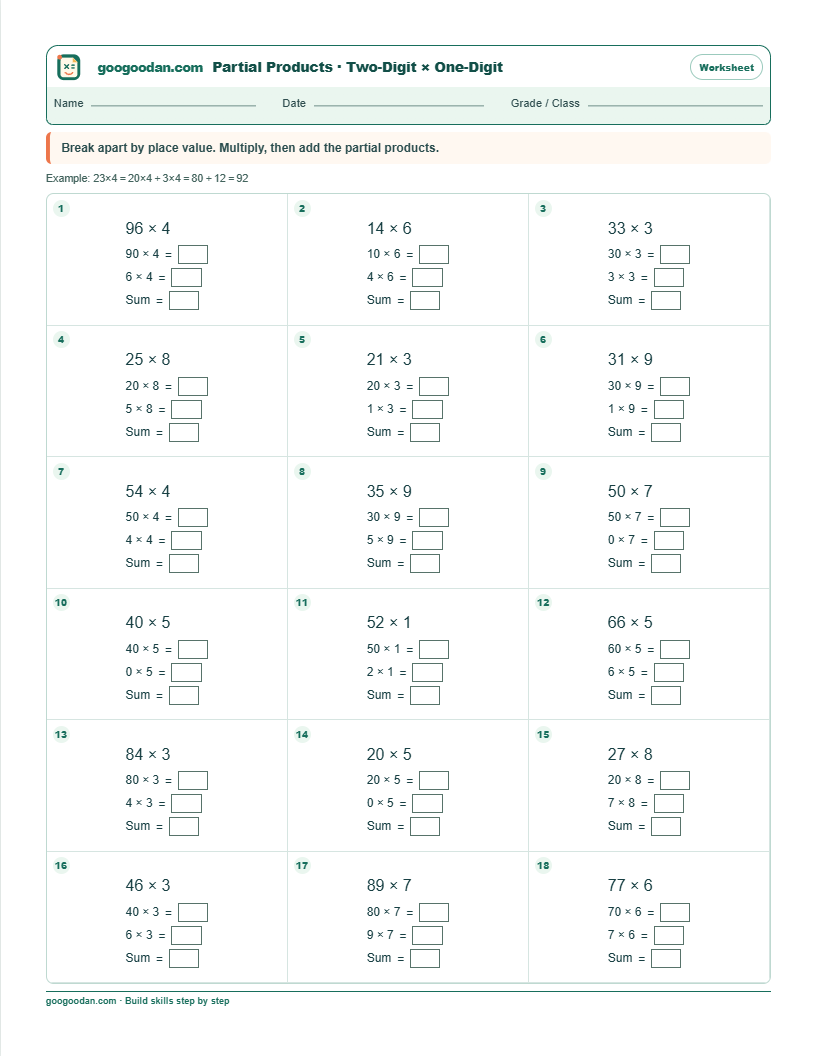
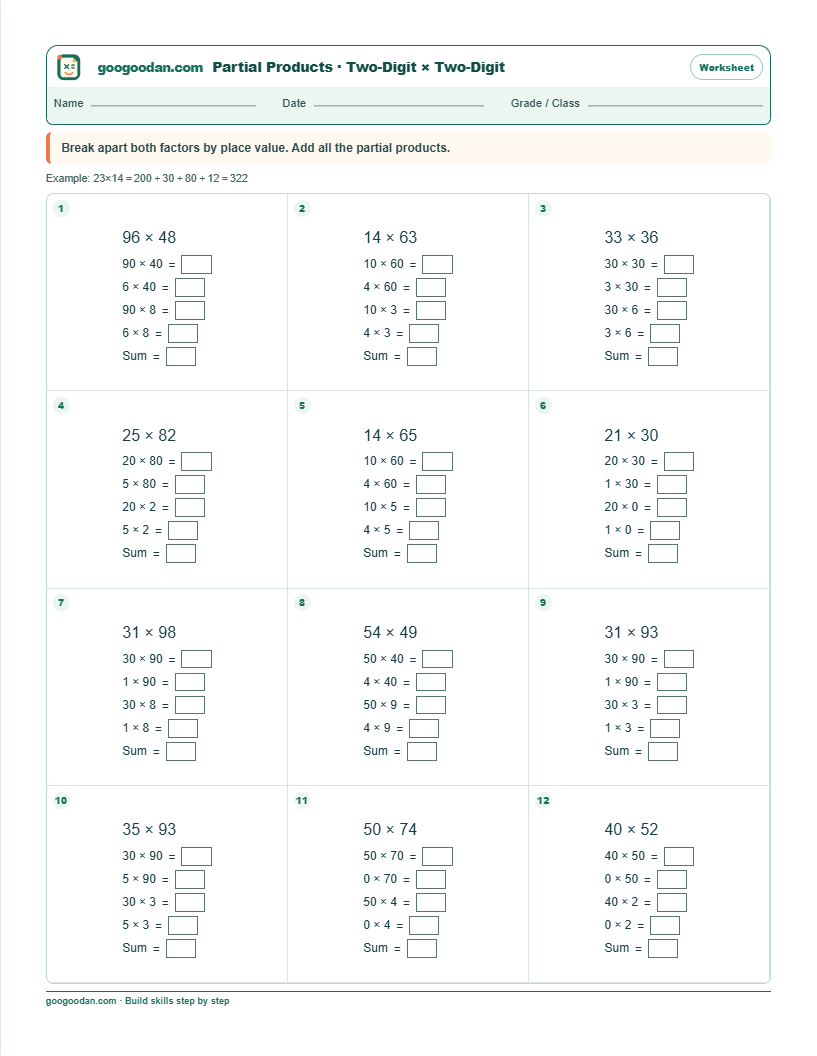
Use these sheets for multiplying by one or two digits and for dividing with and without remainders. Area models and partial products show why the written methods work, and the division sheets run from equal sharing up to short and long division.
Times table facts make all of this easier, so check the times tables worksheets first if answers come slowly. Press New Numbers for another set and print the answer page when you finish.
Multiplication Worksheets
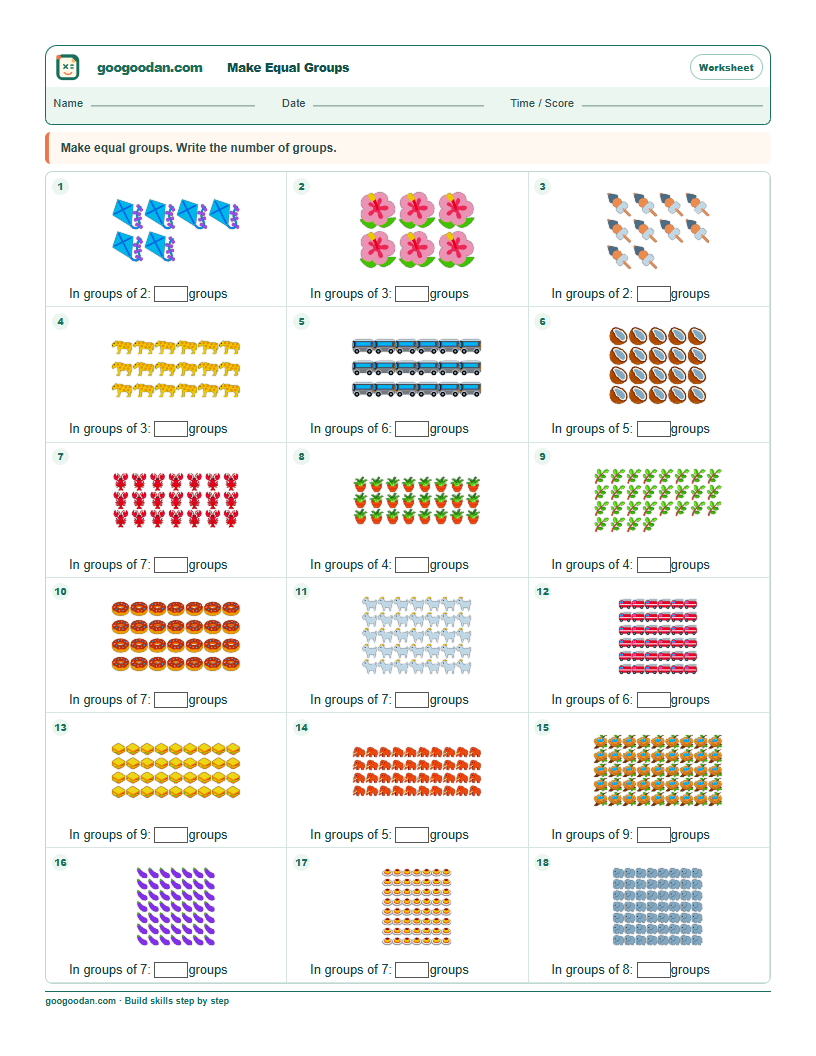 Multiplication, Equal Groups: Draw Equal Groups Worksheet
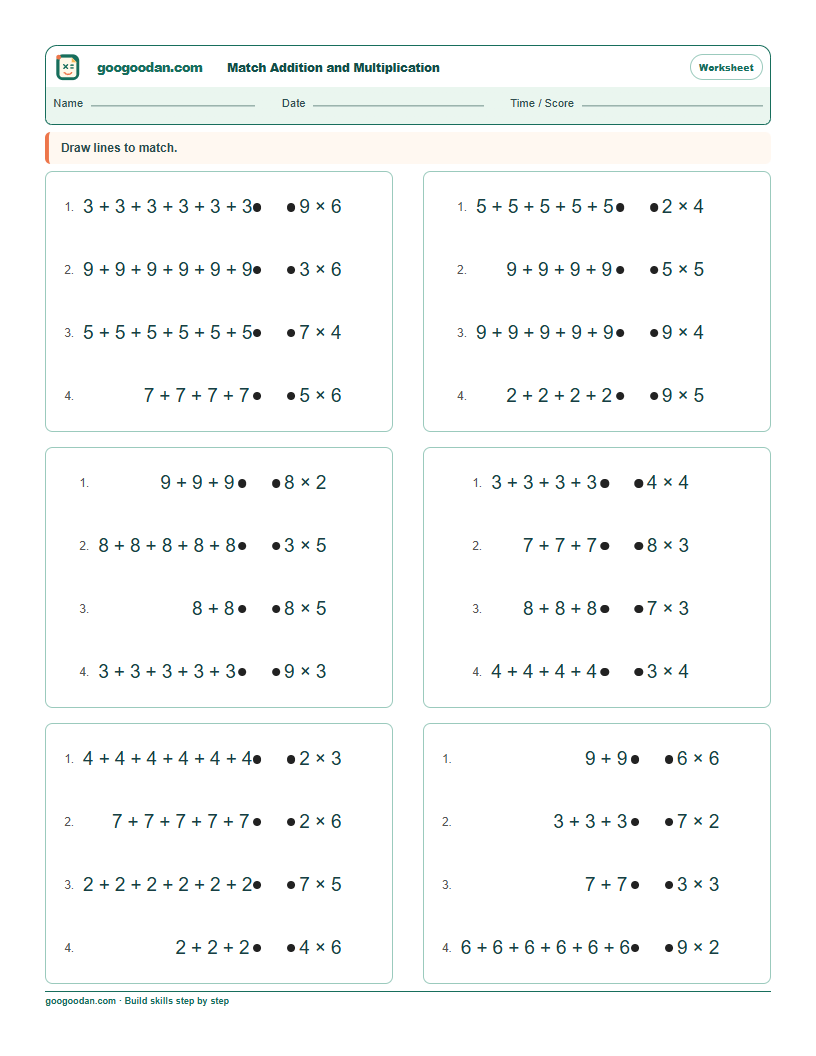 Multiplication Arrays: Match Addition and Multiplication Worksheet
 6 and 7 Times Tables: Horizontal Practice Worksheet
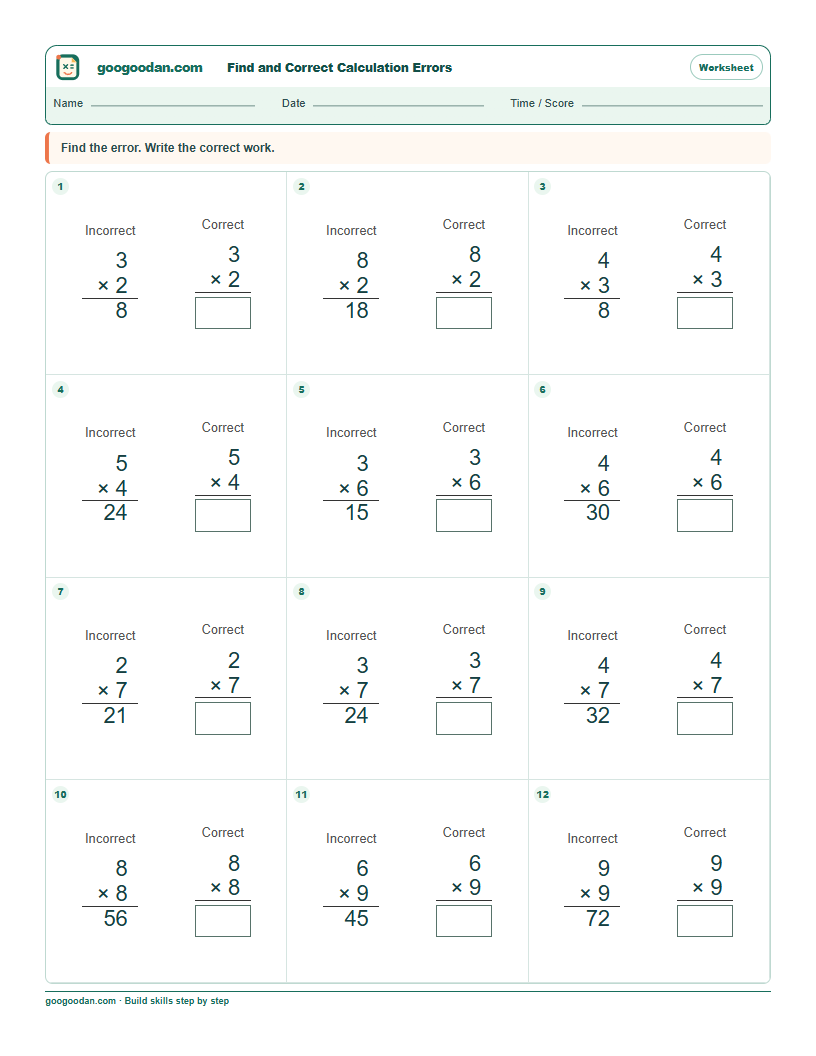 Mixed Times Tables: Fix Calculation Errors Worksheet
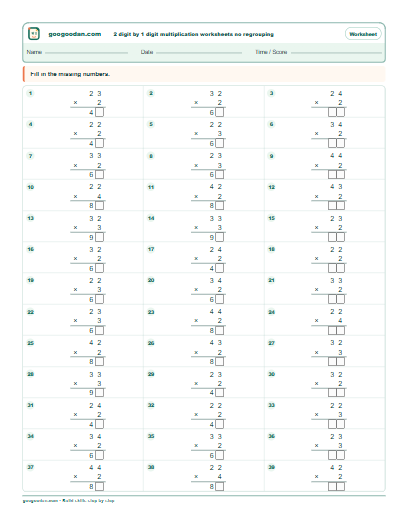 2-Digit × 1-Digit Short Multiplication, No Carrying: Missing Digits Worksheet
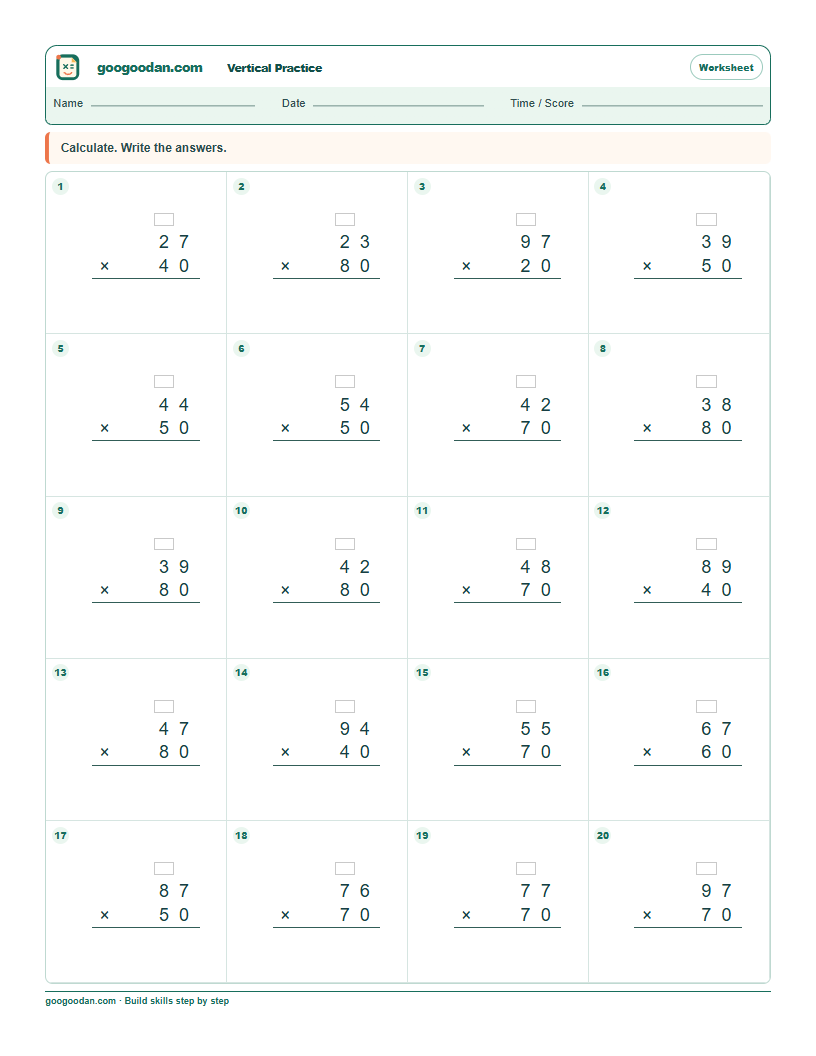 2-Digit × Multiples of 10 Long Multiplication Worksheet
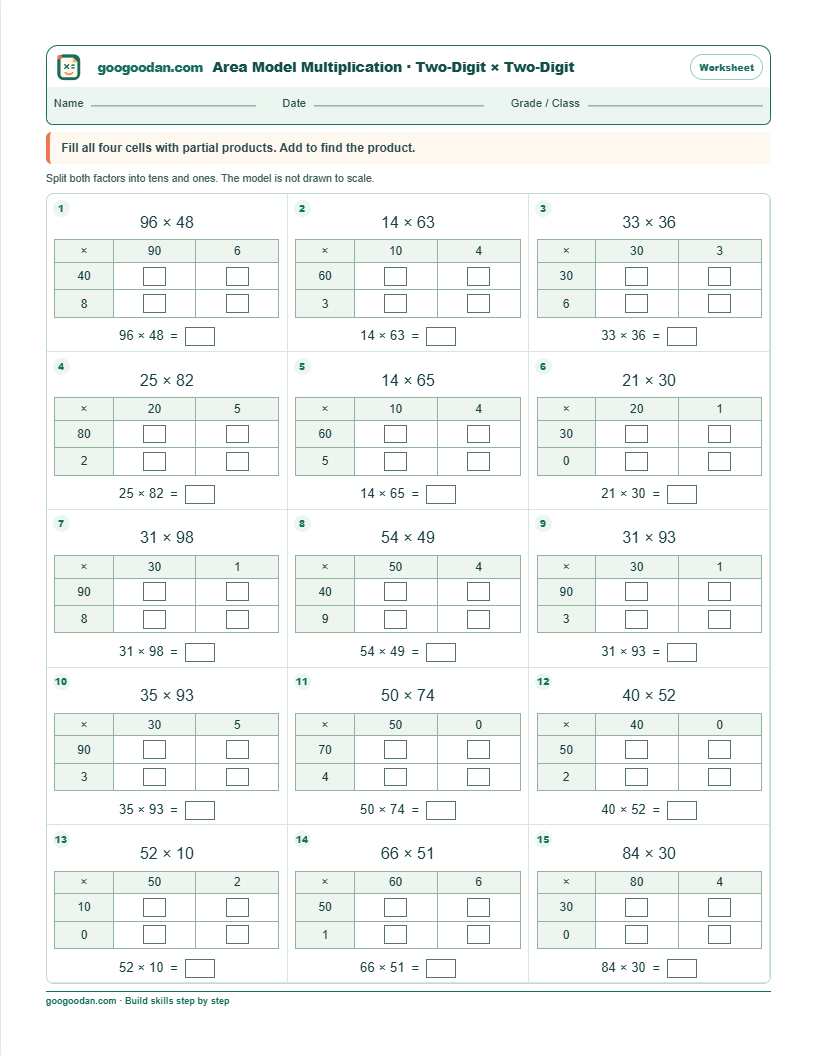
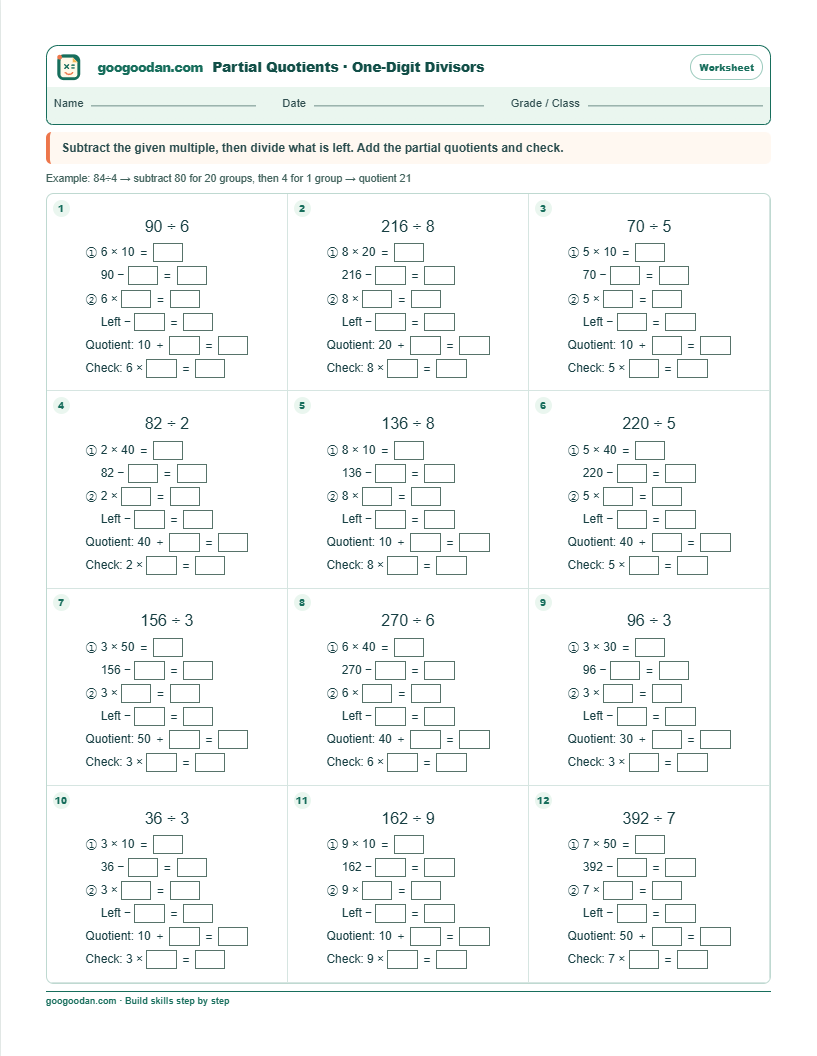
Area Model and Partial Product Worksheets
Division Worksheets
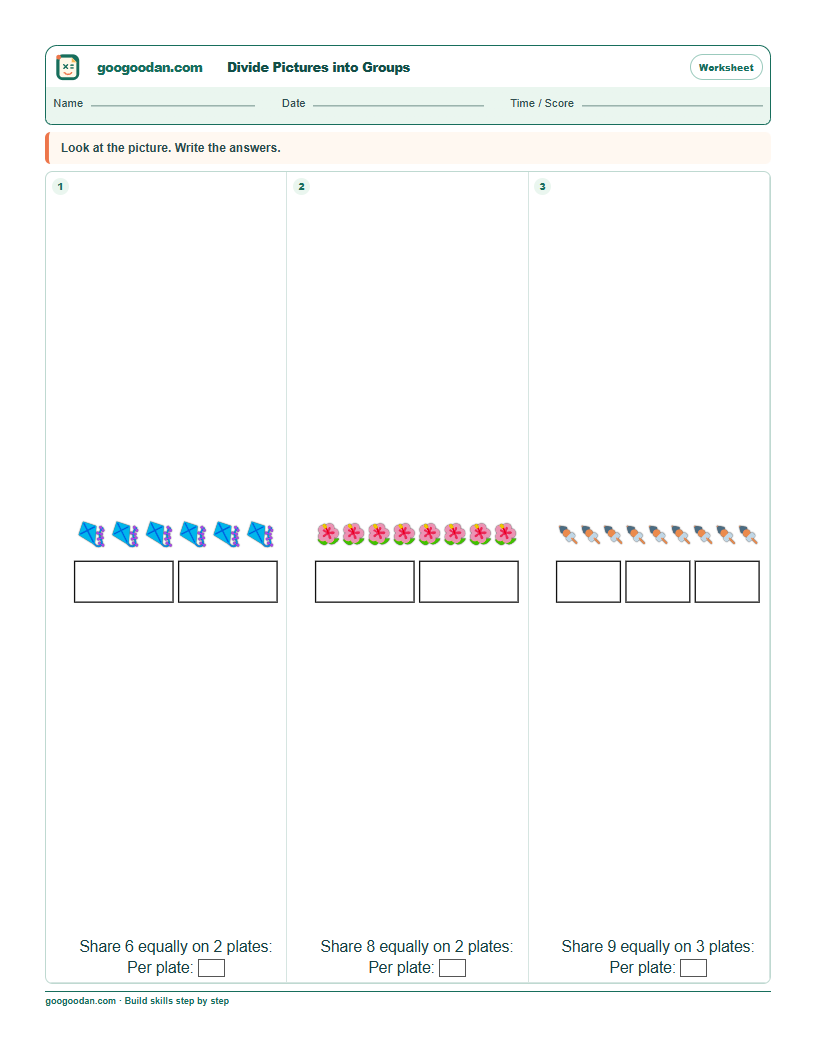 Division by Equal Sharing: Picture Problems Worksheet
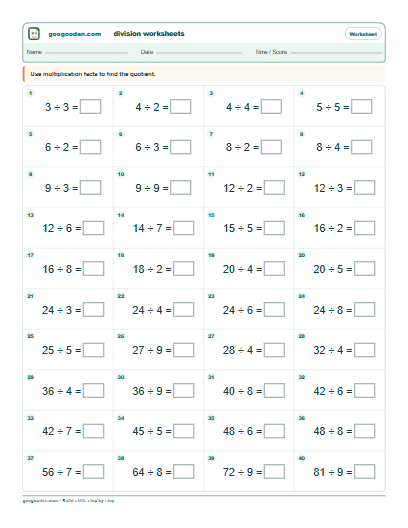 Division Facts from Times Tables: Horizontal Worksheet
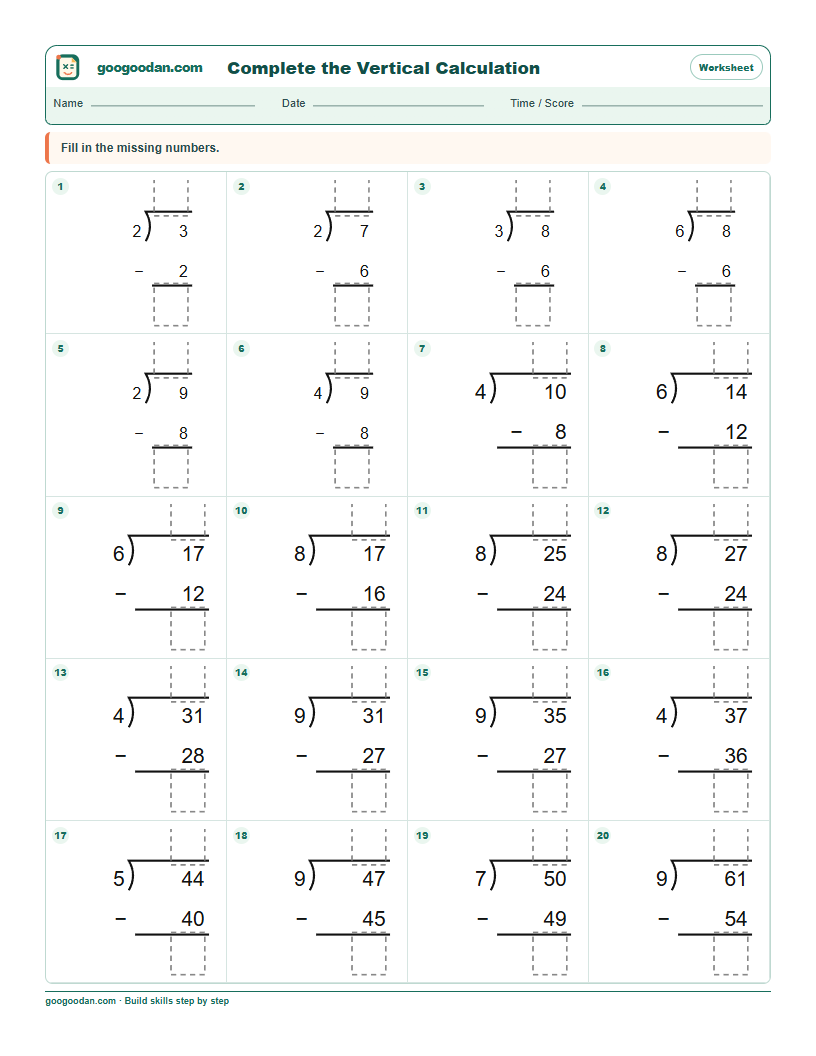 Long Division Facts with Remainders: Missing Steps Worksheet
 2-Digit ÷ 1-Digit Division, Remainders: Horizontal Worksheet
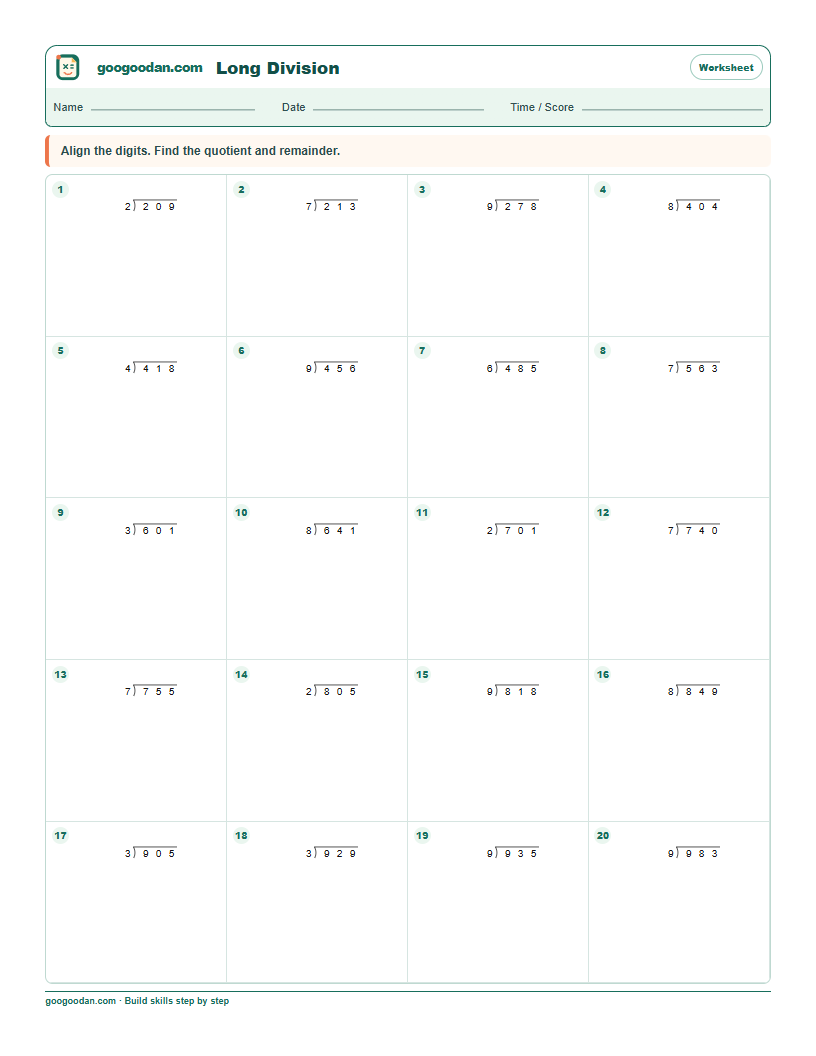 3-Digit Long Division: Zero in Quotient, Remainders Worksheet
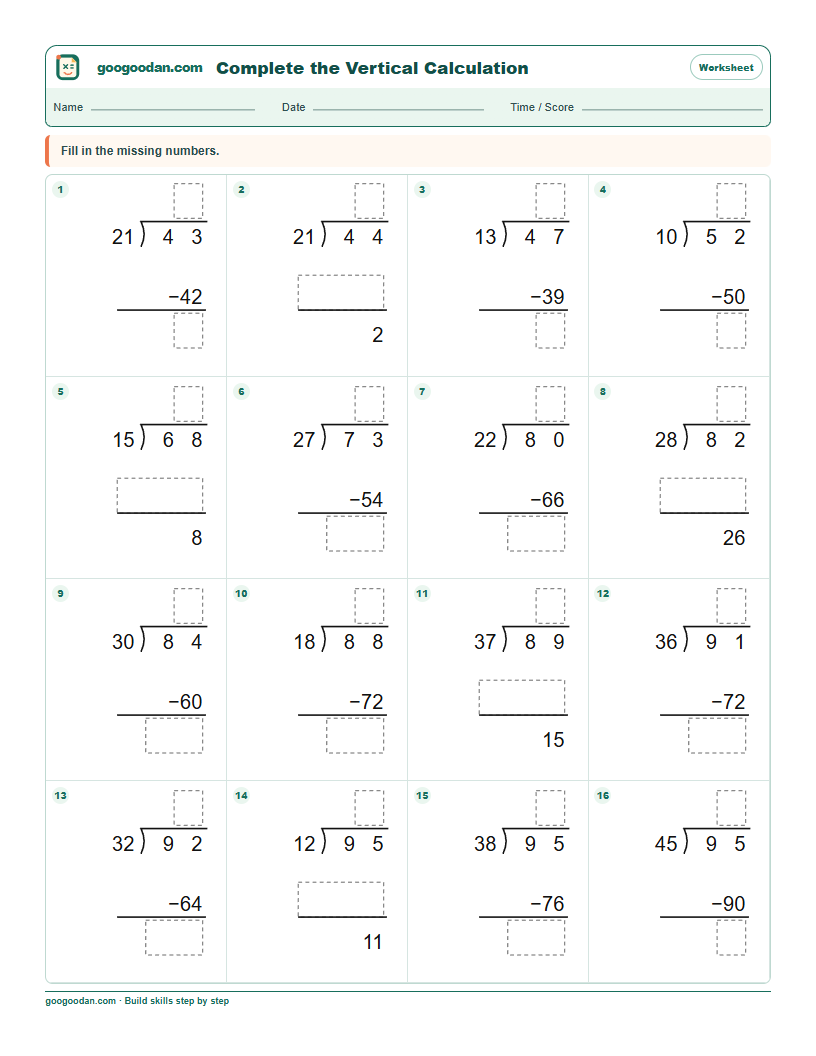 2-Digit ÷ 2-Digit Long Division, Remainders: Missing Steps Worksheet
More worksheet collections
- Free Printable Maths Worksheets
- Times Tables Worksheets
- Addition and Subtraction Worksheets
- Fractions and Decimals Worksheets
- KS2 Maths Worksheets: Years 3 to 6
- Shape Worksheets for Primary Maths Practice
- Measurement Worksheets for Primary Maths Practice
- Reception Maths Worksheets: Counting and Number Facts
Choosing multiplication and division practice
Choose a sheet according to the structure the learner needs to practise. Equal groups and arrays help connect multiplication with repeated addition; a times-table sheet can support facts; area models and column methods show how larger numbers are built. For division, decide whether the question asks for equal sharing, grouping or a written quotient. Begin with a familiar fact or representation, then choose a page that introduces one additional step. The collection includes different formats, so compare the title and preview before settling on a worksheet.
Name the task before solving
Open one sheet and identify whether it requests products, quotients, missing factors or a check of someone else's calculation. Choose Worksheet for the attempt and Answer Key for checking. New Numbers can give another set at the same level. Keep multiplication and division linked: after finding a product, use the corresponding division facts to check it. If a page mixes operations, ask the learner to name the operation before calculating so the symbols and story meaning stay connected.
Use the inverse relationship
For example, calculate 36 x 14 by splitting 14 into 10 and 4: 36 x 10 = 360 and 36 x 4 = 144, so the total is 504. Check using 504 divided by 14, or divide by 2 and then by 7. For 84 divided by 6, ask how many groups of 6 make 84; the fact 6 x 14 = 84 gives a quotient of 14. The inverse relationship makes the result easier to verify than relying on a single written method.
Common slips to catch
Common mistakes include confusing the number of groups with the size of each group, placing partial products in the wrong column and forgetting that a remainder must be smaller than the divisor. Draw equal groups for a sharing question and label both the group count and group size. In a written division, check each subtraction and bring-down step in order. At the end, multiply the quotient by the divisor and add any remainder to see whether the original dividend is recovered.