Free Printable Maths Worksheets
These maths worksheets are for children who need regular written practice at home or in class, from number facts to fractions and decimals. Choose a topic below, open any sheet and press New Numbers to get a fresh set of questions.
Every sheet has an answer page. Pick Worksheet, Answer Key or both, then print. Each page is set up for A4 paper, and your browser’s Save as PDF option gives a PDF copy.
Choose a topic
- Addition and Subtraction Worksheets
Pictures and number facts first, then column methods with and without carrying or exchanging. - Times Tables Worksheets
One section for each table from 1 to 10, plus mixed tables up to 12. - Multiplication and Division Worksheets
Multiplying by one or two digits, area models, short division and remainders. - Fractions and Decimals Worksheets
Equivalent and mixed fractions, then adding, subtracting and multiplying fractions and decimals. - KS2 Maths Worksheets: Years 3 to 6
Sheets grouped by the written methods taught in Years 3 to 6. - Shape Worksheets for Primary Maths Practice
- Measurement Worksheets for Primary Maths Practice
- Reception Maths Worksheets: Counting and Number Facts
A few popular sheets
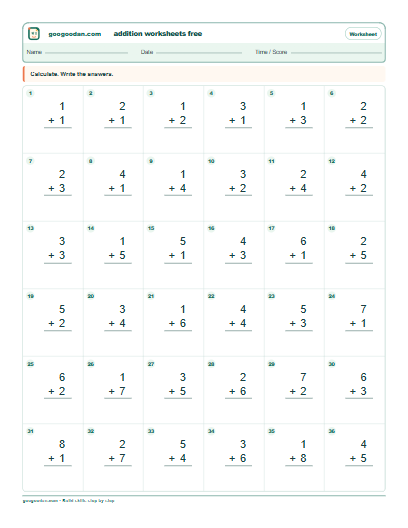 Column Addition: Sums to 9 Worksheet
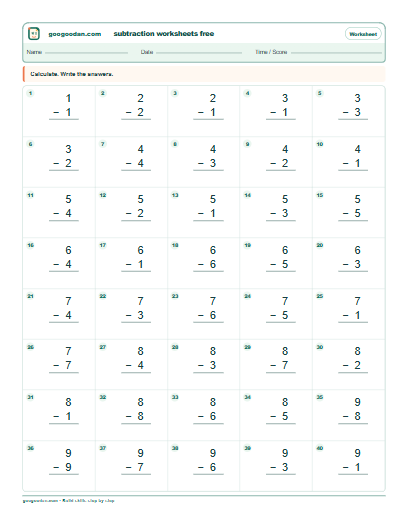 Column Subtraction within 9 Worksheet
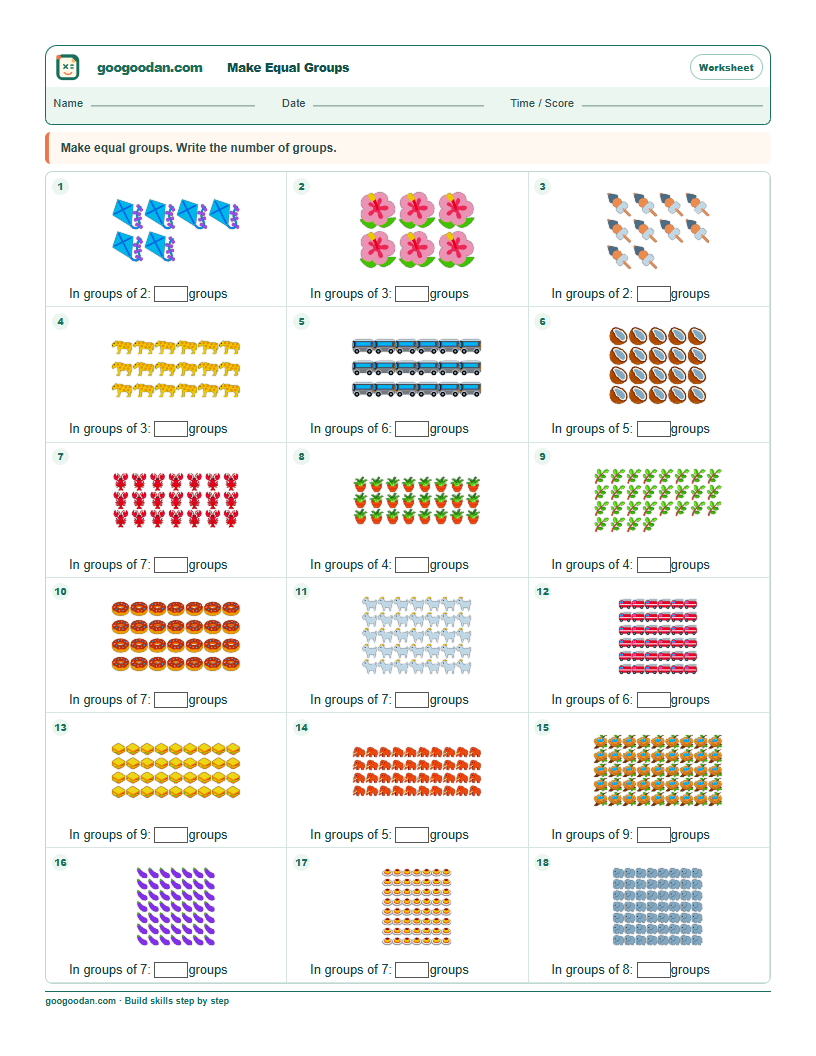 Multiplication, Equal Groups: Draw Equal Groups Worksheet
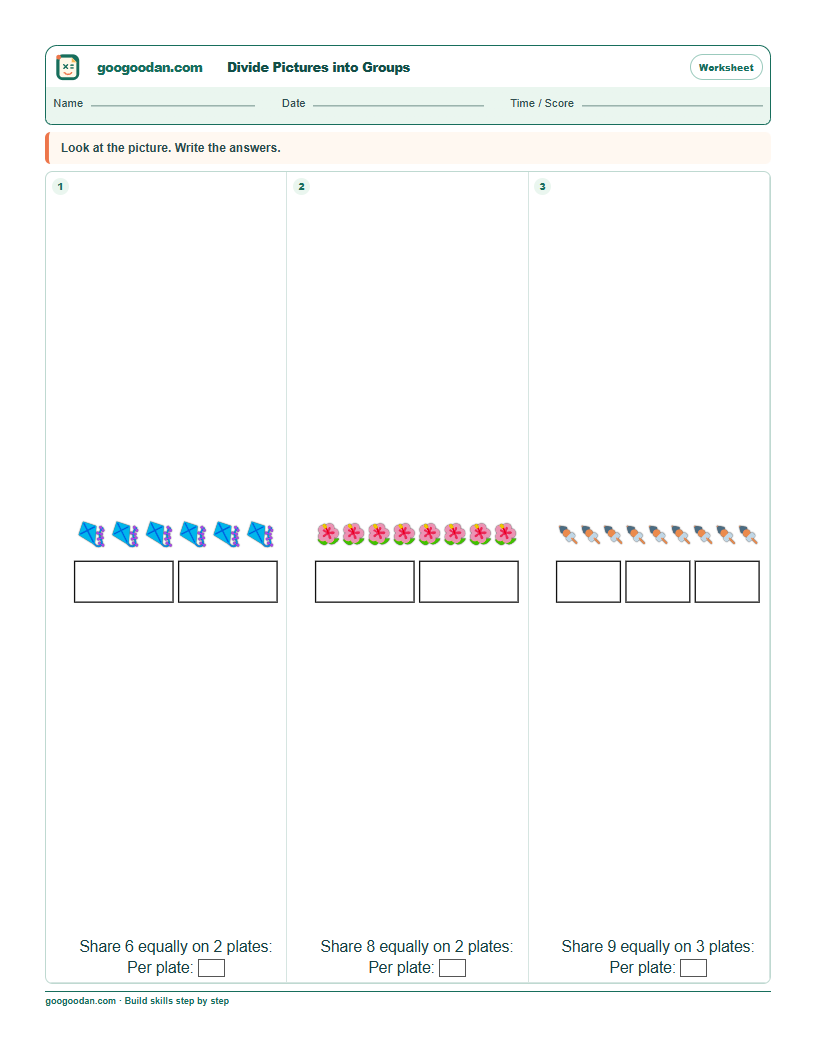 Division by Equal Sharing: Picture Problems Worksheet
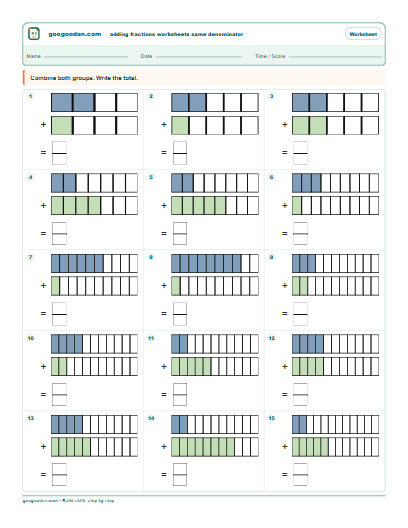 Adding Unit Fractions with Pictures: Join Picture Groups Worksheet
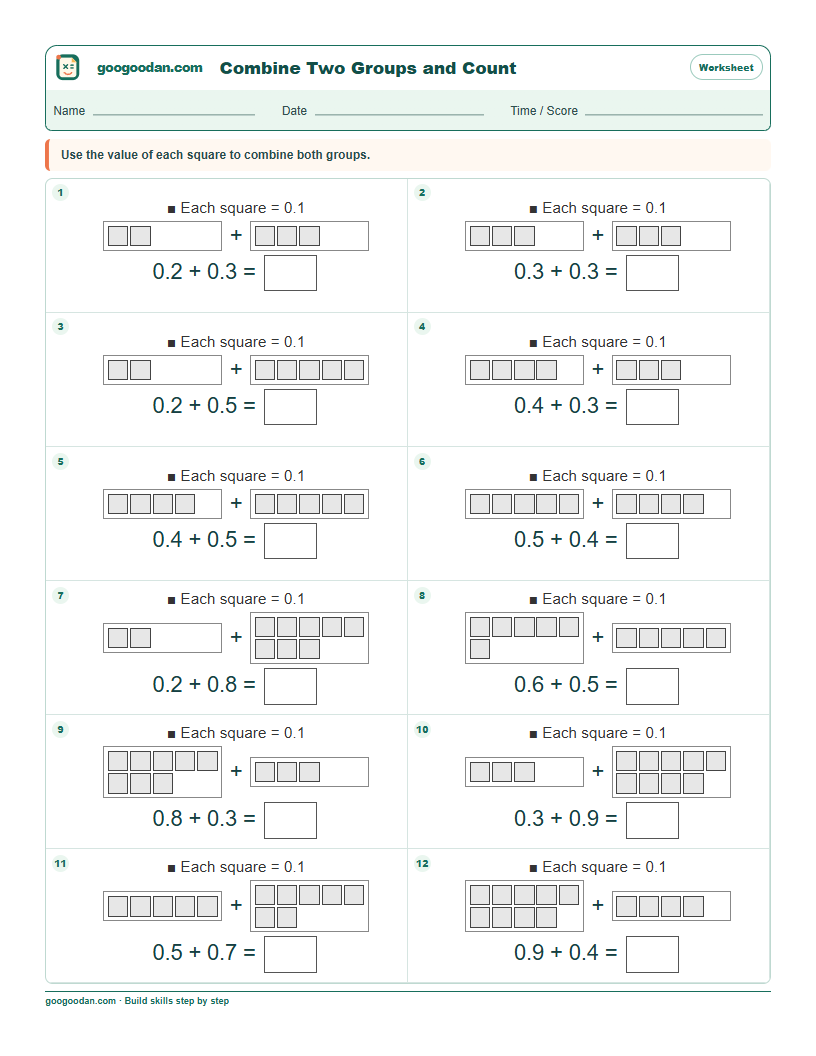 Adding Tenths with Pictures: Join Picture Groups Worksheet
More worksheet collections
- Times Tables Worksheets
- Addition and Subtraction Worksheets
- Multiplication and Division Worksheets
- Fractions and Decimals Worksheets
- KS2 Maths Worksheets: Years 3 to 6
Finding a useful maths worksheet
This collection can be used for a short review, extra independent practice or a way to revisit a skill after a lesson. Start by selecting the broad topic that matches the current work: number operations, fractions, decimals, measurement or another listed area. Then narrow the choice by the task described on the card, such as a written method, a missing number or a comparison. The closest match is usually more useful than a page with a larger number of questions. Follow the learner's current materials rather than treating the card order as a course sequence.
Preview before printing
Open a candidate sheet and inspect the question style before printing. Some pages ask for a calculation; others ask the learner to select a method or find an error. Choose Worksheet for practice, Answer Key to check, or both if an adult will mark the work. New Numbers creates a fresh set for the same activity. Print only what the learner can complete carefully in one sitting, and keep a note of the sheet title and any question type that caused difficulty so the next choice can be specific.
Choose a step that fits
Imagine a learner practising two-digit addition who can calculate 34 + 21 but is not yet comfortable when ones make a new ten. Choose a sheet that introduces carrying, rather than jumping to three-digit calculations. Work through 34 + 28: combine 4 and 8 to make 12 ones, write 2 ones and carry 1 ten; then add 3 tens, 2 tens and the carried ten to get 6 tens. The result is 62. Ask the learner to explain where the carried ten came from before trying a second question.
Common slips to catch
Frequent mistakes include choosing by grade label alone, switching topics after one wrong answer and printing the answer key before an attempt. A wrong answer can point to a narrow issue, such as place-value alignment or a sign being misread. Return to a visual or simpler format for one example, then try the selected sheet again. Use an estimate to notice answers that are far from a sensible range. If the task is not a good fit, choose a nearby skill and keep the same goal clear.