Geometry and Shape Worksheets for Primary Maths Practice
Build confidence with flat and solid shapes by naming them, noticing their features and comparing how they are put together. These activities suit primary learners working with shape names and properties.
Choose a worksheet to open the printable practice and answer key. The collection includes 14 worksheets for Primary learners.
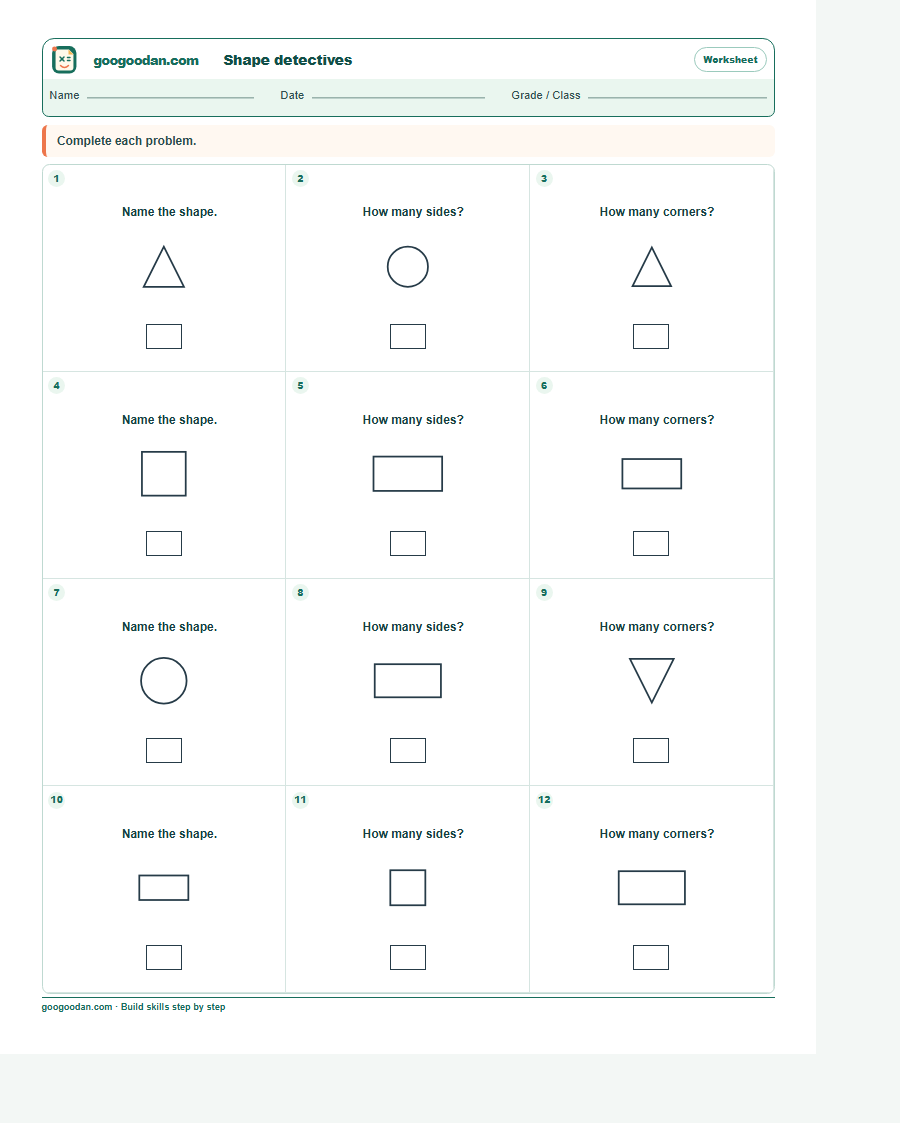 2D Shapes: Names, Sides and Corners Worksheet
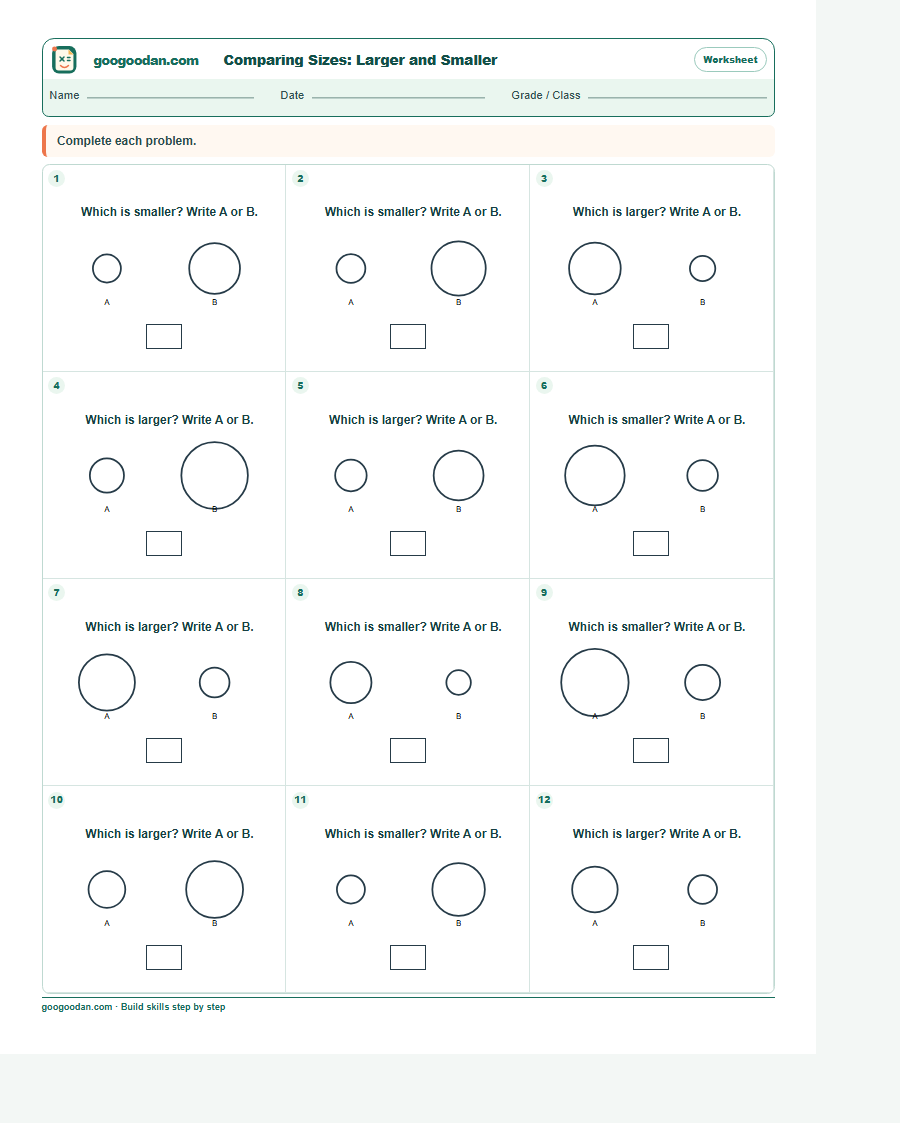 Comparing Sizes: Choose Larger and Smaller Shapes Worksheet
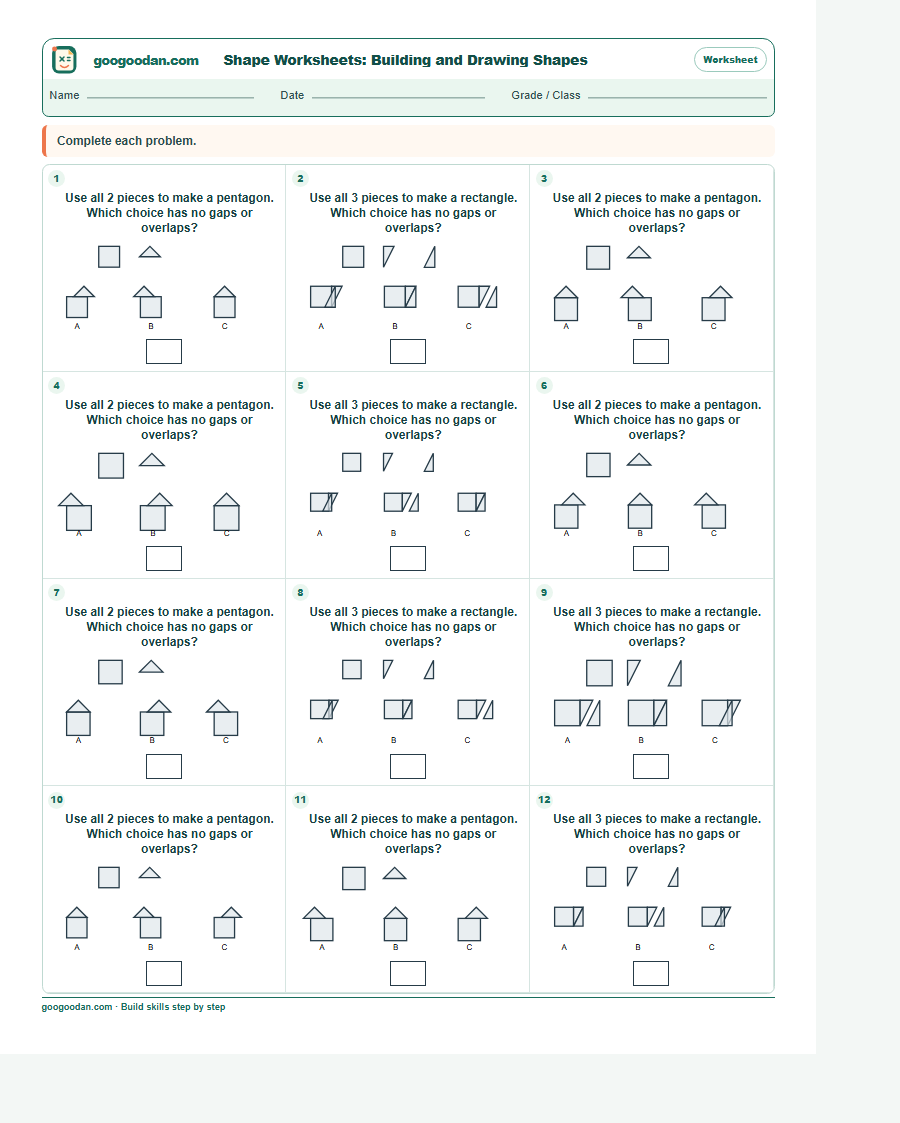 Compose Pentagons and Rectangles from Shape Pieces Worksheet
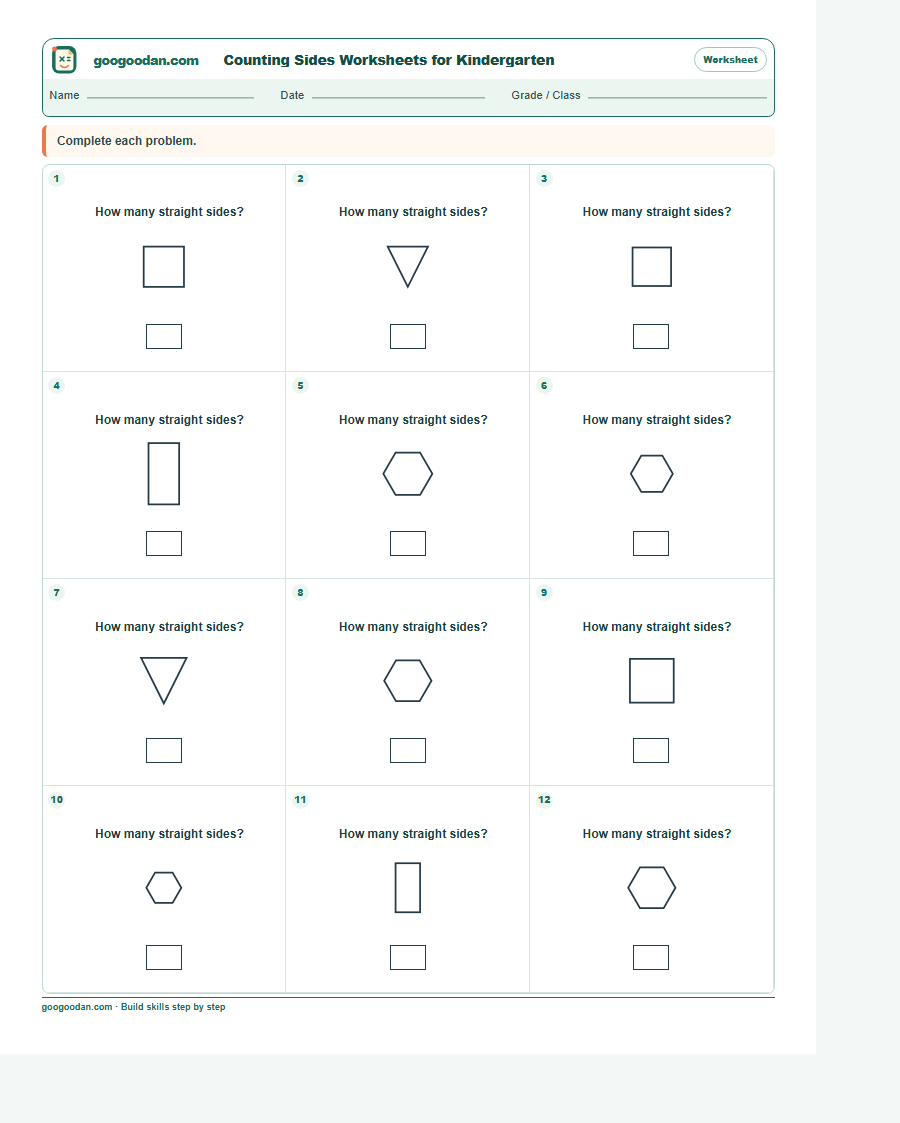 Counting Straight Sides on 2D Shapes Worksheet
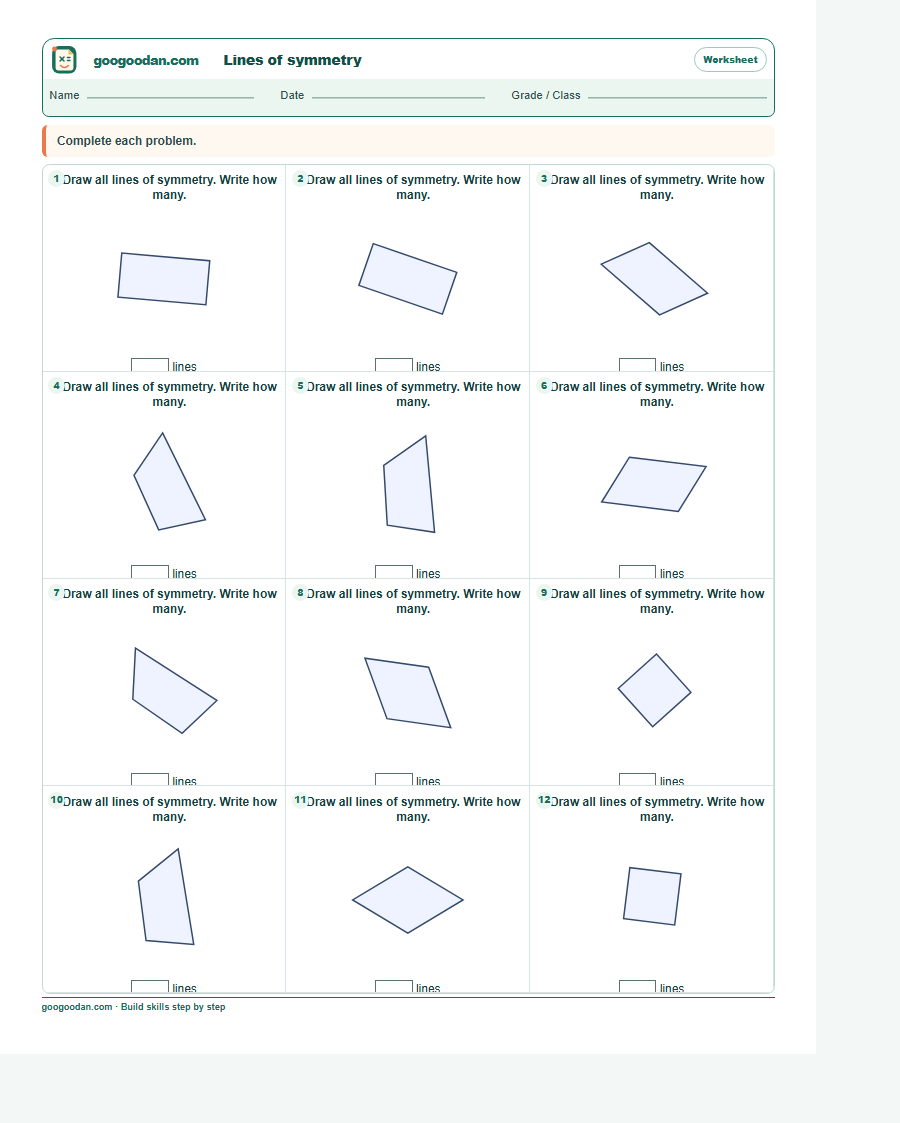 Lines of Symmetry: Draw and Count on Shapes Worksheet
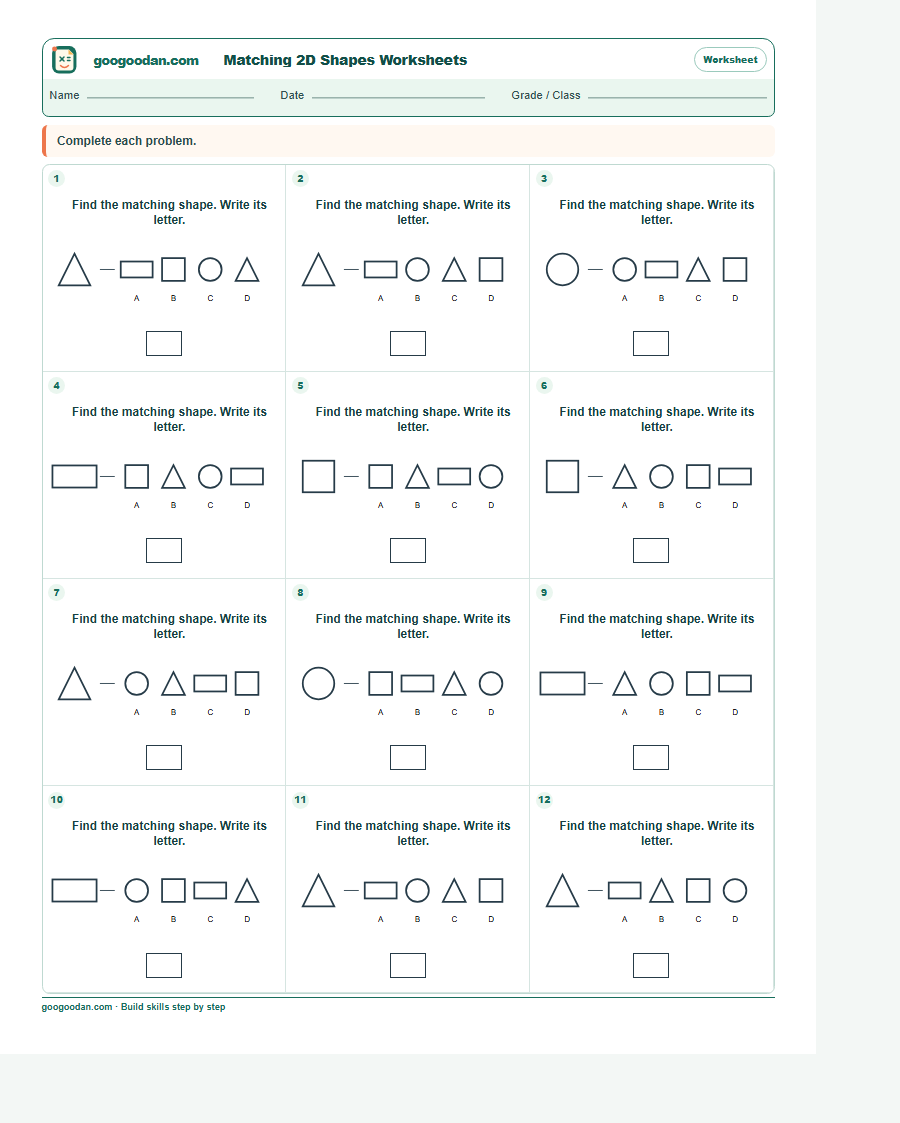 Matching 2D Shapes: Choose the Same Shape Worksheet
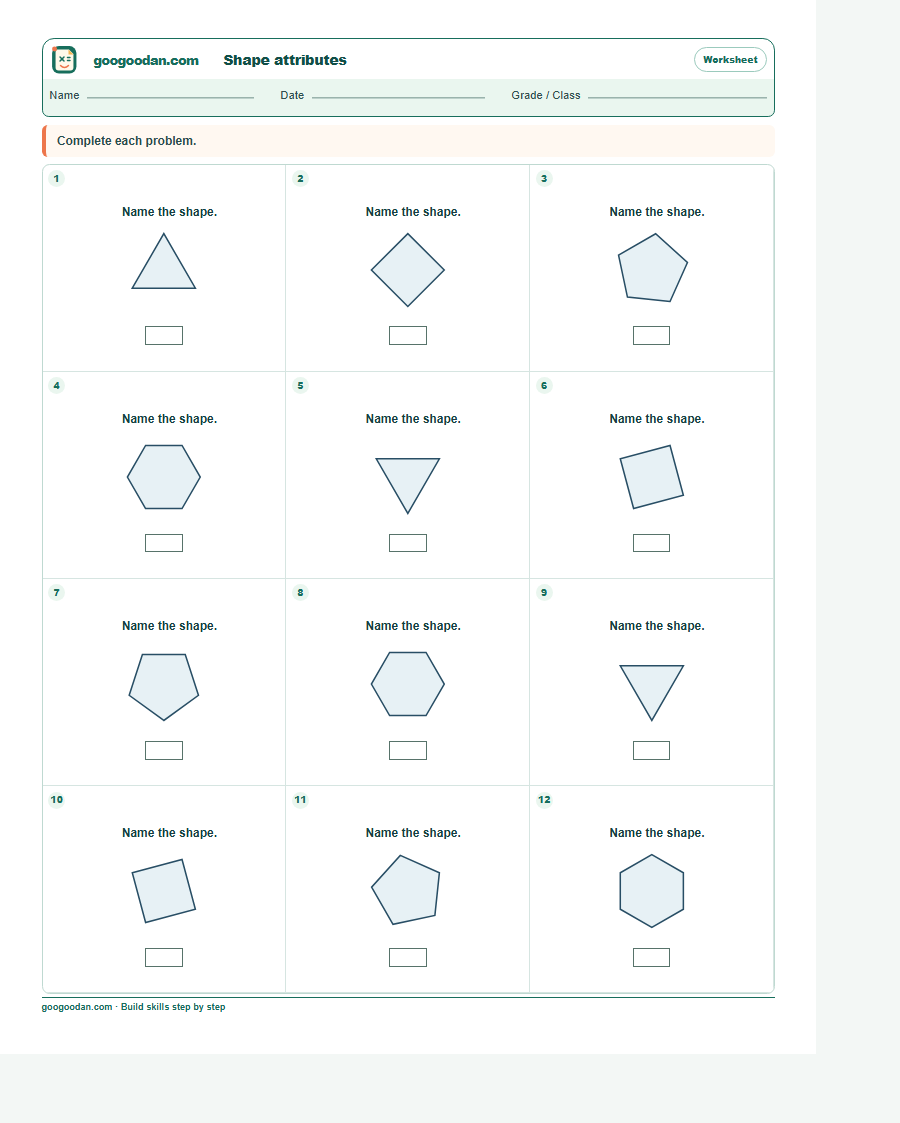 Naming 2D and 3D Shapes from Pictures Worksheet
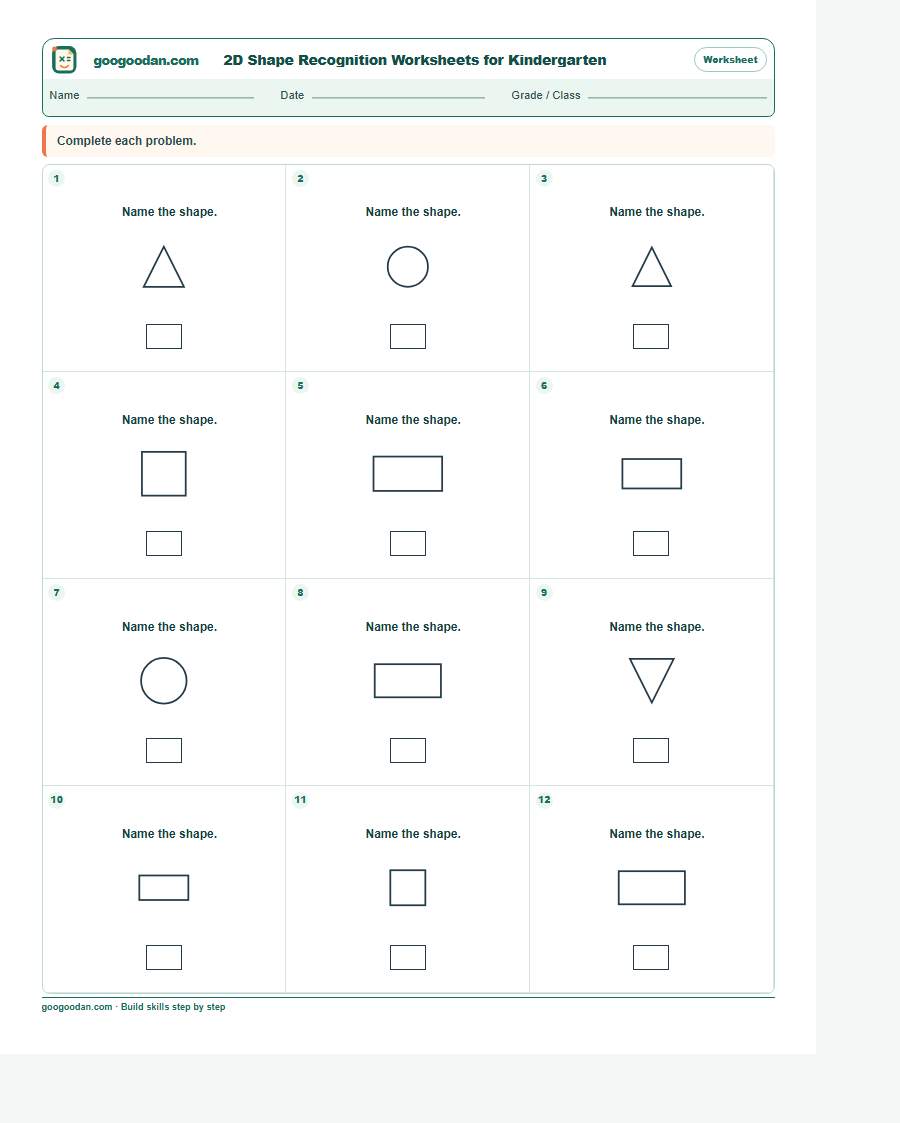 Naming 2D Shapes: Circles, Triangles and Quadrilaterals Worksheet
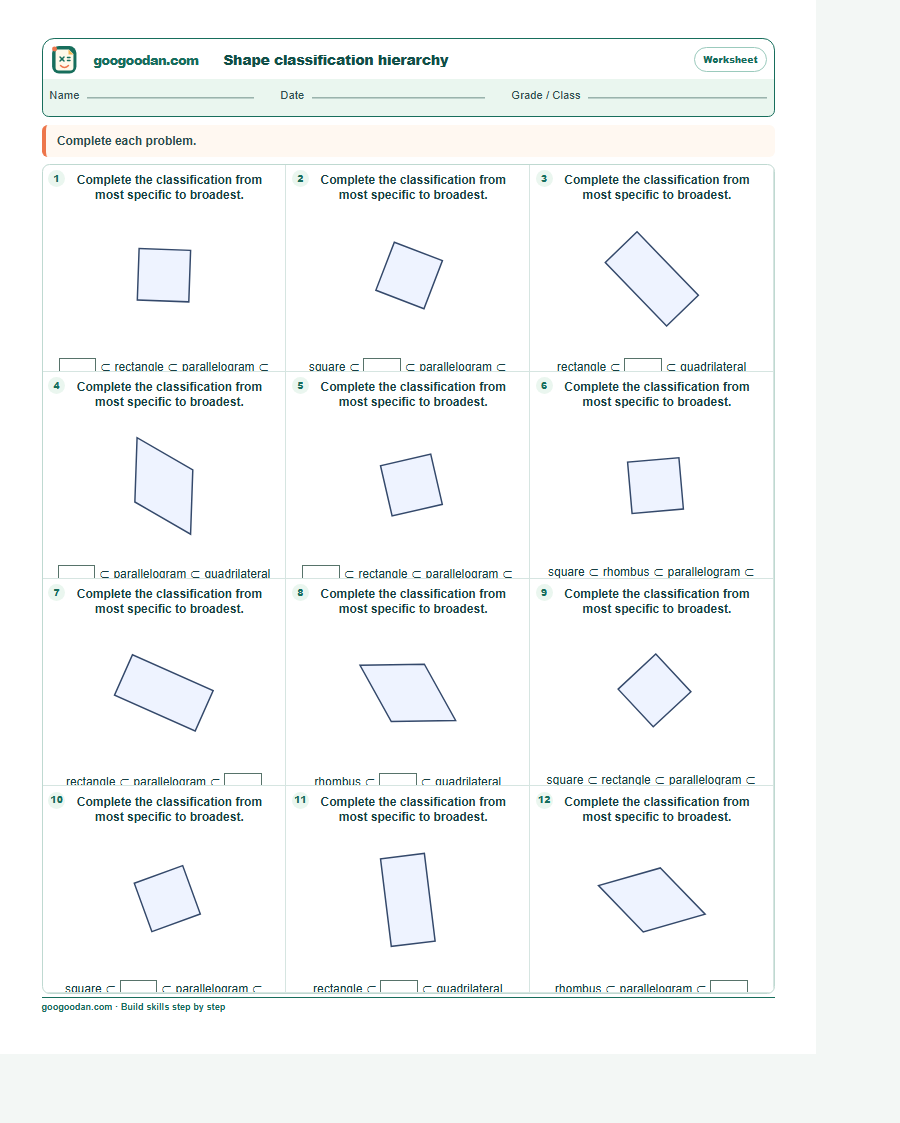 Quadrilateral Hierarchy: Complete Shape Families Worksheet
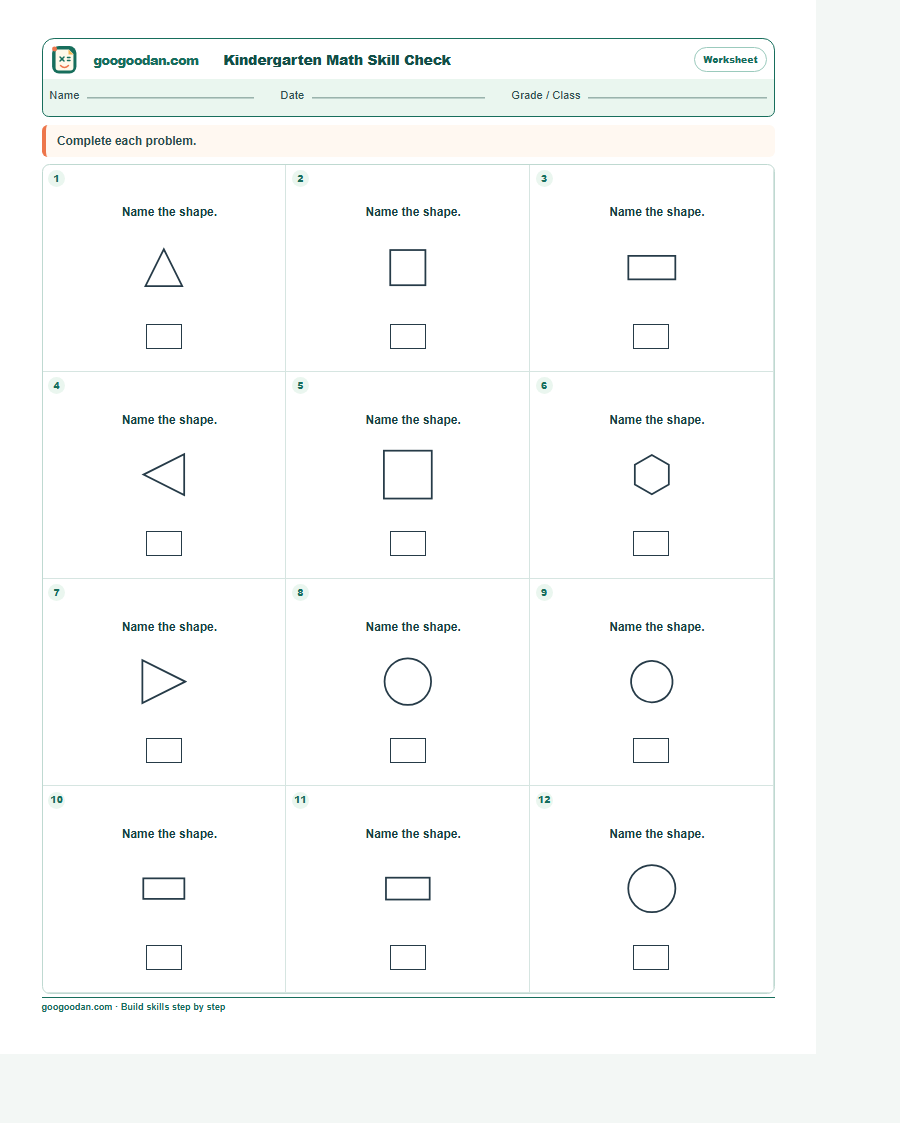 Recognising 2D Shapes: Write Each Name Worksheet
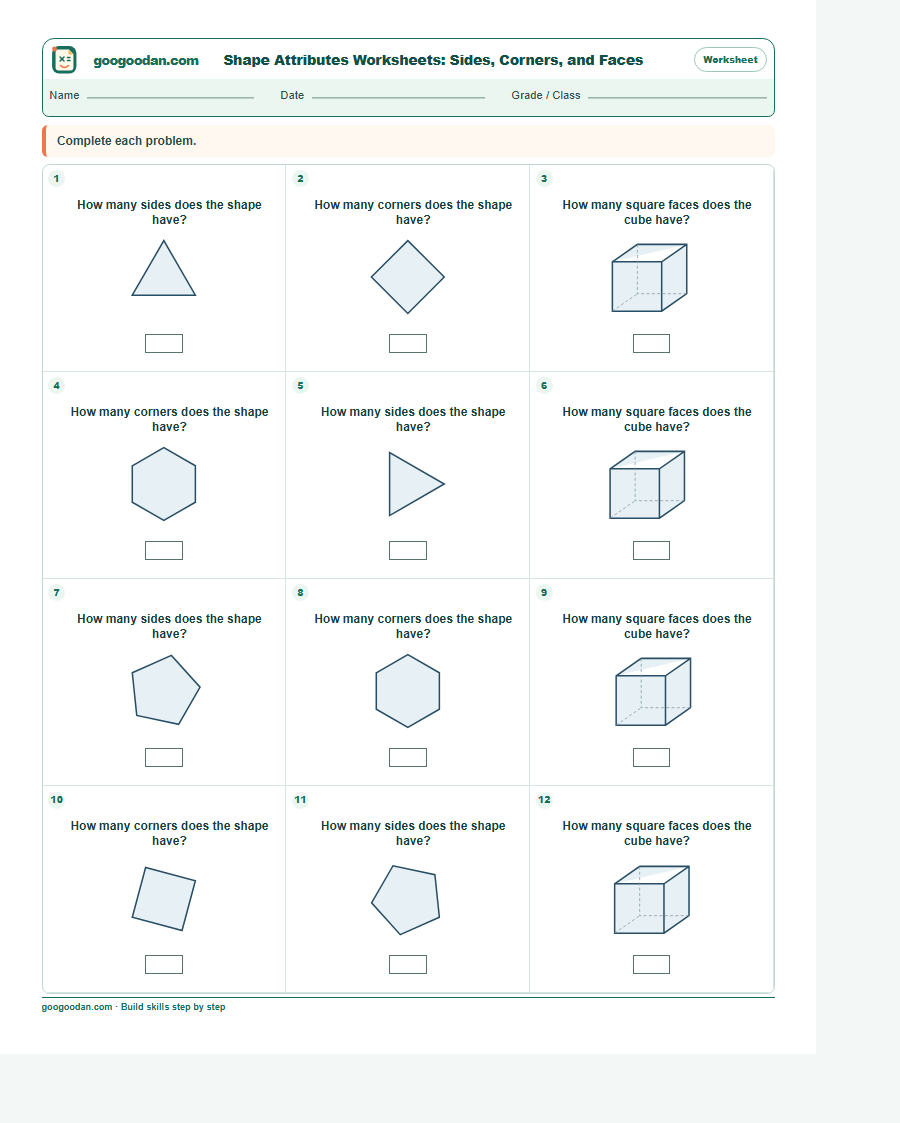 Shape Properties: Count Sides, Corners and Cube Faces Worksheet
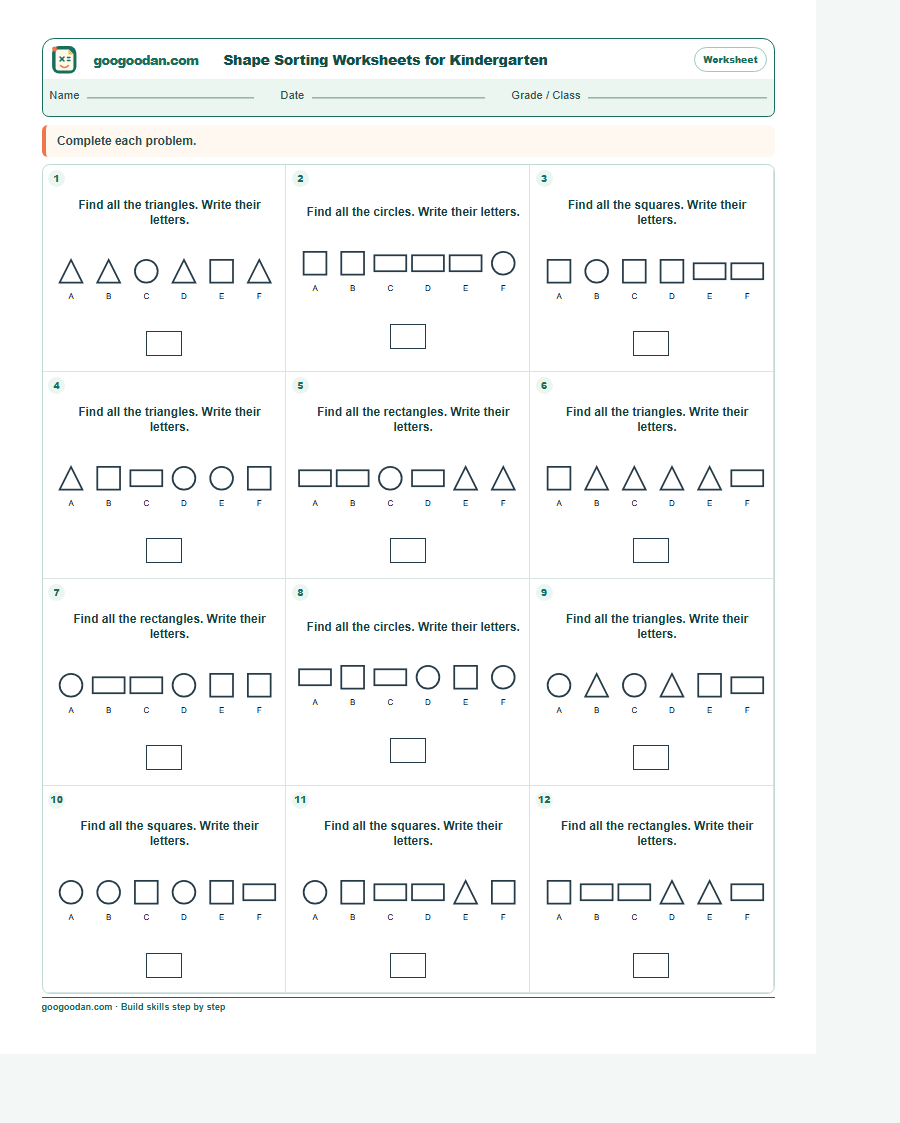 Sorting 2D Shapes: Find All Matching Names Worksheet
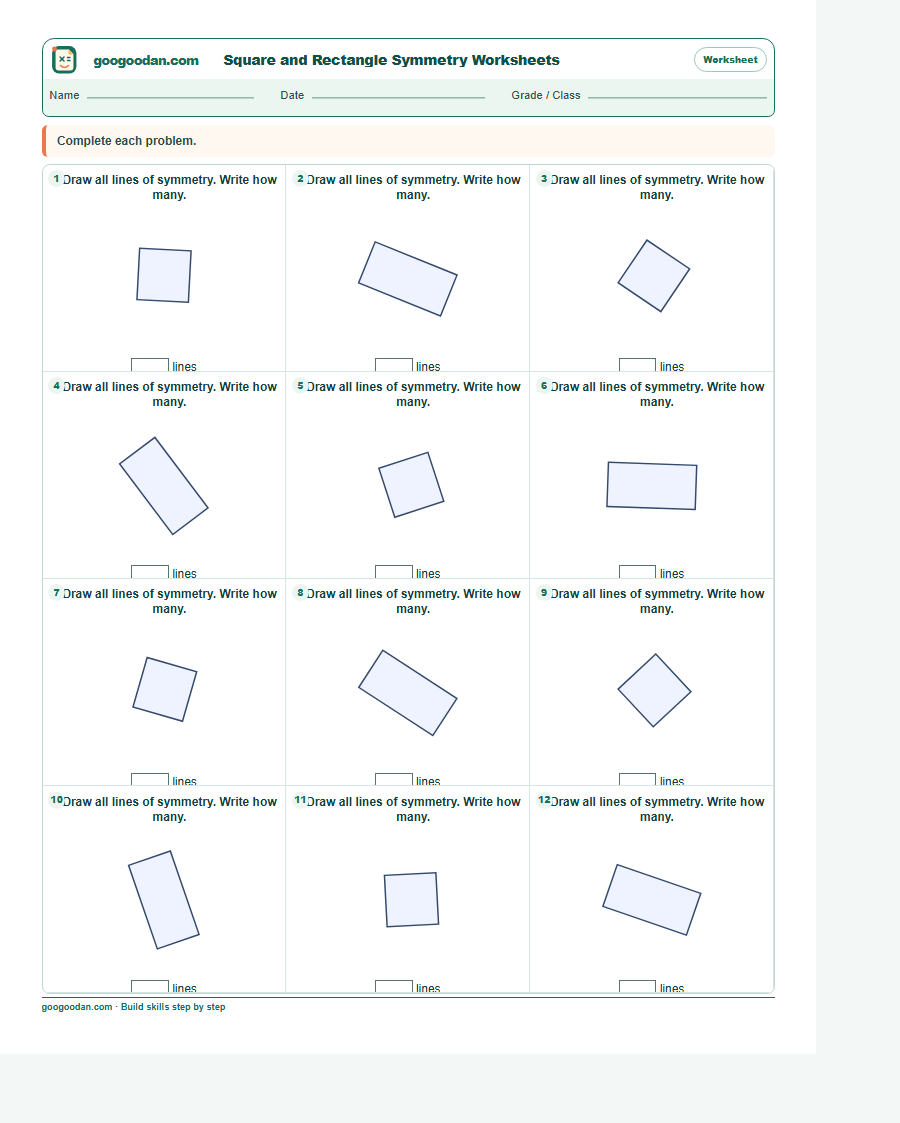 Square and Rectangle Symmetry: Draw Every Axis Worksheet
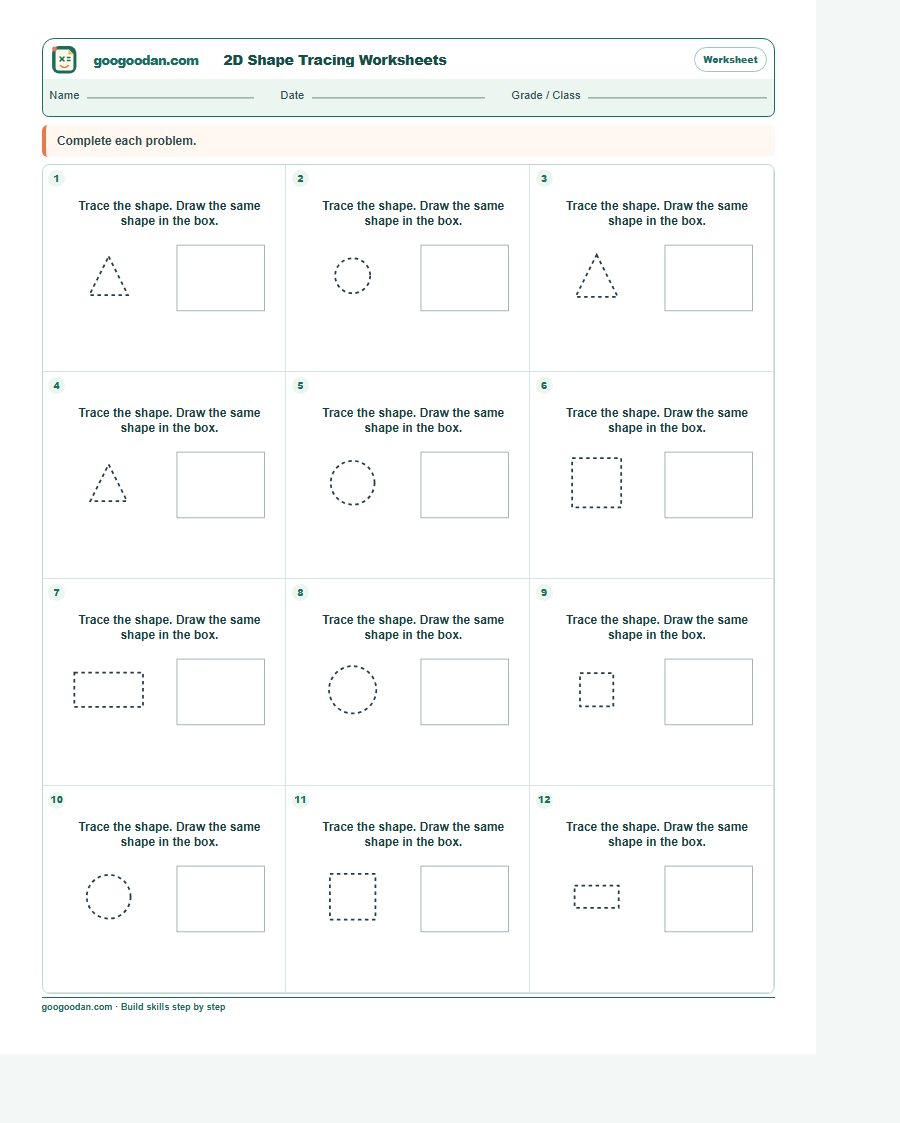 Tracing and Drawing 2D Shapes in Boxes Worksheet
More worksheet collections
- Measurement Worksheets for Primary Maths Practice
- Reception Maths Worksheets: Counting and Number Facts
- Geometry and Shape Worksheets for Primary Maths Practice
- Measurement Worksheets for Primary Maths Practice
- Reception Maths Worksheets: Counting and Number Facts
Choosing shape and geometry practice
Shape work begins with noticing and describing features, then moves towards comparing, drawing and reasoning about them. Choose a page that matches the learner's current vocabulary: naming a shape, counting sides and vertices, identifying right angles, or considering symmetry. Three-dimensional shapes can be discussed by their faces, edges and vertices. A task with a diagram may be easier to enter than a written description, while a classification page asks the learner to explain which features matter. Select one feature at a time before combining them.
Look at diagrams before printing
Check whether the task requires a ruler, tracing or a written explanation. Worksheet gives the questions; Answer Key can be used after the learner has described a first answer. When a shape is unfamiliar, rotate the page or draw the shape in a different orientation to show that its name depends on its features, not its position. Keep a small vocabulary list nearby and ask the learner to point to the feature being named rather than guessing from the outline.
Sort by a stated property
For example, a rectangle has four sides and four right angles. A square is also a rectangle because it has those features, and it adds the condition that all four sides are equal. A learner who sorts shapes only by appearance may separate squares from rectangles, so state the rule and test it against each shape. For a line of symmetry, fold or imagine folding the figure: both sides should match. This turns a visual impression into a checkable property.
Common slips to catch
Common slips include counting corners twice, calling every four-sided shape a rectangle, and assuming a shape changes category when it is tilted. Trace around the boundary while counting sides, and name the angle or length condition used to classify it. For a solid, distinguish a flat face from an edge where two faces meet. If a diagram is not to scale, rely on marked properties and written clues rather than measuring the picture. Ask for a reason alongside each label.