Measurement Worksheets for Primary Maths Practice
Practise reading clocks, comparing lengths and choosing suitable ways to measure. The worksheets cover early measurement ideas through upper primary units.
Choose a worksheet to open the printable practice and answer key. The collection includes 17 worksheets for Primary learners.
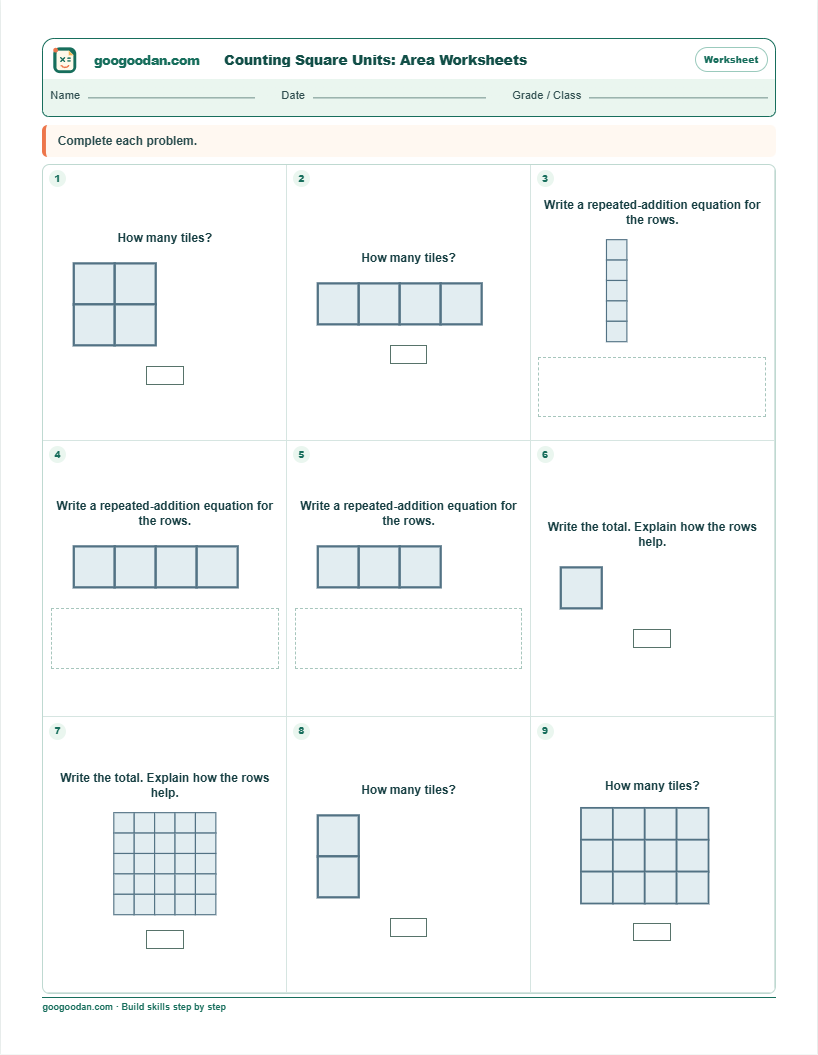 Area in Square Units: Tiles and Repeated Addition Worksheet
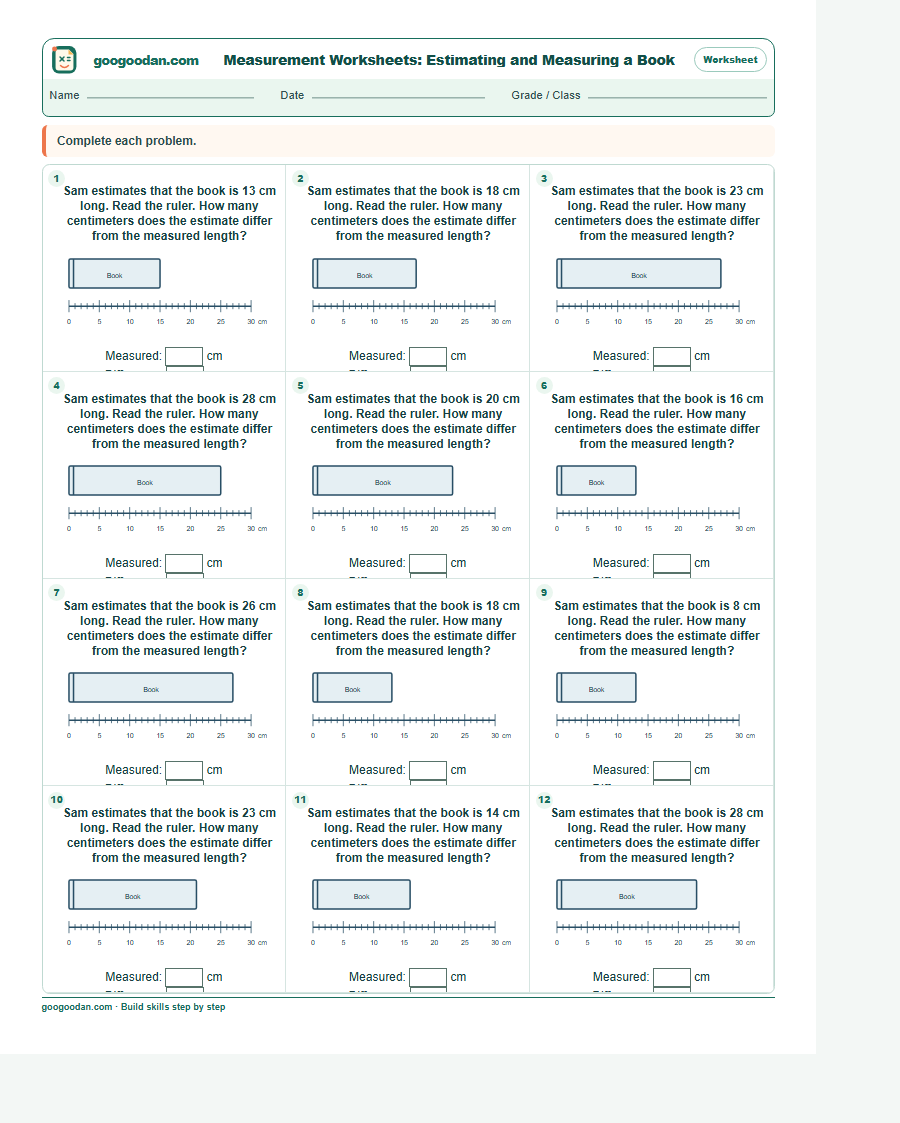 Book Length: Compare Estimates with Ruler Measurements Worksheet
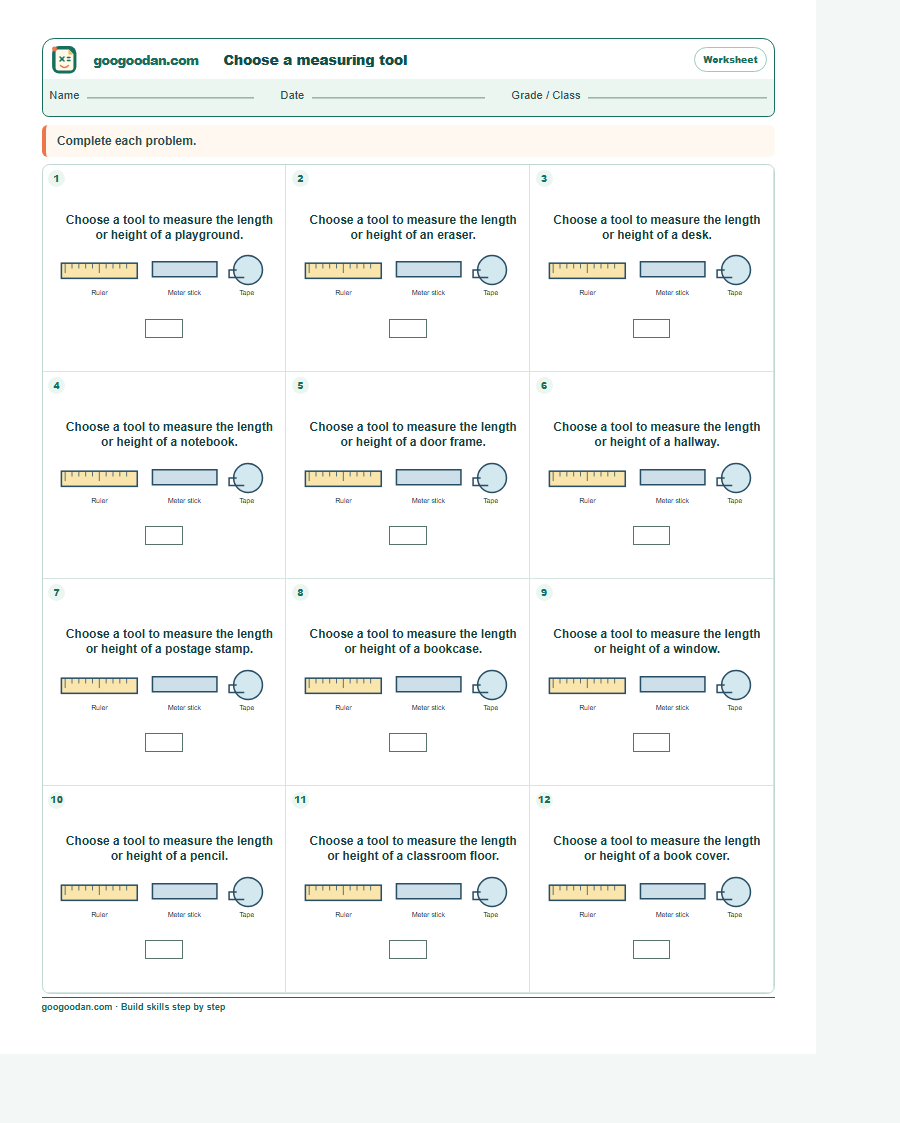 Choosing Measuring Tools for Length and Height Worksheet
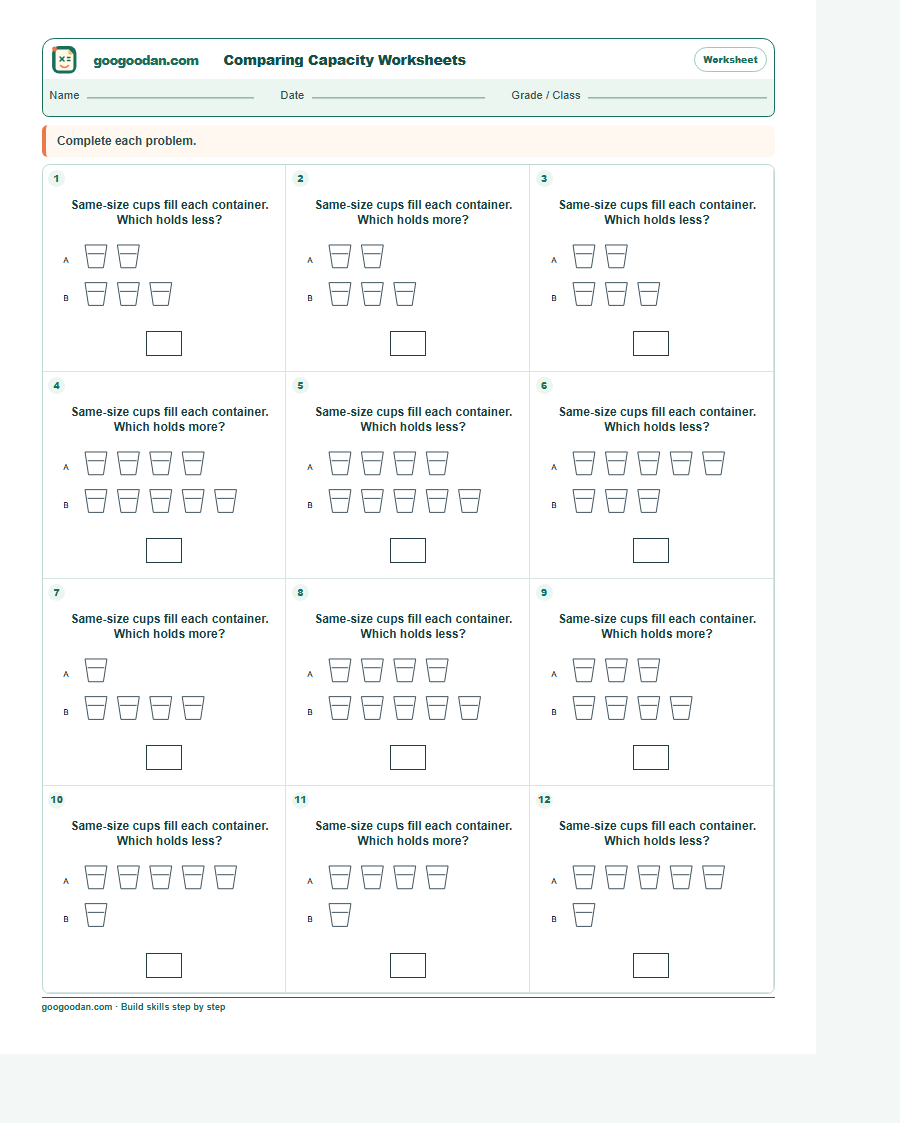 Comparing Capacity Using Equal-Sized Cups Worksheet
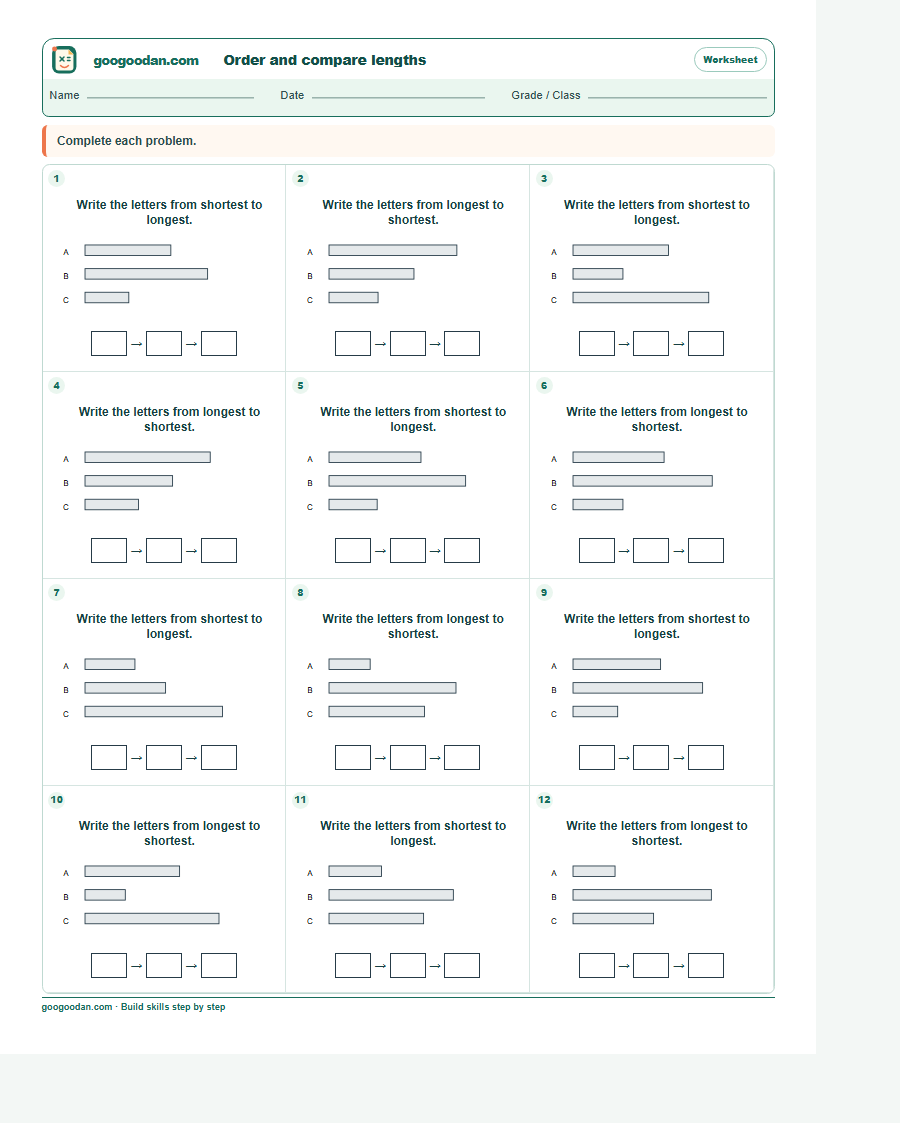 Comparing Three Lengths: Shortest and Longest First Worksheet
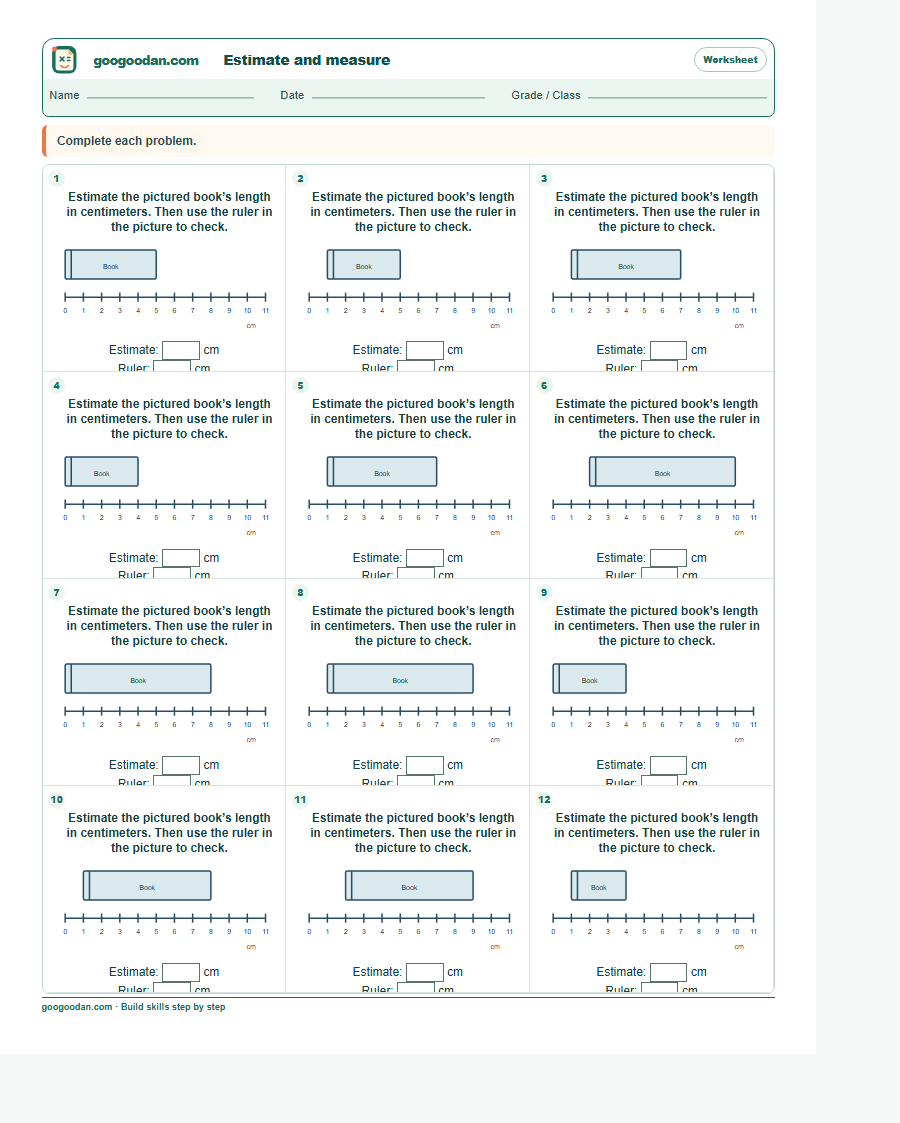 Estimate Book Lengths in Centimetres and Check Rulers Worksheet
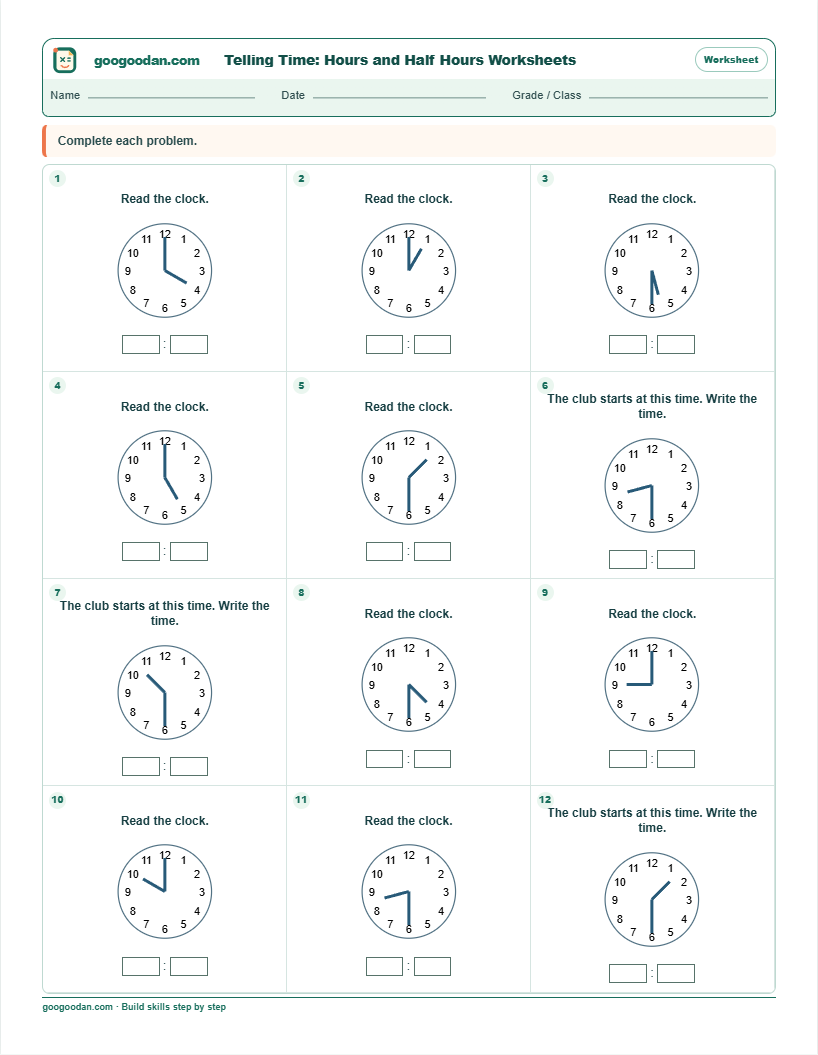 Hours and Half Hours: Clocks and Daily Events Worksheet
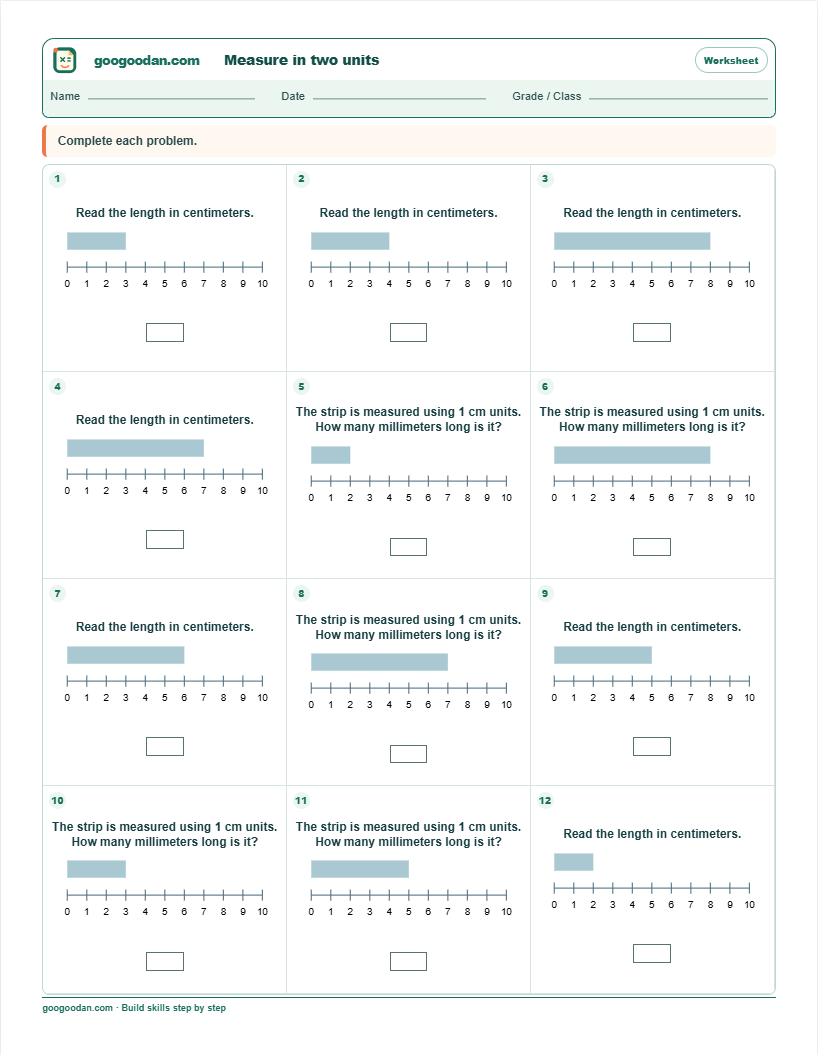 Measuring Length in Centimetres and Millimetres Worksheet
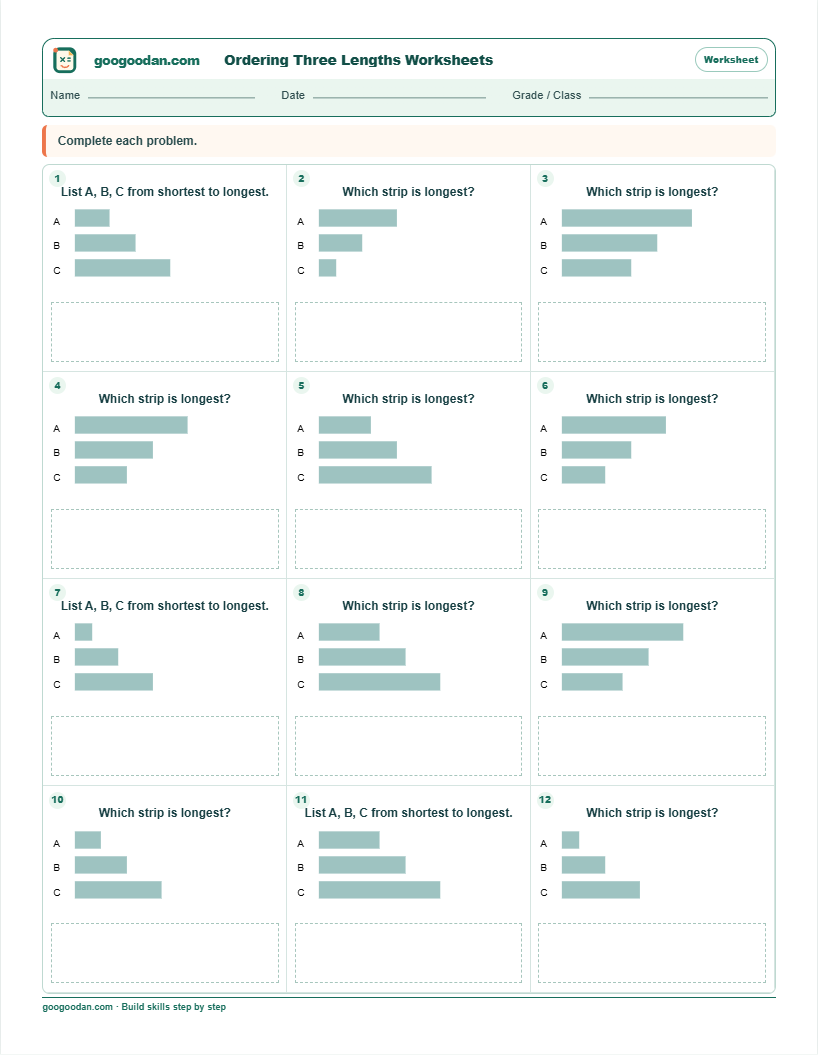 Finding the Longest of Three Lengths Worksheet
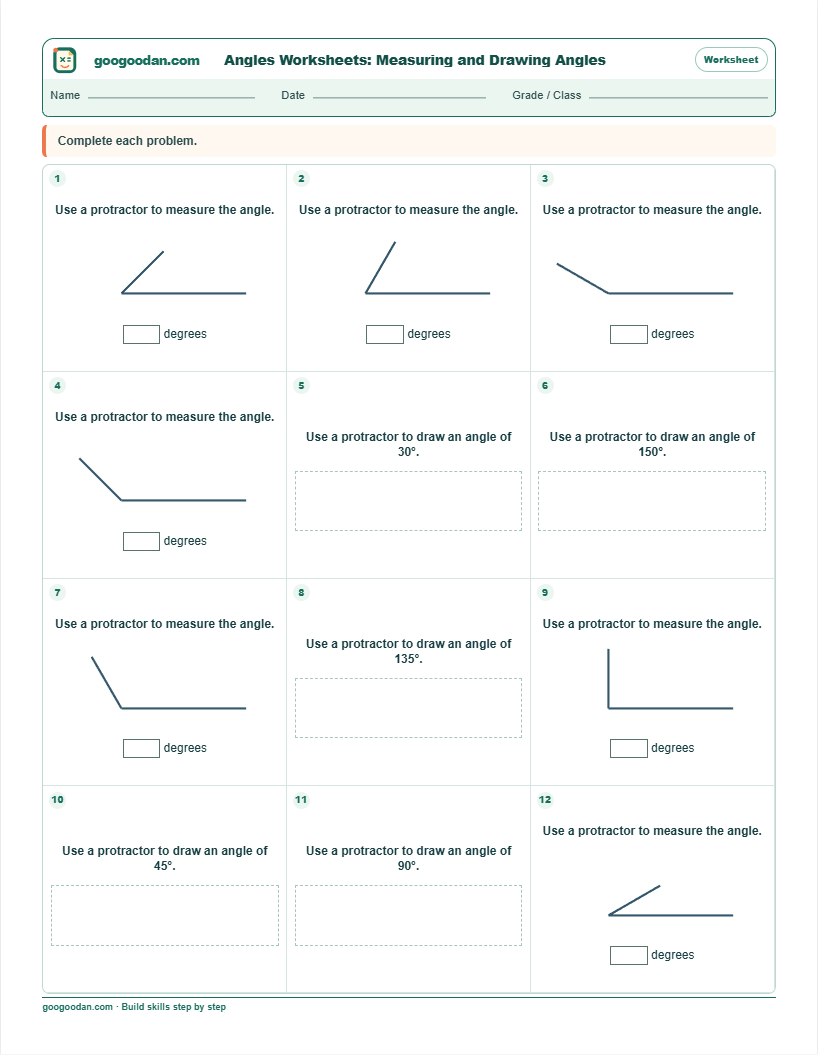 Protractor Practice: Measuring and Drawing Angles Worksheet
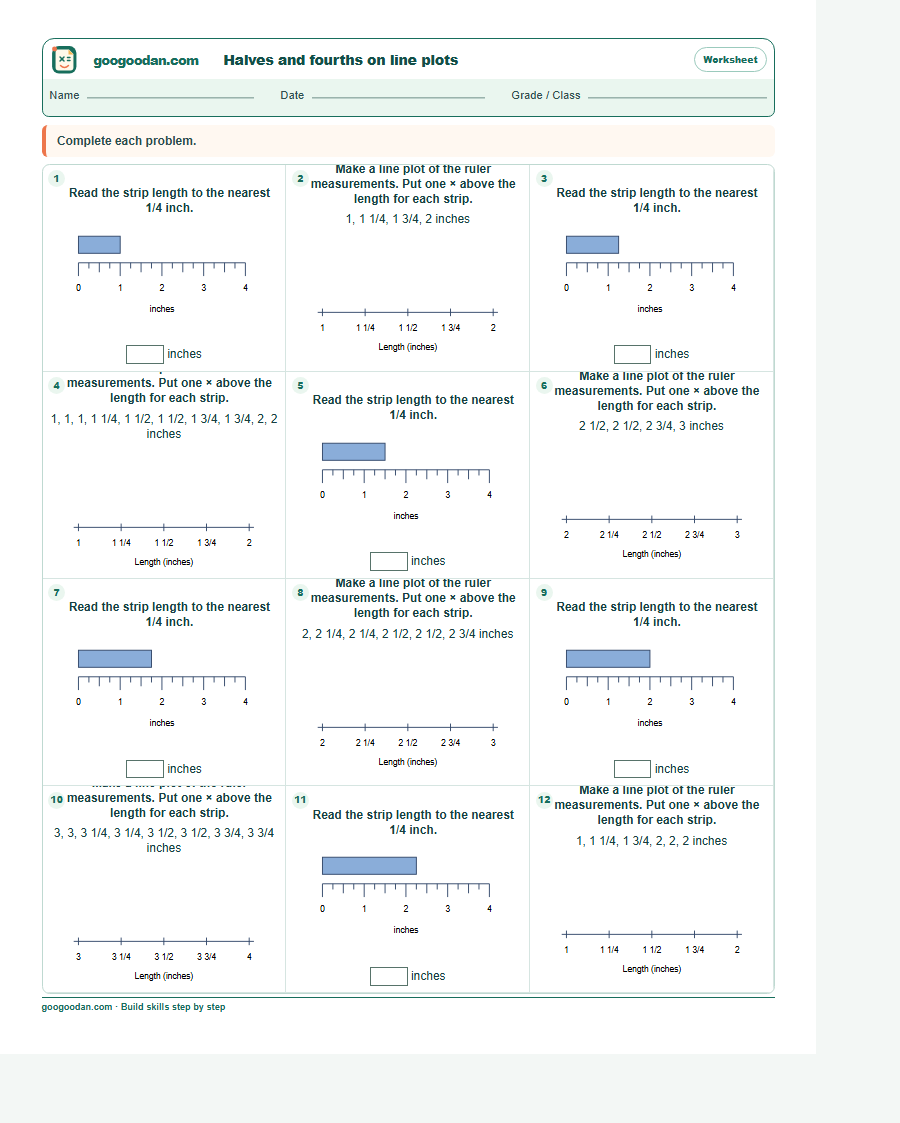 Optional Imperial: Quarter-Inch Measurements — Read Rulers and Plot Data Worksheet
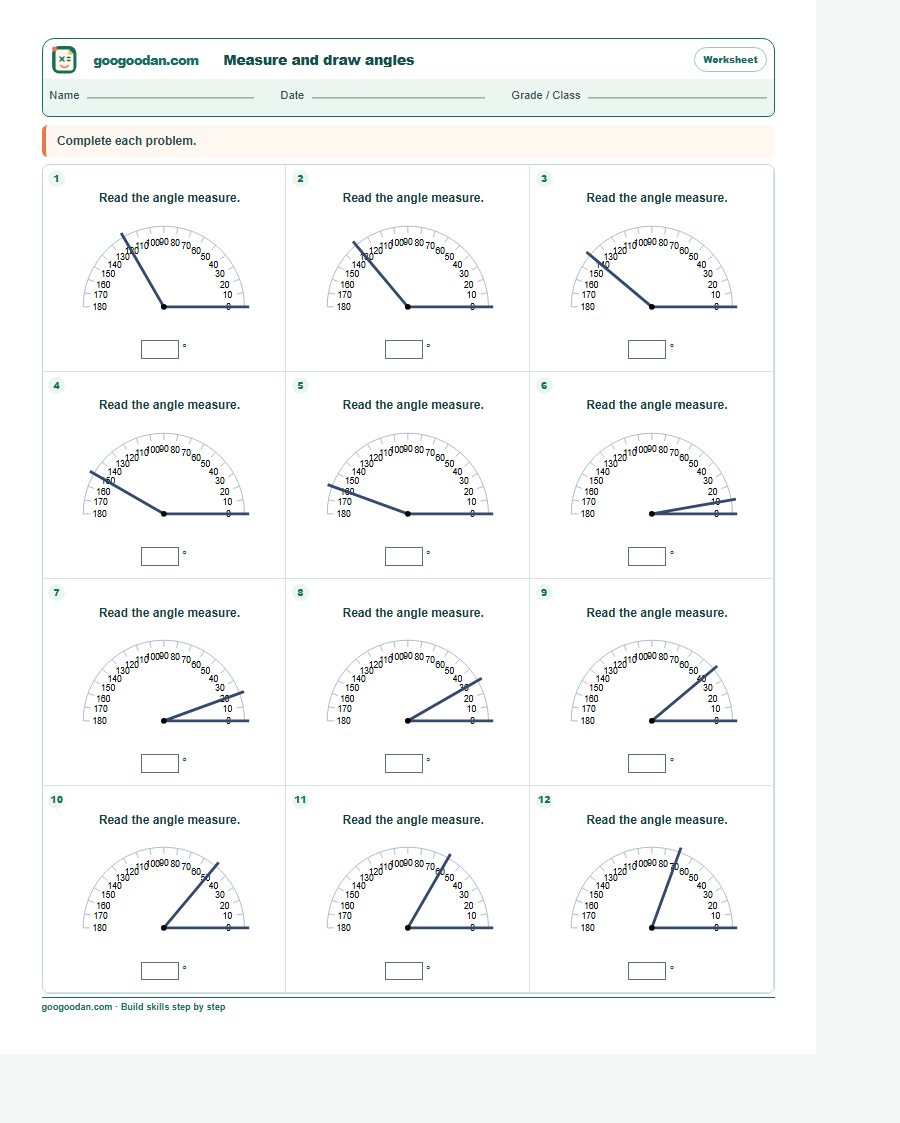 Reading Angles on a Drawn Protractor Worksheet
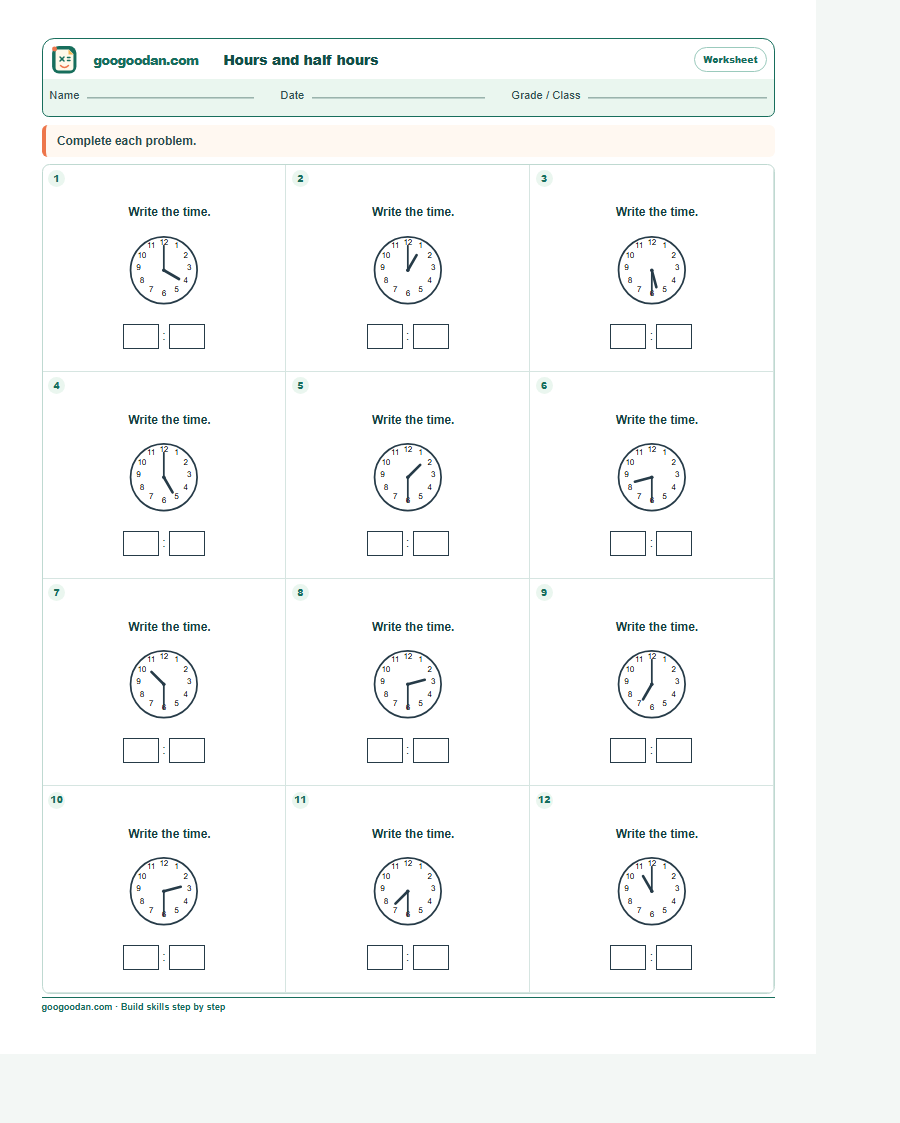 Telling Time: Hours and Half Hours, Digital Answers Worksheet
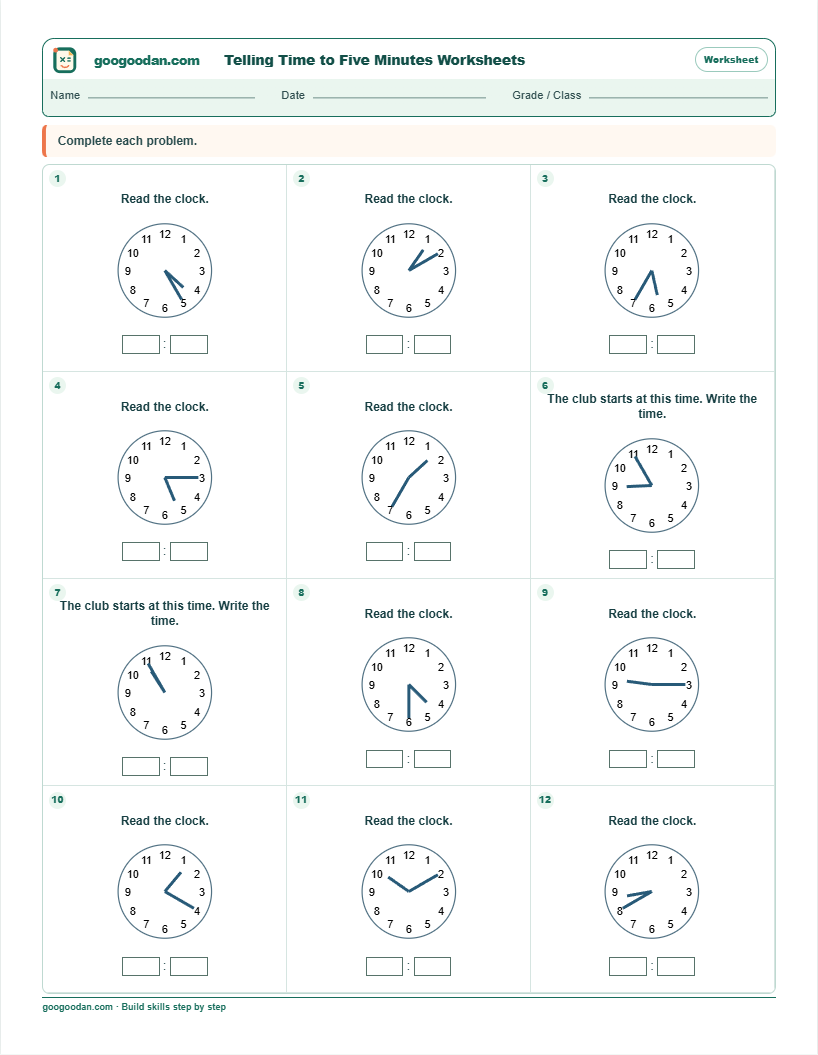 Telling Time to 5 Minutes: Clocks and Daily Events Worksheet
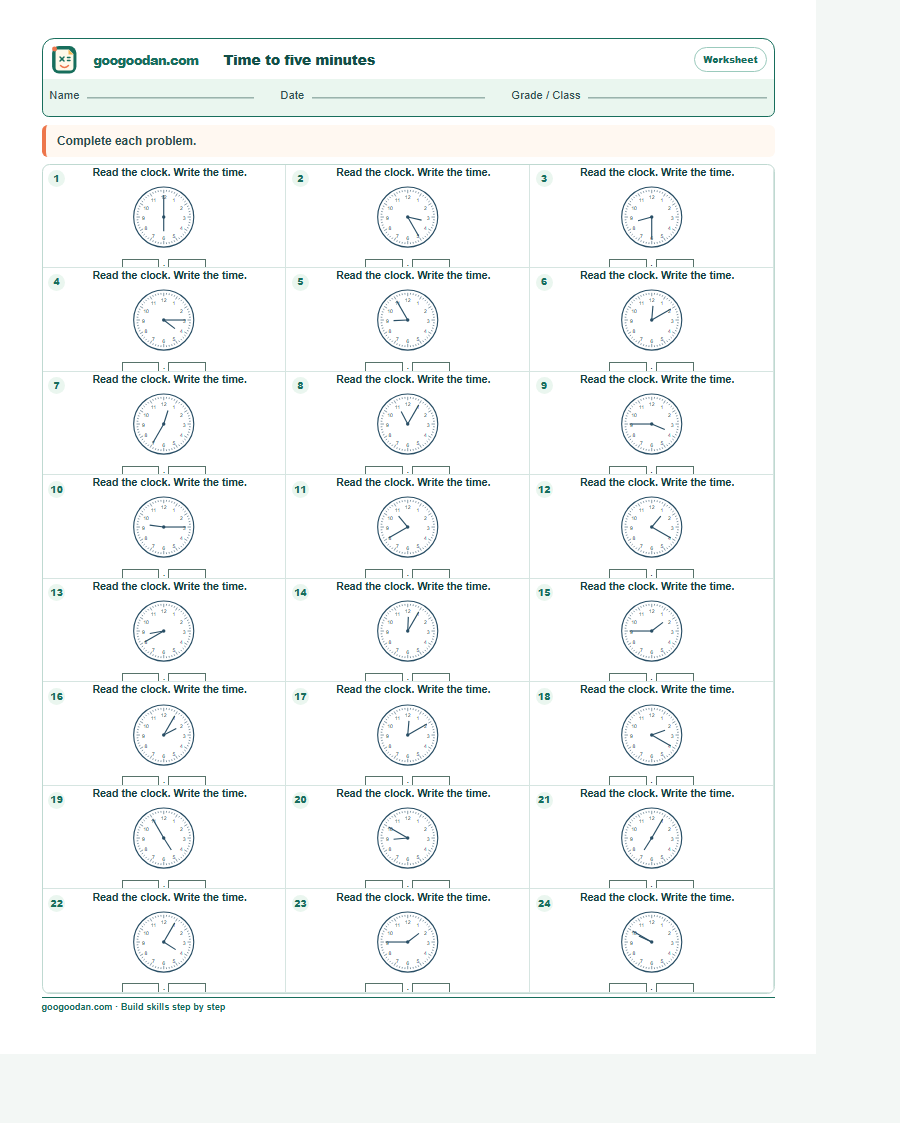 Telling Time to 5 Minutes: Read Clocks and Write Times Worksheet
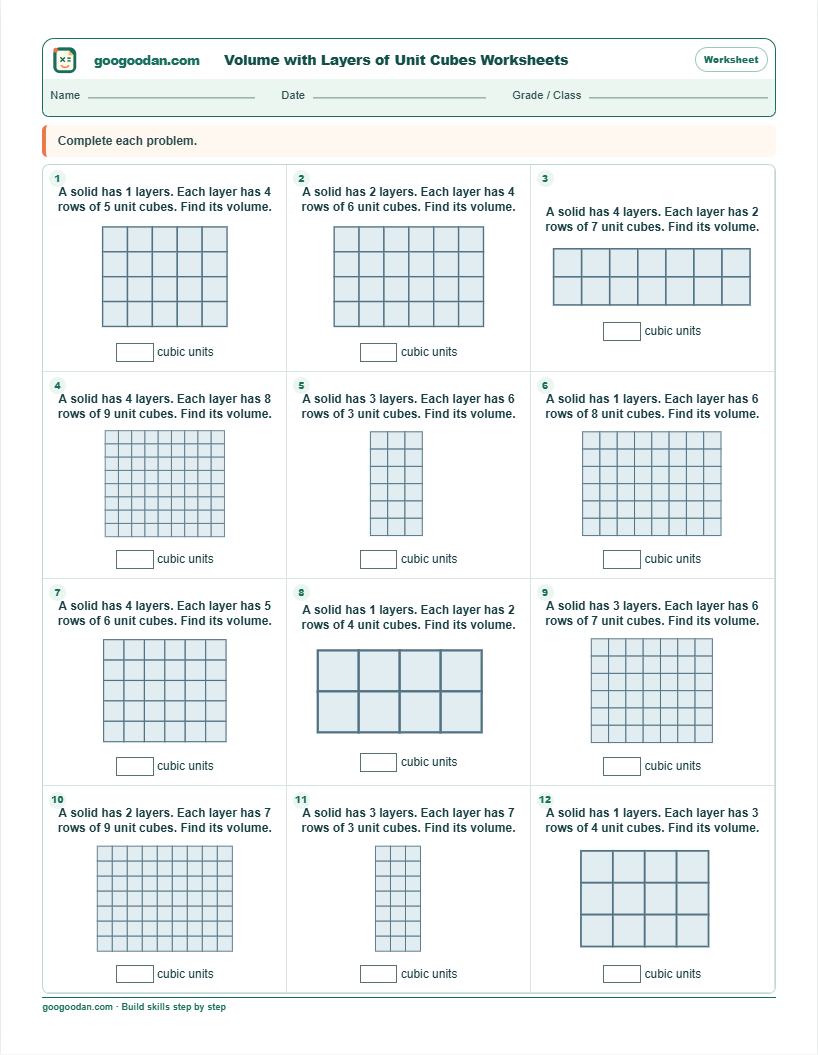 Volume of Unit Cubes: Multiply Rows and Layers Worksheet
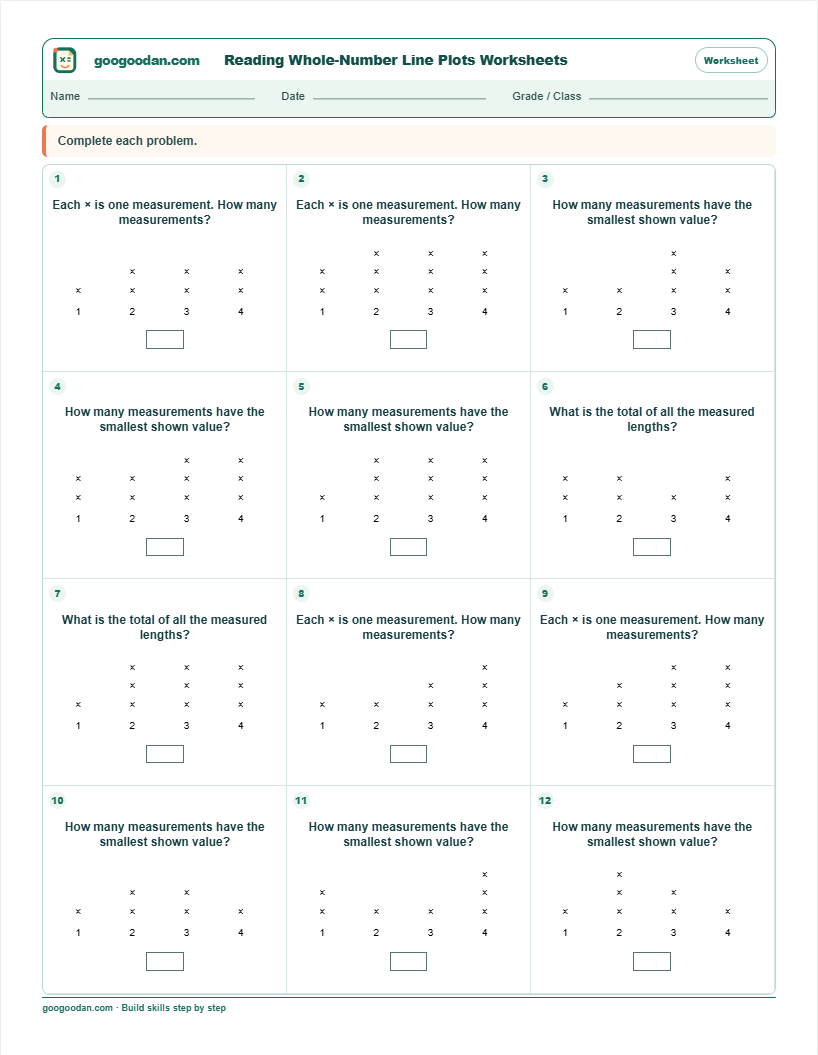 Whole Number Line Plots: Frequencies and Total Length Worksheet
More worksheet collections
- Shape Worksheets for Primary Maths Practice
- Reception Maths Worksheets: Counting and Number Facts
- Measurement Worksheets for Primary Maths Practice
Choosing measurement practice
Measurement pages can practise reading a scale, comparing lengths, understanding time, or using units in a calculation. Select the sheet by the quantity and representation shown in its title. If a learner is learning to read a clock, begin with a clear clock face and a single kind of time question. Length and capacity tasks benefit from comparing objects or containers before writing a number. More advanced conversions should follow only when the learner knows what each unit represents and can explain whether the answer should grow or shrink.
Check units and materials
Before printing, check the units and whether a ruler, clock or other object is needed. Use the worksheet as a prompt to measure or reason, not just to copy a number. Choose Worksheet to attempt the questions, Answer Key to check, or both for guided practice. If the page includes a mixture of units, mark each unit beside the working and convert one value at a time. Fresh numbers are useful for repeating the same skill, but keep the measuring tool and scale readable on the printed sheet.
Make a fair comparison
For a length example, convert 2 metres 35 centimetres to centimetres. Since one metre is 100 centimetres, 2 metres is 200 centimetres; adding 35 gives 235 centimetres. To compare 1.8 metres with 175 centimetres, write 1.8 metres as 180 centimetres first, then see that 180 is greater than 175. Converting to a common unit makes the comparison fair. A real ruler can also help the learner check that the sizes make sense.
Common slips to catch
Common errors include writing a conversion in the wrong direction, forgetting to include the unit and reading a scale from the wrong starting mark. Ask what one division on the scale represents before counting. When converting, say the relationship aloud and use it to decide whether multiplication or division is appropriate. Record the unit in every line so it cannot disappear from the final answer. For time, check whether the question asks for a clock time or an elapsed duration, as these require different reasoning.