Reception Maths Worksheets: Counting and Number Facts
These early activities focus on counting small groups, recognising numerals and building number bonds. Number facts stay within 10 to support first steps in addition and subtraction.
Choose a worksheet to open the printable practice and answer key. The collection includes 13 worksheets for Reception learners.
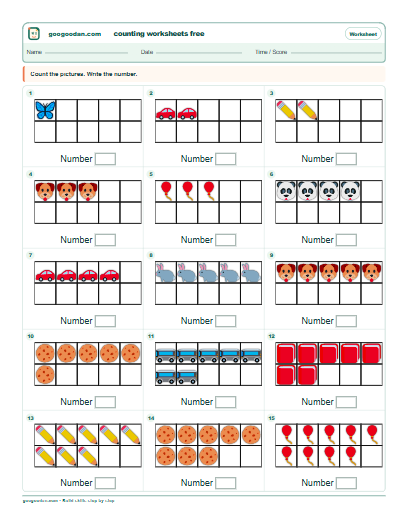 Counting Objects to 9 Worksheet
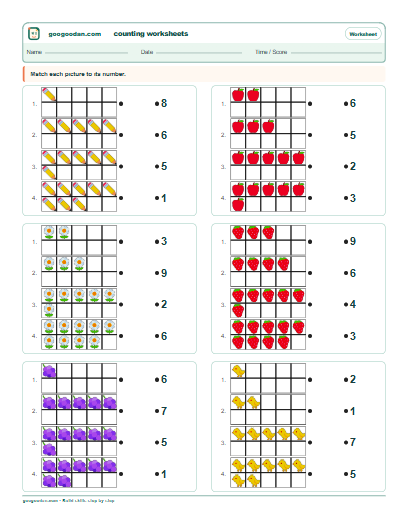 Counting 1 to 9: Match Pictures and Numbers Worksheet
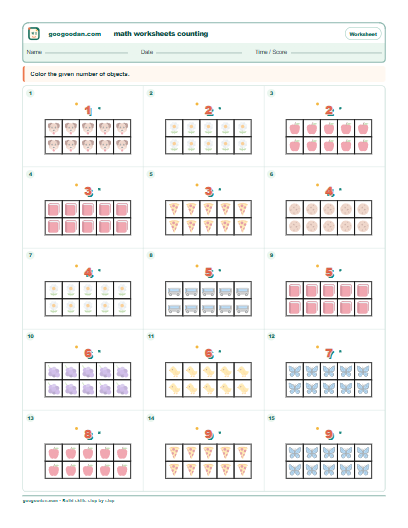 Counting 1 to 9: Draw the Quantity Worksheet
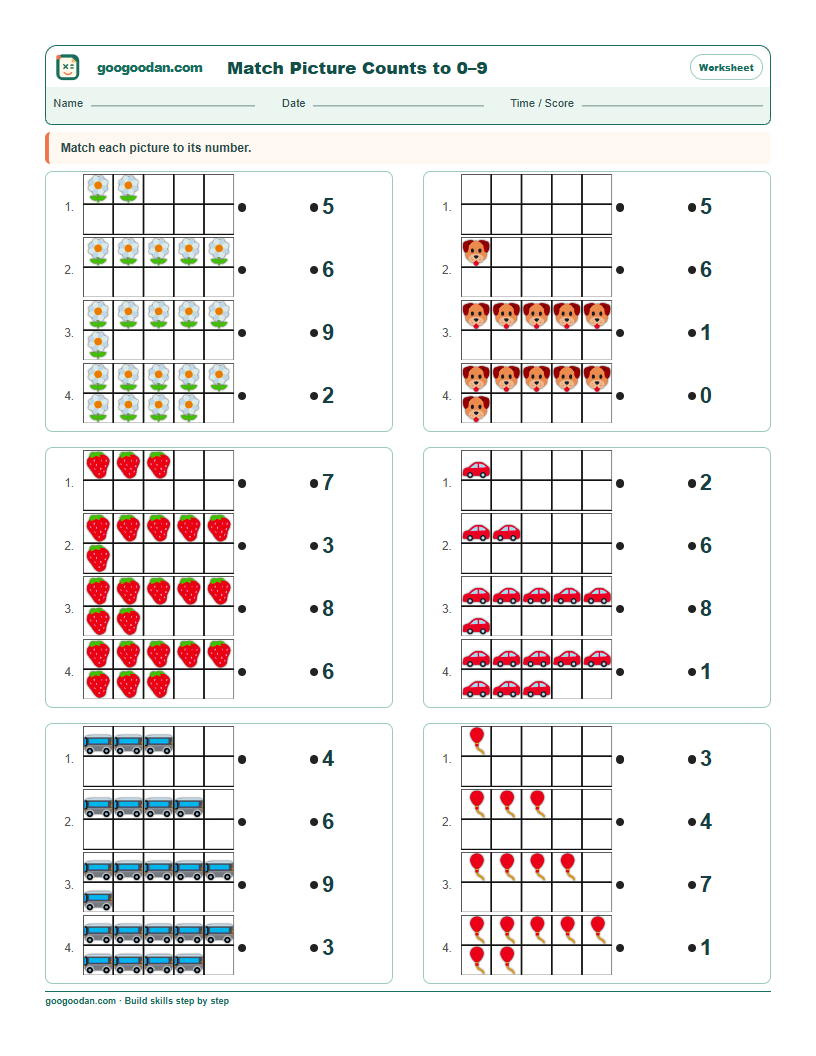 Zero and Numbers 0 to 9: Match Pictures to 0–9 Worksheet
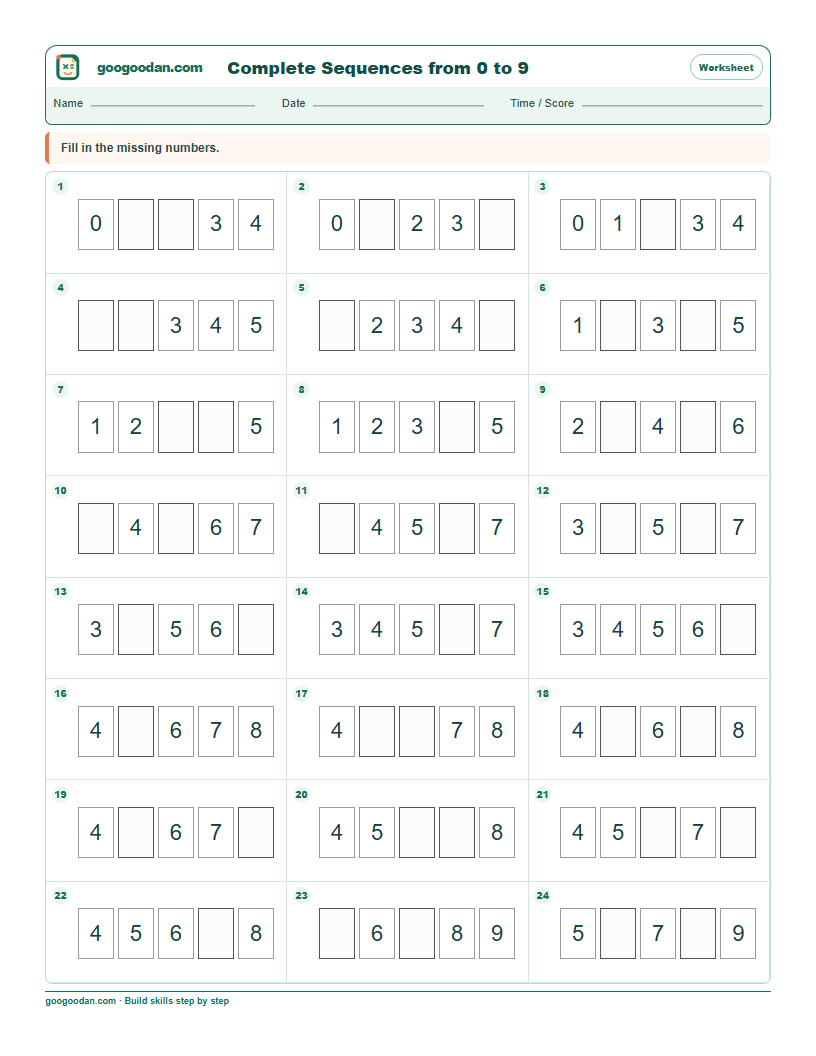 Zero and Numbers 0 to 9: Complete 0–9 Sequences Worksheet
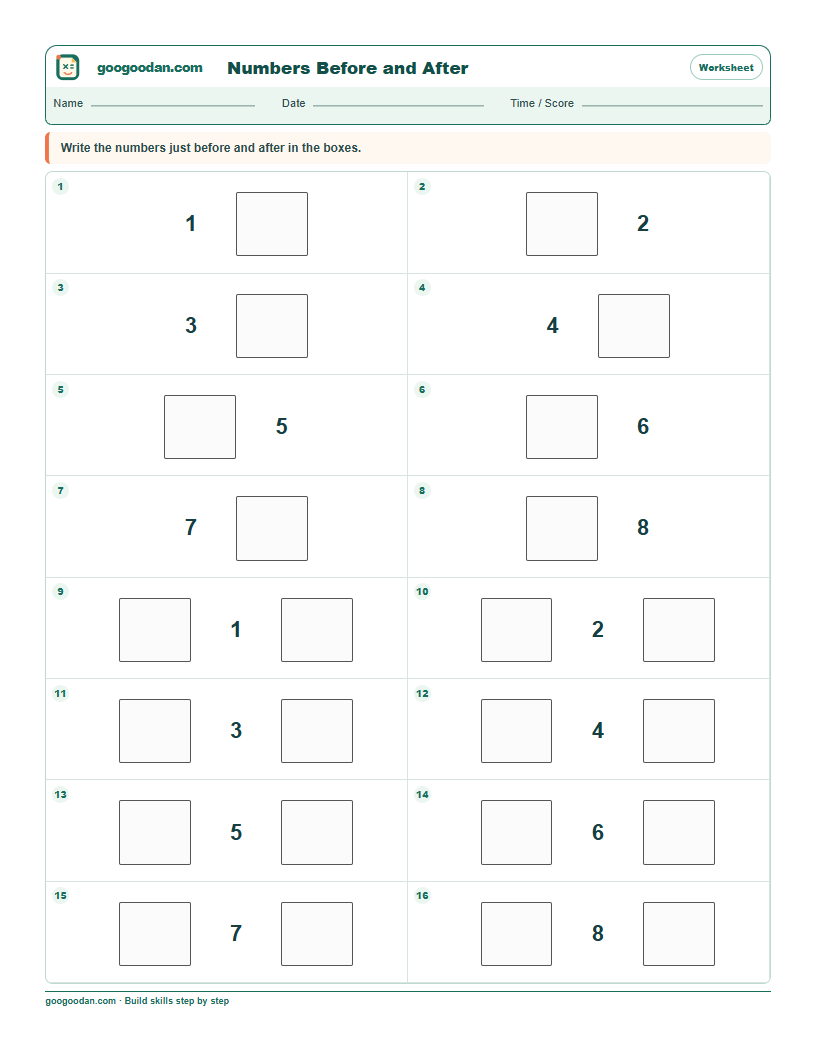 Zero and Numbers 0 to 9: Before and After Worksheet
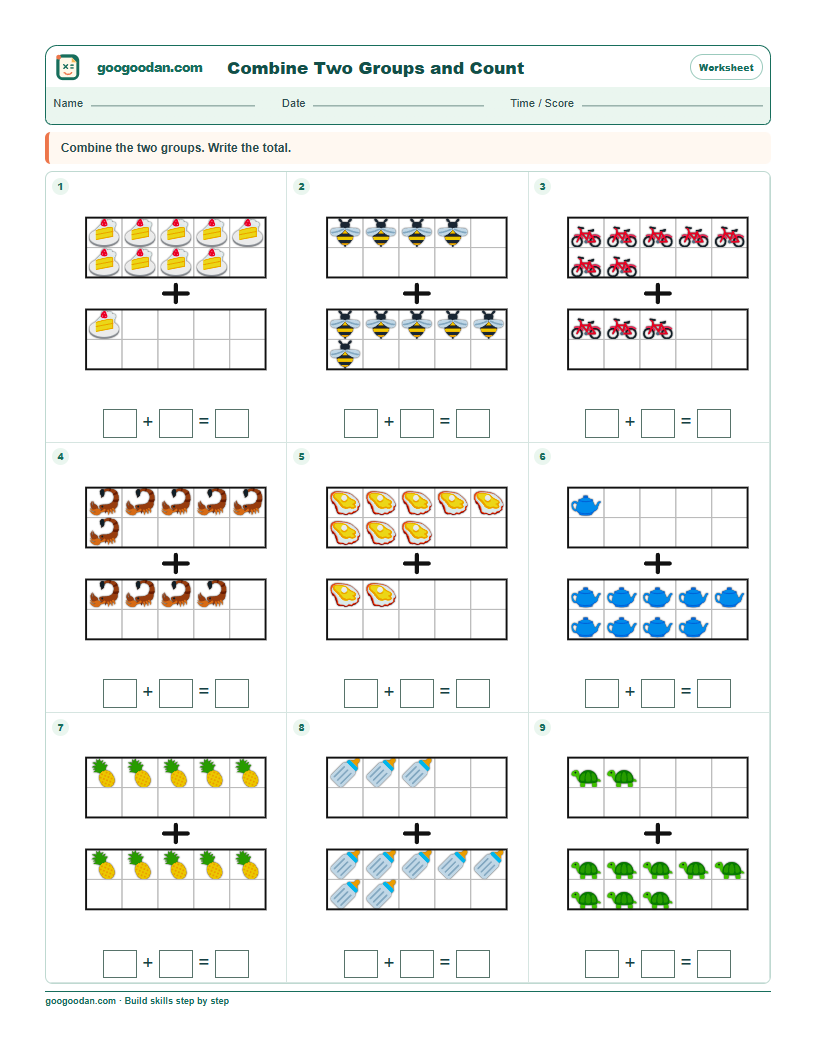 Number Bonds to 10: Join Picture Groups Worksheet
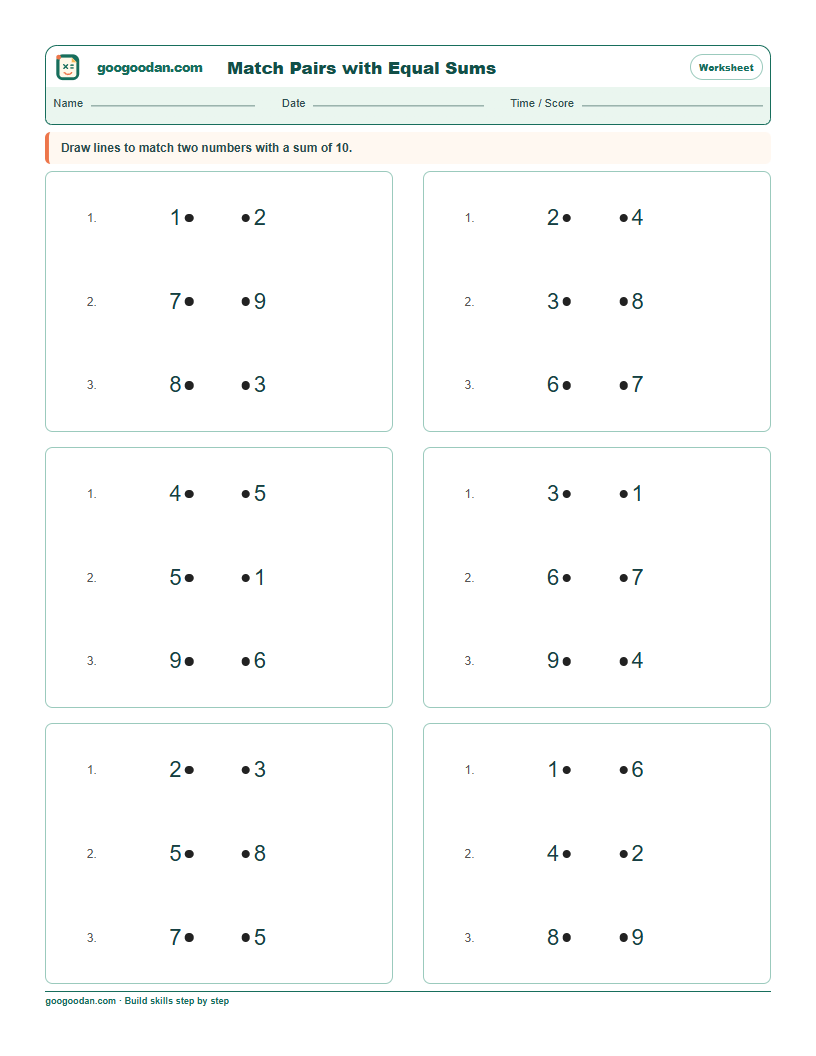 Number Bonds to 10: Match Equal Sums Worksheet
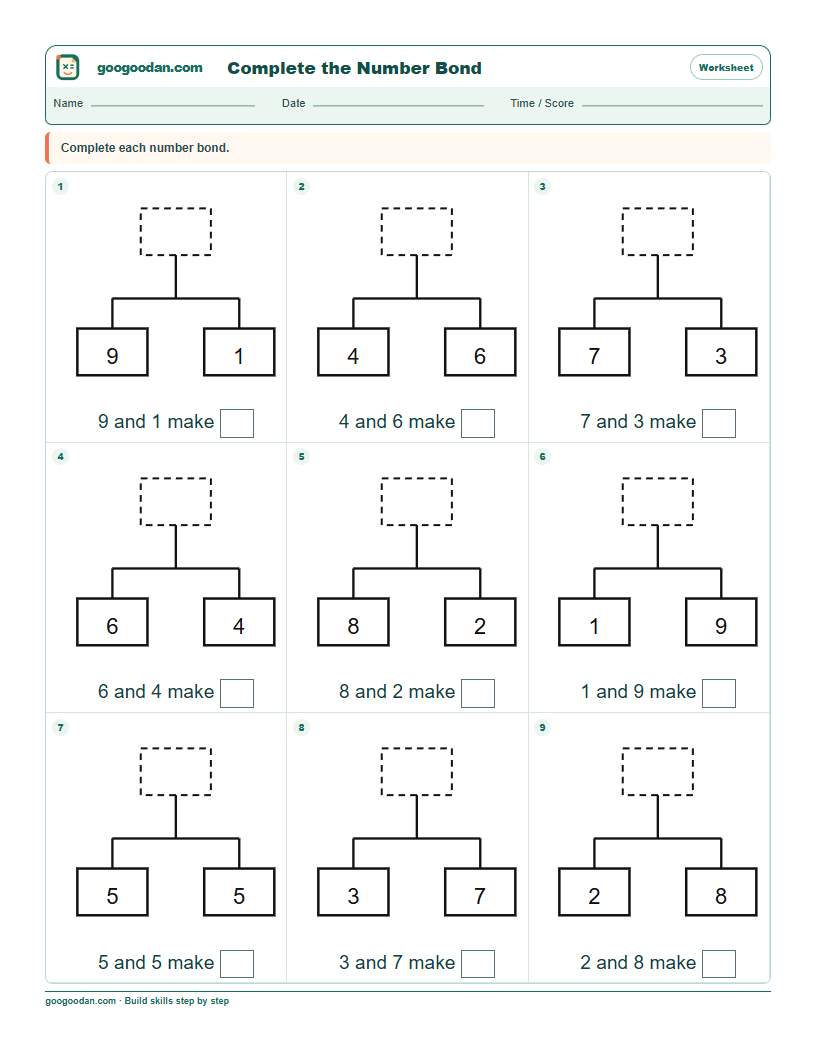 Number Bonds to 10: Complete Bond Diagrams Worksheet
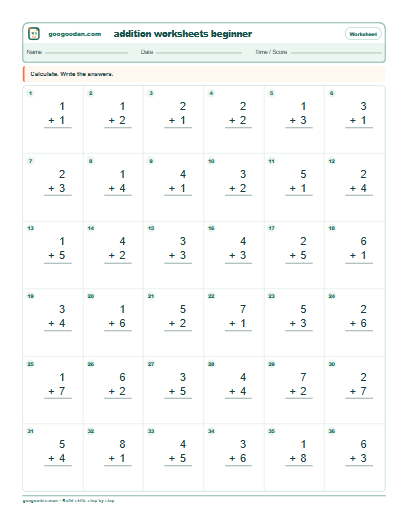 Addition within 9: Find Each Sum Worksheet
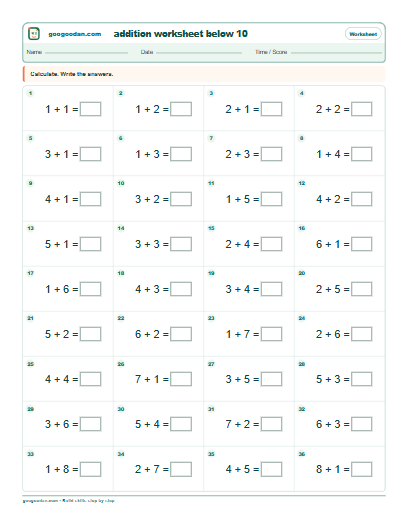 Adding Single Digits: Totals below 10 Worksheet
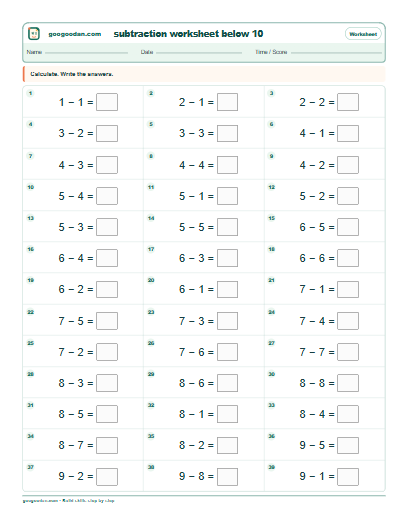 Single-Digit Subtraction: Numbers below 10 Worksheet
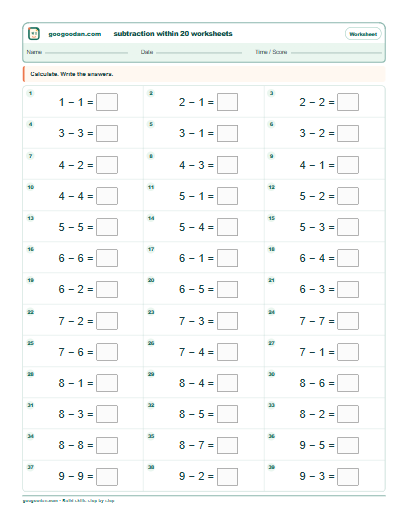 Subtraction within 9: Horizontal Worksheet
More worksheet collections
- Shape Worksheets for Primary Maths Practice
- Measurement Worksheets for Primary Maths Practice
- Reception Maths Worksheets: Counting and Number Facts
Choosing early-years number practice
These pages support early number work through counting, numeral recognition, comparing groups and building simple number facts. Choose a sheet by the action a child is ready to practise. If counting objects is still developing, use a small range and point to each item once. When numerals are recognised reliably, match a written number to a group or complete a short number sequence. Number bonds can follow once the child can explain that two parts make the same whole. Keep the first choice visually simple so the mathematical idea stands out.
Choose a small, clear task
Before printing, look at the number range and the amount of writing required. A young learner may be ready to count aloud but not yet write every answer independently; an adult can record the first few responses while the child points. Open a worksheet, choose Worksheet for an attempt, and use Answer Key only after the child has had time to think. Fresh numbers make a familiar task usable again, but keep the same skill for a few examples before changing the format.
Use objects to show a number bond
Try a small example with seven counters. Put three on one side and four on the other, count each group, then join them and count all seven. Ask what could change if one counter moved: the groups would become four and three, while the total would stay seven. This links counting, comparison and the number bond 3 + 4 = 7 without introducing a new rule. For a sequence, say 5, 6, __, 8 and invite the child to continue counting from the known number.
Common slips to catch
Watch for skipping an object, counting the same object twice, or saying the next number without matching it to the next item. Move counters one at a time into a new row to make progress visible. When matching numerals, check that the written symbol and the counted group refer to the same amount. Avoid rushing from a successful answer to a larger range; repeat the idea with a different small group first. If attention fades, stop after a few careful responses and return later.