Addition and Subtraction Worksheets
Start with sheets that use pictures and small numbers, then move to column methods once the number facts are secure. Each section mixes layouts, so you can choose horizontal questions, column questions, missing digits or error-fixing tasks.
Look at the carrying or exchanging in the title: some sheets have none, others need one or two. Open a sheet, press New Numbers for fresh questions, and print the answer page to check.
Addition Worksheets
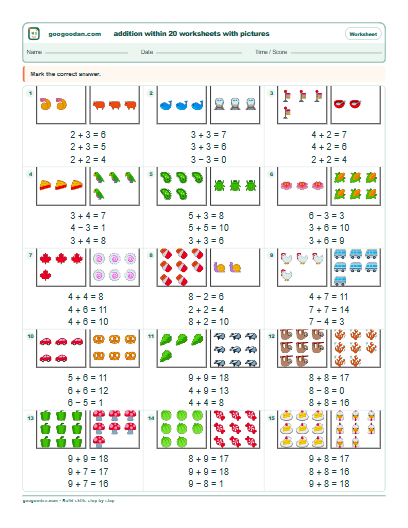
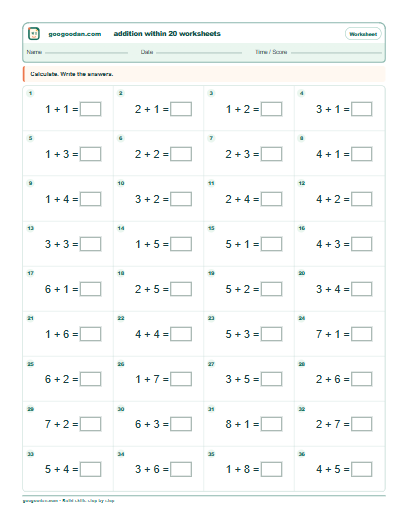
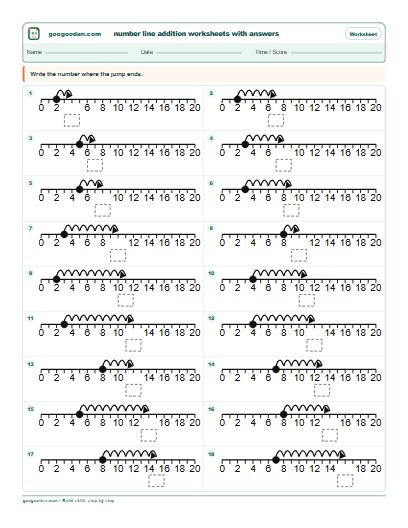
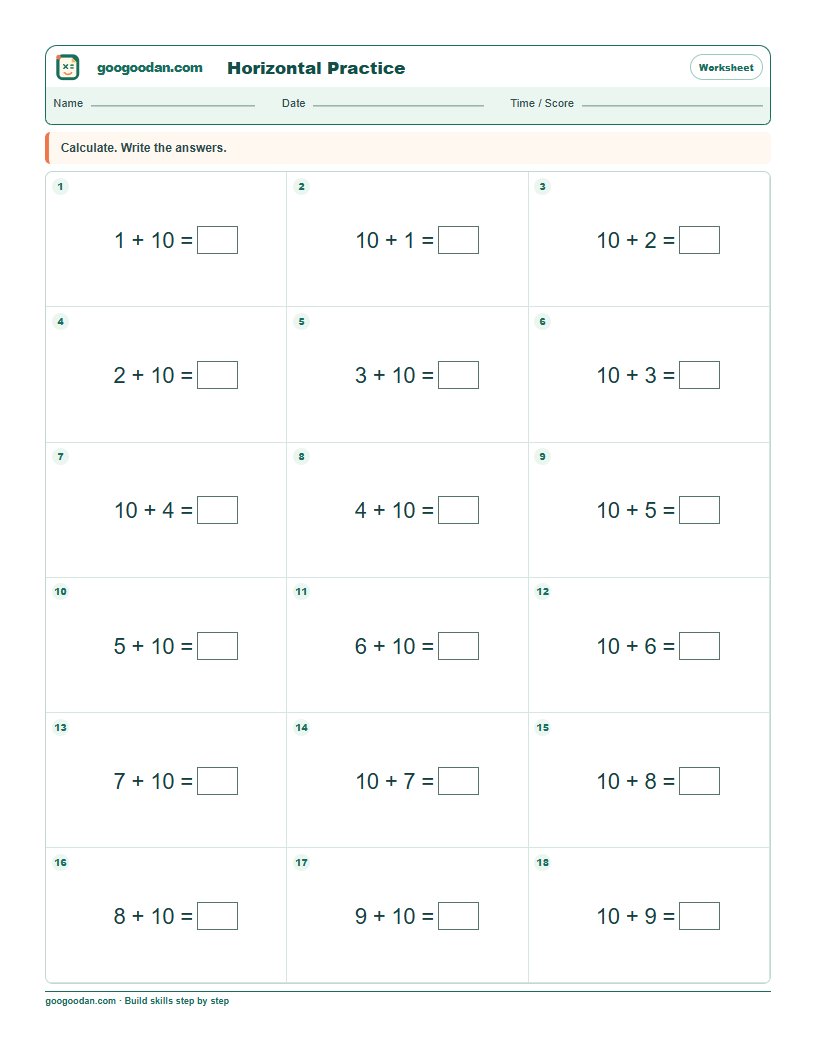
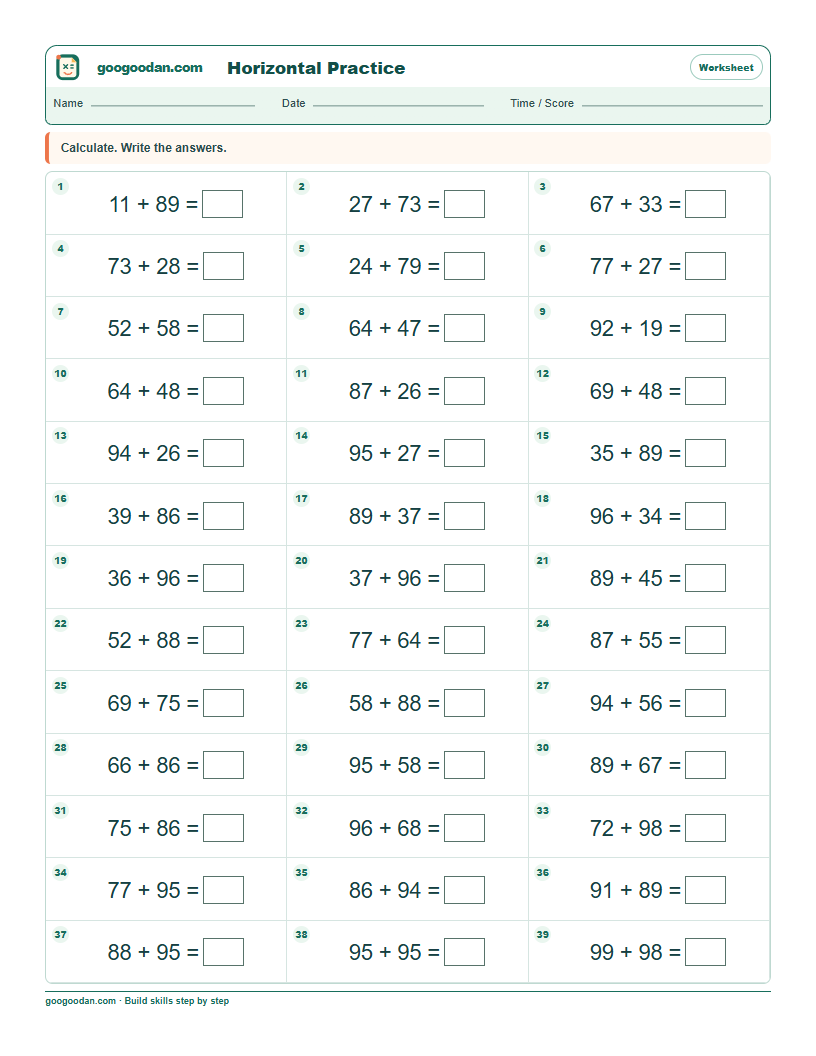
Column Addition Worksheets
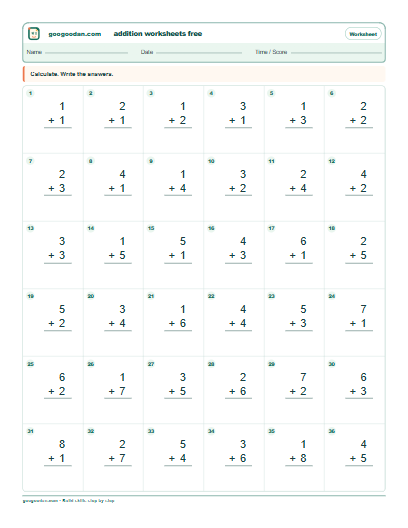 Column Addition: Sums to 9 Worksheet
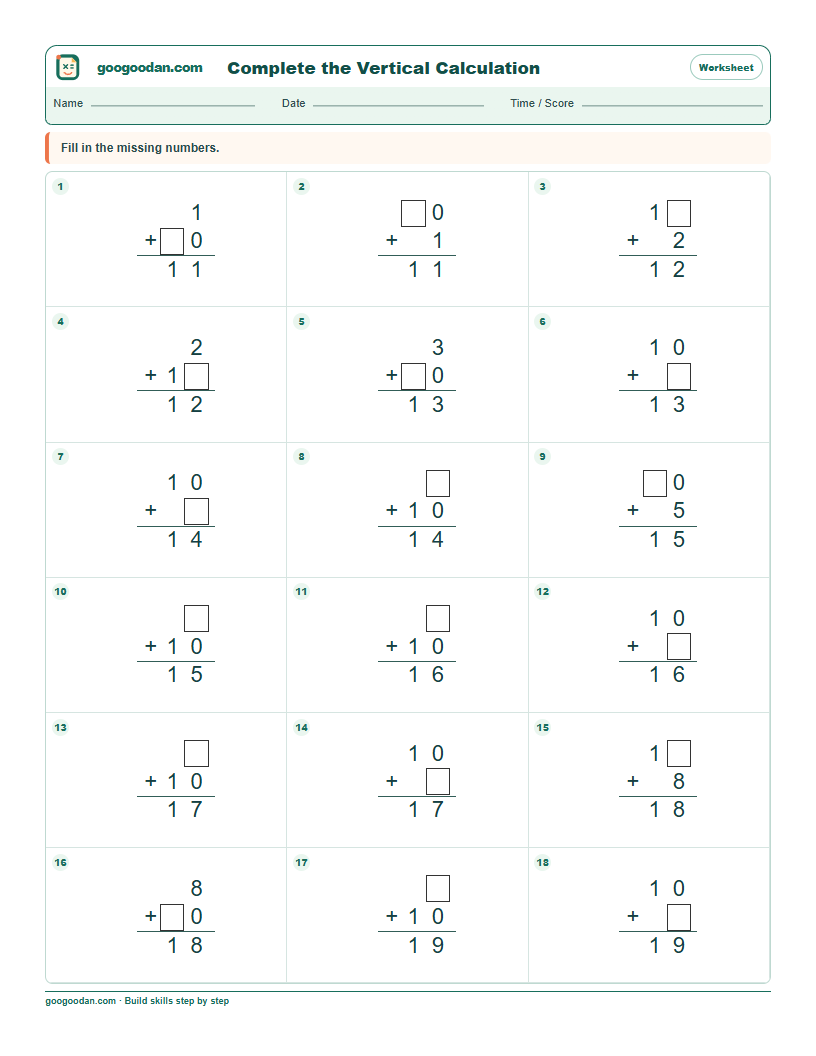 Adding 1 Digit to 10 Column Addition: Missing Digits Worksheet
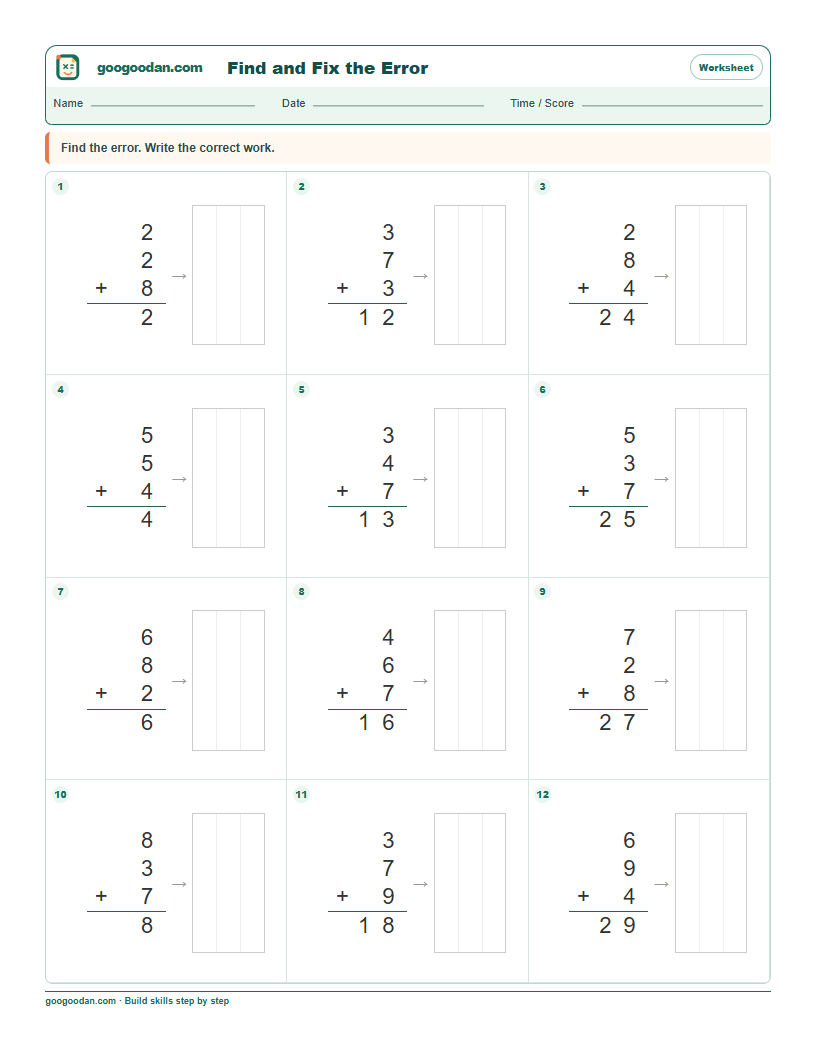 Adding Three Numbers, Make 10 Column Addition: Fix Errors Worksheet
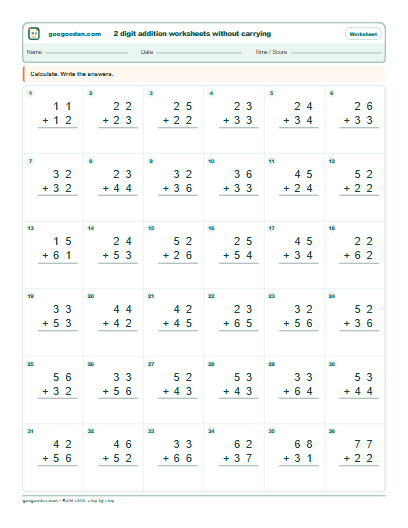 2-Digit Column Addition without Carrying Worksheet
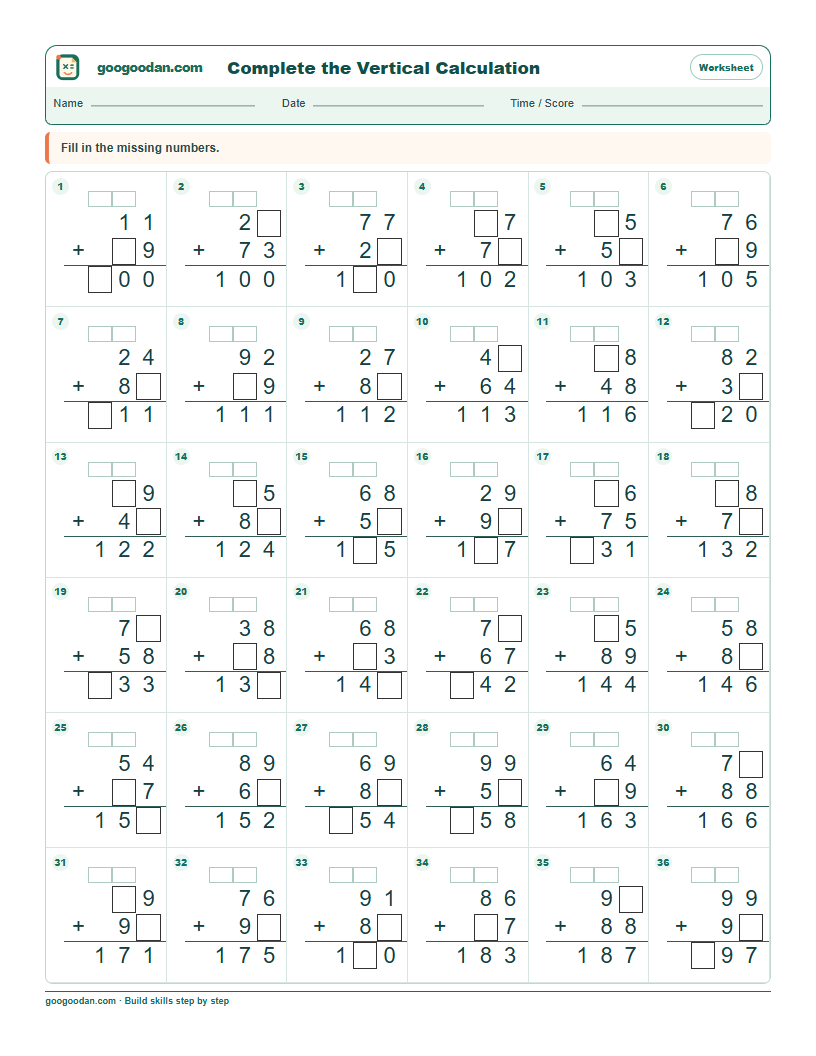 2-Digit Column Addition, Two Carries: Missing Digits Worksheet
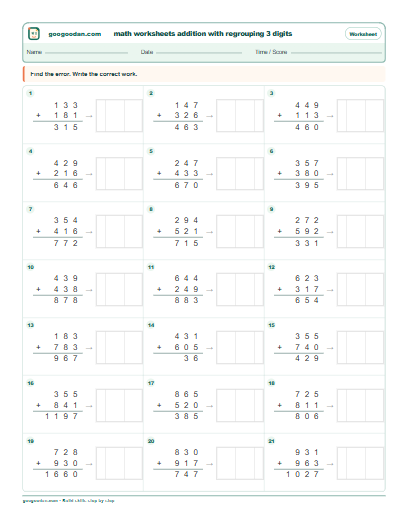 3-Digit Column Addition, One Carry: Fix Errors Worksheet
Subtraction Worksheets
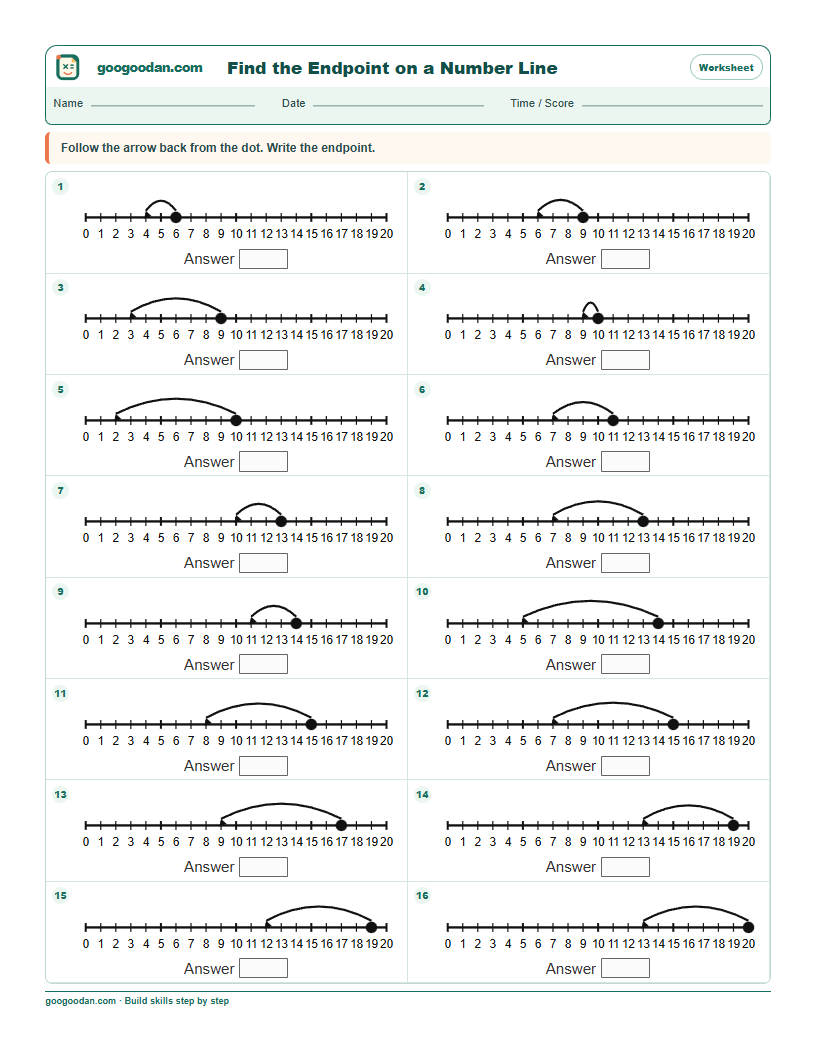 Number Line Subtraction: Find Landing Points Worksheet
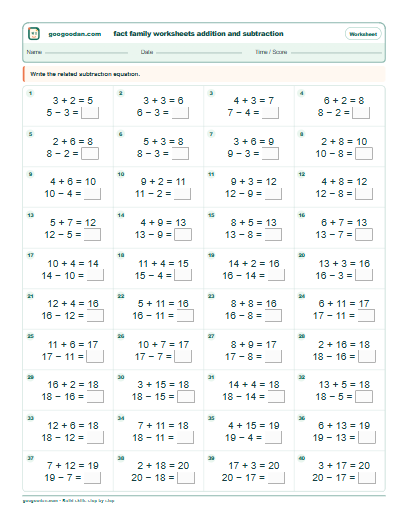 Addition and Subtraction Fact Families: Write Related Equations Worksheet
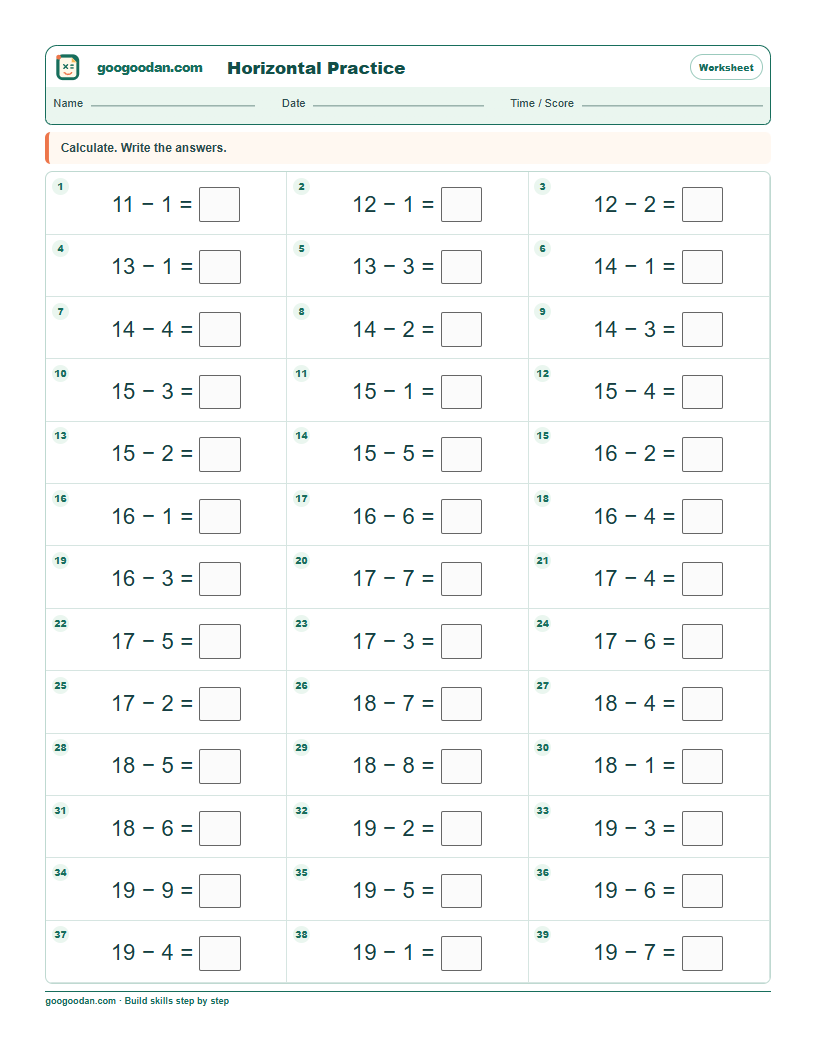 Teen Subtraction, No Exchanging: Horizontal Worksheet
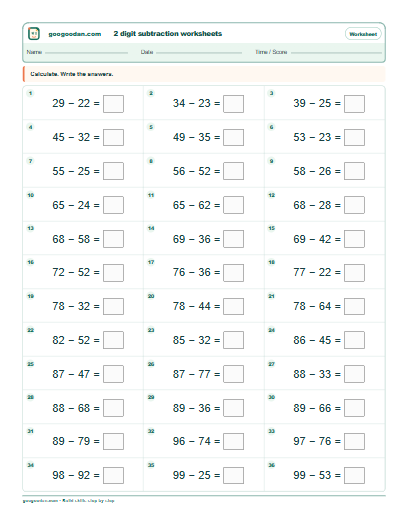 2-Digit Subtraction, No Exchanging: Horizontal Worksheet
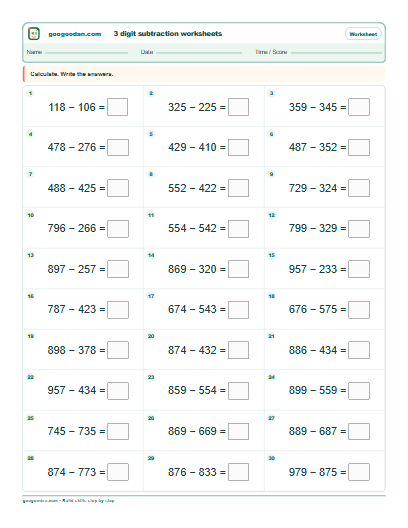 3-Digit Subtraction, No Exchanging: Horizontal Worksheet
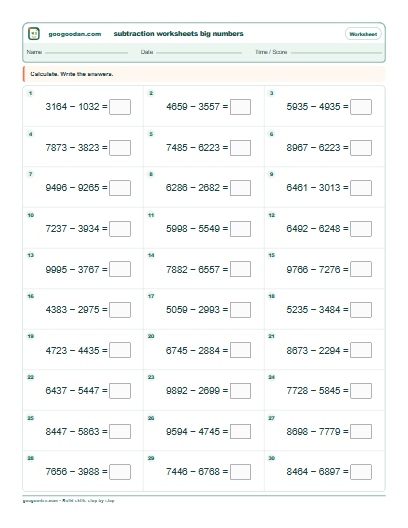 4-Digit Subtraction: Horizontal Worksheet
Column Subtraction Worksheets
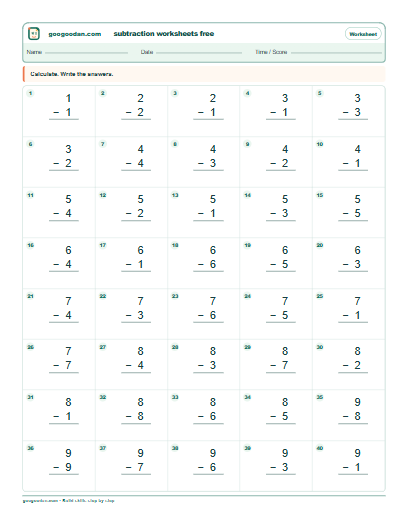 Column Subtraction within 9 Worksheet
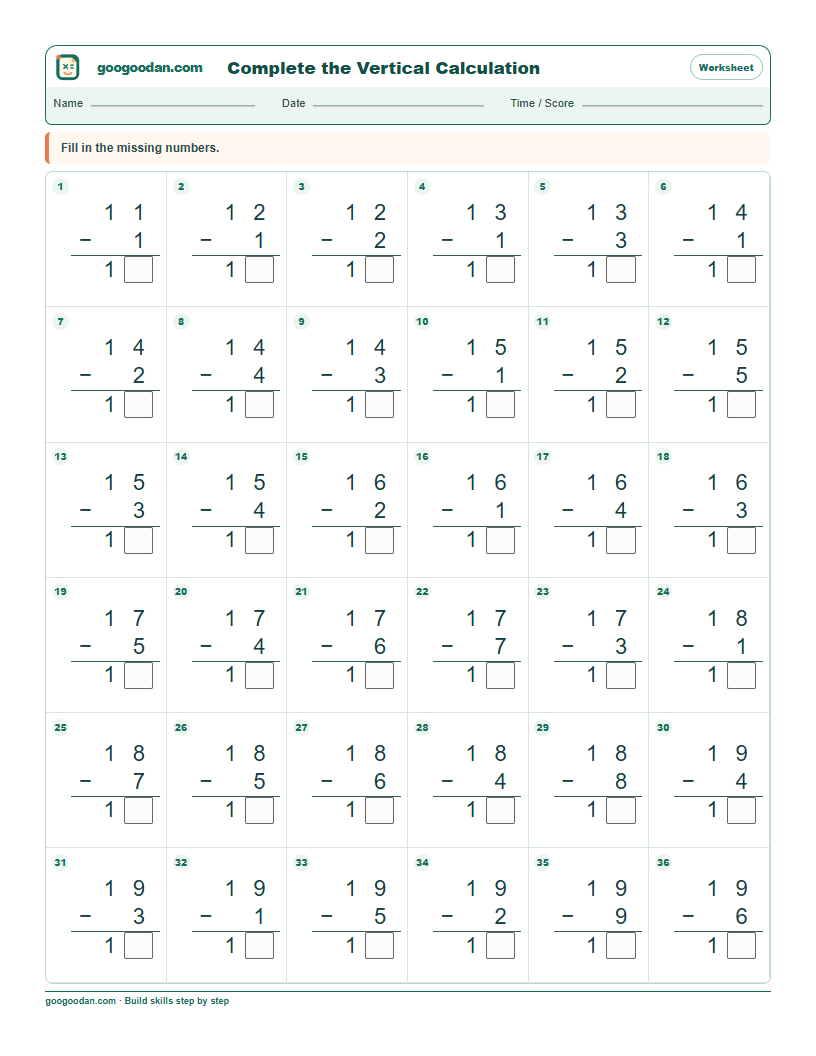 Teen Column Subtraction, No Exchanging: Missing Digits Worksheet
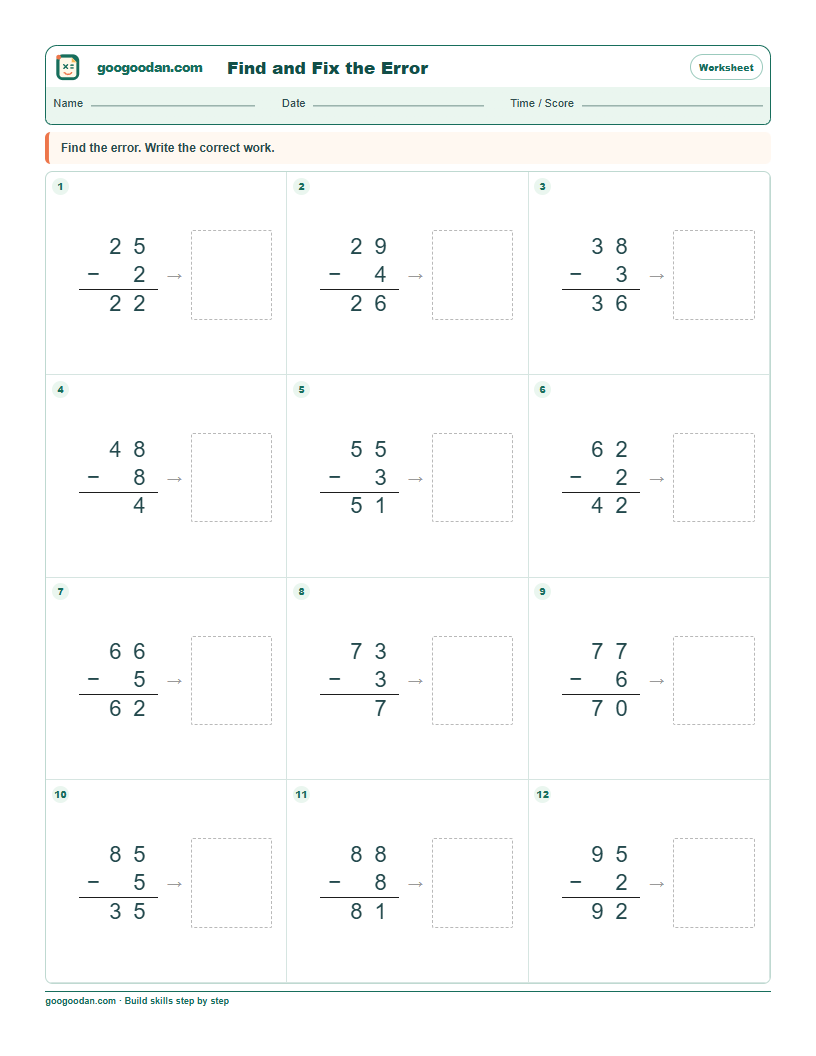 2-Digit − 1-Digit Column Subtraction, No Exchanging: Fix Errors Worksheet
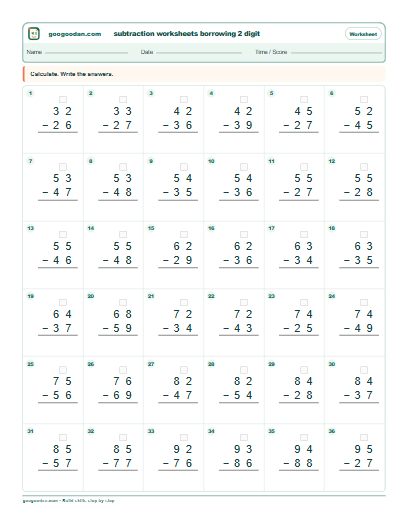 2-Digit Column Subtraction with Exchanging Worksheet
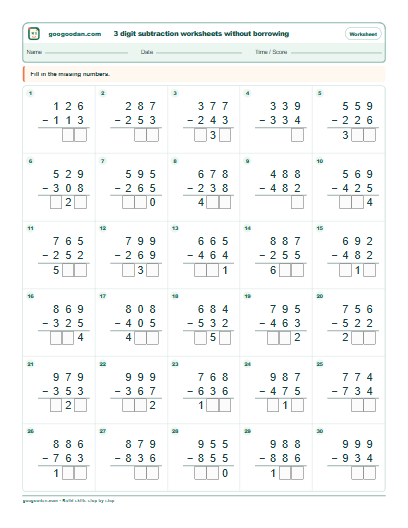 3-Digit Column Subtraction, No Exchanging: Missing Digits Worksheet
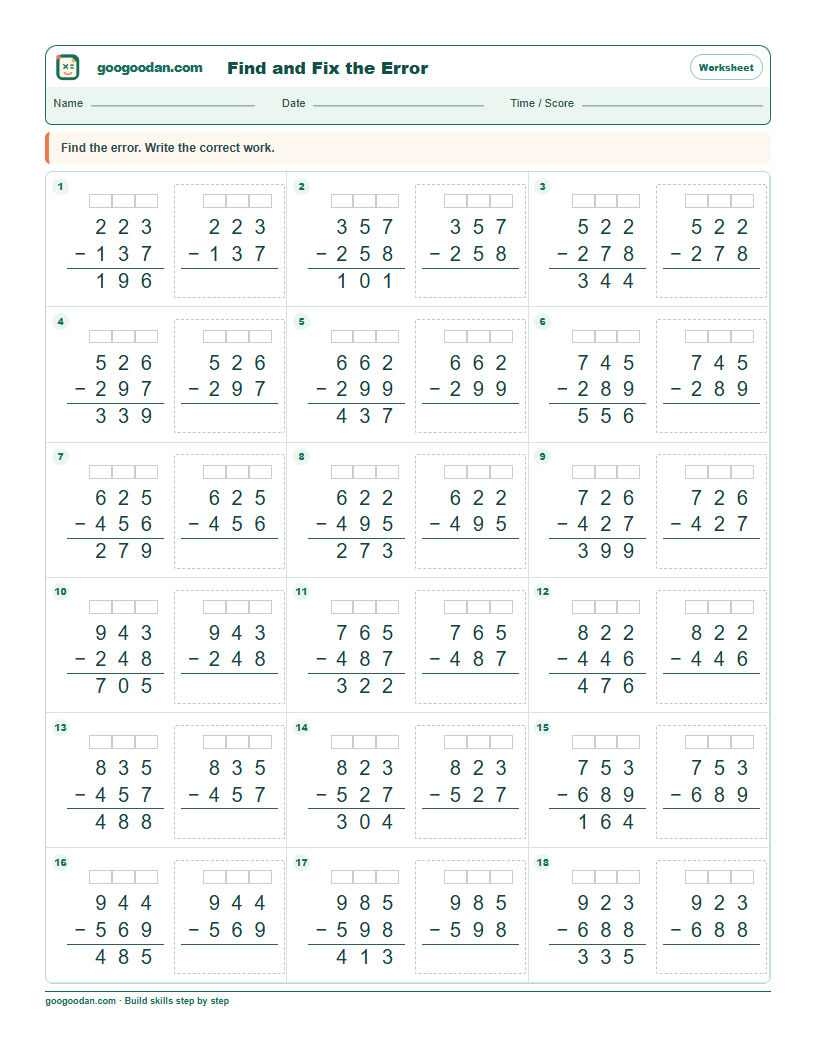 3-Digit Column Subtraction, Consecutive Exchanges: Fix Errors Worksheet
More worksheet collections
- Free Printable Maths Worksheets
- Times Tables Worksheets
- Multiplication and Division Worksheets
- Fractions and Decimals Worksheets
- KS2 Maths Worksheets: Years 3 to 6
- Shape Worksheets for Primary Maths Practice
- Measurement Worksheets for Primary Maths Practice
- Reception Maths Worksheets: Counting and Number Facts
Choosing addition and subtraction practice
Use the worksheet titles to choose one step at a time. Begin with a short horizontal sheet if the learner is still connecting the signs to what happens to a quantity. Move to column addition after place value is secure, then select a version with carrying when the questions call for it. For subtraction, compare sheets with and without exchanging before choosing a harder set. Missing-number and error-checking pages are useful once ordinary calculations feel familiar, because they ask the learner to reason about a result instead of repeating one layout.
Pick a format, then practise
Open a single sheet and scan the first few questions before printing. Keep the chosen format consistent for a short practice session, and use New Numbers when another set is needed. Worksheet prints the questions; Answer Key prints the answers; selecting both is useful for an adult who is checking work. A learner can write a quick estimate beside the first question, solve the set, then compare the estimate with the final answer. Change to a different format only after the current method can be described clearly.
Check one example carefully
For example, calculate 368 + 257 by aligning hundreds, tens and ones. Add the ones to make 15, record 5 and carry 1 ten. The tens become 6 + 5 + 1, or 12 tens, so record 2 and carry 1 hundred. The hundreds total 6, giving 625. For 503 - 278, regroup one hundred as ten tens, then one ten as ten ones: 13 - 8 is 5, 9 - 7 is 2, and 4 - 2 is 2, so the answer is 225. Check by adding 225 and 278.
Common slips to catch
Common slips include placing a carried digit in the wrong column, forgetting to include it in the next addition, and subtracting the smaller digit from the larger without respecting which number is being reduced. In subtraction, mark each exchange before calculating and reduce the column that gave up a ten or hundred. Keep zeroes visible during regrouping. Use the answer key after an attempt, not as a prompt to copy. If an answer is unexpected, estimate first and then check with the inverse operation.