Fractions and Decimals Worksheets
Fractions come first: pictures, equivalent fractions and mixed numbers, then adding and subtracting with the same and different denominators. Decimals follow, from place value to the four operations.
Some of these sheets are hard, so read each title for the exact skill before printing. New Numbers gives fresh questions, and the answer page shows each result so you can check the working.
Fraction Basics Worksheets
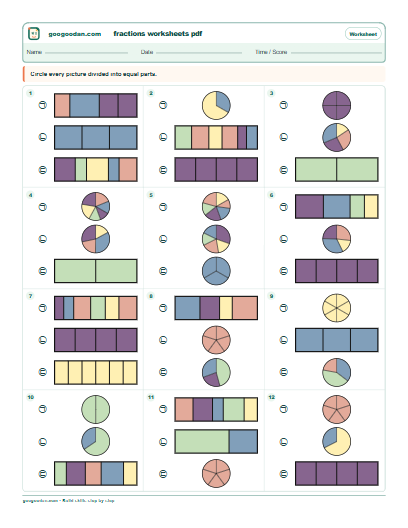 Fractions, Equal Parts: Choose Equal Partitions Worksheet
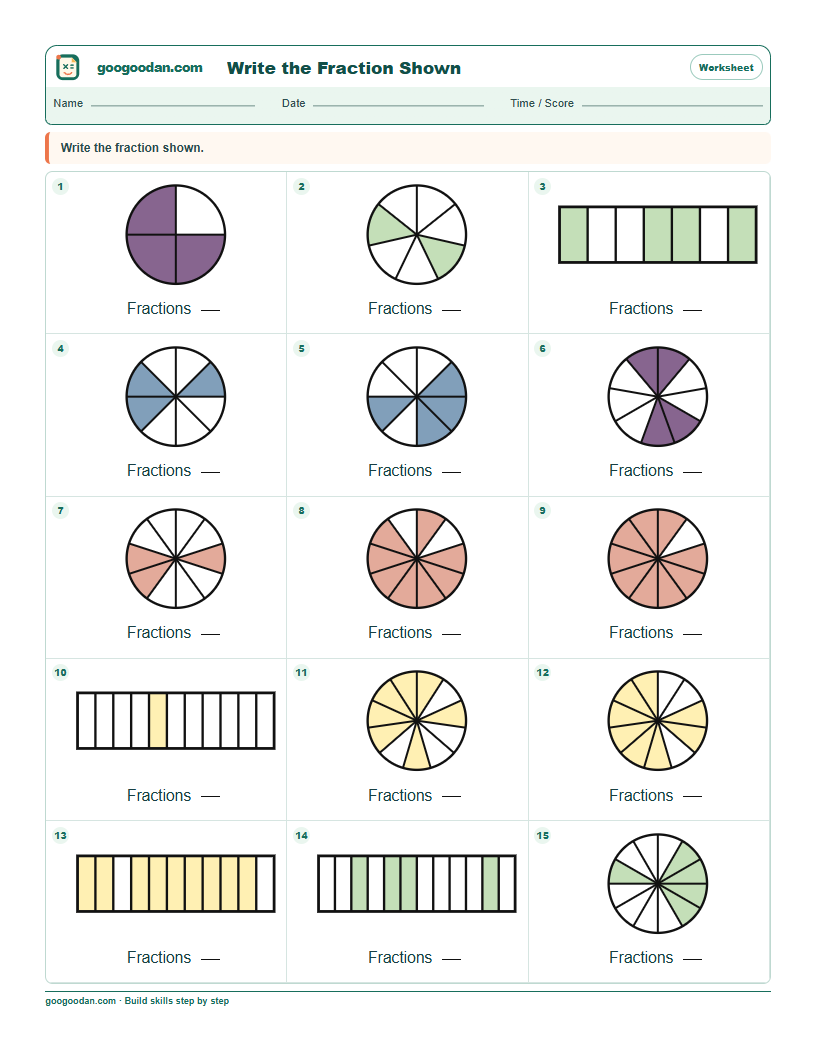 Fractions with Pictures: Write Picture Fractions Worksheet
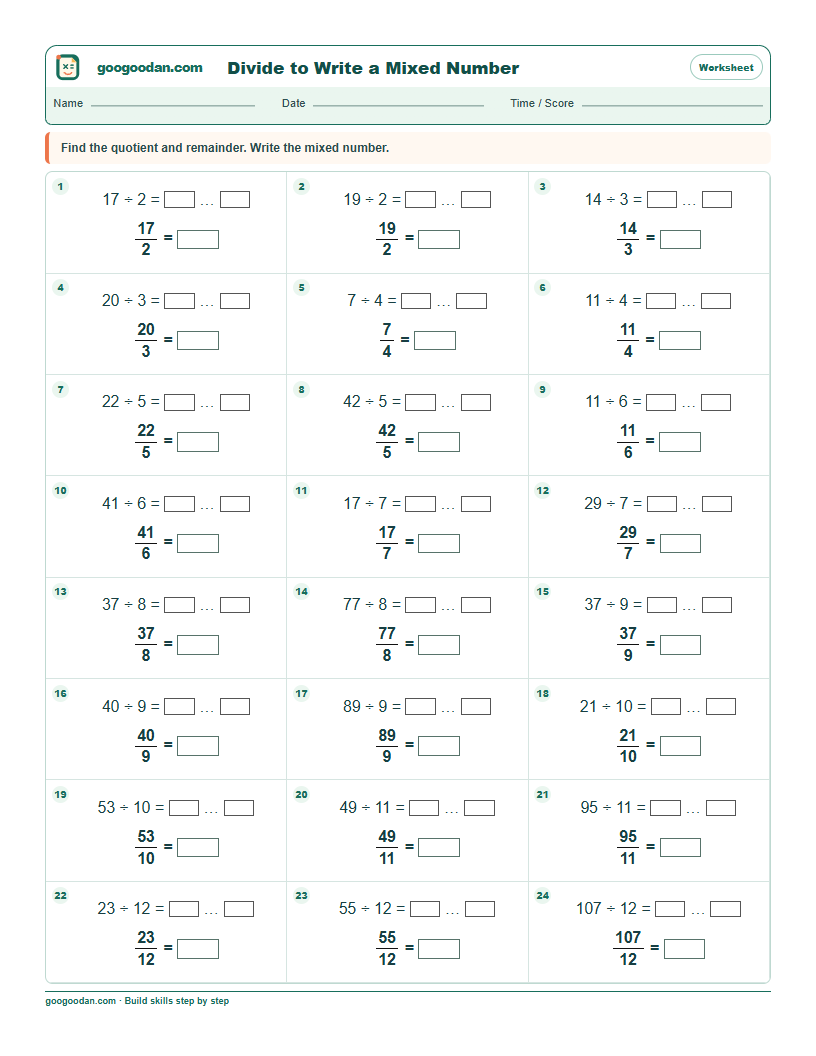 Improper Fractions to Mixed Numbers: Use Quotients and Remainders Worksheet
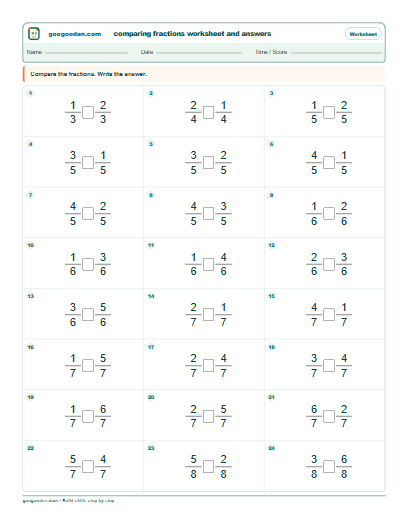 Comparing Same-Denominator Fractions: Comparison Signs Worksheet
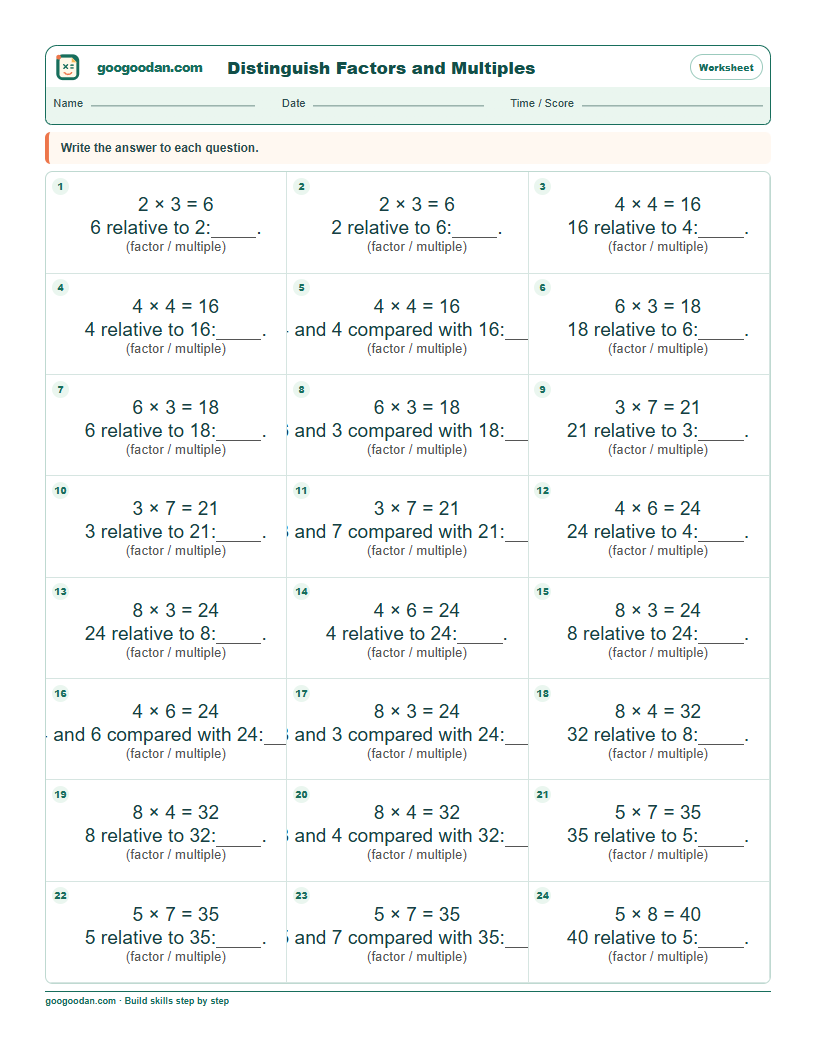 Factors and Multiples for Fractions: Identify the Relationship Worksheet
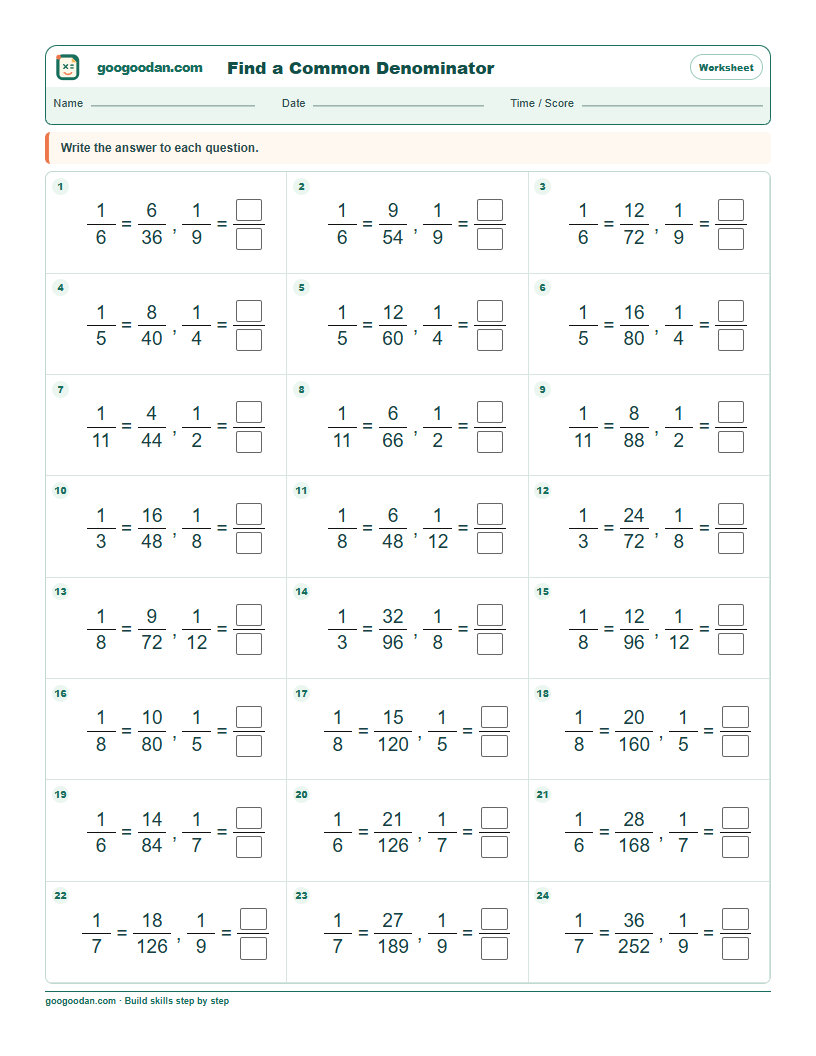 Common Denominators Using Multiples: Find Common Denominators Worksheet
Adding and Subtracting Fractions Worksheets
 Adding Unit Fractions with Pictures: Join Picture Groups Worksheet
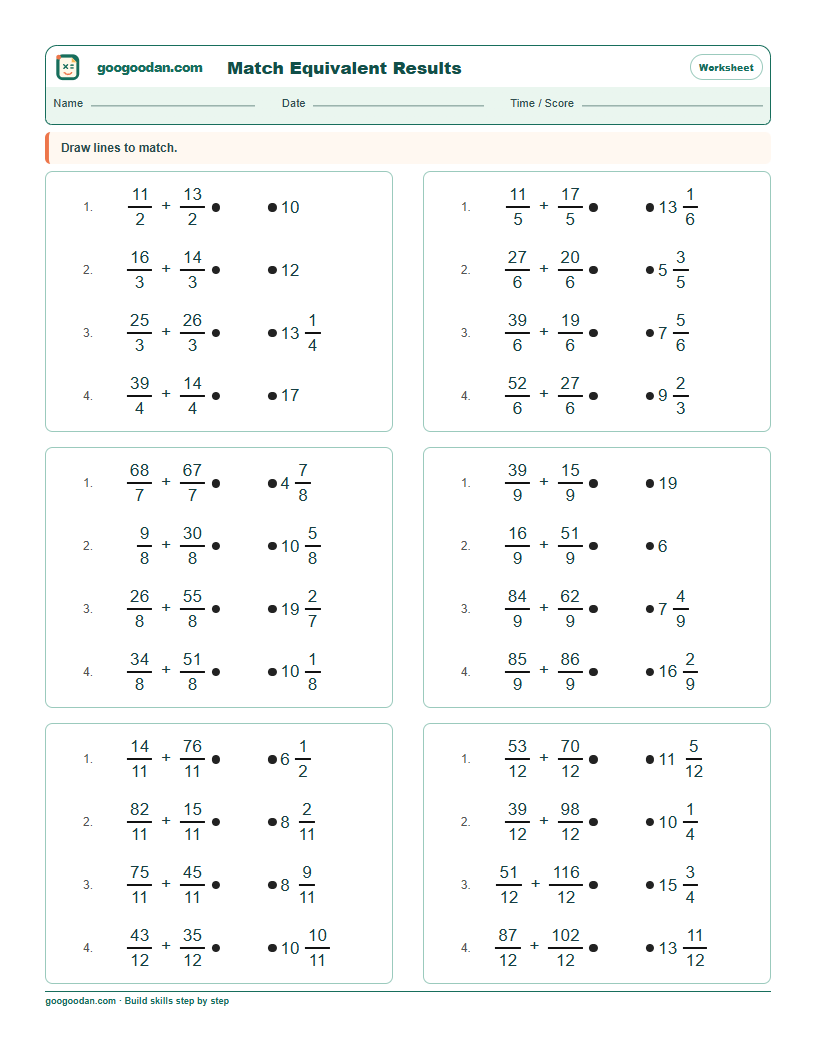 Same-Denominator Addition, Two Improper Fractions: Match Answers Worksheet
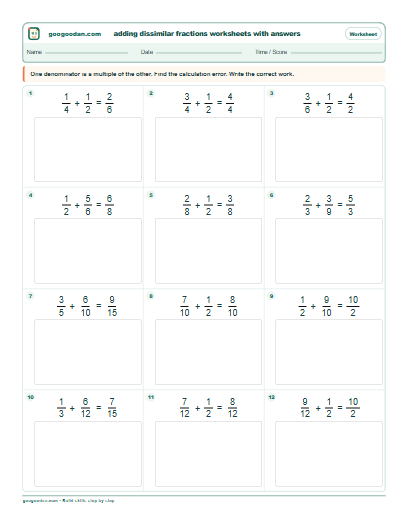 Fraction Addition, One Denominator a Multiple: Fix Errors Worksheet
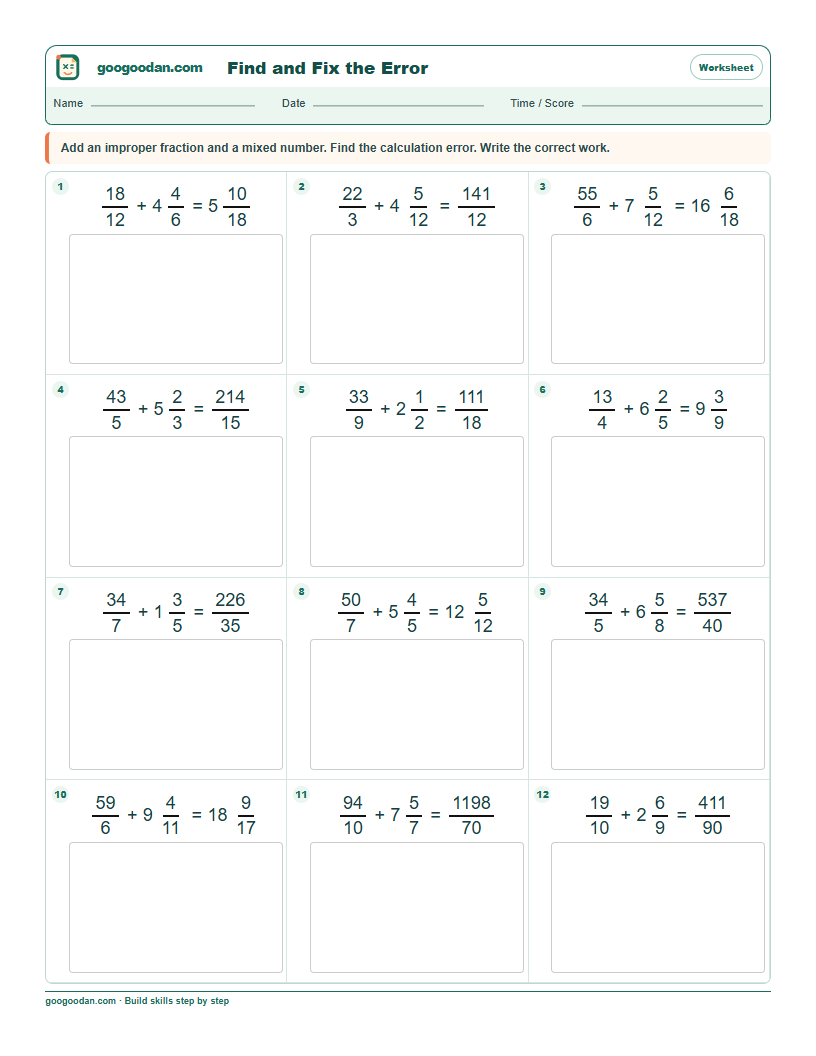 Unlike Addition, Improper Fraction + Mixed Number: Fix Errors Worksheet
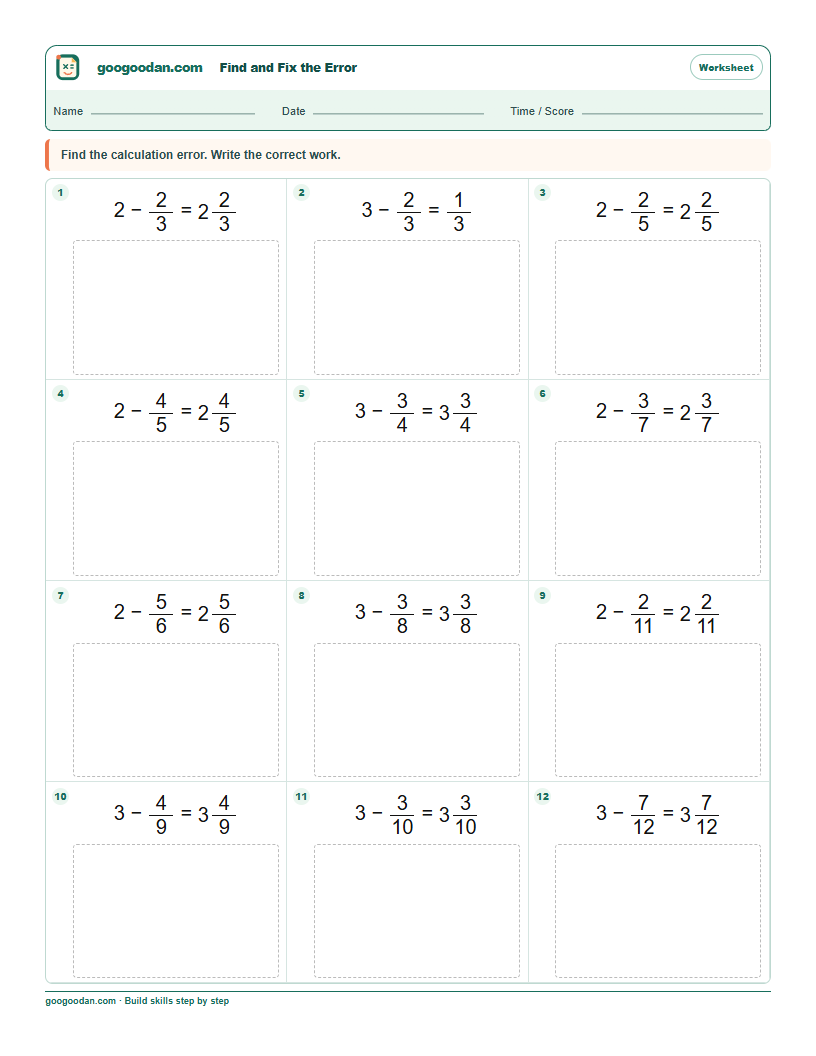 Whole Number − Proper Fraction: Fix Errors Worksheet
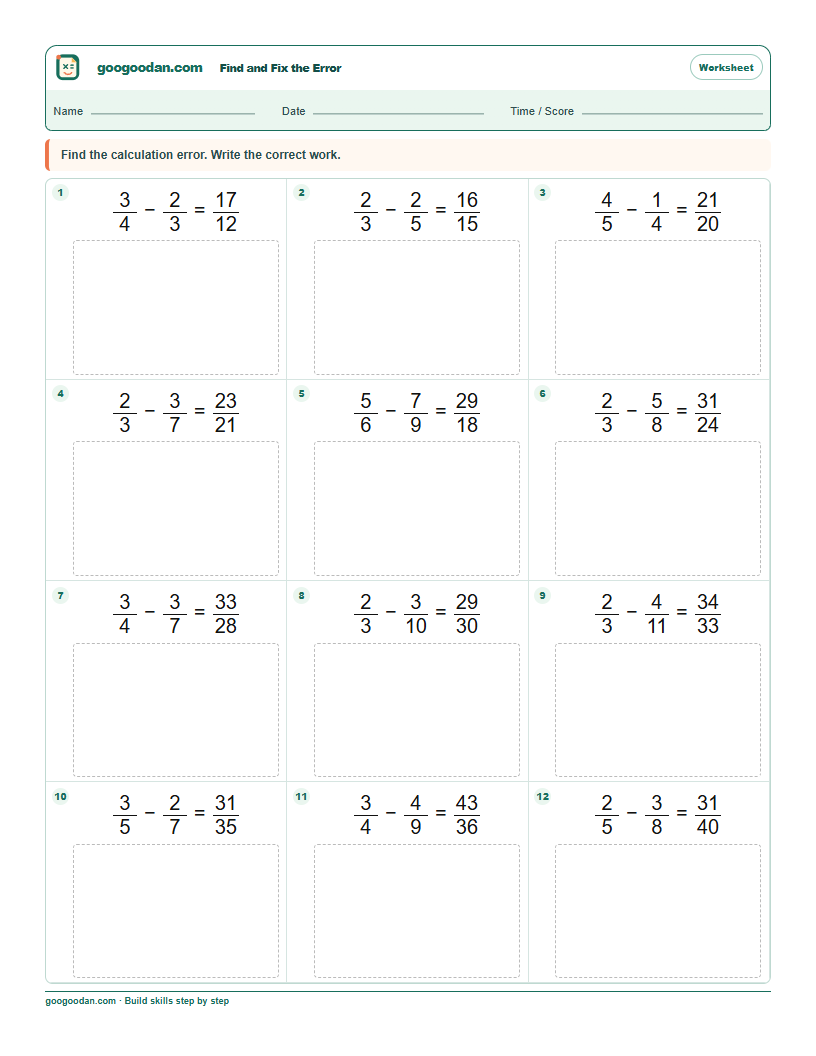 Unlike Fraction Subtraction, Common Denominators: Fix Errors Worksheet
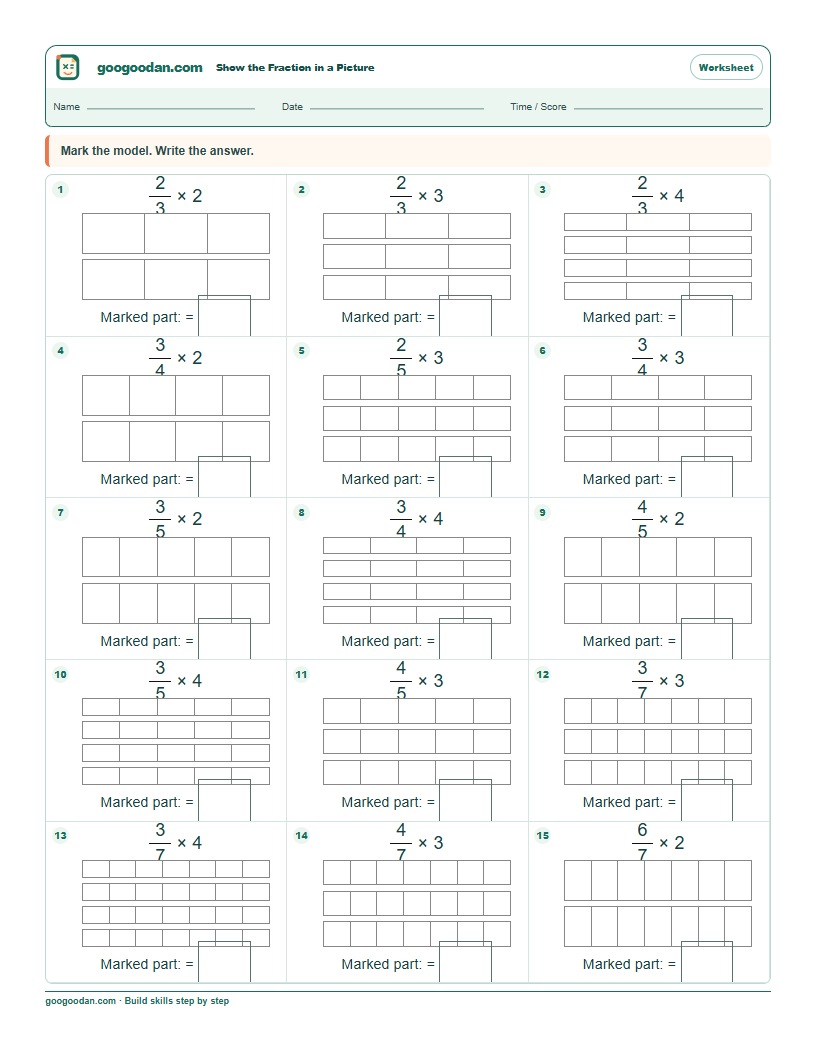
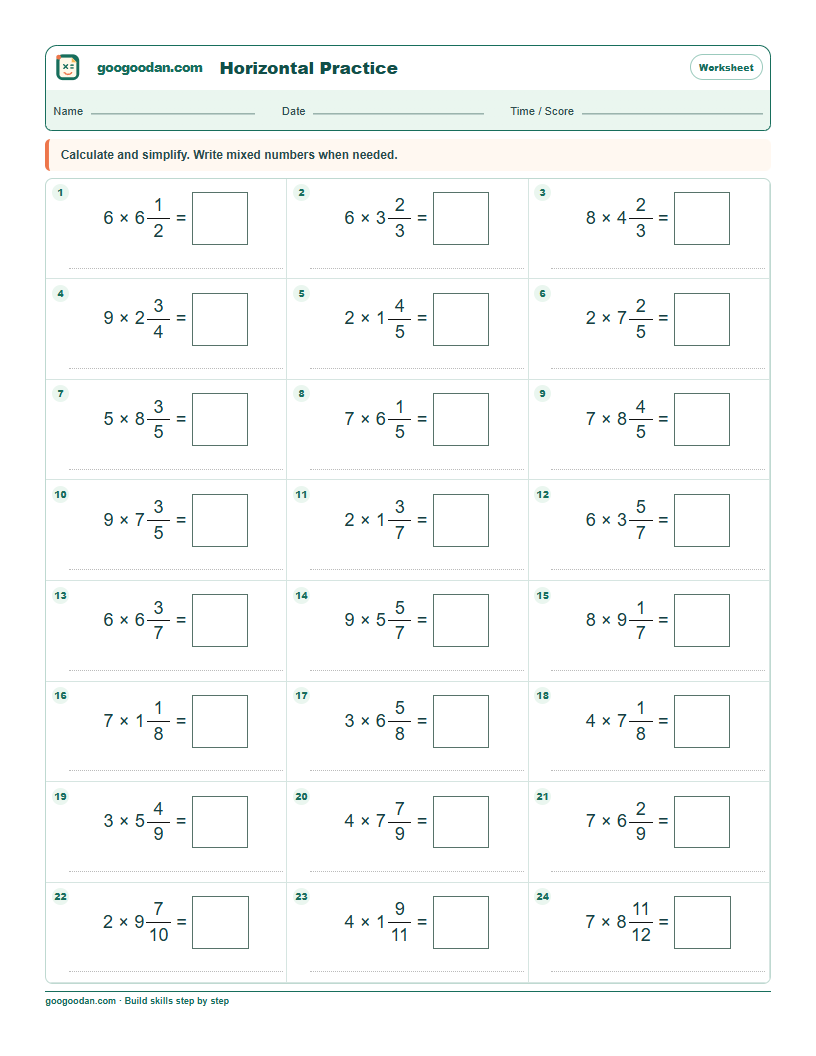
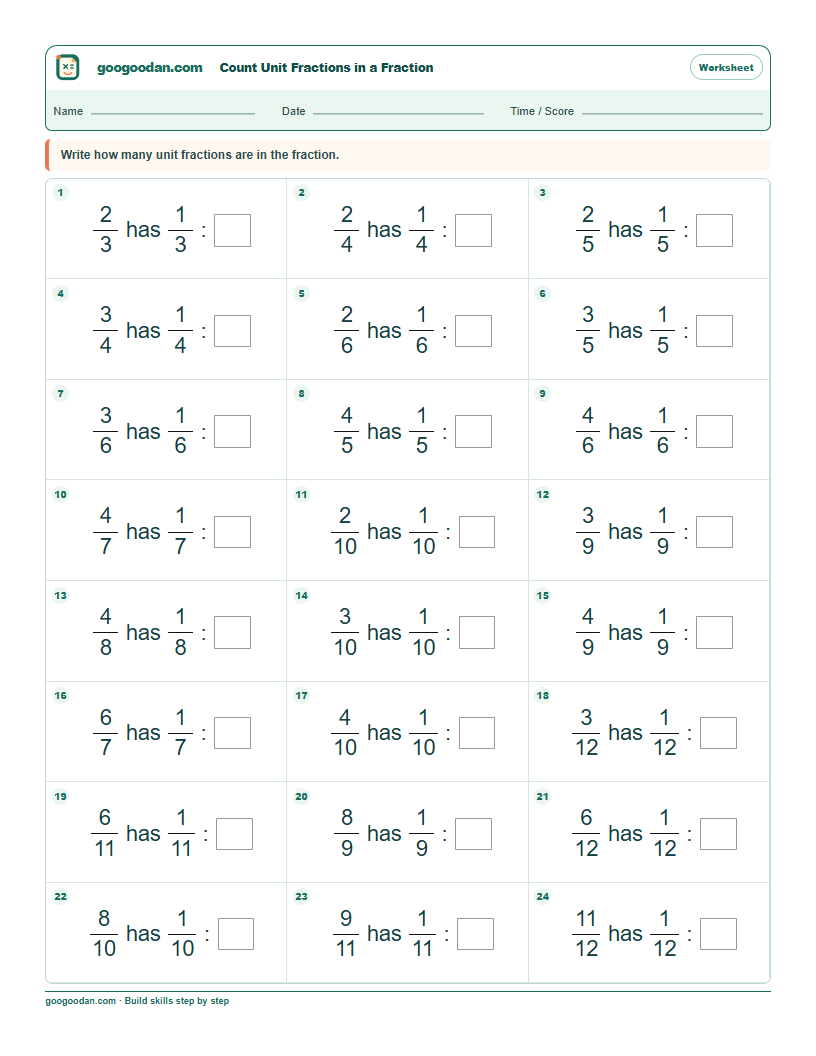
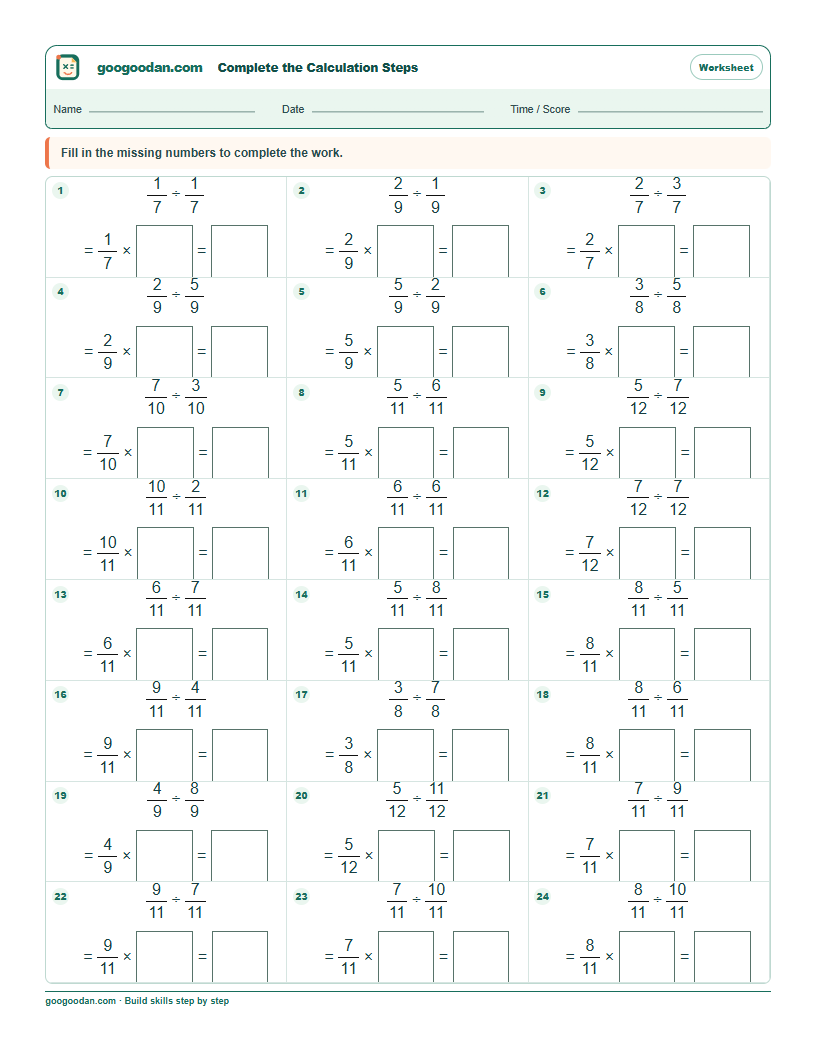
Multiplying and Dividing Fractions Worksheets
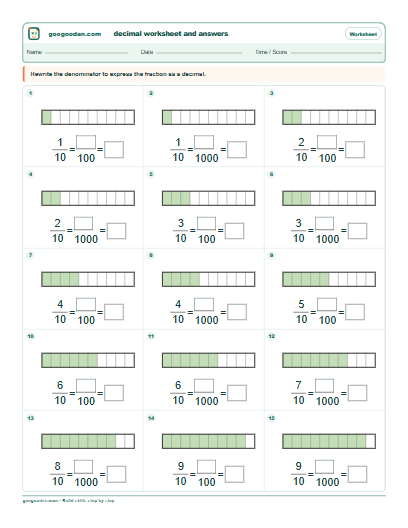
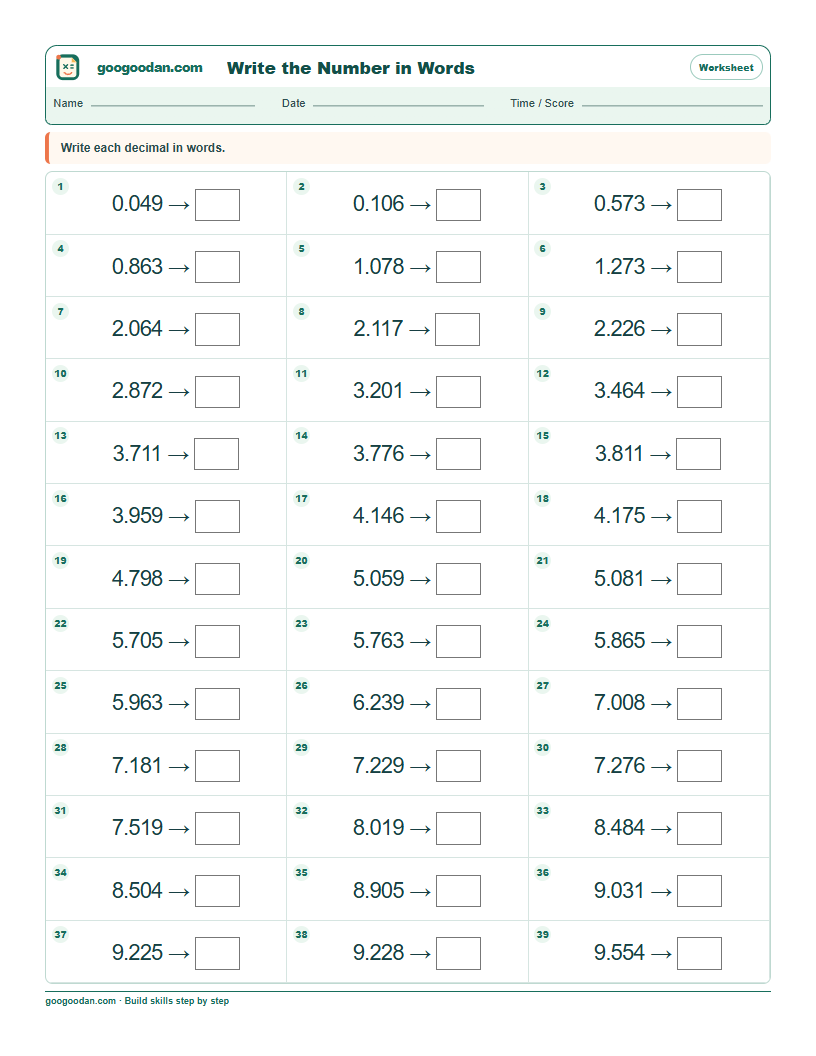
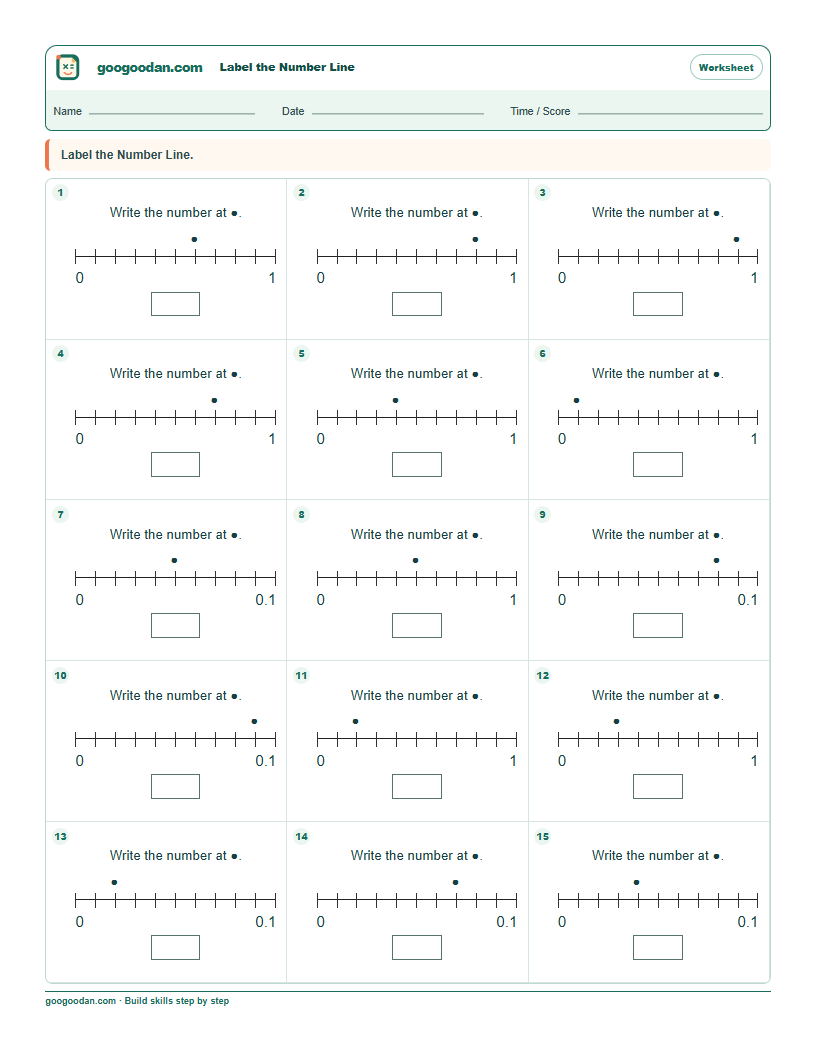
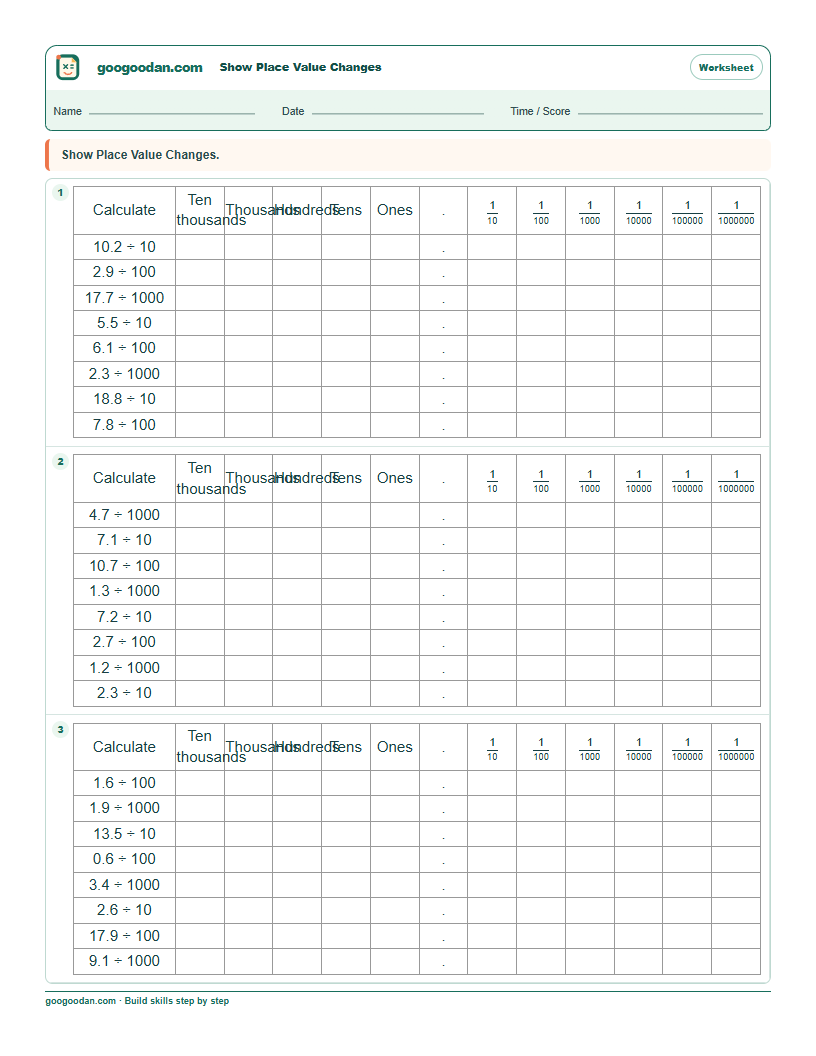
Decimal Place Value Worksheets
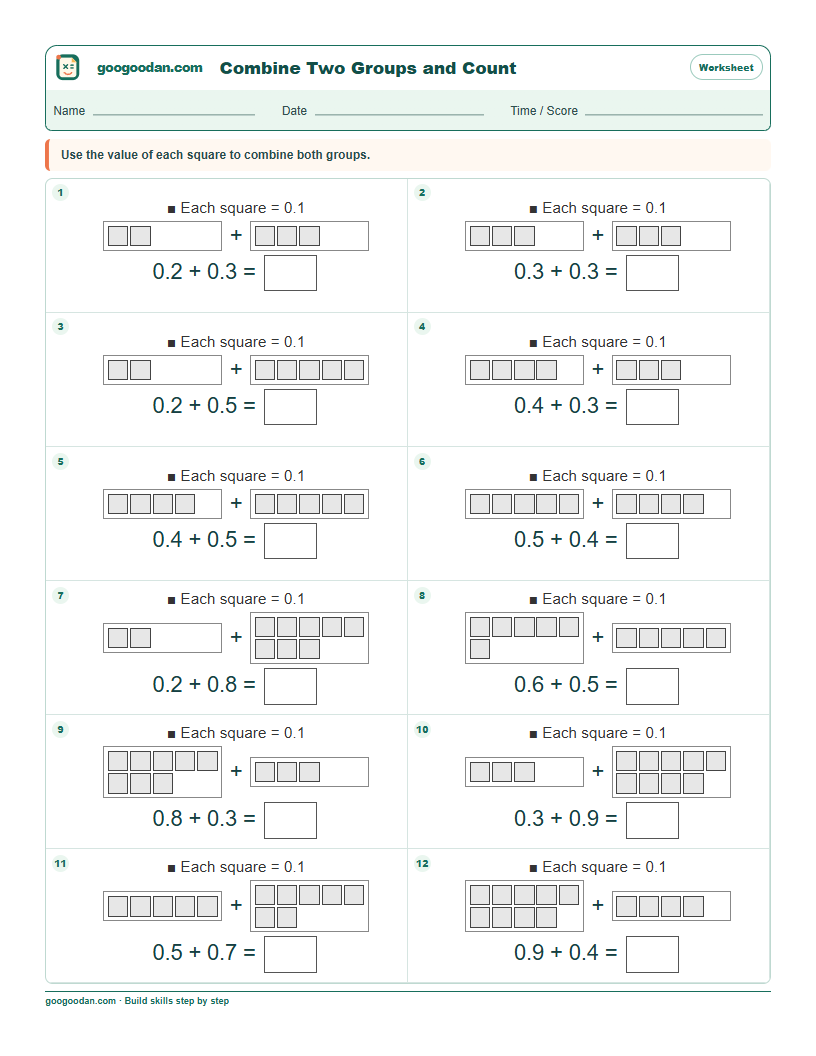
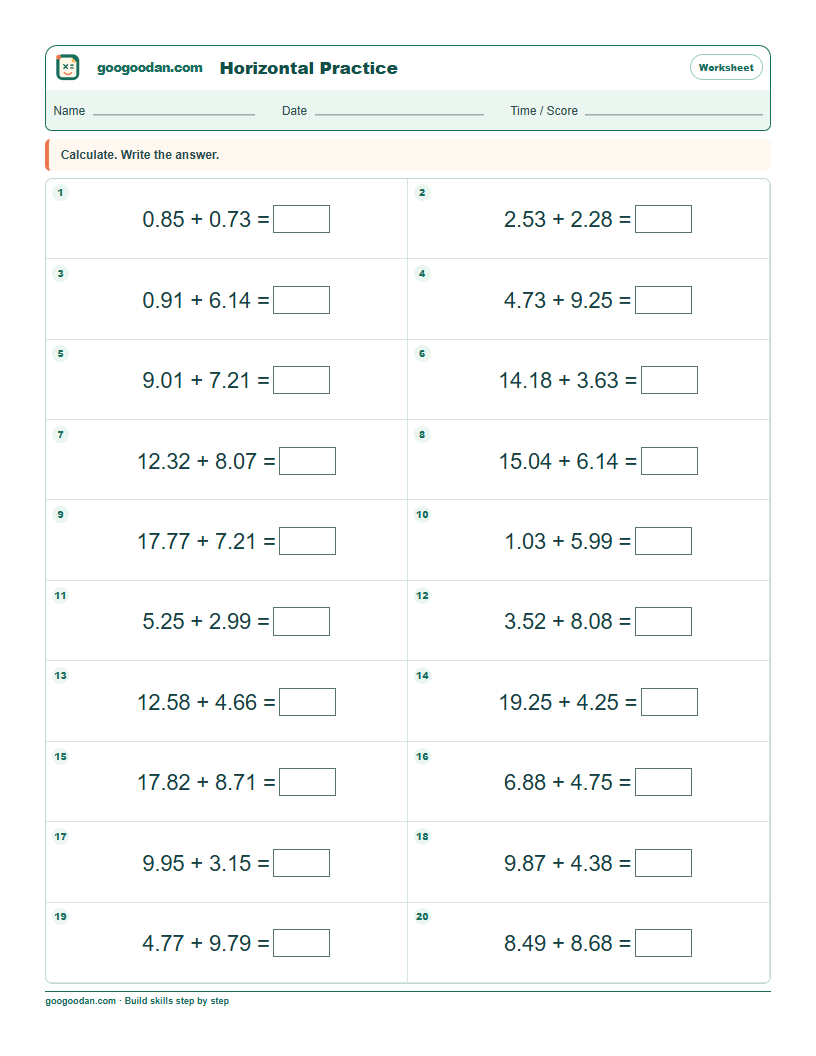
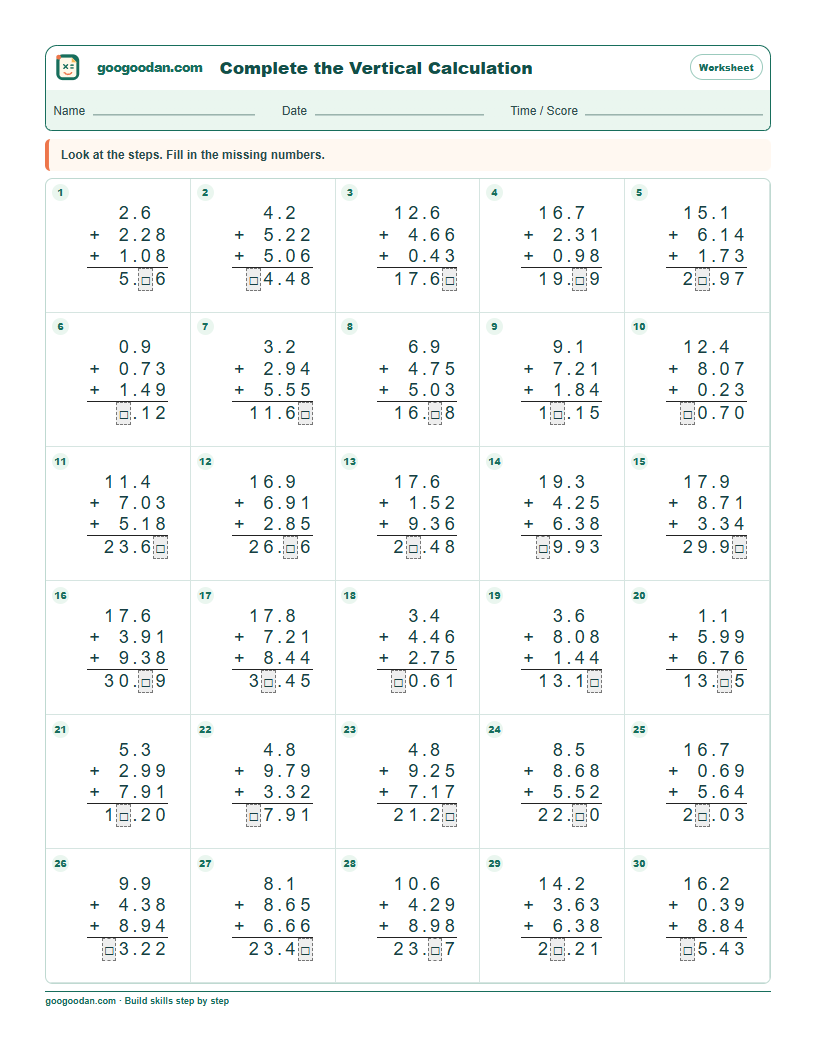
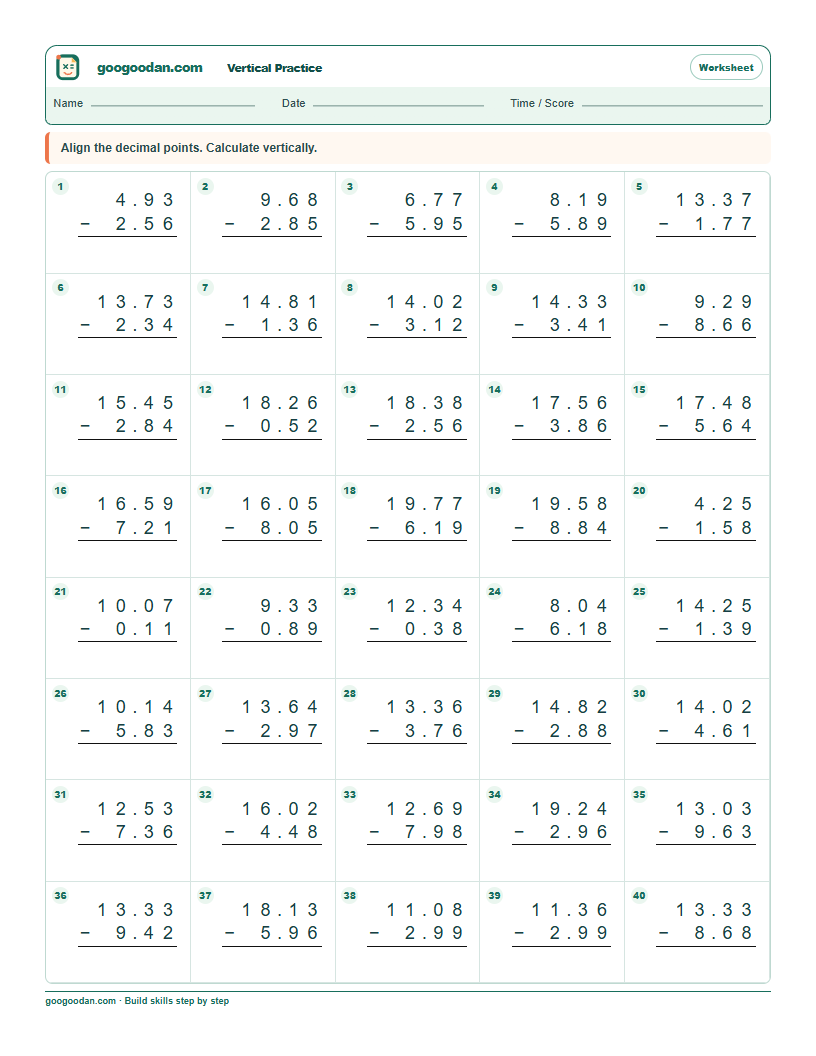
Adding and Subtracting Decimals Worksheets
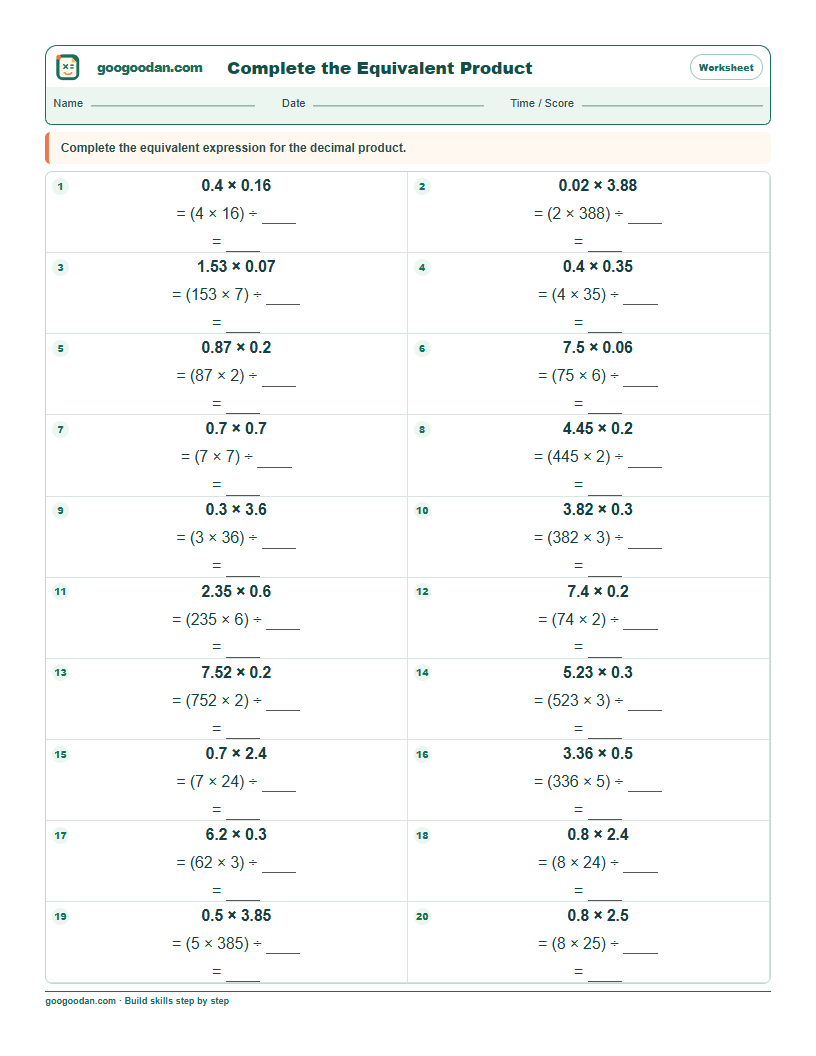
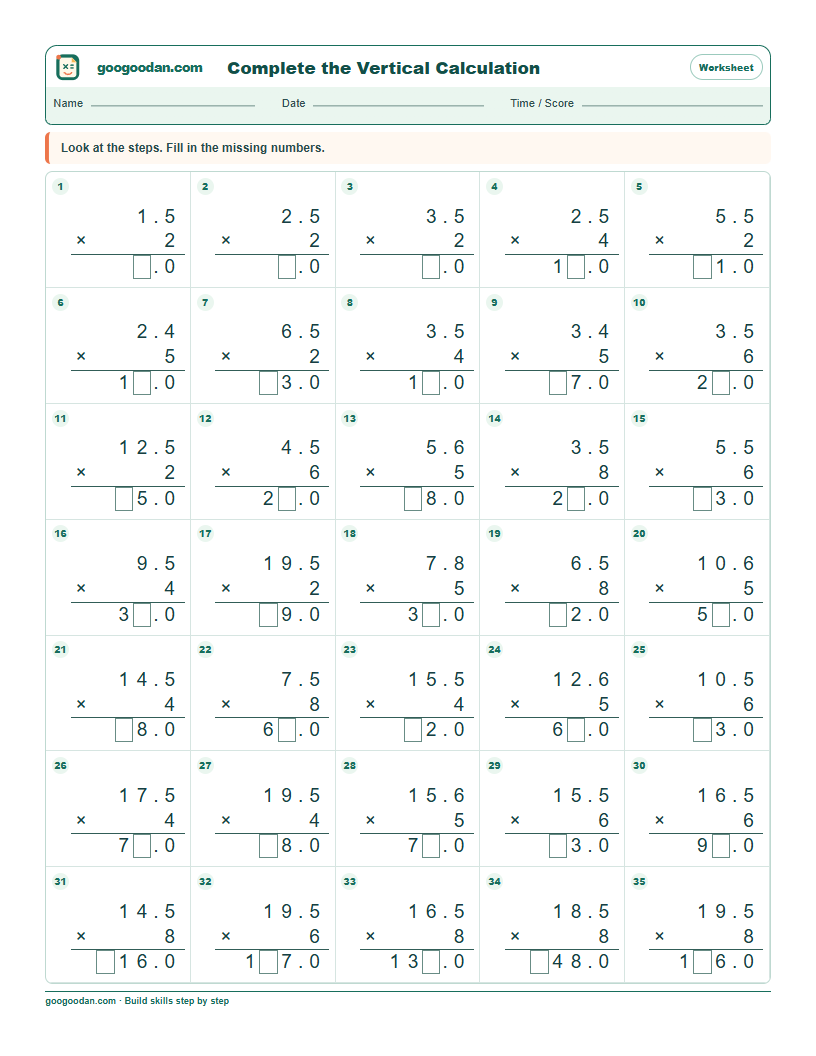
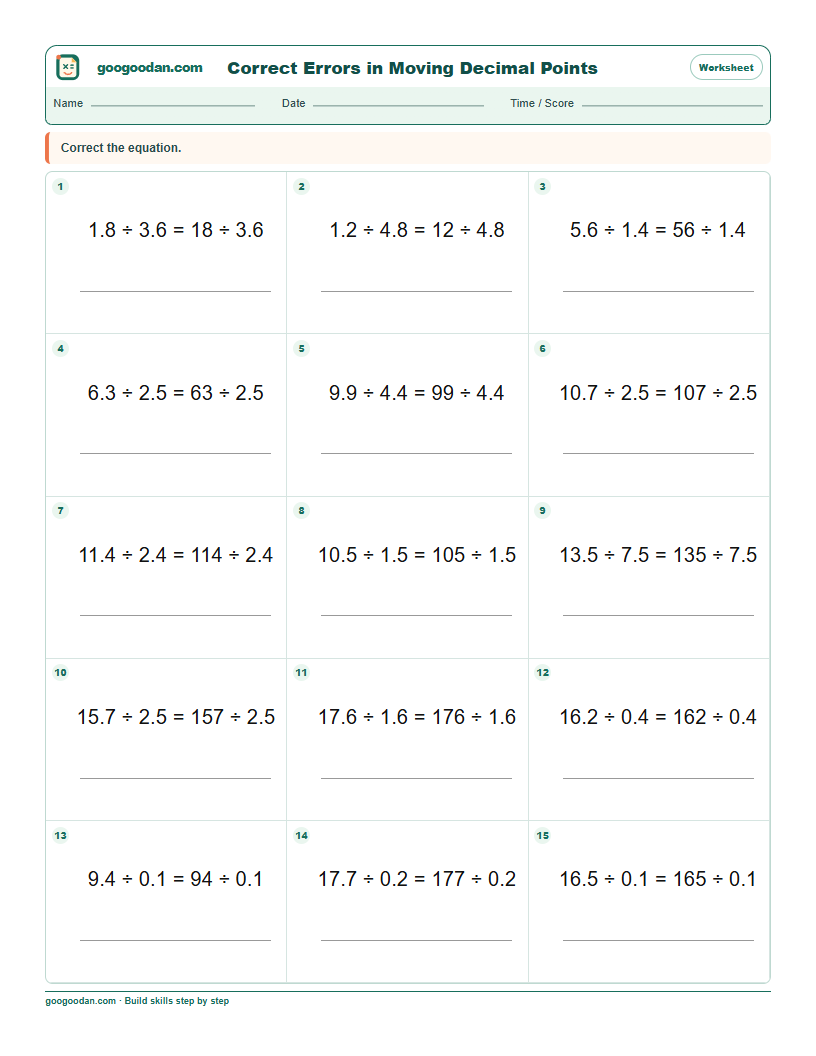
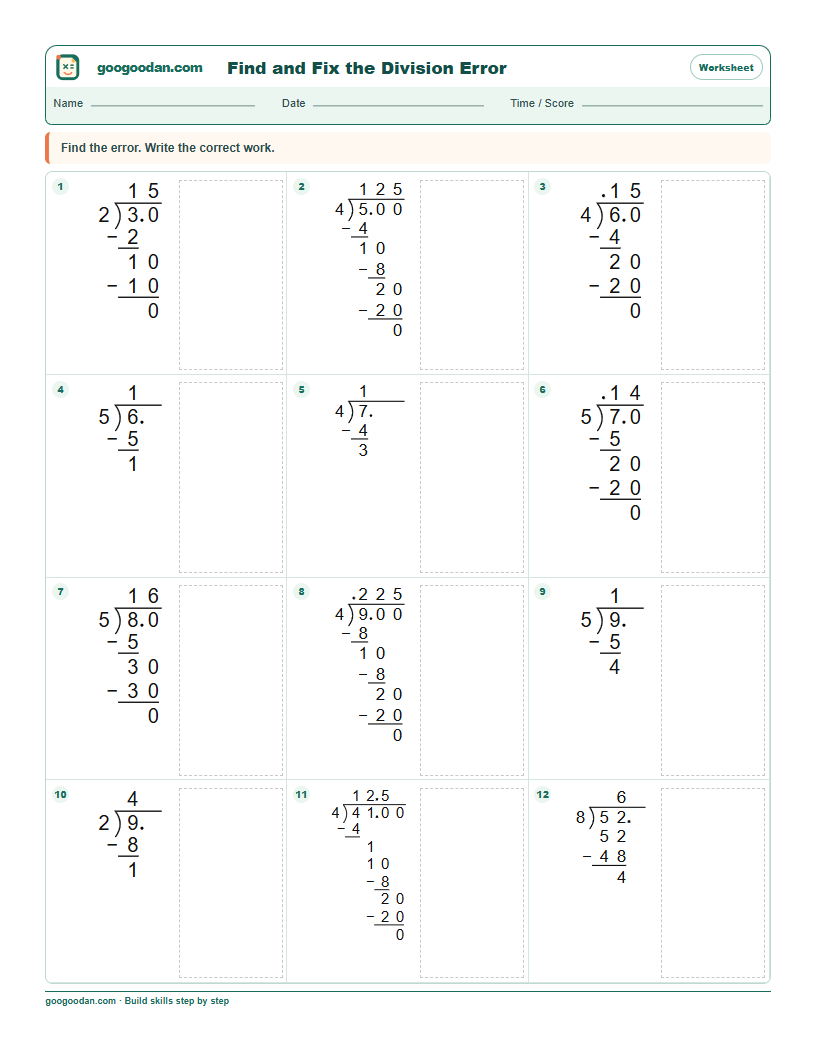
Multiplying and Dividing Decimals Worksheets
More worksheet collections
- Free Printable Maths Worksheets
- Times Tables Worksheets
- Addition and Subtraction Worksheets
- Multiplication and Division Worksheets
- KS2 Maths Worksheets: Years 3 to 6
- Shape Worksheets for Primary Maths Practice
- Measurement Worksheets for Primary Maths Practice
- Reception Maths Worksheets: Counting and Number Facts
Choosing fraction and decimal practice
Choose a starting point by looking at the representation in the worksheet title and preview. A picture-based fraction page can help learners connect equal parts with the whole. Equivalent fractions are a sensible next choice when the learner can identify the denominator as the number of equal parts. Addition and subtraction can then be practised with like denominators before moving to unlike denominators. Decimal sheets should match the place values already being used, such as tenths or hundredths. Keep one new idea in focus instead of mixing every operation immediately.
Read the question style first
Open a sheet and check whether the questions ask for a picture, a comparison, a calculation or a missing value. Select Worksheet to practise, Answer Key to check, or both when someone else is guiding the session. For a calculation page, solve one example on scrap paper first and confirm that the chosen method fits the questions. New Numbers provides another set for the same skill; it does not change the intended level, so switch to a different sheet when the current one is consistently accurate.
Compare equal parts and place values
For example, compare 3/4 and 5/8 by writing both with denominator 8: 3/4 is 6/8, so 5/8 is smaller. For decimals, 0.4 is four tenths and 0.35 is thirty-five hundredths; writing 0.4 as 0.40 makes the place values easier to compare, and 0.40 is greater than 0.35. These examples show why equal-sized parts and aligned place values matter. The digits alone do not tell which fraction or decimal is larger unless their positions are understood.
Common slips to catch
Common errors include adding denominators when adding fractions with the same denominator, comparing decimal digits without aligning place values, or treating a larger denominator as a larger fraction automatically. Draw or label the whole before deciding what each part means. In decimal work, use a place-value chart or add a zero at the end when it helps align columns; 0.6 and 0.60 have the same value. Check a fraction result against the size of the whole and use estimation before opening the answer key.