Multiplication and Division Worksheets
Use these sheets for multiplying by one or two digits and for dividing with and without remainders. Area models and partial products show why the written methods work, and the division sheets run from equal sharing up to short and long division.
Times table facts make all of this easier, so check the times tables worksheets first if answers come slowly. Press New Numbers for another set and print the answer page when you finish.
Multiplication Worksheets
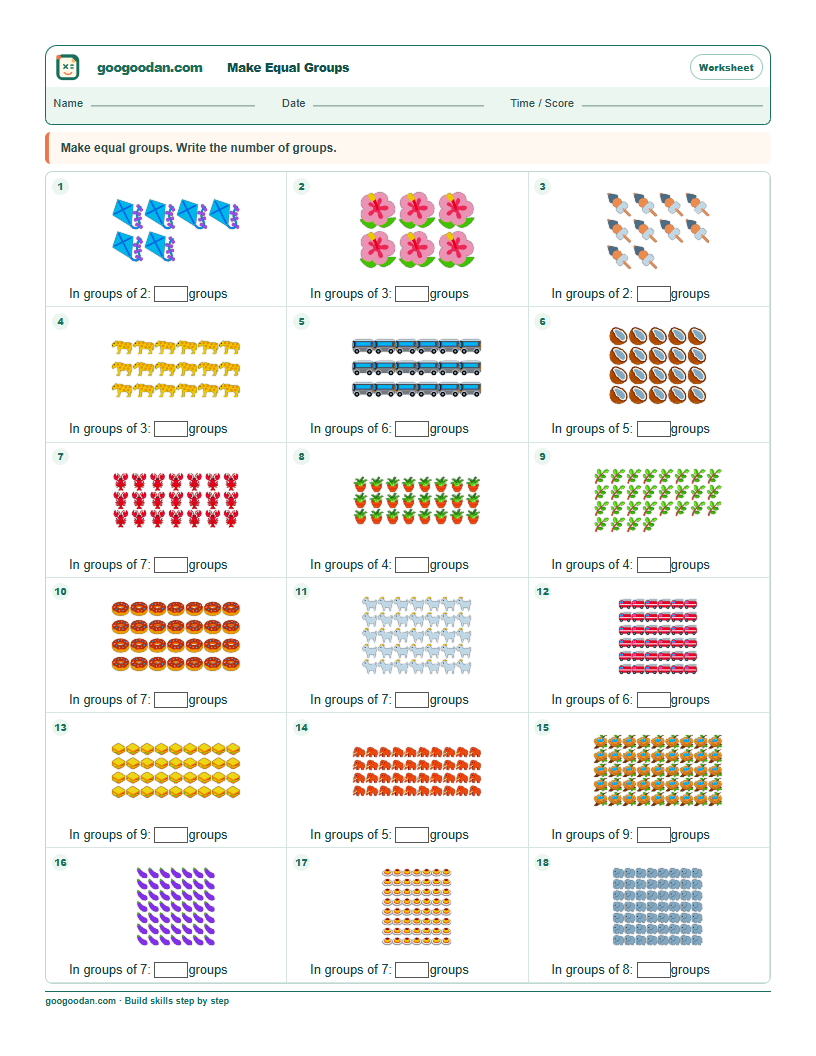 Equal Groups: Multiplication Pictures, Circle Groups Worksheet
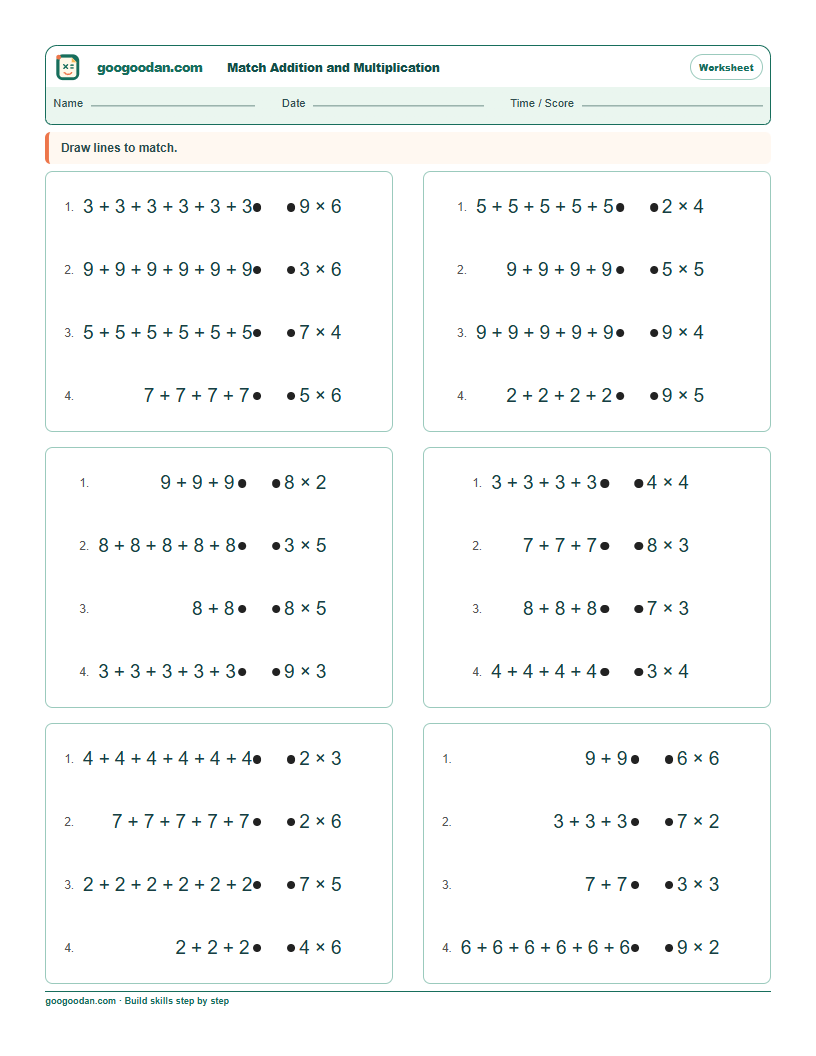 Multiplication Arrays: Match Repeated Sums Worksheet
 6 and 7 Times Tables: Horizontal Facts Worksheet
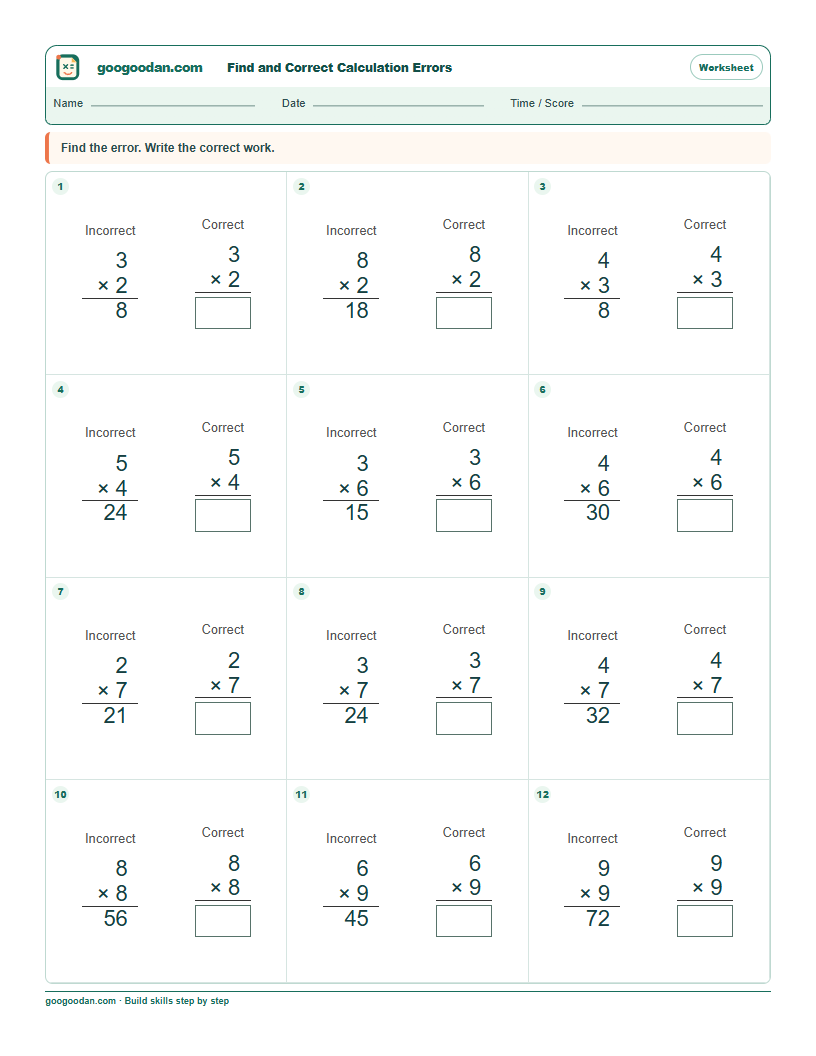 Mixed Times Tables 2–9: Fix Errors Worksheet
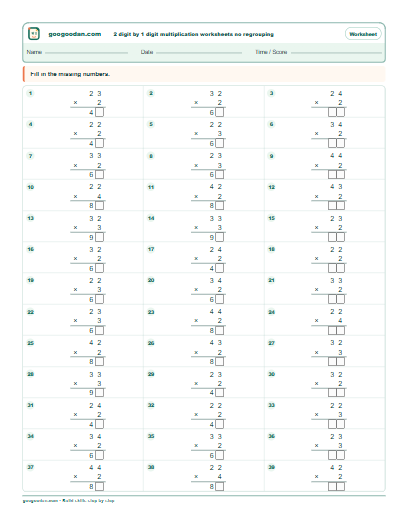 2-Digit × 1-Digit Column Multiplication: No Regrouping, Digit Blanks Worksheet
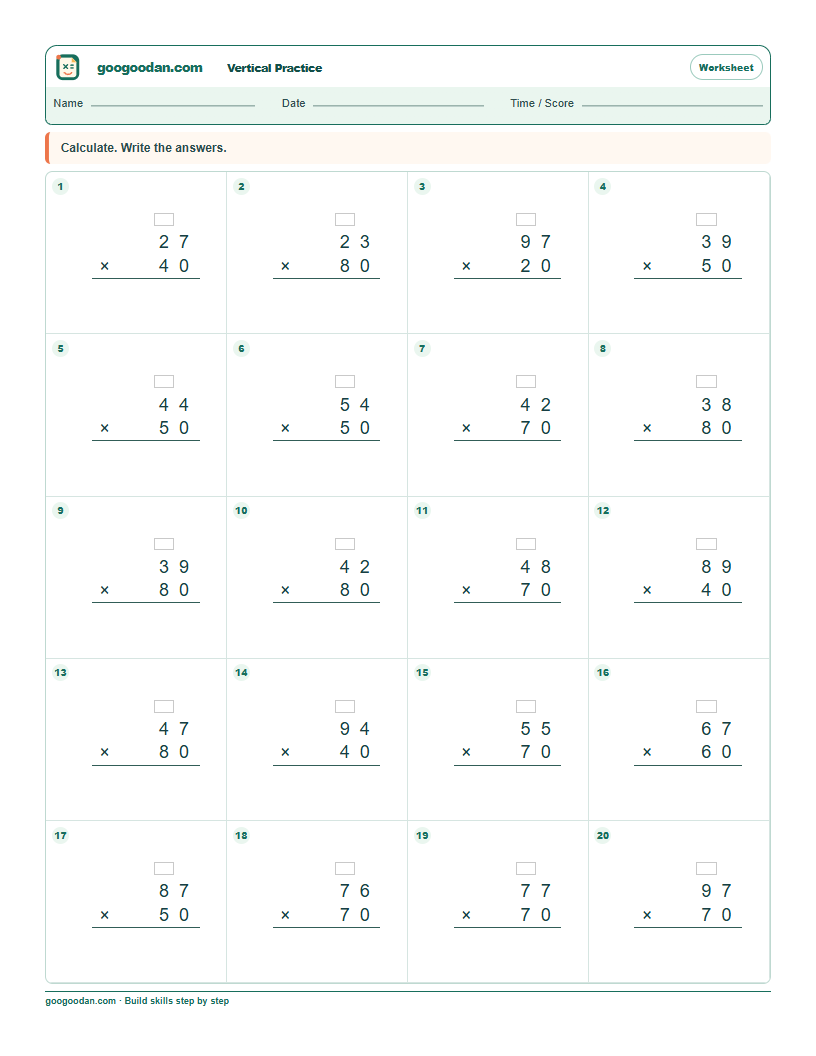 2-Digit × Tens Column Multiplication Worksheet
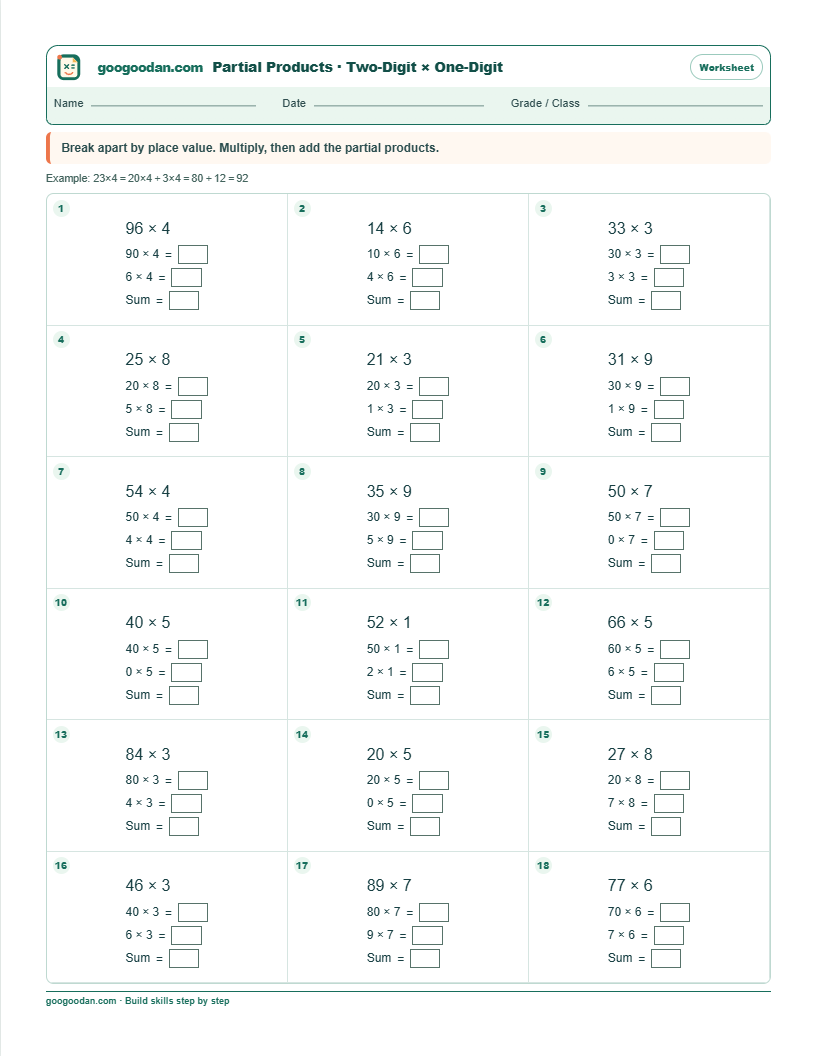
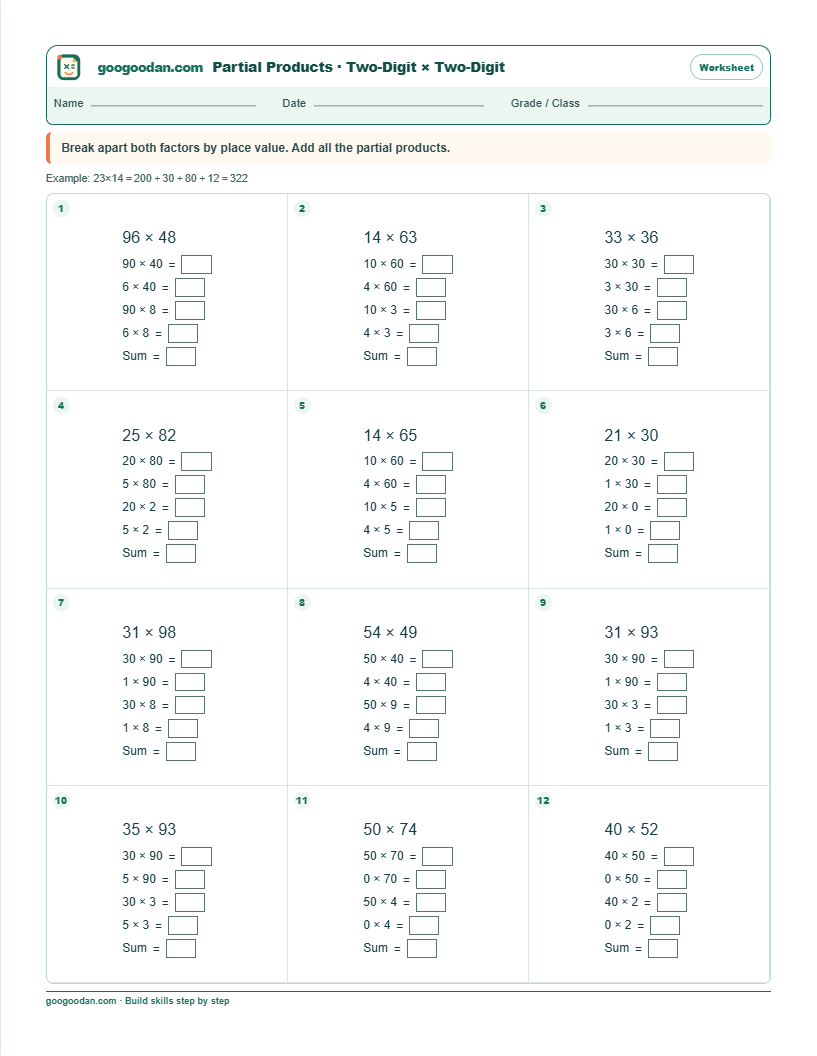
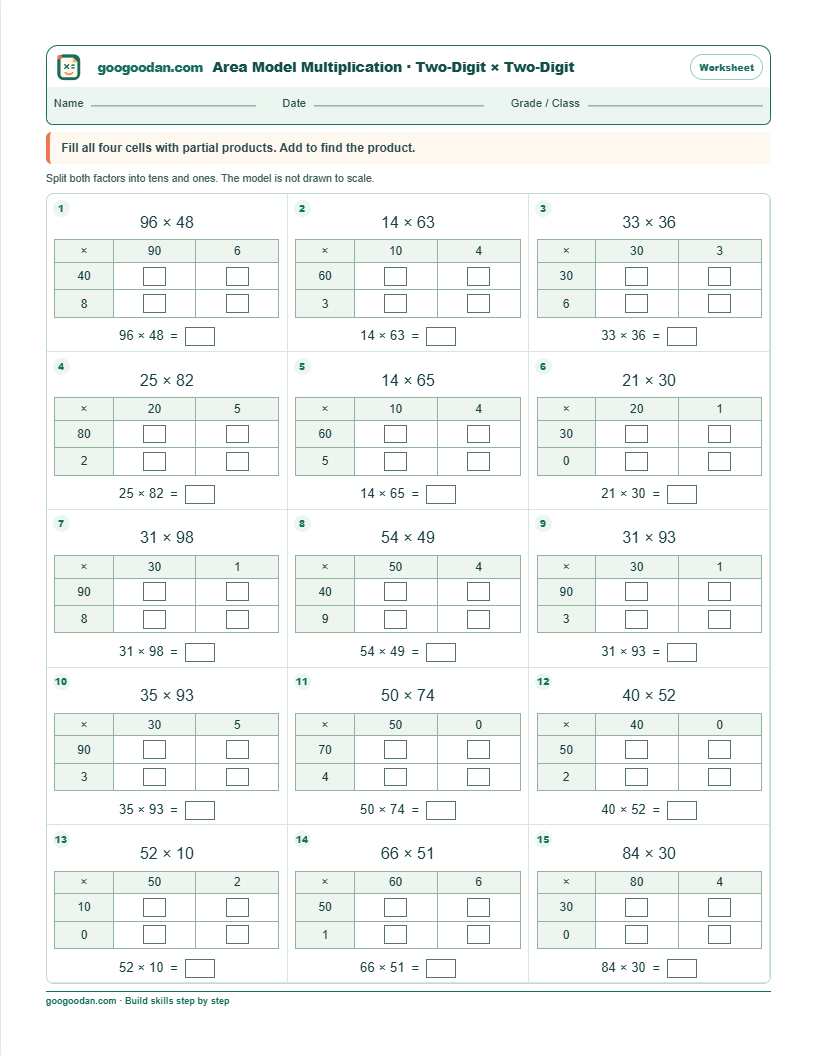
Area Model and Partial Product Worksheets
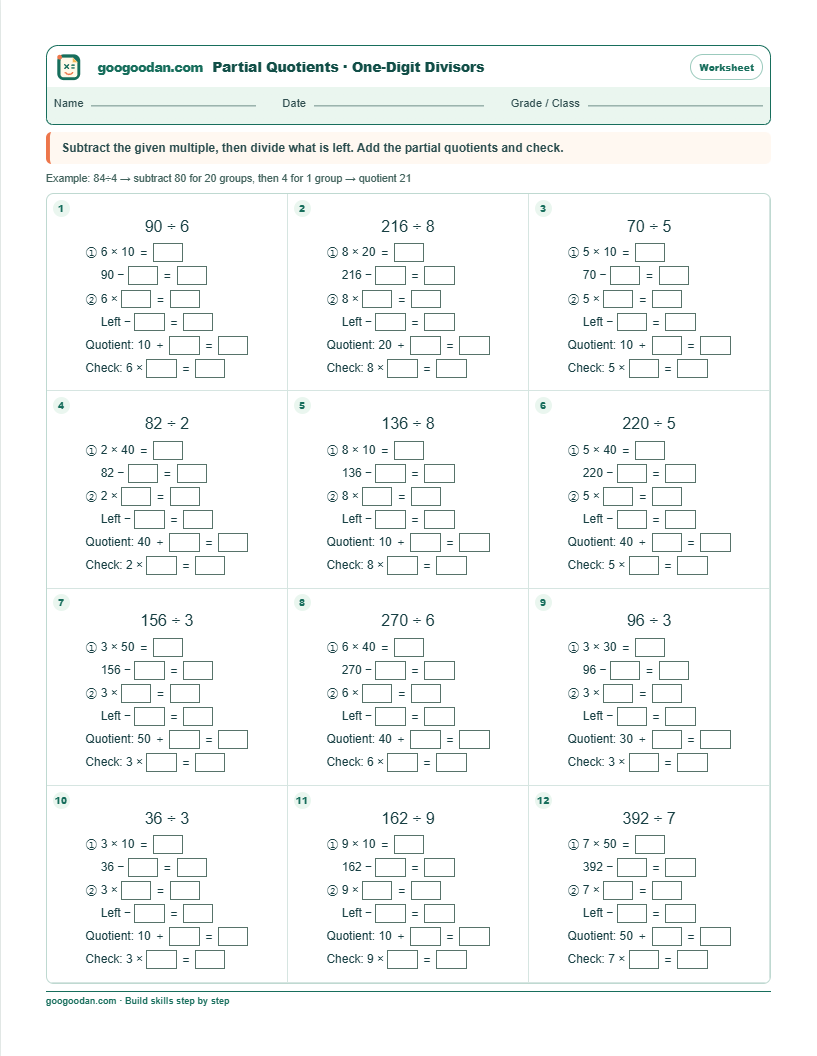
Division Worksheets
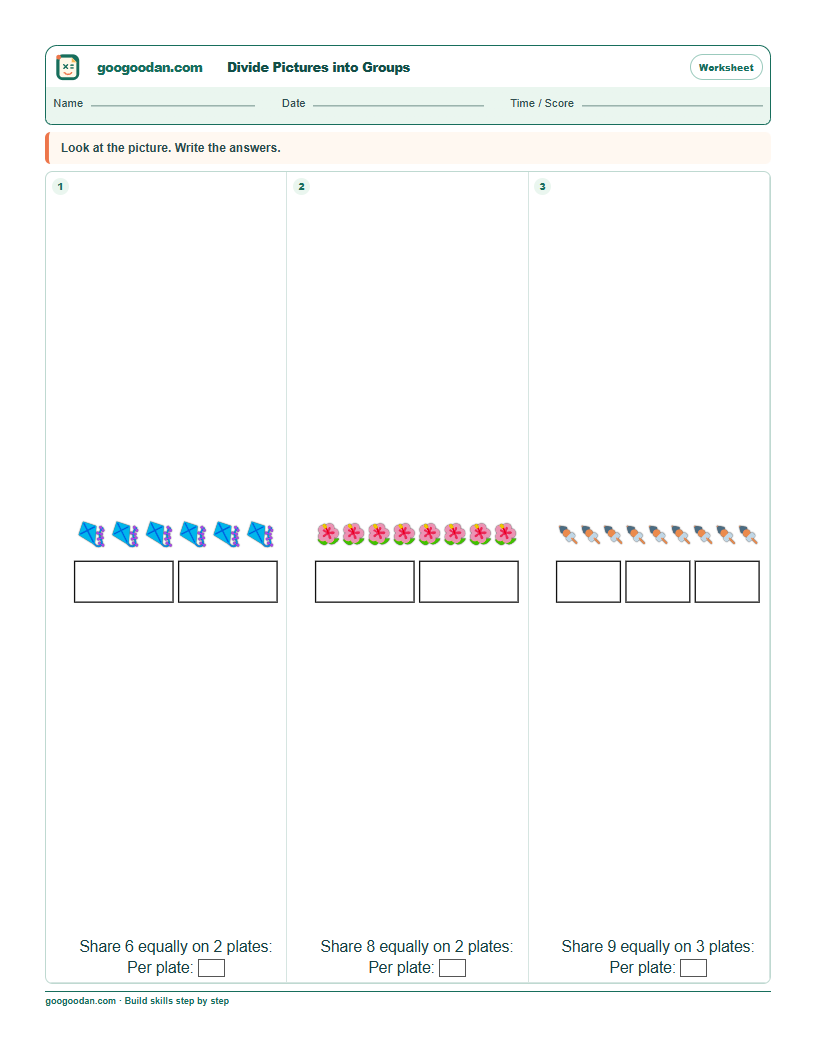 Division Pictures: Equal Sharing, Draw Shares or Groups Worksheet
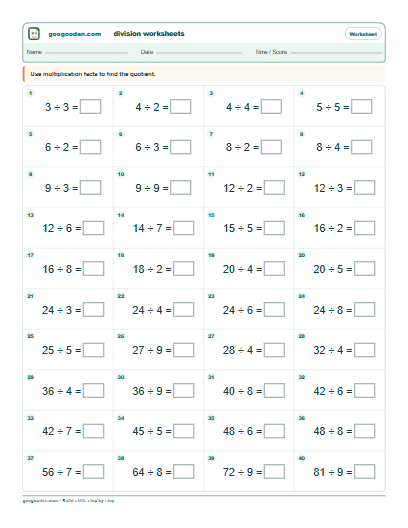 Division Facts from Times Tables: Horizontal Worksheet
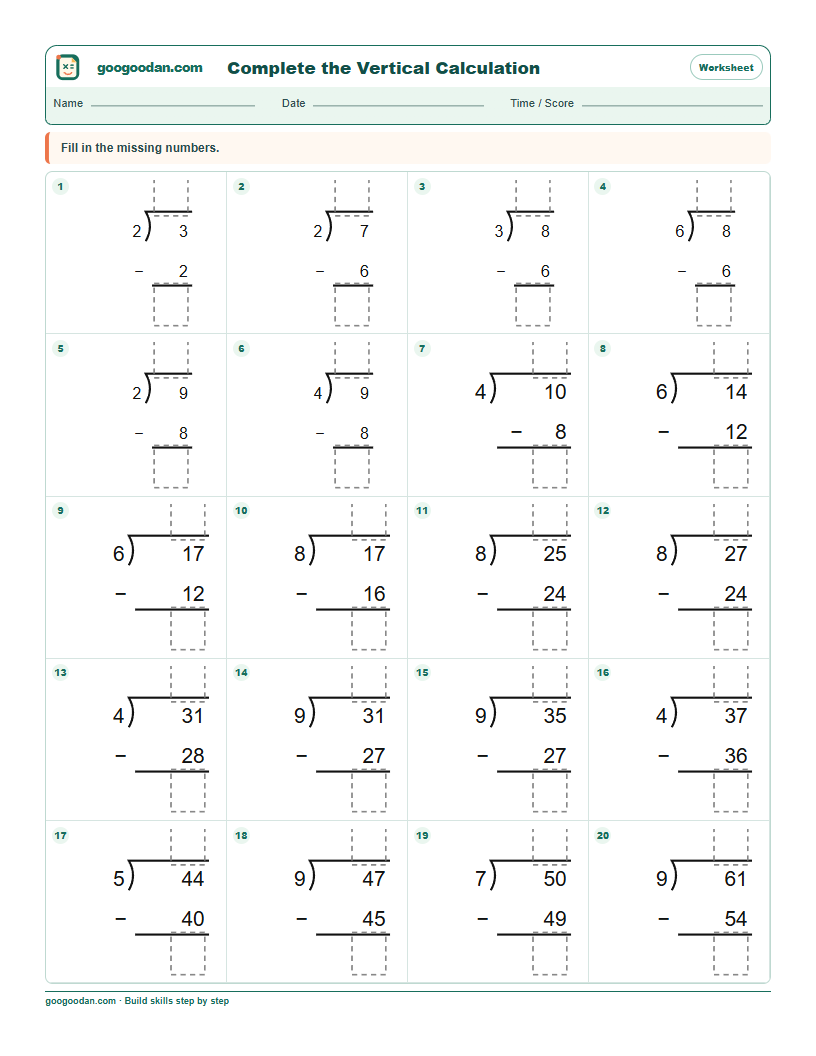 Basic Division with Remainders: Column Blanks Worksheet
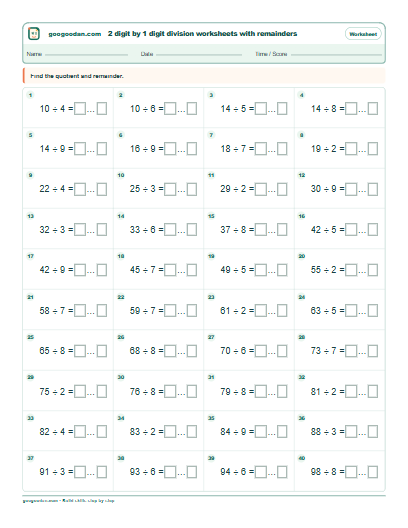 2-Digit ÷ 1-Digit Division: Remainders, Horizontal Worksheet
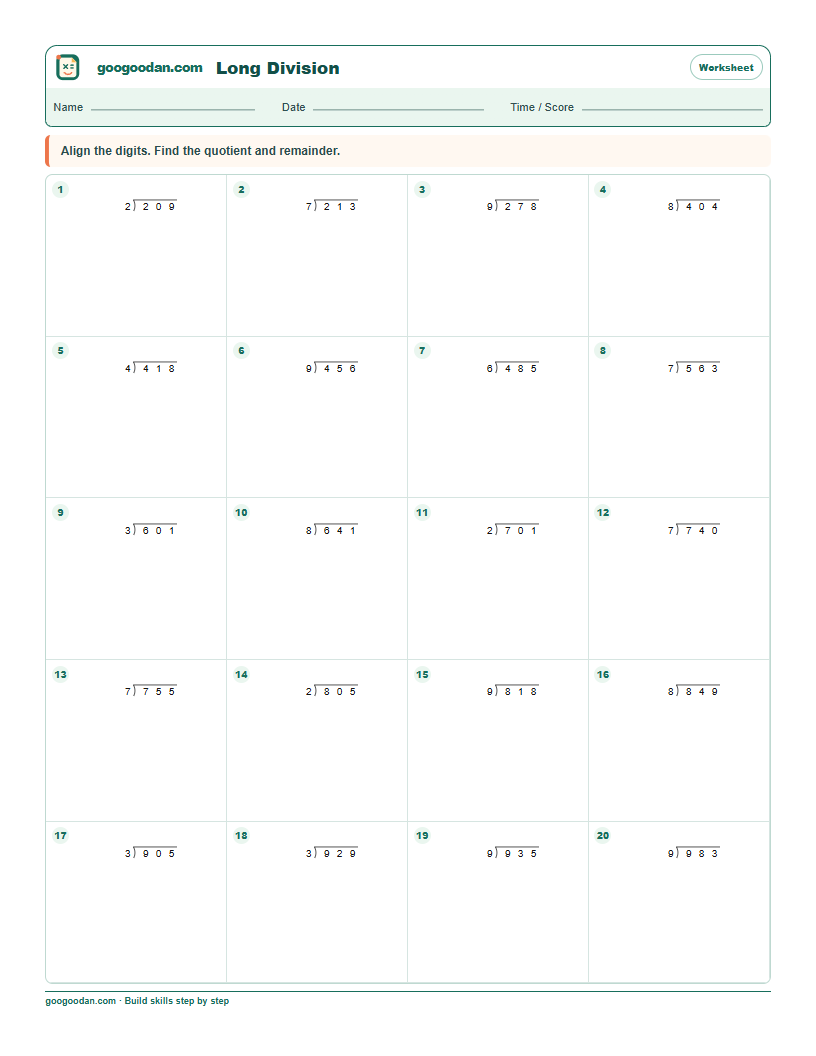 3-Digit Long Division: Zero in Quotient Worksheet
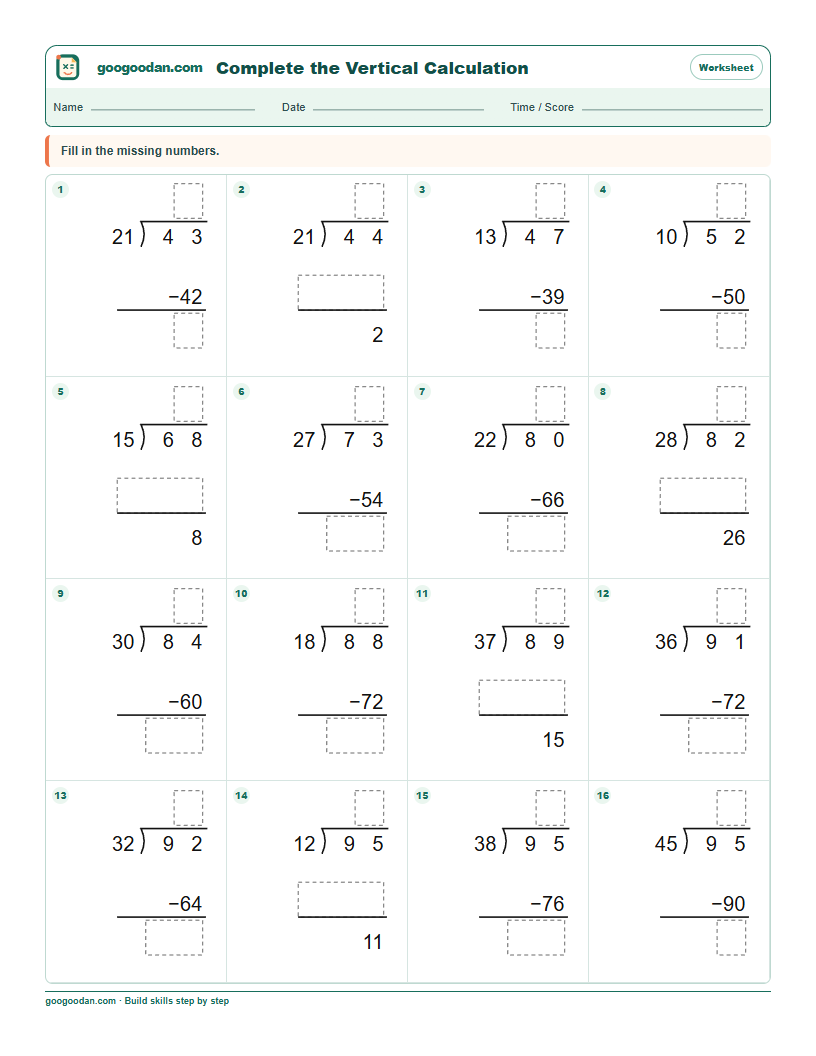 2-Digit ÷ 2-Digit Division: Remainders, Column Blanks Worksheet
More worksheet collections
- Free Printable Maths Worksheets
- Times Tables Worksheets
- Addition and Subtraction Worksheets
- Fractions and Decimals Worksheets
- Year 3 Maths Worksheets
- Shape Worksheets for Primary Maths Practice
- Measurement Worksheets for Primary Maths Practice
- Foundation Maths Worksheets: Counting and Number Facts
Build a path through multiplication and division
These worksheets connect basic facts with larger multiplication and division methods. Choose a sheet by the method named in its title: equal groups, area models, partial products, short division, long division or remainders each ask learners to organise thinking differently. If a learner is unsure of a product, practise the relevant times table first. Then return to the selected sheet and look for how the groups or place values are represented.
See the structure in an example
For 23 × 4, an area-style split gives 20 × 4 = 80 and 3 × 4 = 12, for a total of 92. The split shows why a two-digit multiplication can be built from easier facts. For 47 ÷ 5, five groups of 9 use 45, leaving 2; the quotient is 9 remainder 2. Check by multiplying 9 by 5 and adding the remainder: 45 + 2 = 47. This check catches a remainder that is too large or a quotient that does not match the original total.
Open a worksheet and solve one item with the answer page covered. Use New Numbers for a fresh attempt if the method is familiar but accuracy needs practice. Print the Worksheet and Answer Key together when you plan to check later, or choose only the page needed. Keep written steps aligned, especially when recording partial products or bringing down a digit in long division.
Frequent mistakes to notice
In multiplication, a partial product must include its place value: 2 tens multiplied by 4 is 8 tens, not 8 ones. In division, a remainder must be smaller than the divisor; if dividing by 5 leaves 7, another group of 5 can still be made. A quotient can look reasonable yet fail the check, so multiply back and add any remainder. When dividing without a remainder, the check is simply quotient times divisor equals the original number.
Move from a model to a written layout when the learner can explain what each part means. If errors repeat in one step, use a page with a clearer representation or return to the related fact practice. Keep the answer key for checking rather than copying, and note which question type caused difficulty before choosing the next sheet.