Foundation Maths Worksheets: Counting and Number Facts
These early activities focus on counting small groups, recognising numerals and building number bonds. Number facts stay within 10 to support first steps in addition and subtraction.
Choose a worksheet to open the printable practice and answer key. The collection includes 12 worksheets for Foundation learners.
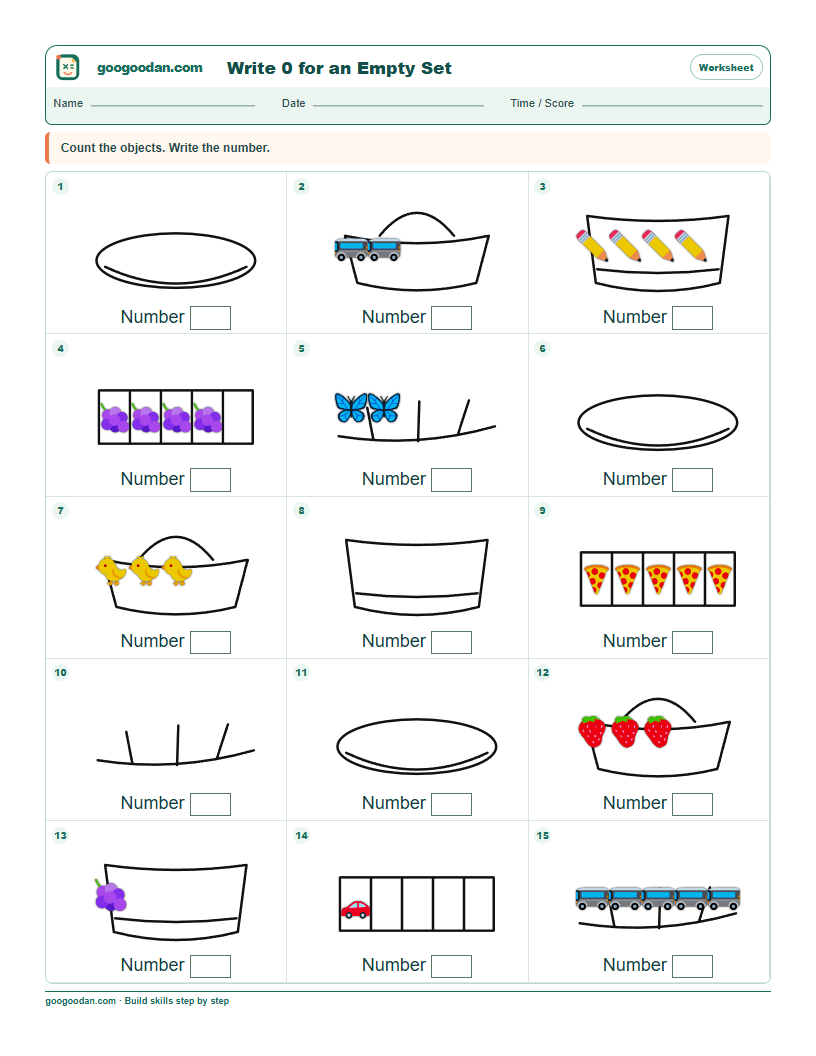 Counting 0–5 Worksheet: Empty and Full Picture Sets
 Counting 1–9: Draw Quantities Worksheet
 Counting 1–9: Picture Match Worksheet
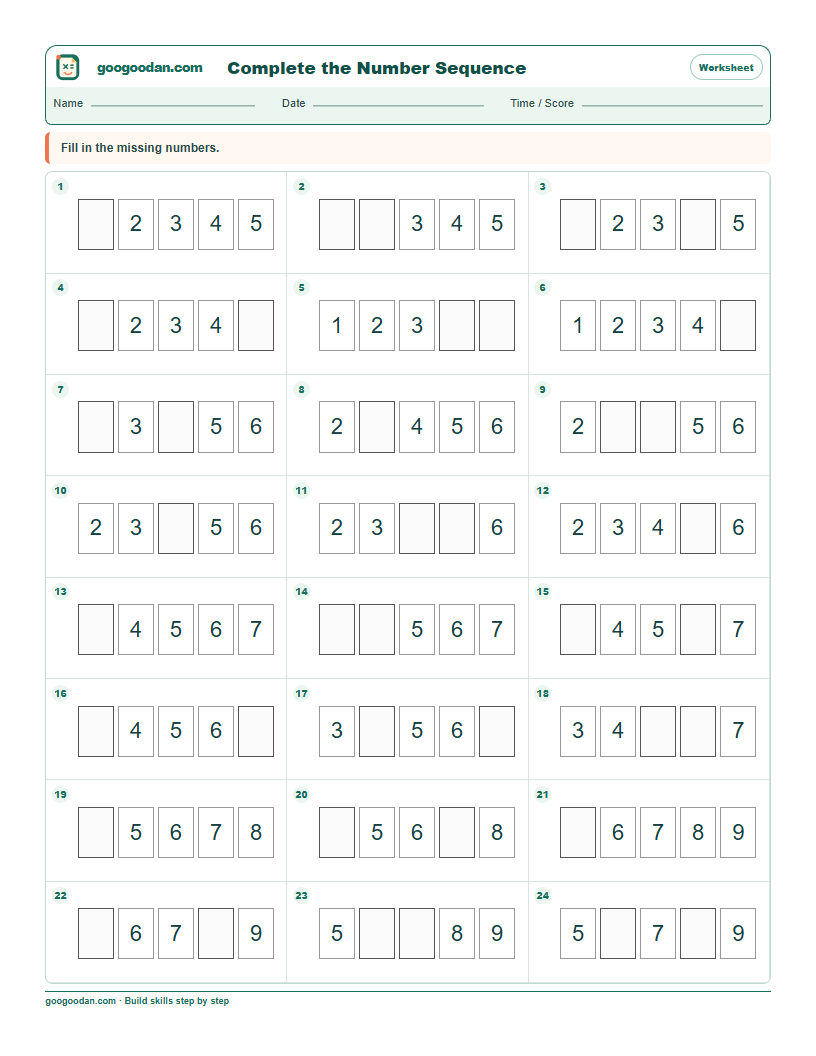 Counting 1–9: Sequence Blanks Worksheet
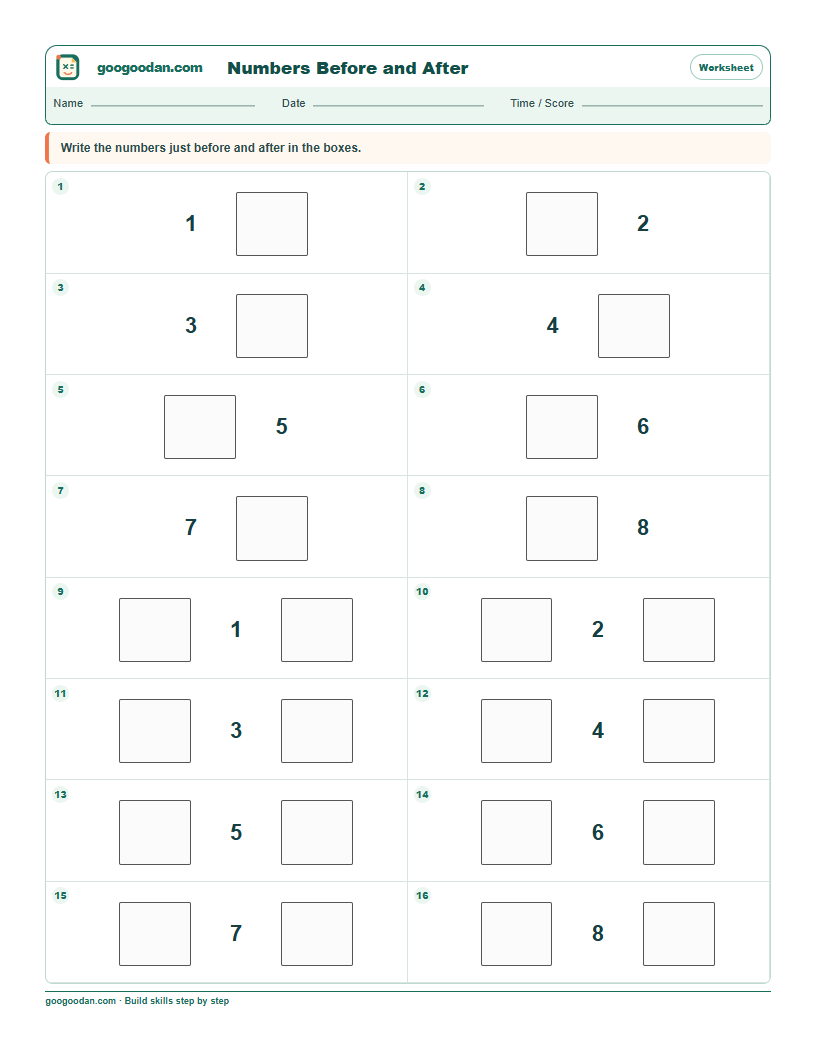 Zero and Numbers 0–9: Before and After Worksheet
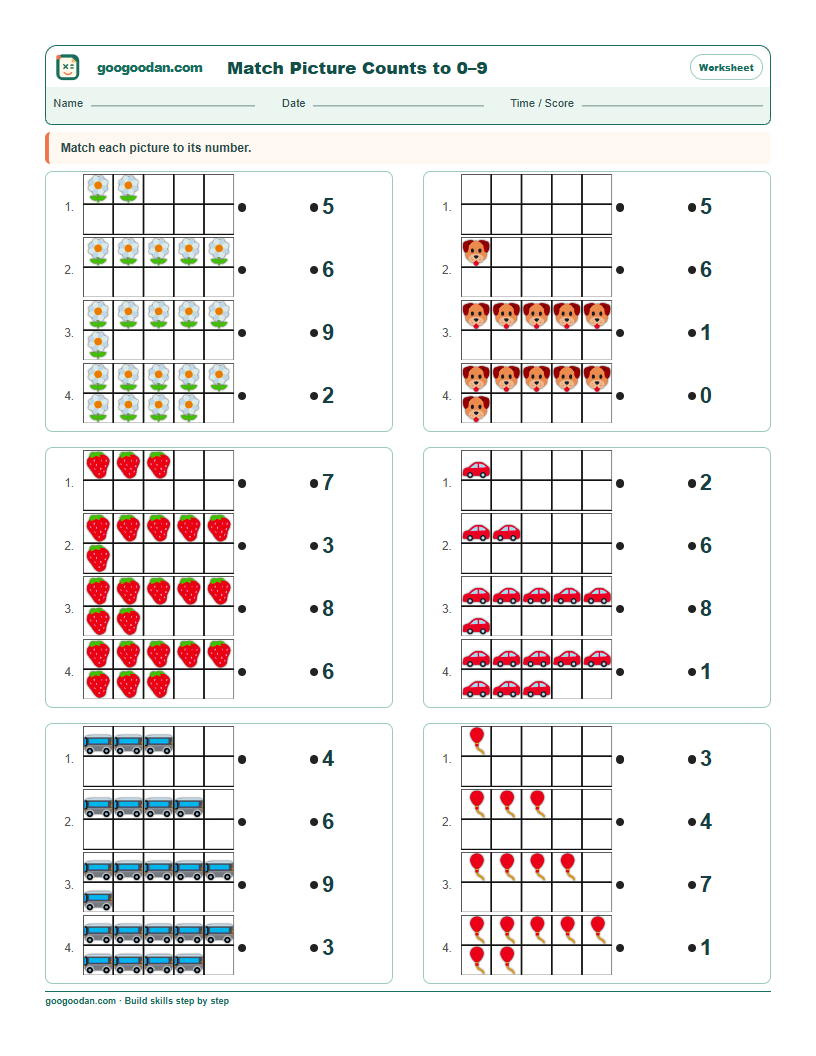 Zero and Numbers 0–9: Picture Match Worksheet
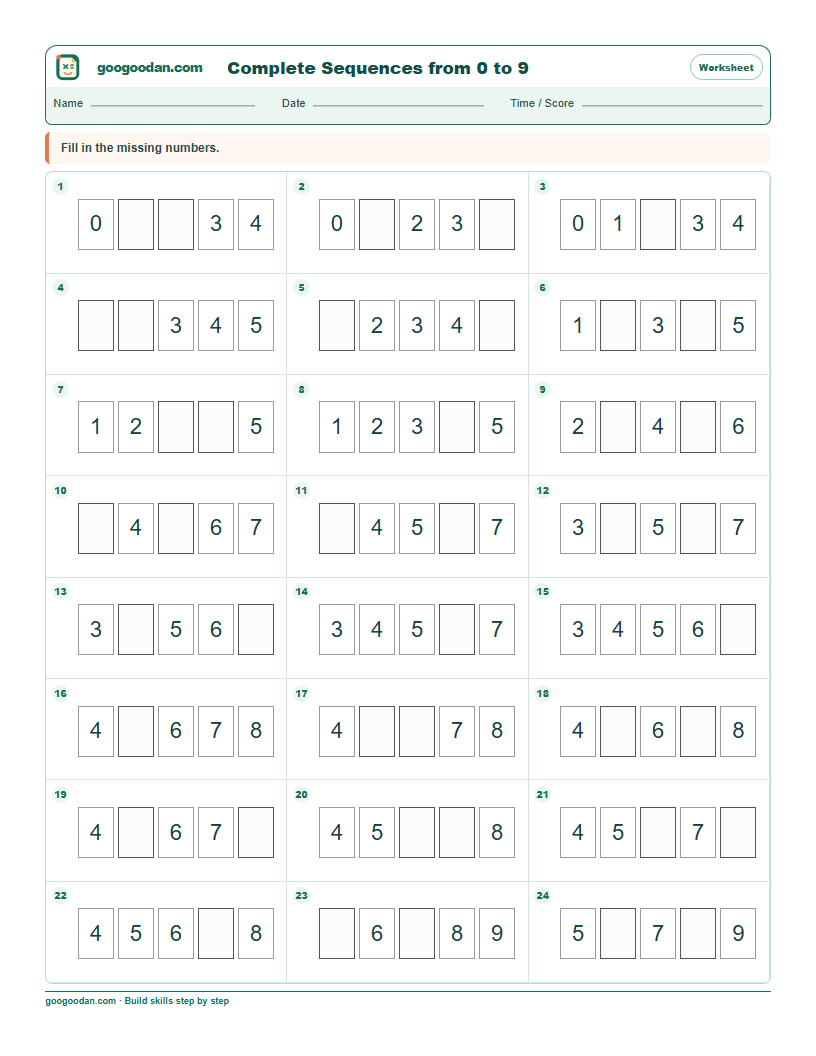 Zero and Numbers 0–9: Sequence Blanks Worksheet
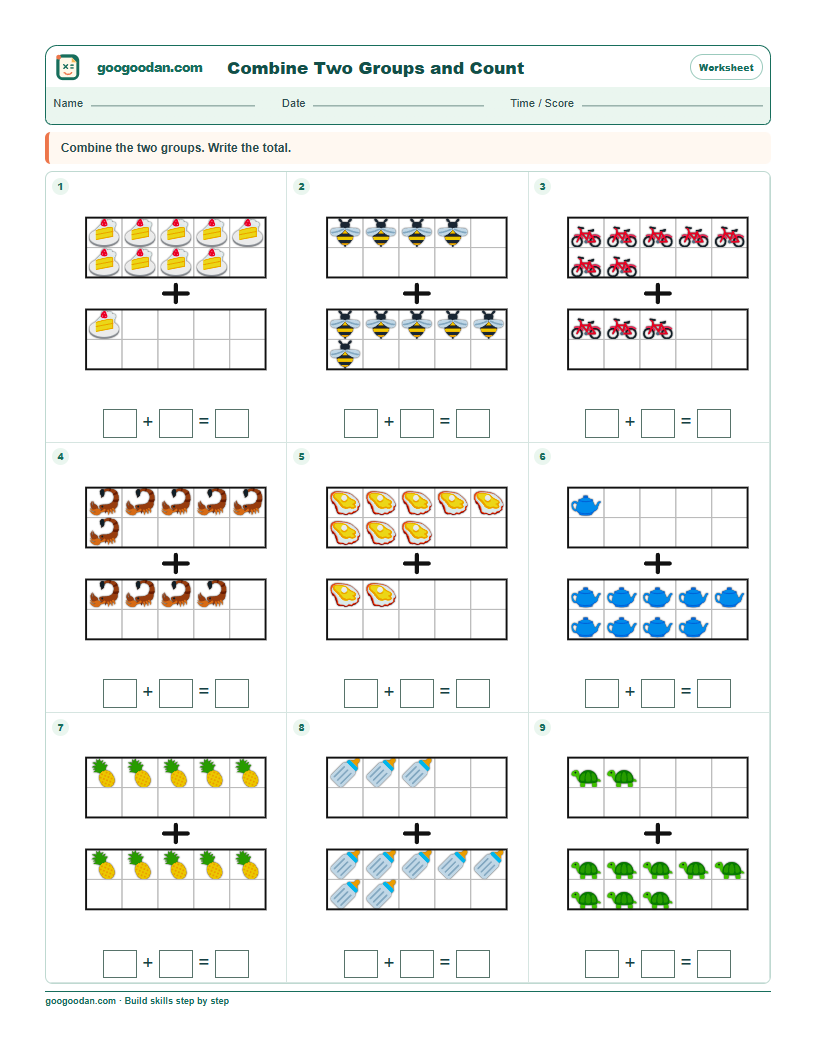 Number Bonds to 10: Combining, Count Combined Pictures Worksheet
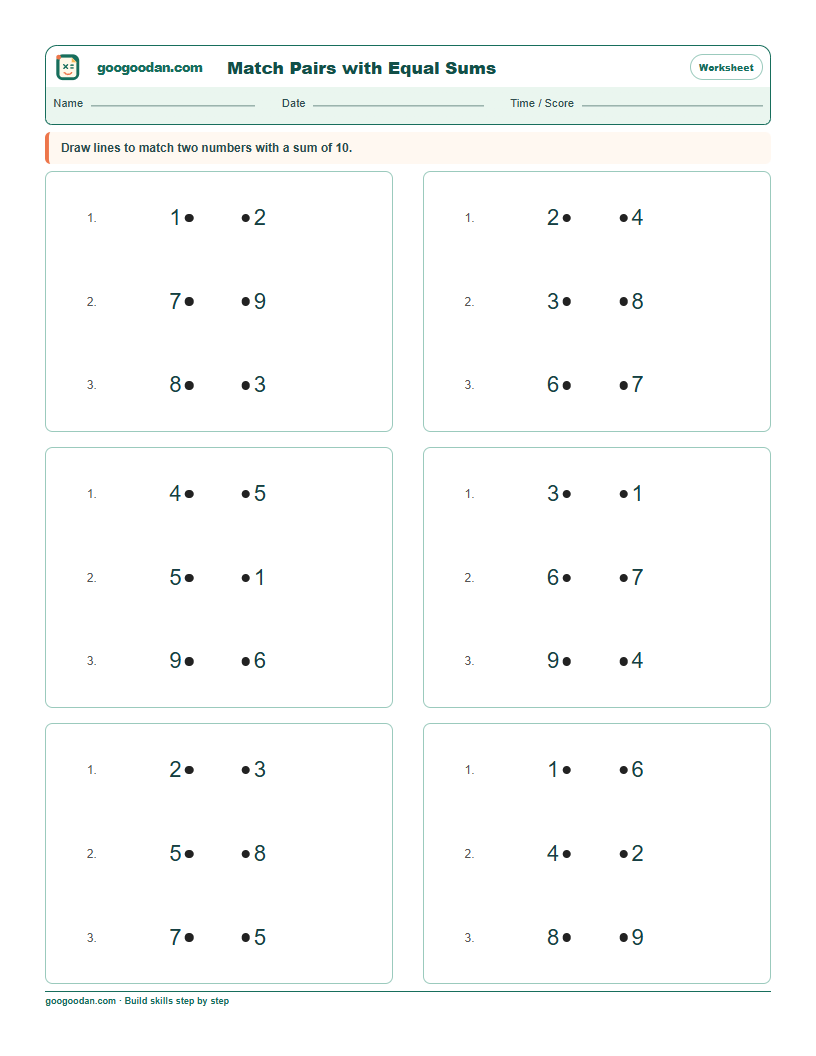 Number Bonds to 10: Combining, Match Equal Totals Worksheet
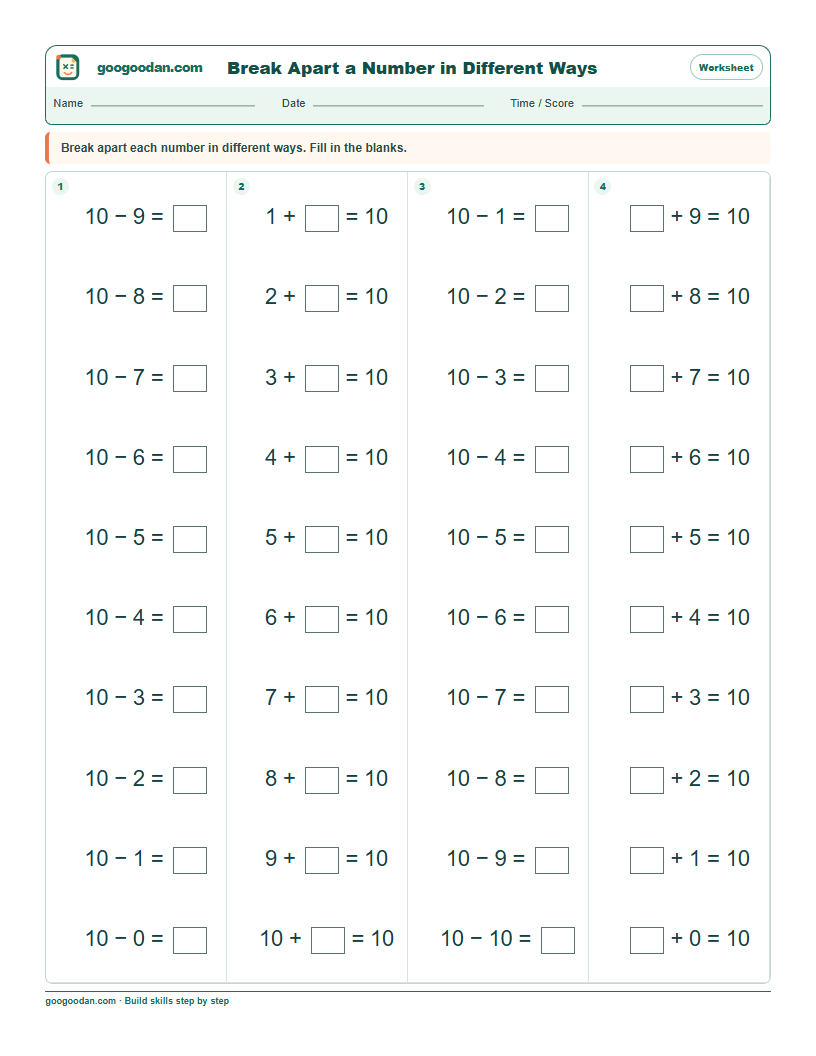 Number Bonds to 10: Splitting, Find Different Pairs Worksheet
 Subtraction below 10 Worksheet: Write Horizontal Differences
 Basic Addition Facts Worksheet: Horizontal Sums to 9
More worksheet collections
- Shape Worksheets for Primary Maths Practice
- Measurement Worksheets for Primary Maths Practice
- Foundation Maths Worksheets: Counting and Number Facts
A gentle sequence for early number practice
This collection brings together short activities for counting, recognising numerals and connecting quantities with number facts. Start with the page that matches what the learner can already do. If counting objects is the focus, choose a small group and touch each item once while saying the next number. If numerals are familiar, use a matching or sequence activity to connect the spoken count with the written symbol.
Move from seeing to explaining
After a learner can count a group, ask how they know the total. They might count every object, recognise a familiar pattern, or split a group into smaller parts. For example, five counters can be seen as three and two. That observation can then support a number-bond question: if there are five altogether and three are shown, two are hidden. Use a picture or counters beside the worksheet when it helps, then gradually let the printed question carry more of the thinking.
Choose manageable practice
Open a sheet and look at its title, sample layout and number range before printing. Pick one activity for the skill being practised instead of switching pages after every question. New Numbers creates another set when the learner is ready to repeat. The Answer Key is useful for a quick check after an attempt; keep it separate during the first try. If the activity feels too easy, move to a page that asks for a different connection, such as matching a numeral to a group or completing a number bond.
Watch for counting errors
Two frequent slips are counting one object twice and saying the next number before moving to the next object. Pointing to each item once helps. When matching numerals, check that the written symbol is read in the right direction and is not confused with a similar-looking one. For a number bond, the parts must combine to make the whole; a missing part is found by counting on from the known part, not by repeating the whole.
End a session by asking the learner to describe one answer. If they can show the group, name the numeral and explain how the parts fit, the practice has made a useful connection. Repeat the format before moving to a less familiar representation.