Geometry and Shape Worksheets for Primary Maths Practice
Build confidence with flat and solid shapes by naming them, noticing their features and comparing how they are put together. These activities suit primary learners working with shape names and properties.
Choose a worksheet to open the printable practice and answer key. The collection includes 16 worksheets for Primary learners.
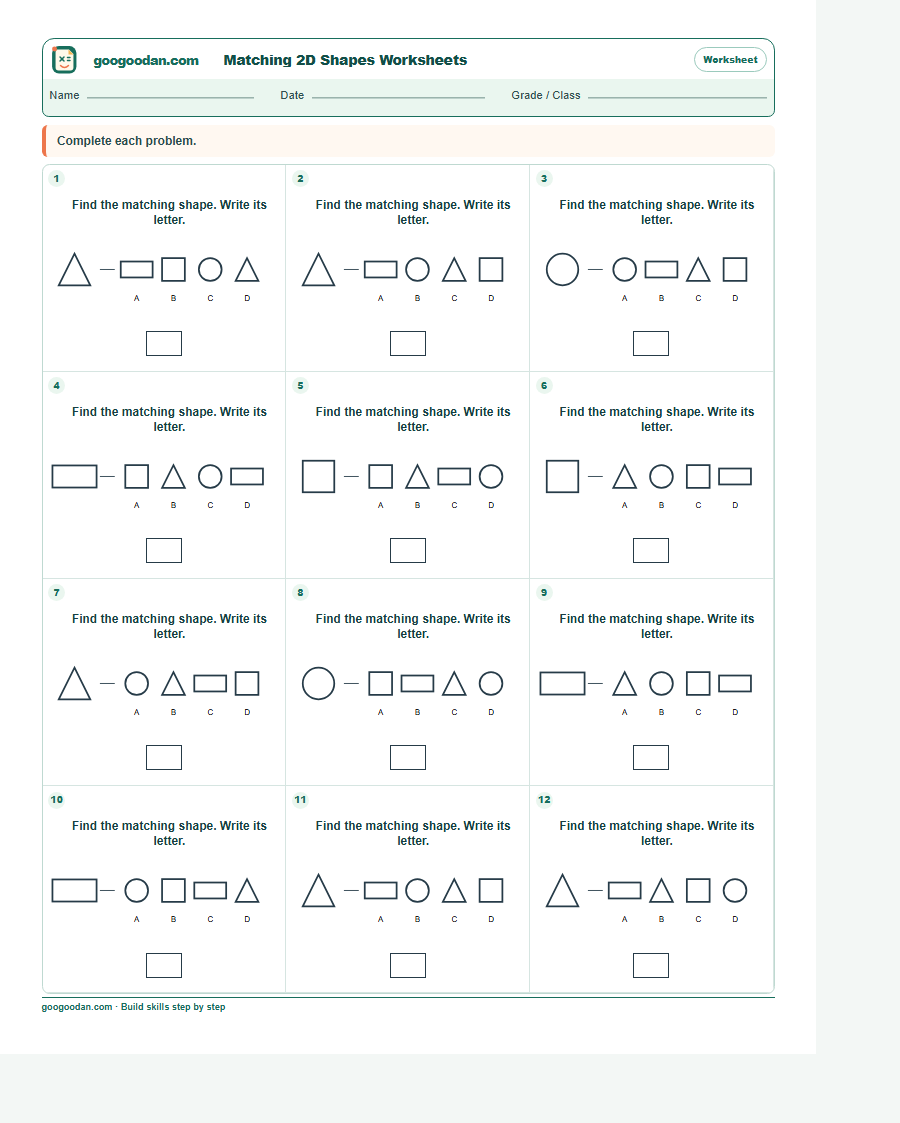 2D Shape Matching Worksheet: Choose the Identical Shape
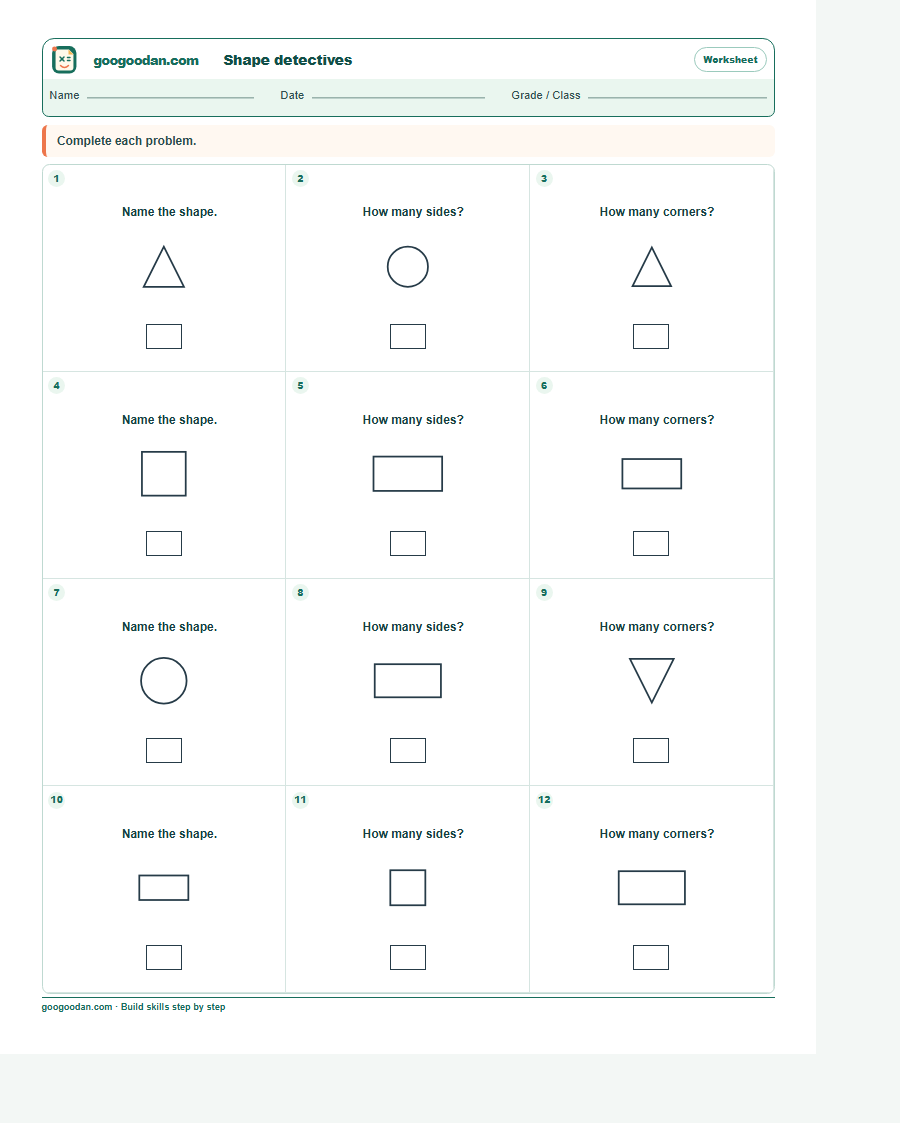 2D Shape Names Worksheet: Identify Shapes and Count Sides
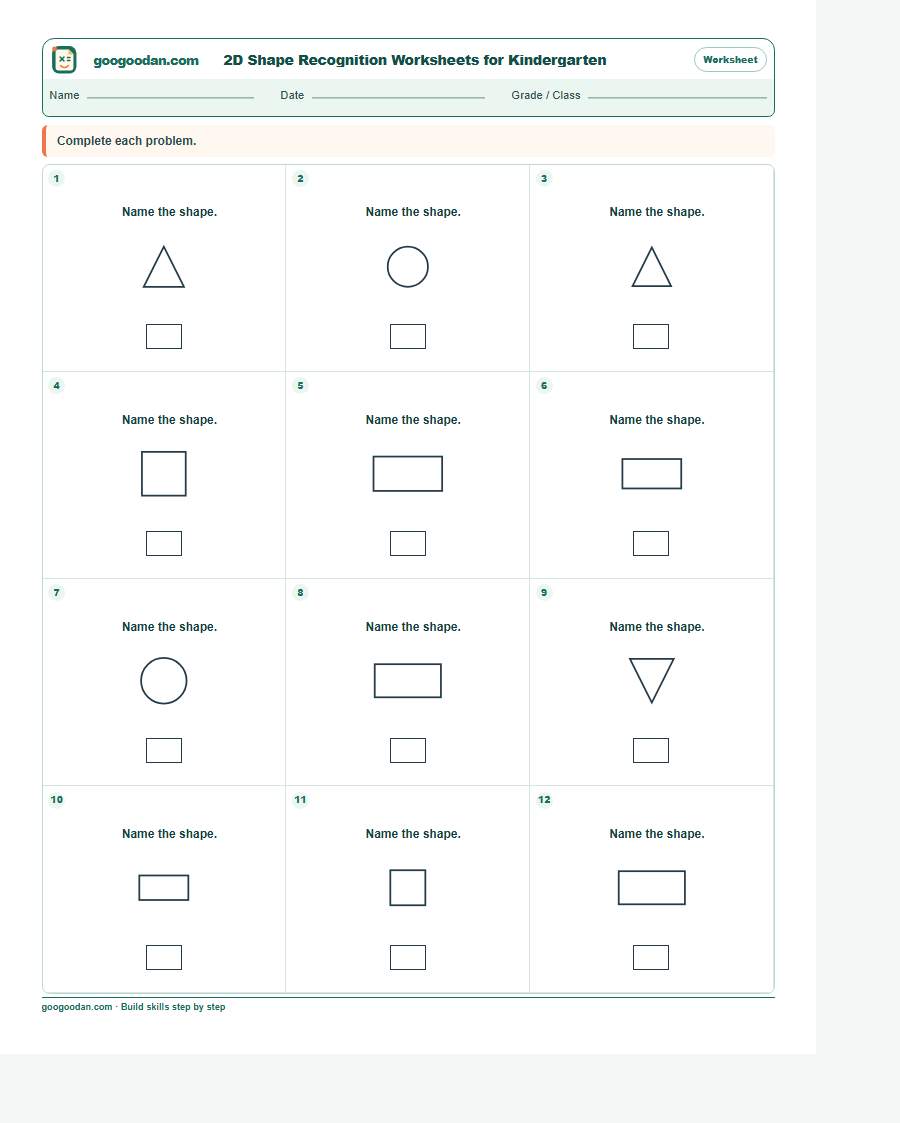 2D Shape Recognition Worksheet: Write the Shape Names
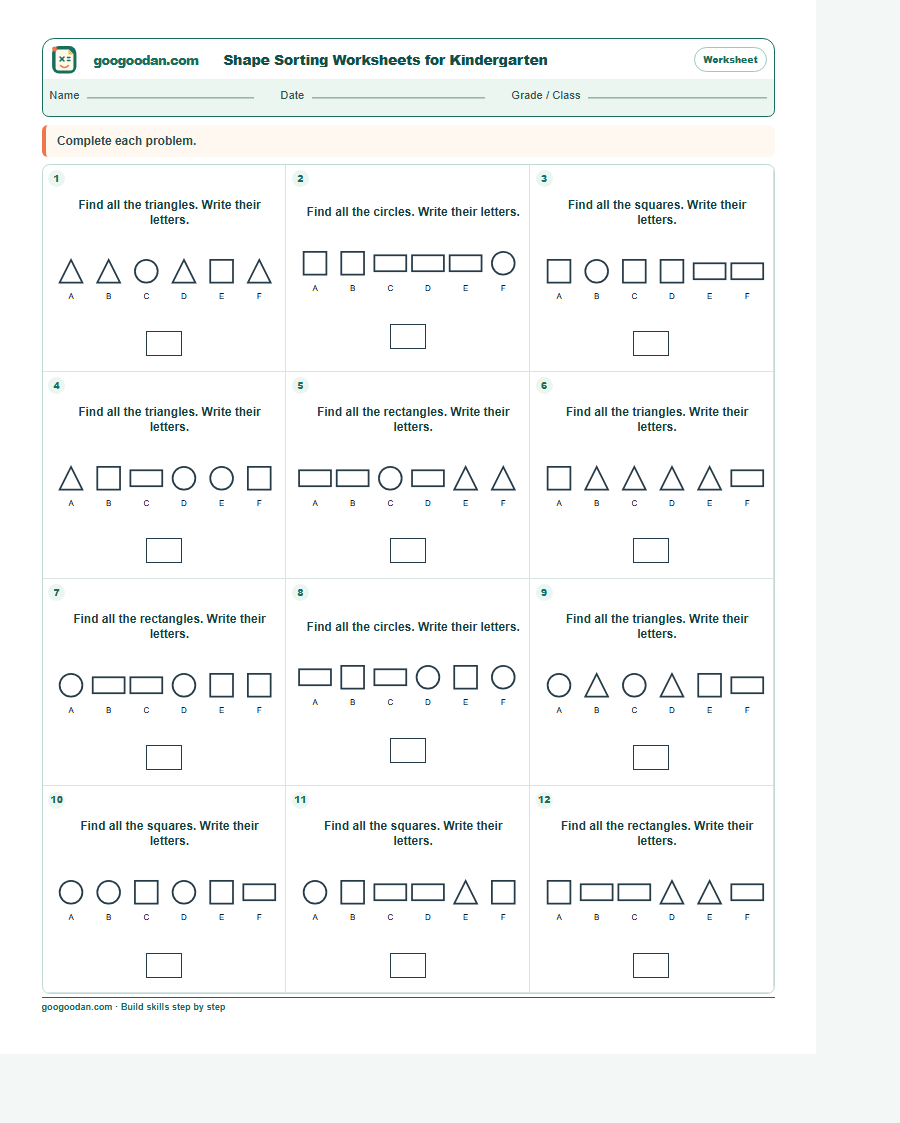 2D Shape Sorting Worksheet: Find All Matching Shape Types
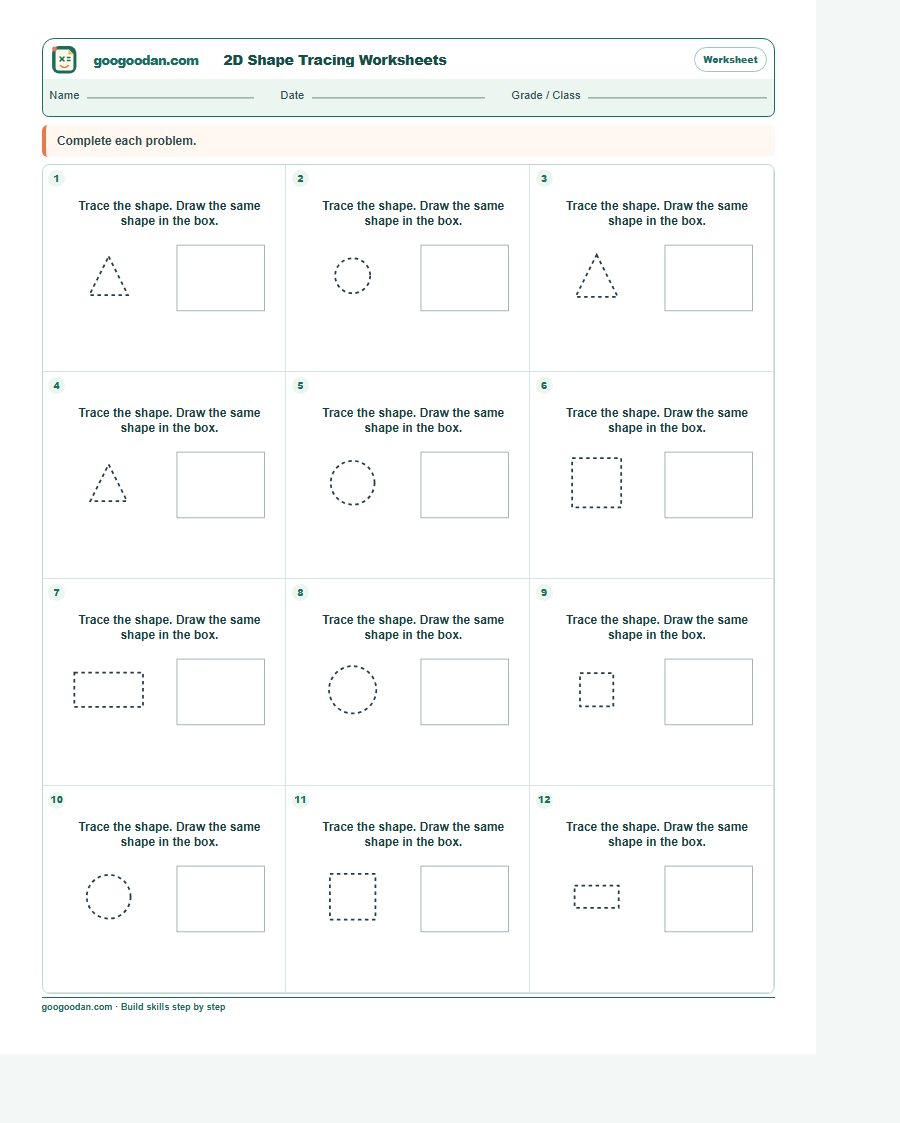 2D Shape Tracing Worksheet: Trace and Copy Outlines
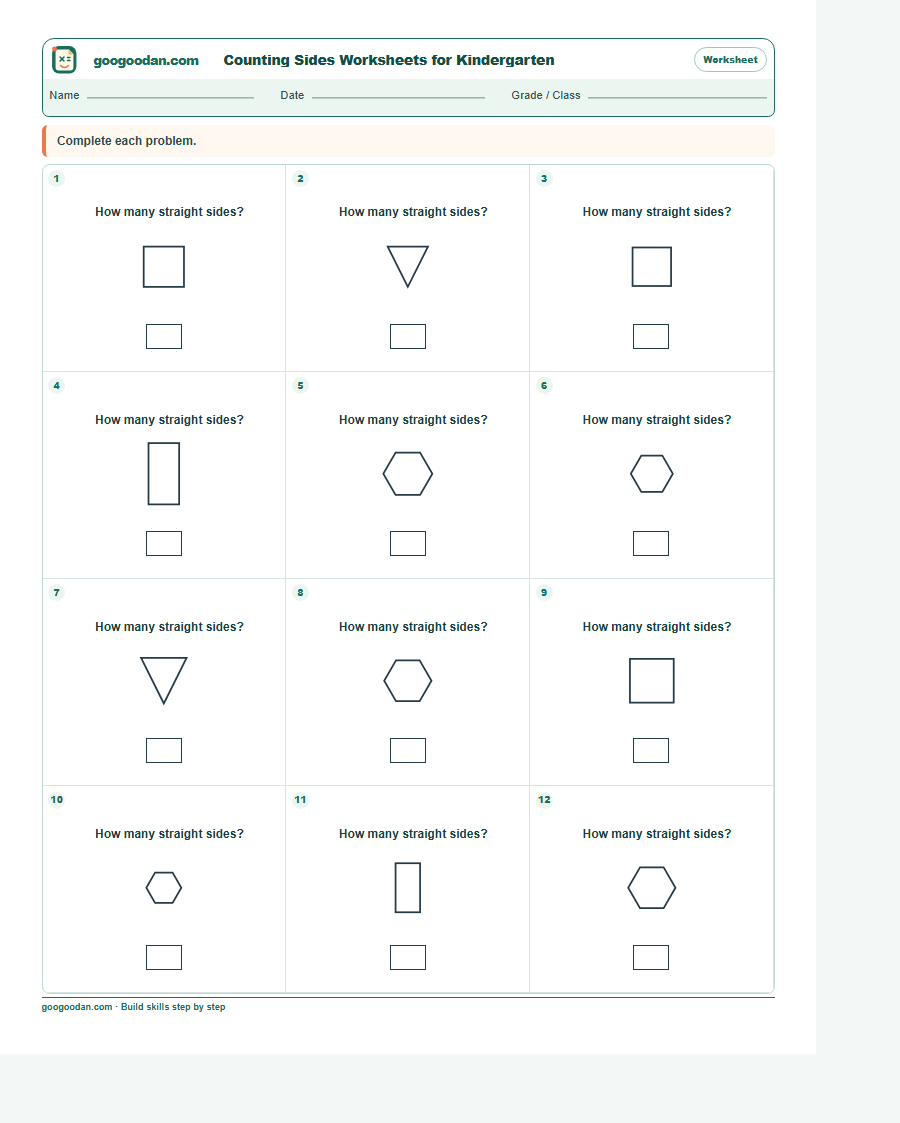 Counting Sides Worksheet: Straight Edges of 2D Shapes
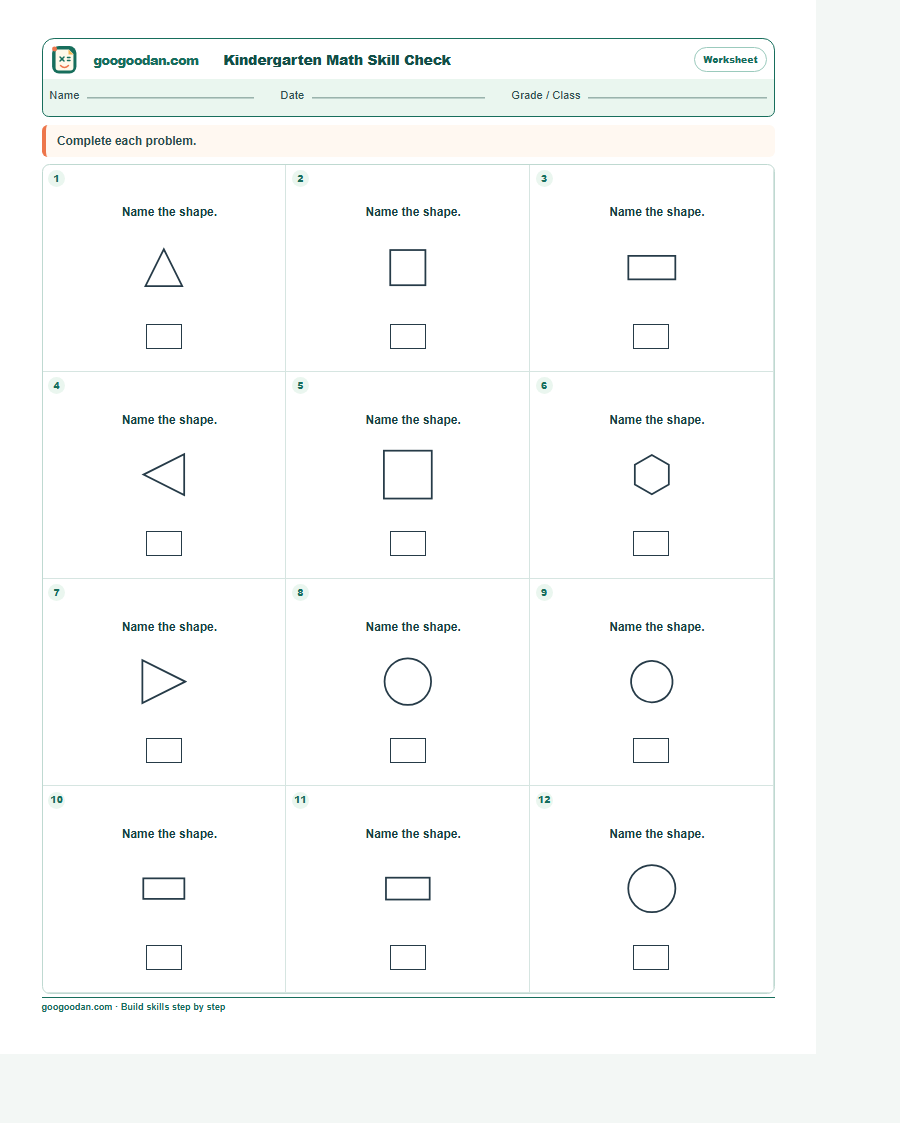 Early Maths Shape Check Worksheet: Name the Pictured Shapes
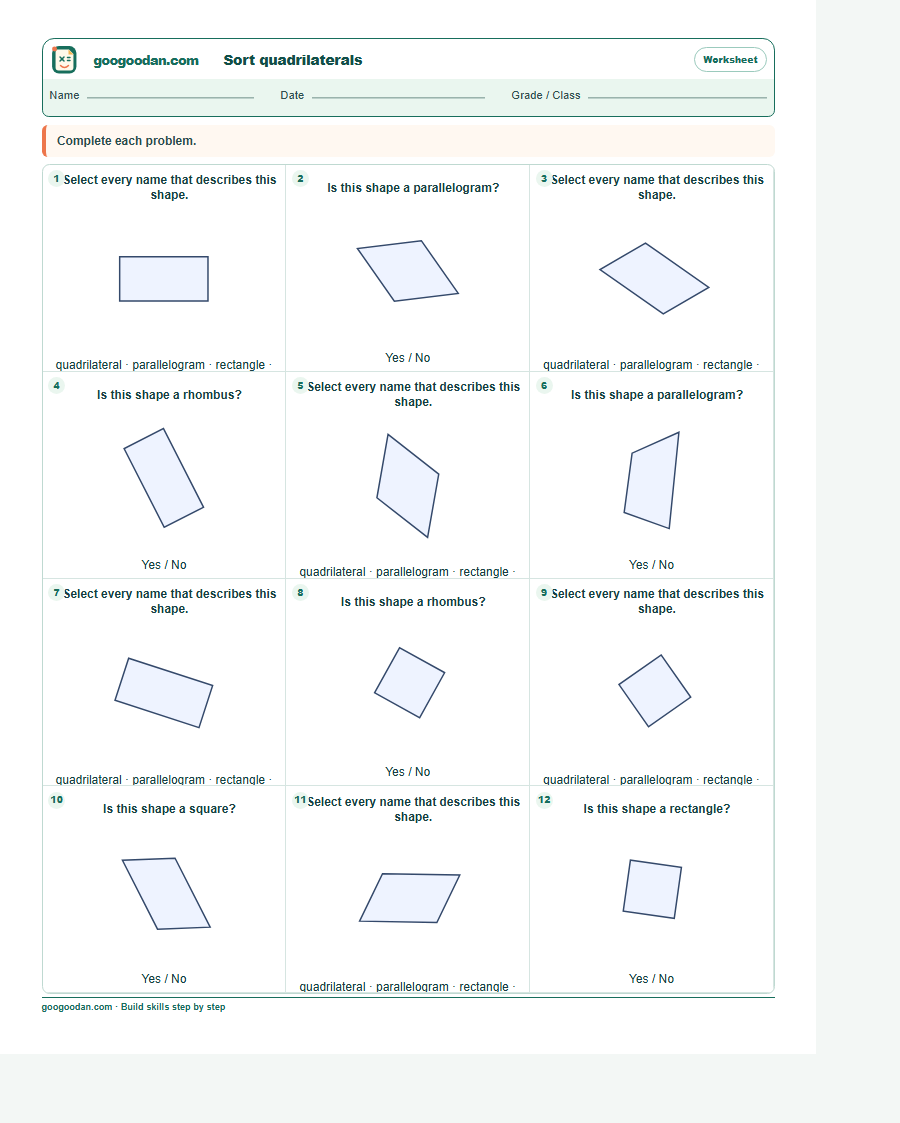 Quadrilateral Sorting Worksheet: Select All Shape Names
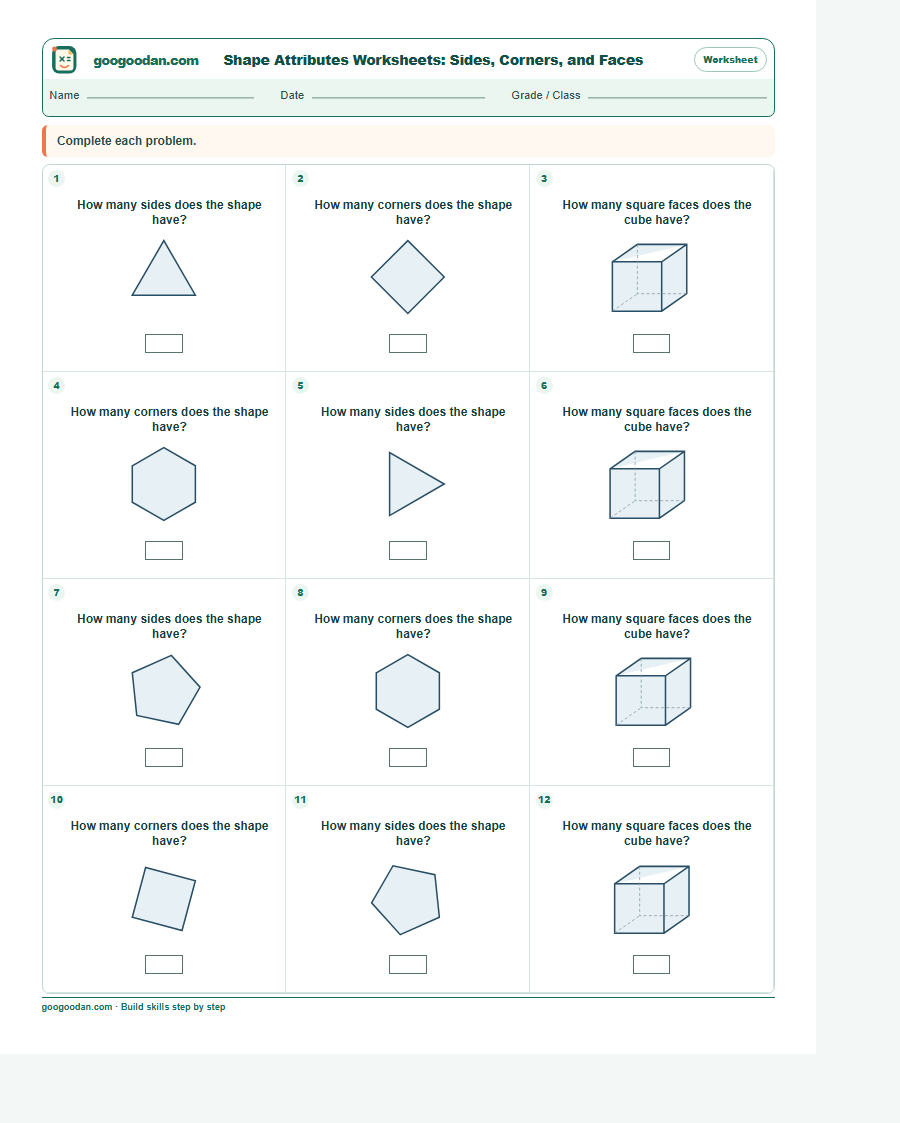 Shape Attributes Worksheet: Count Sides, Corners and Faces
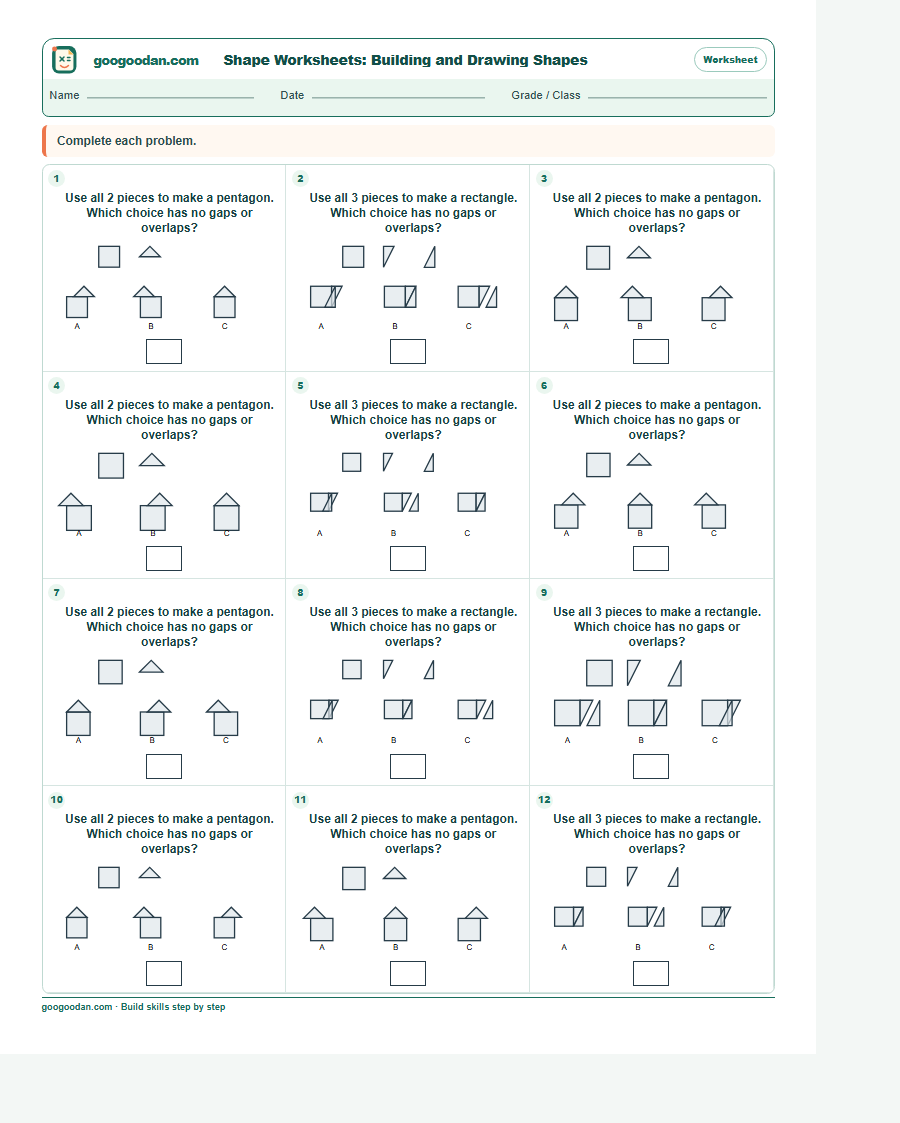 Shape Building Worksheet: Choose Joined Pieces for Polygons
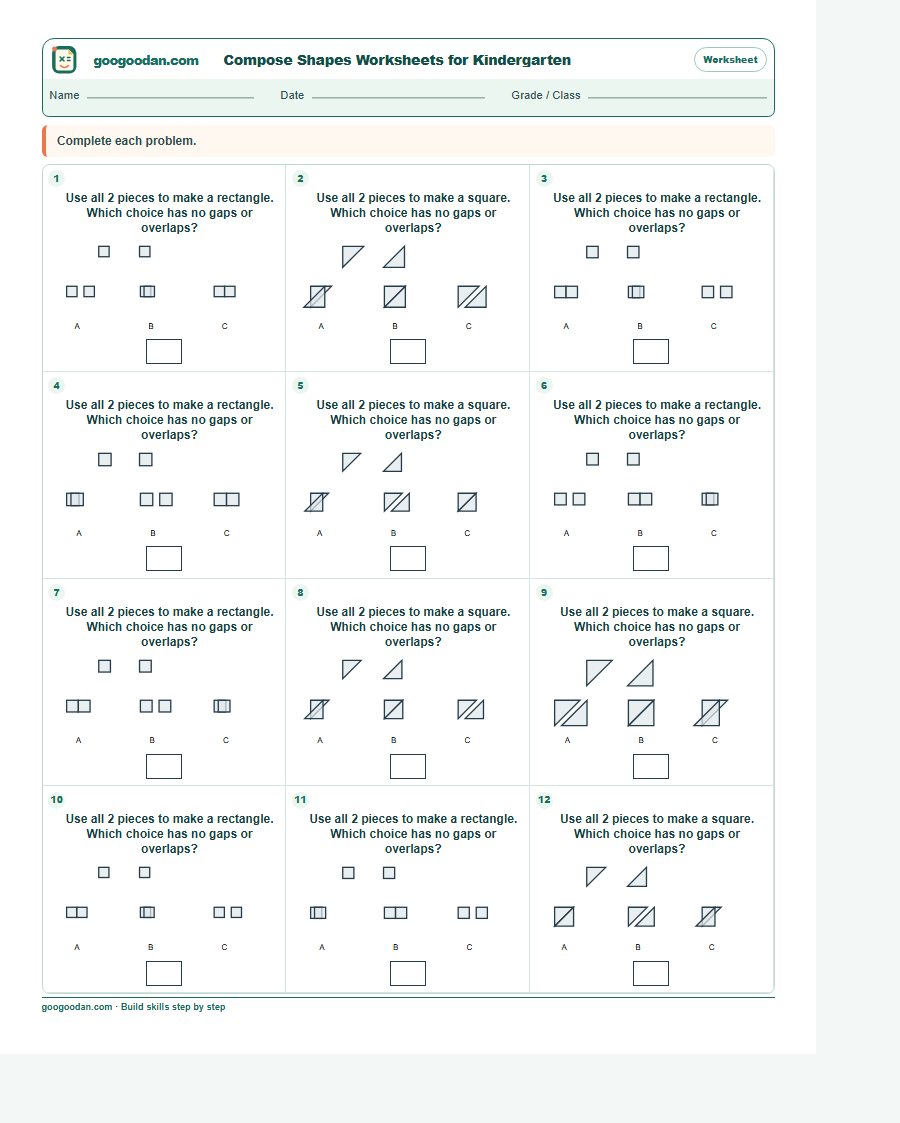 Shape Composition Worksheet: Combine Two Pieces
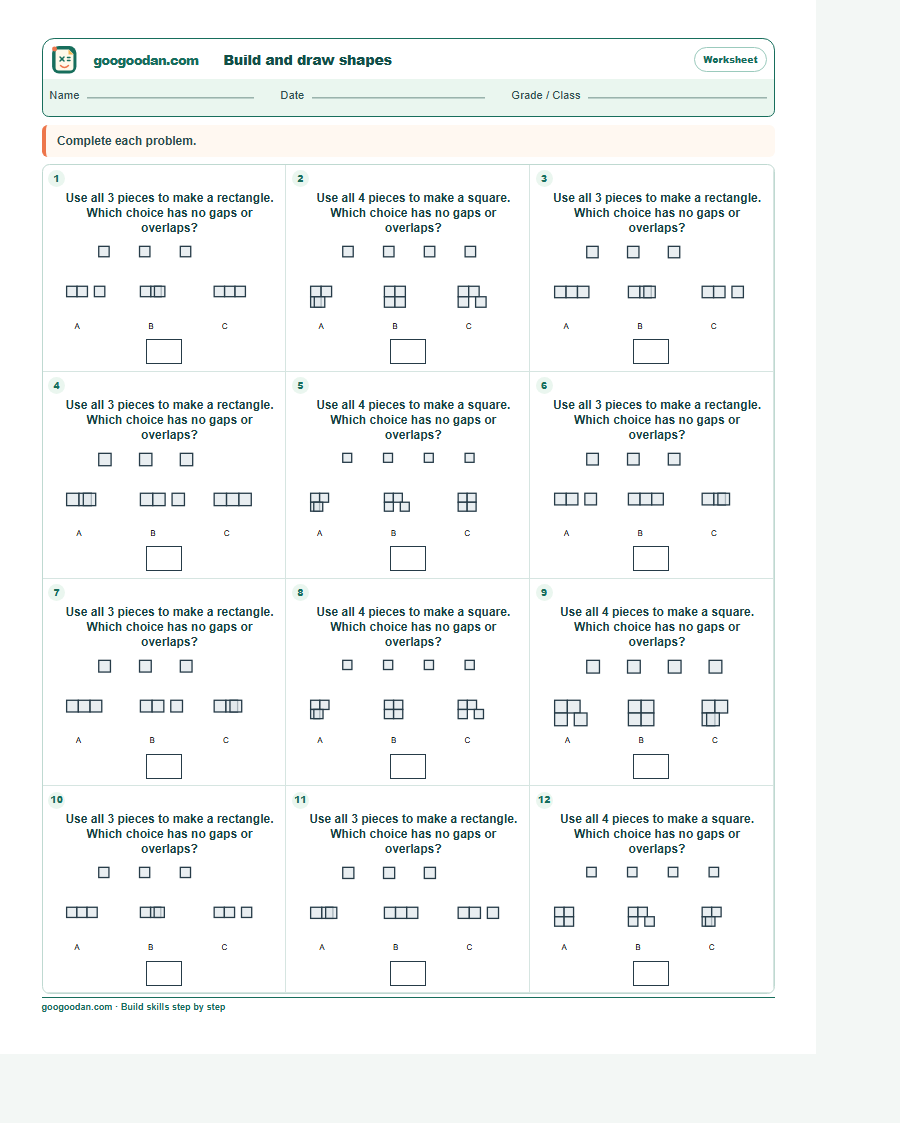 Shape Composition Worksheet: Join Pieces without Gaps
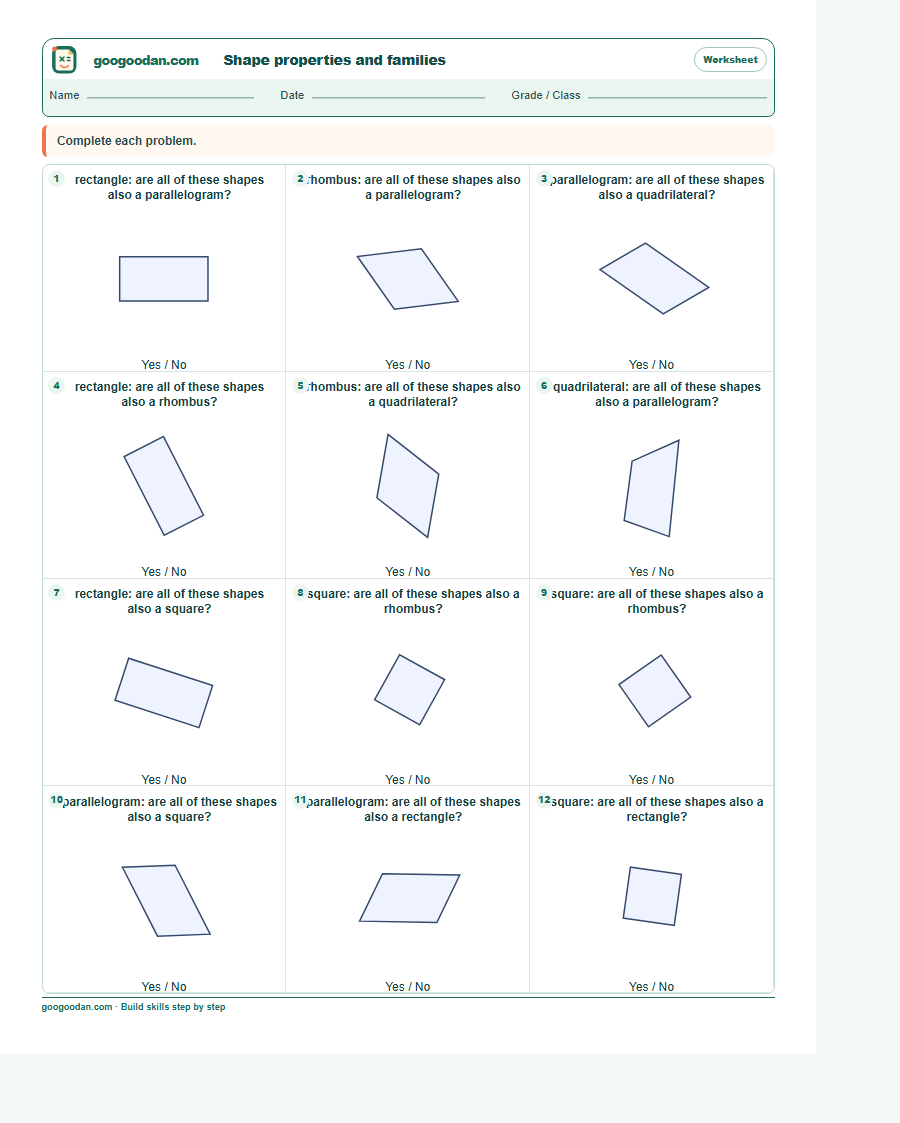 Shape Families Worksheet: Judge Shared Properties
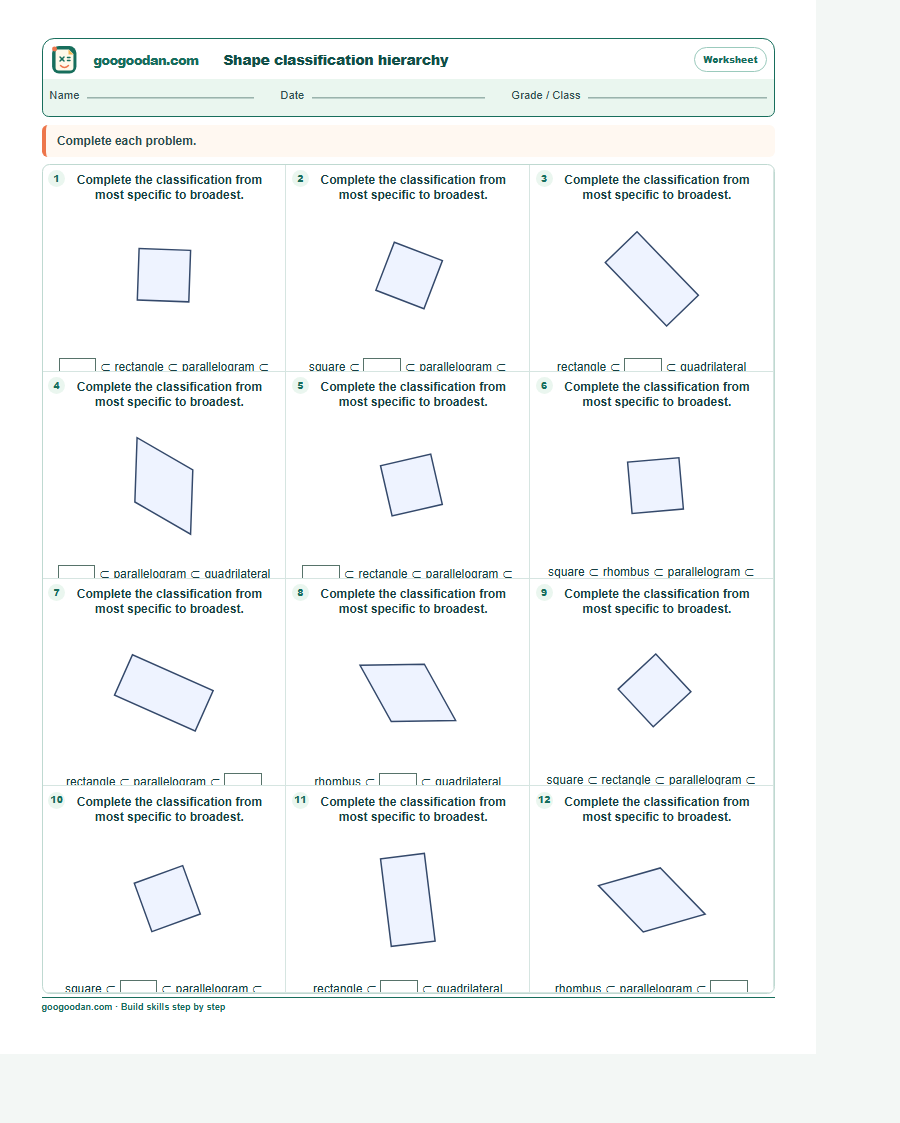 Shape Hierarchy Worksheet: Complete Nested Classifications
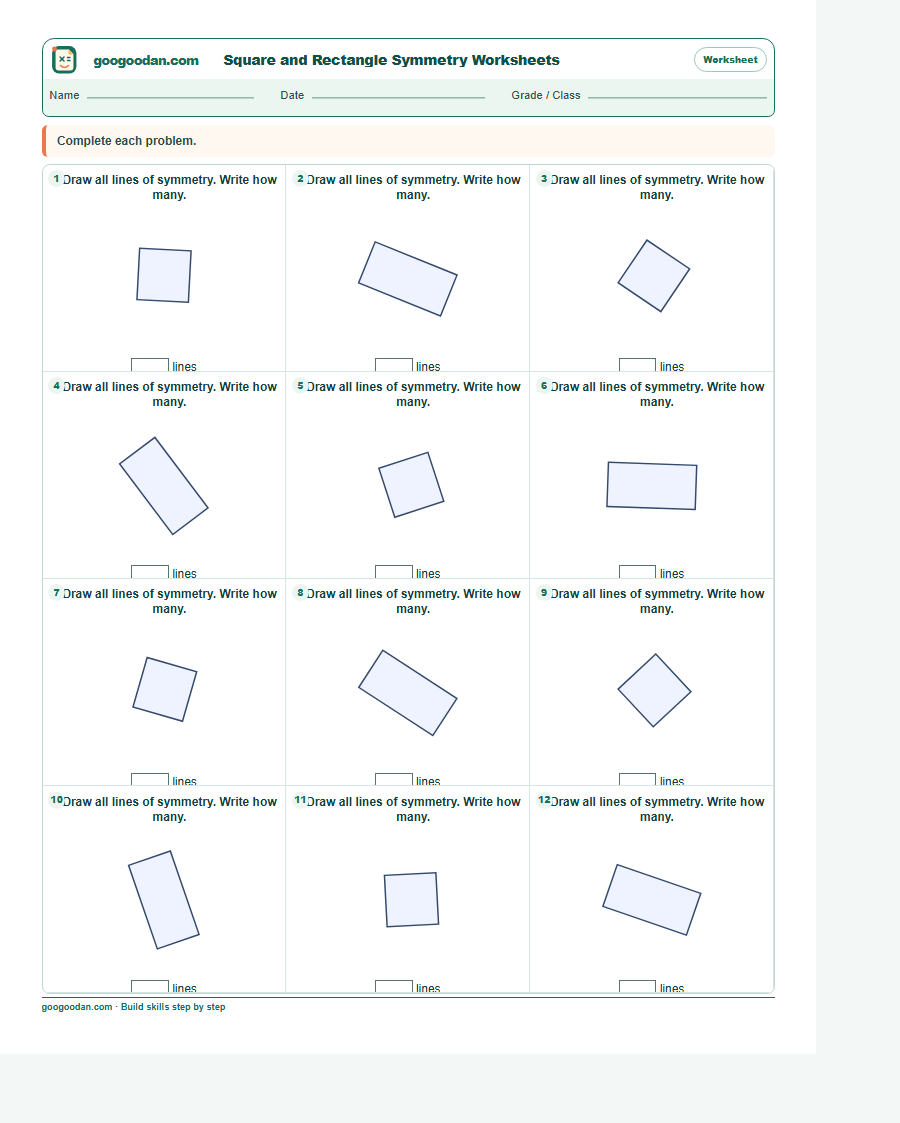 Square and Rectangle Symmetry Worksheet: Draw All Lines
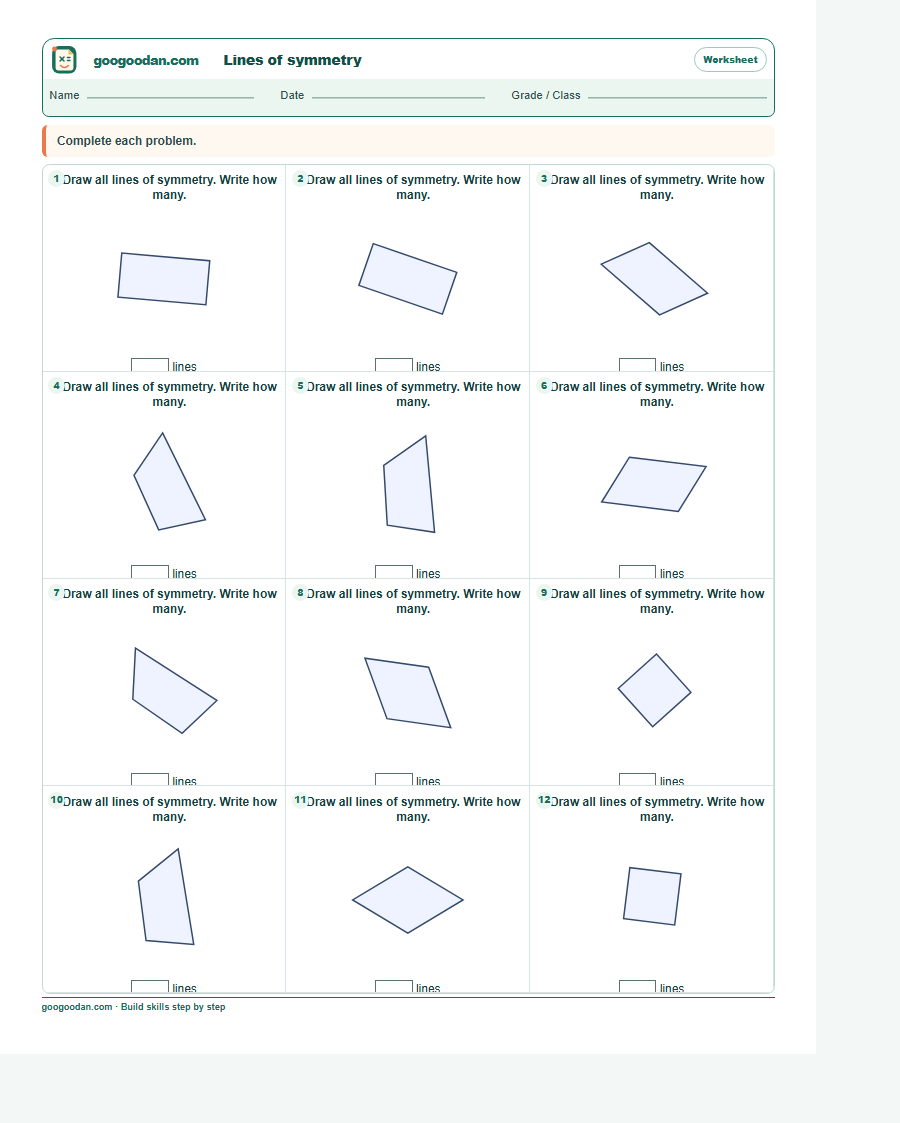 Symmetry Worksheet: Draw and Count Lines on Mixed Shapes
More worksheet collections
- Measurement Worksheets for Primary Maths Practice
- Foundation Maths Worksheets: Counting and Number Facts
- Geometry and Shape Worksheets for Primary Maths Practice
- Measurement Worksheets for Primary Maths Practice
- Foundation Maths Worksheets: Counting and Number Facts
Notice properties before naming a shape
This collection offers practice with flat and solid shapes, their names and visible features. Start by asking what can be seen: count sides, corners, faces or other properties shown. Use those observations to choose a name or compare shapes. This helps learners explain a choice instead of guessing from orientation. Worksheet titles indicate whether a page focuses on naming, properties or combining pieces.
Describe and compare
A triangle has three straight sides and three corners, even when it is rotated or drawn with one side at the top. A rectangle has four corners and opposite sides of equal length; a square is a special rectangle with four equal sides. For a solid shape, look at the three-dimensional object and count its flat faces, edges or corners only when the question asks for them. For example, a cube has six square faces. Say which property supports the answer before moving to another question.
Open a sheet and check the first few diagrams for clarity. Select Worksheet to print the task and Answer Key to check after working. New Numbers may refresh numerical or selection items, while some shape pages use fixed diagrams. Use both pages when a learner needs to compare an answer with a diagram. Keep the sheet flat and the print preview at a readable size so corners and lines remain visible.
Watch for visual traps
Rotation does not change a shape’s properties, and a drawing that looks tall is not automatically a different type from the same shape drawn wide. Do not identify a square only by its orientation. When a figure is composed from pieces, trace each boundary carefully; a line inside a combined figure may be a shared edge rather than an outside side. For solid figures, distinguish a face from an edge: a face is a flat surface, while an edge is where two faces meet.
If an answer seems wrong, recount the feature named rather than relying on appearance. Ask the learner to point to each side, corner or face. Choose another worksheet type after that explanation is clear. Comparing two shapes and describing one shared property is a useful closing check.