Measurement Worksheets for Primary Maths Practice
Practise reading clocks, comparing lengths and choosing suitable ways to measure. The worksheets cover early measurement ideas through upper primary units.
Choose a worksheet to open the printable practice and answer key. The collection includes 18 worksheets for Primary learners.
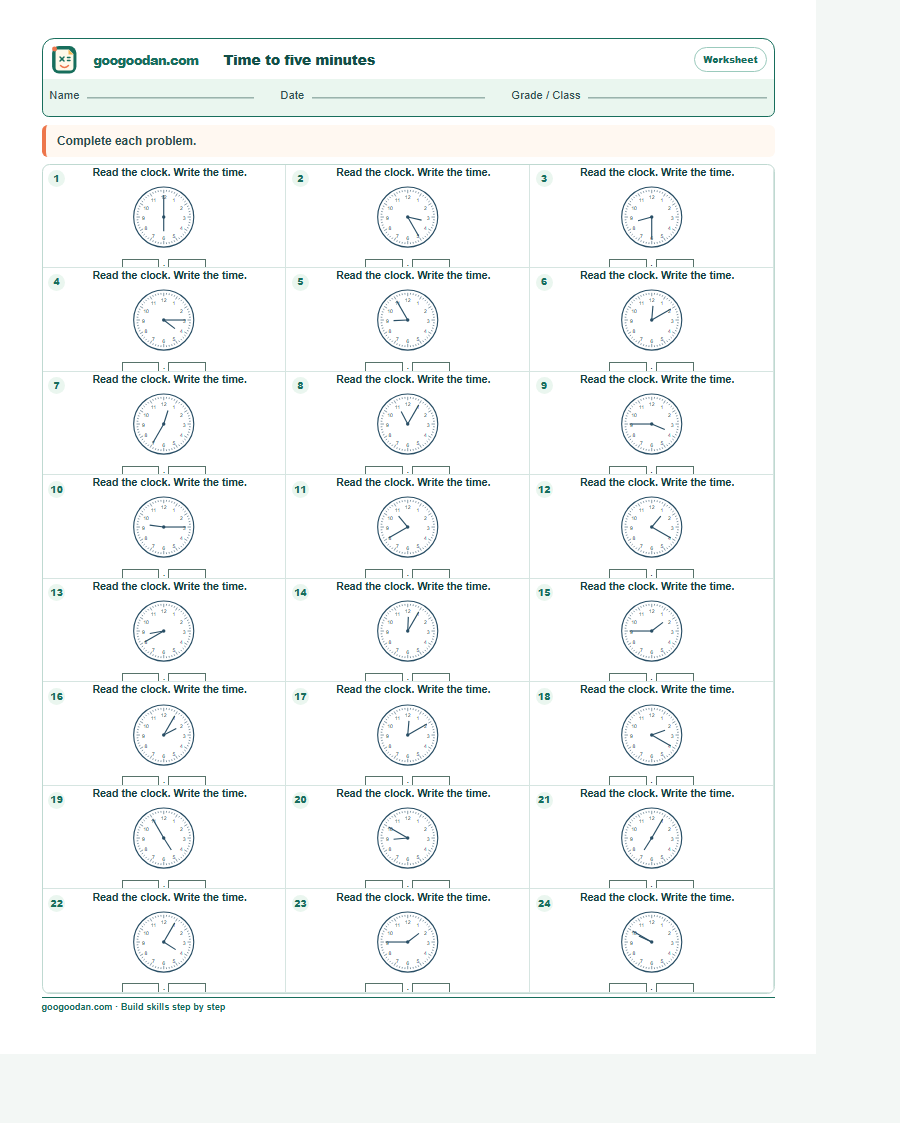 5-Minute Clock Reading Worksheet: 24 Analogue Clocks
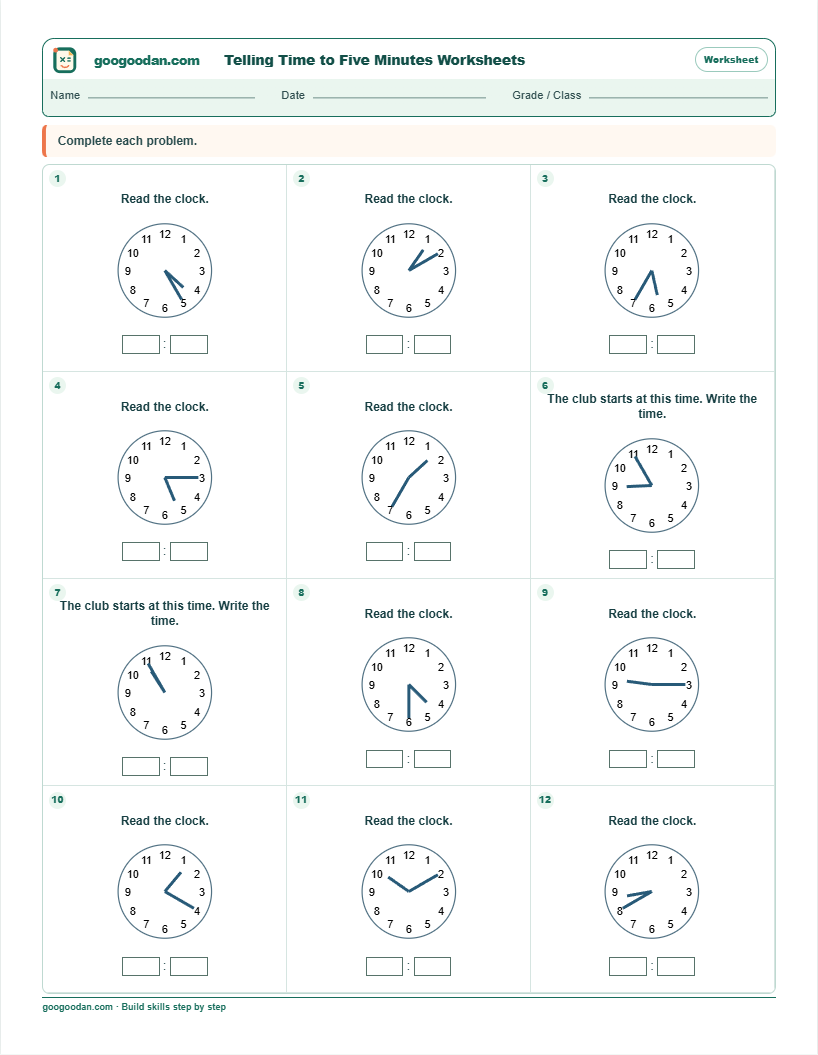 5-Minute Time Worksheet: Read Clocks and Club Starting Times
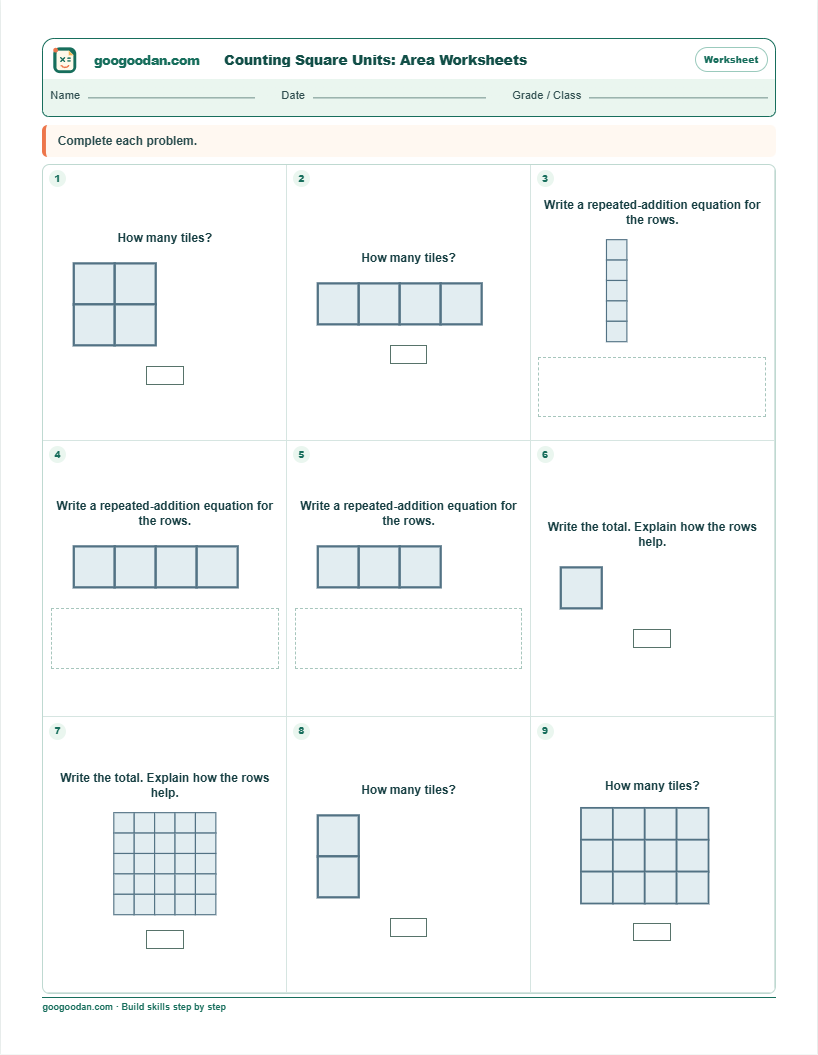 Area Worksheet: Count Square Tiles in Grids
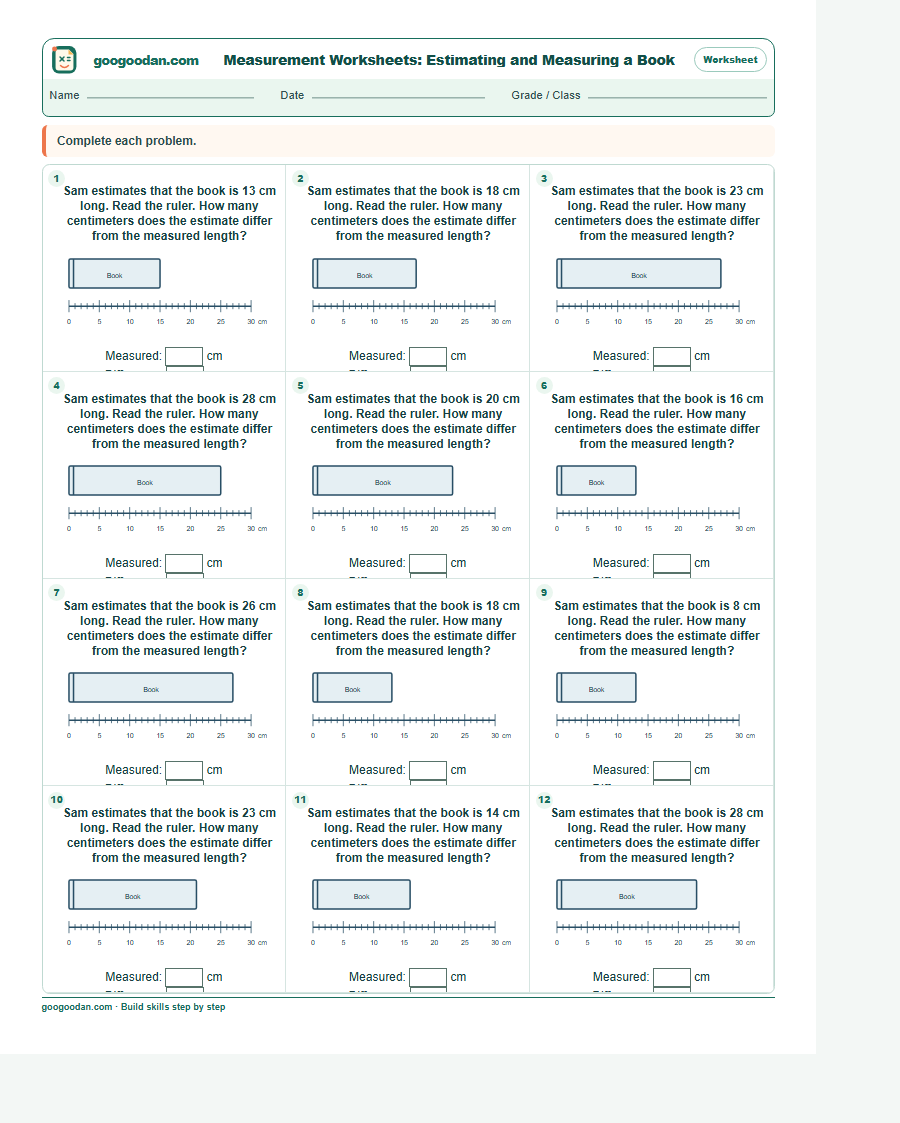 Book Length Estimation Worksheet: Find the Measurement Error
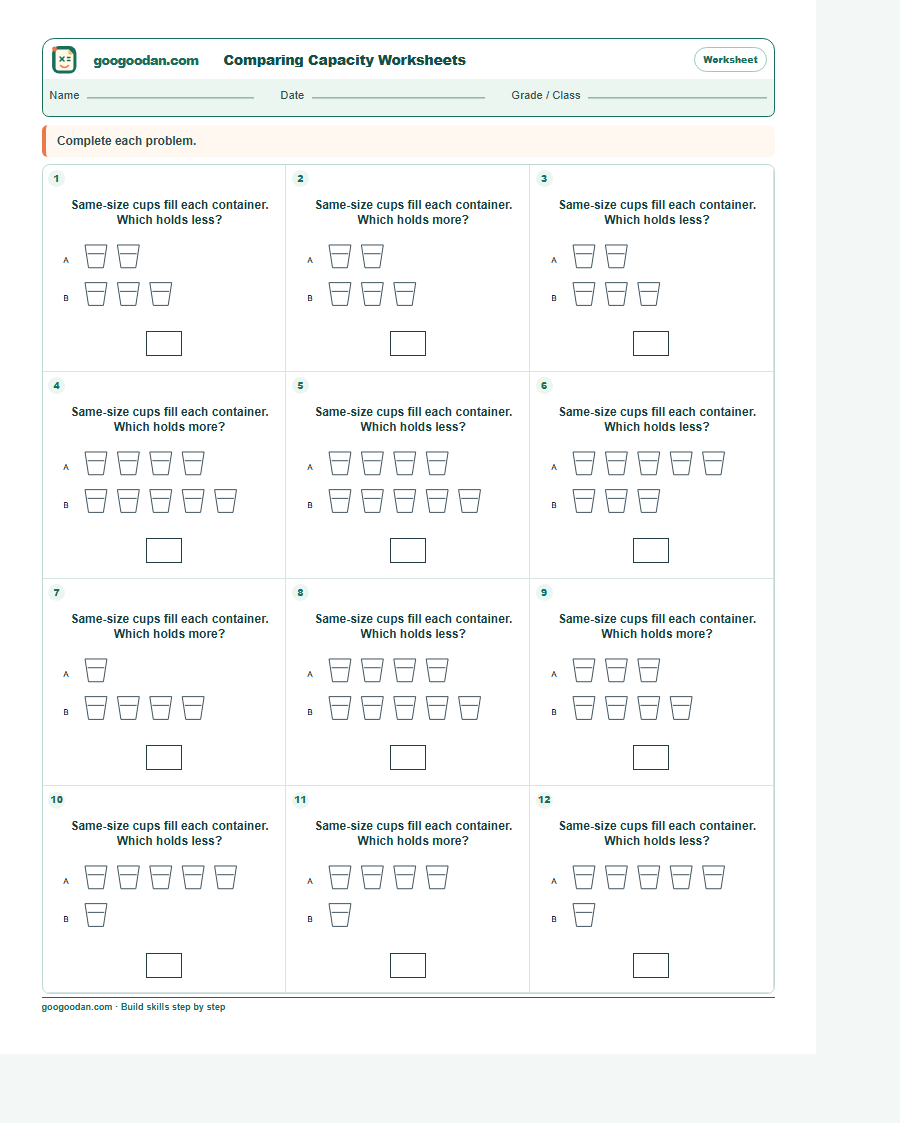 Comparing Capacity Worksheet: More and Less in Containers
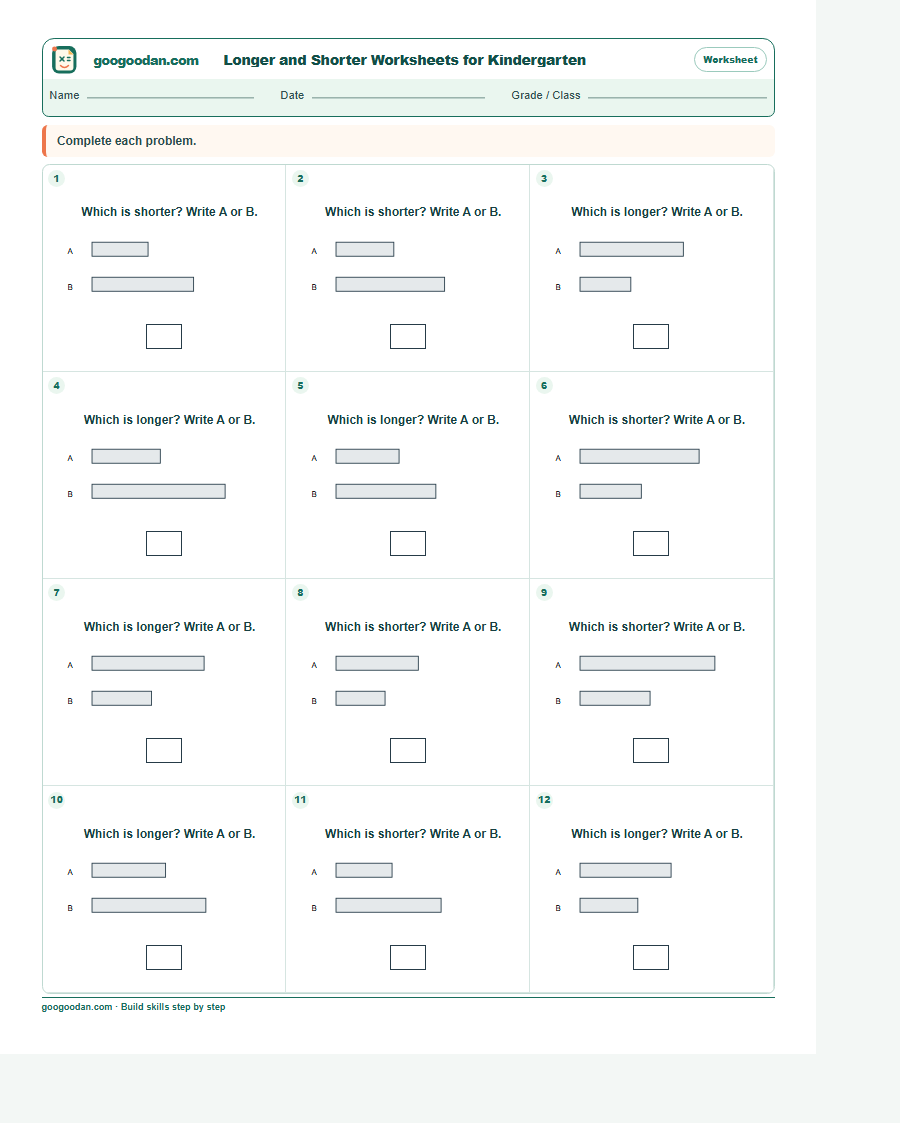 Comparing Length Worksheet: Longer and Shorter Pictures
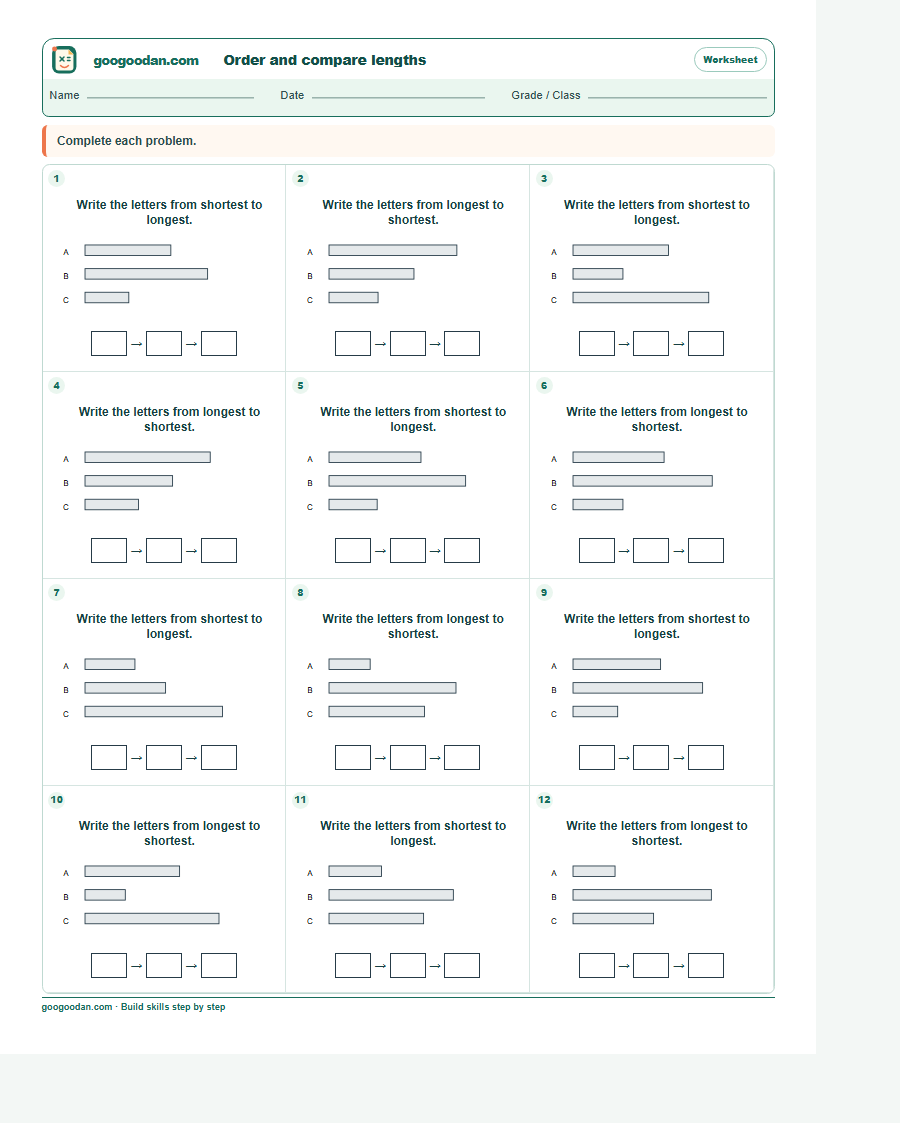 Comparing Lengths Worksheet: Shortest and Longest Order
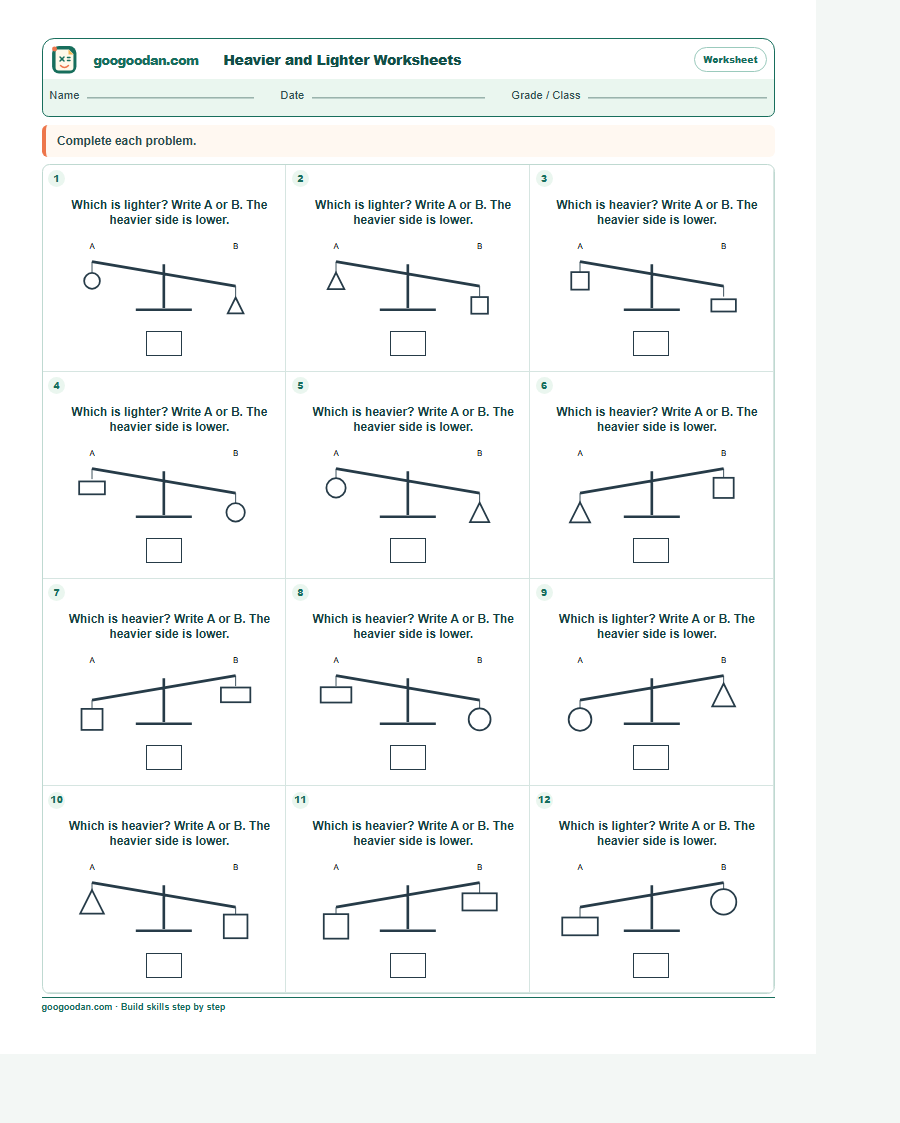 Comparing Mass Worksheet: Heavier and Lighter Balance Pictures
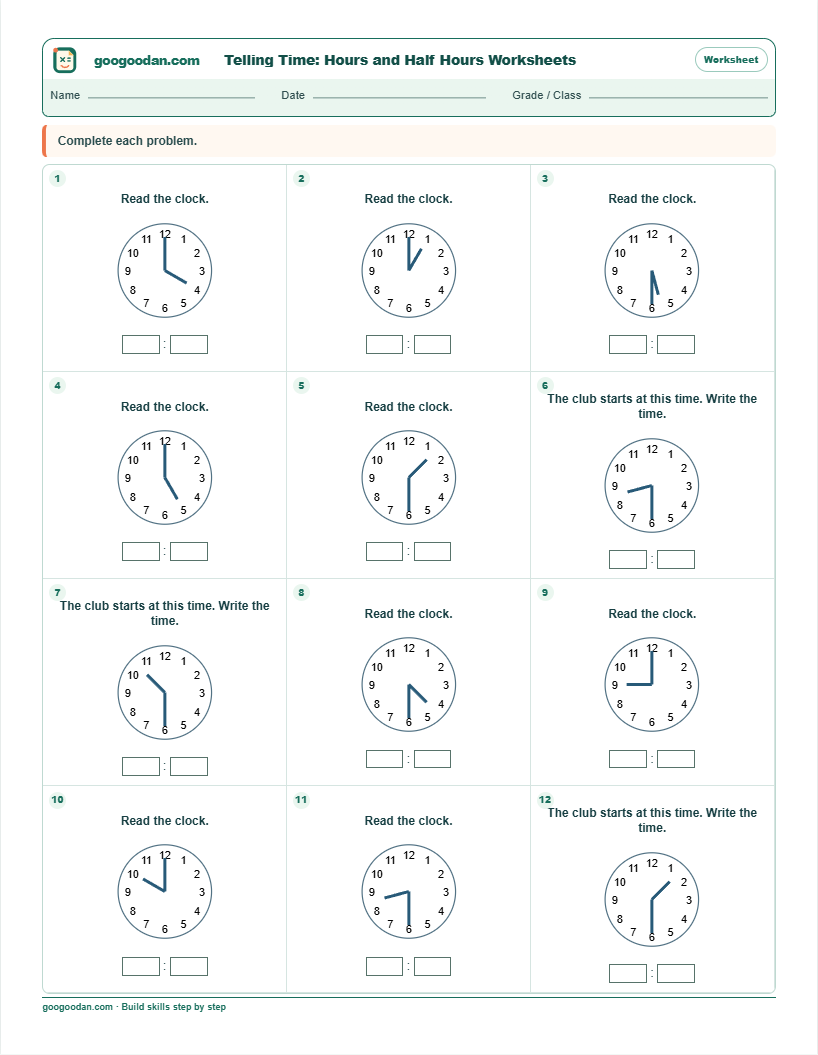 Hours and Half Hours Worksheet: Read Clocks and Club Times
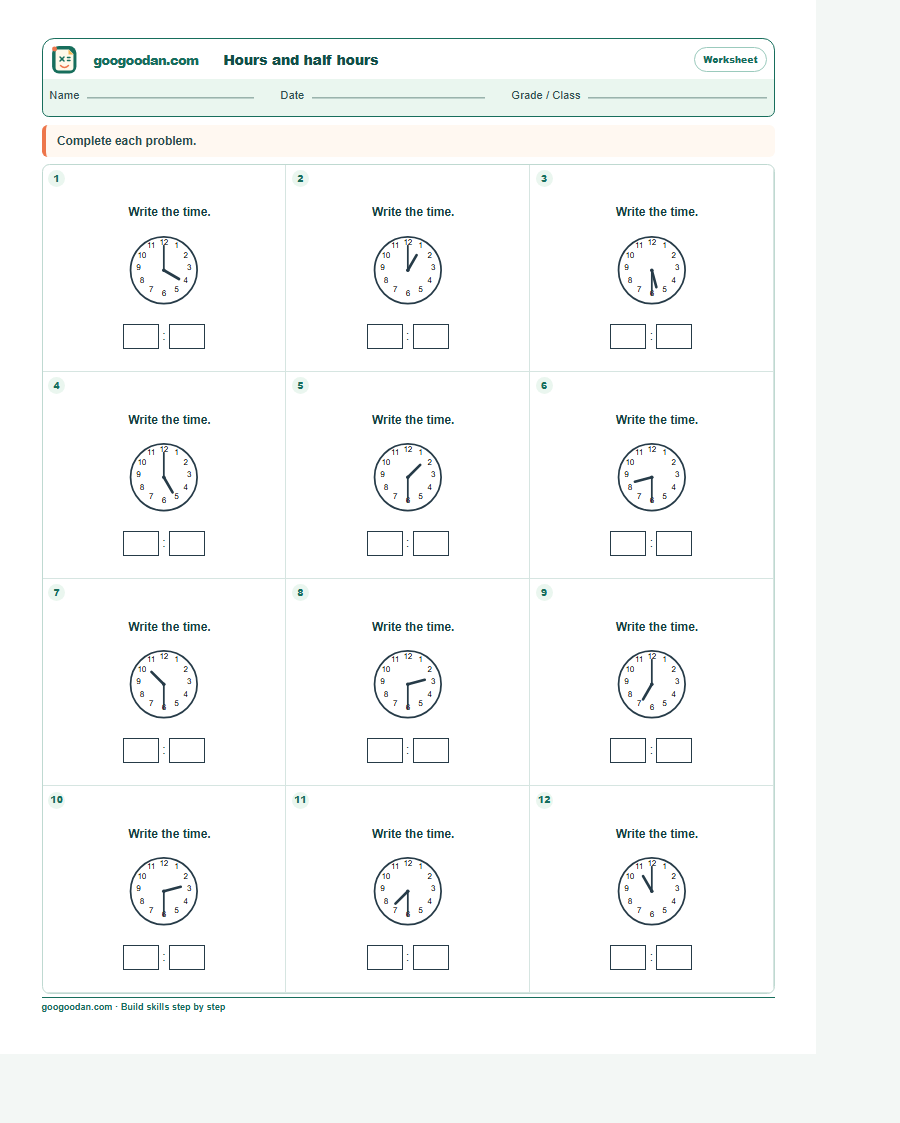 Hours and Half Hours Worksheet: Write Analogue Clock Times
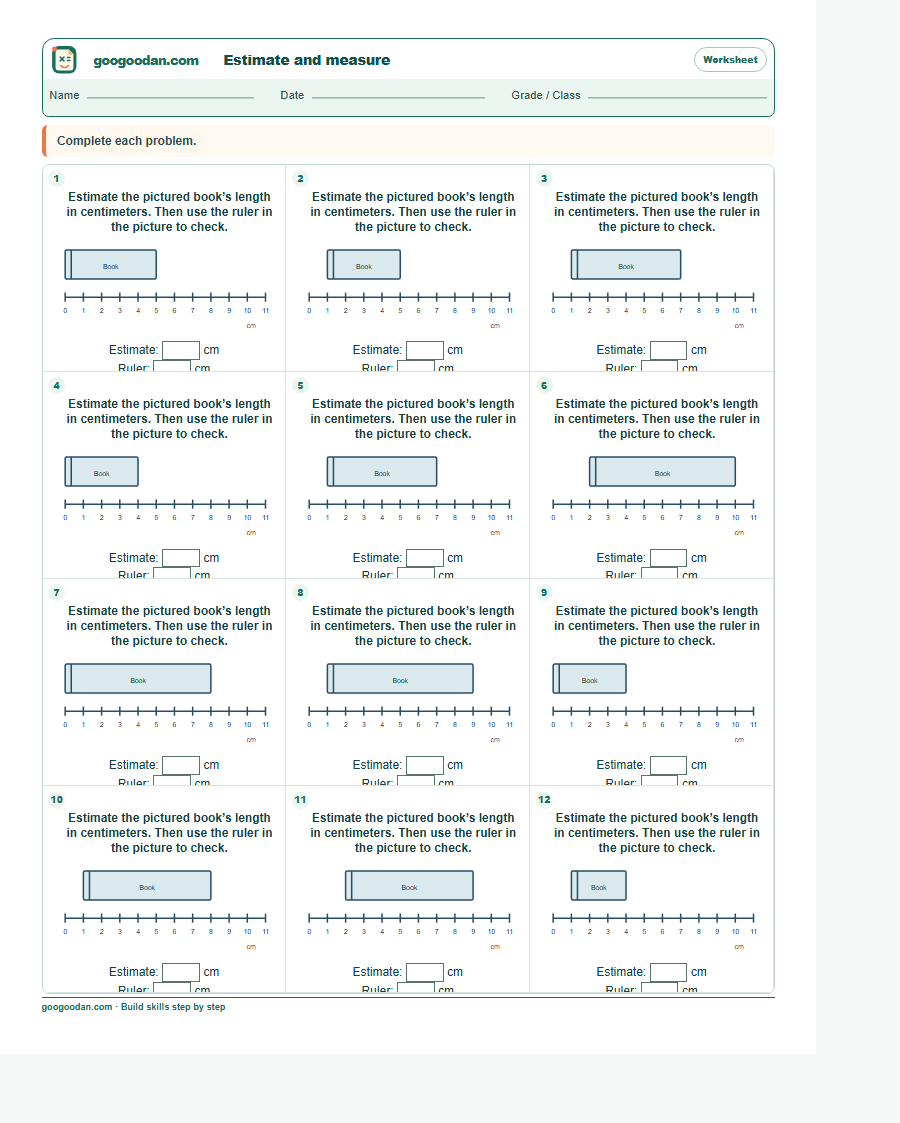 Length Estimation Worksheet: Check Book Lengths with a Ruler
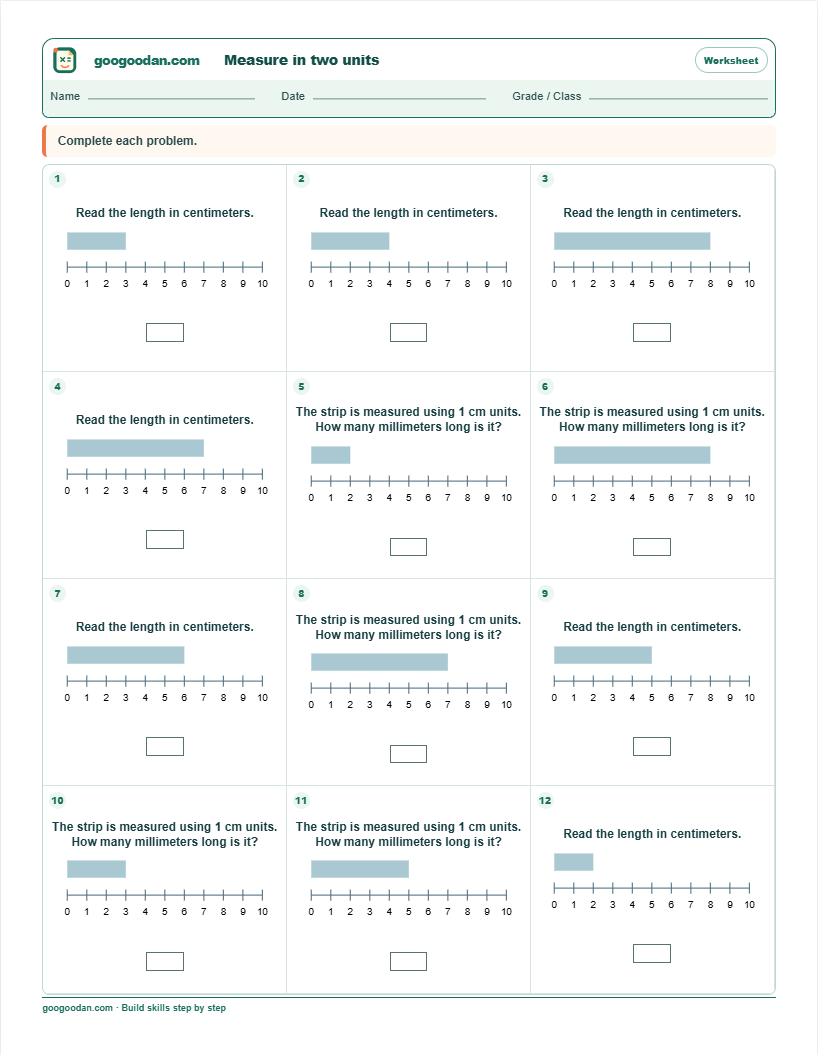 Length Units Worksheet: Read Rulers and Compare Units
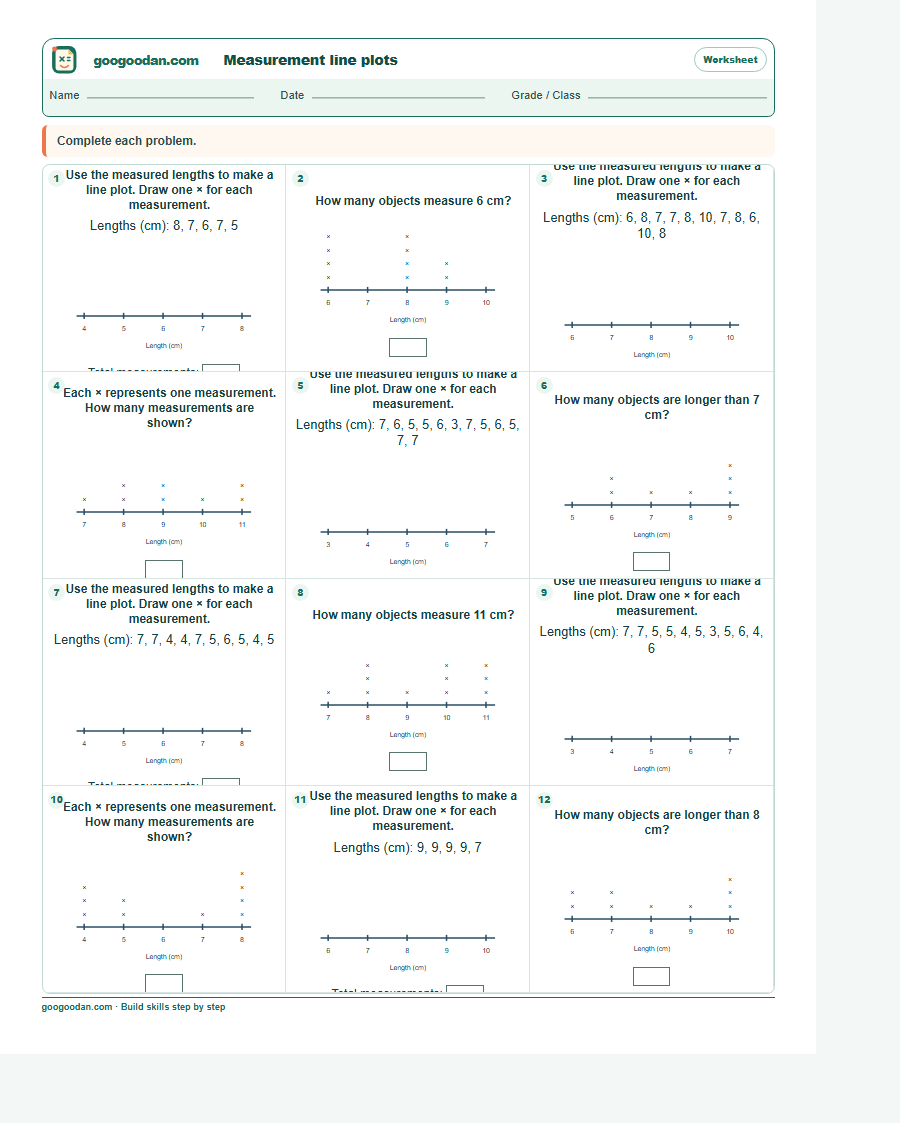 Measurement Line Plots Worksheet: Draw and Read Crosses
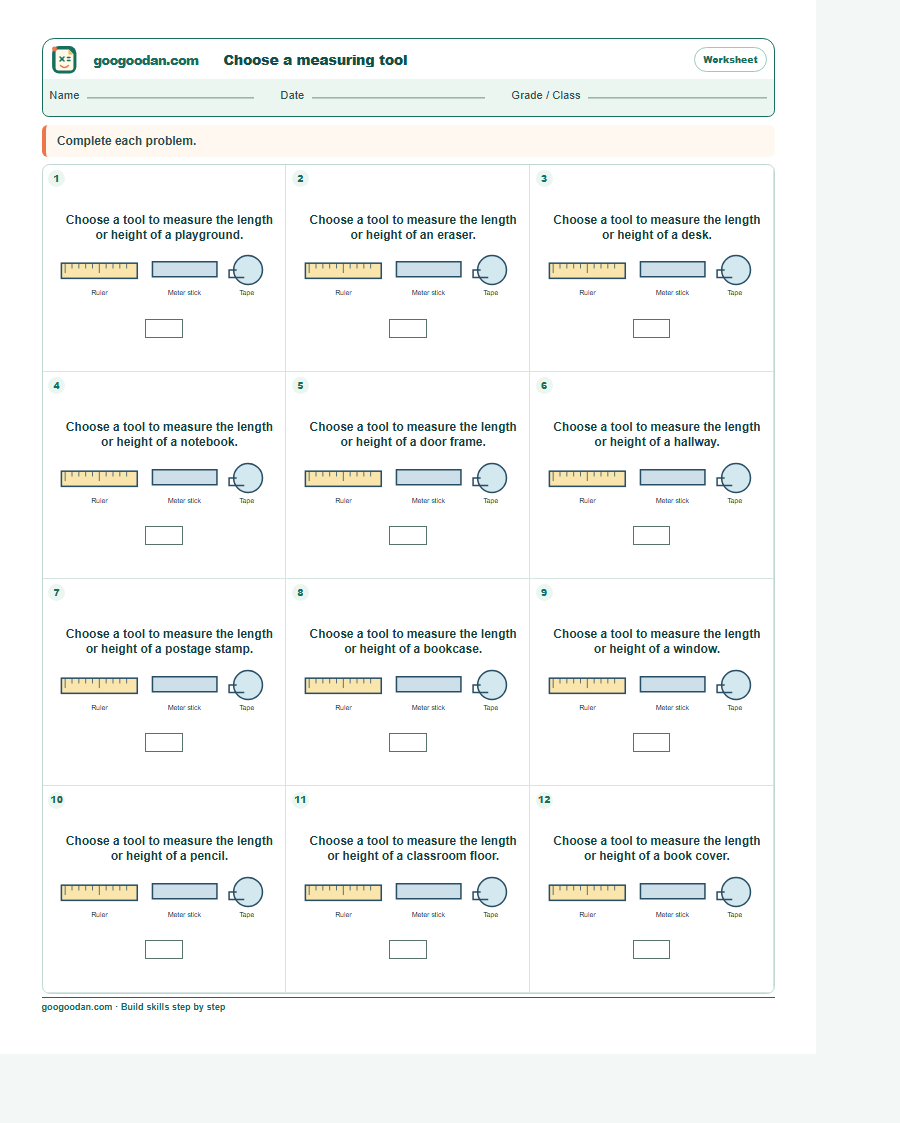 Measuring Tools Worksheet: Choose Rulers or Tape Measures
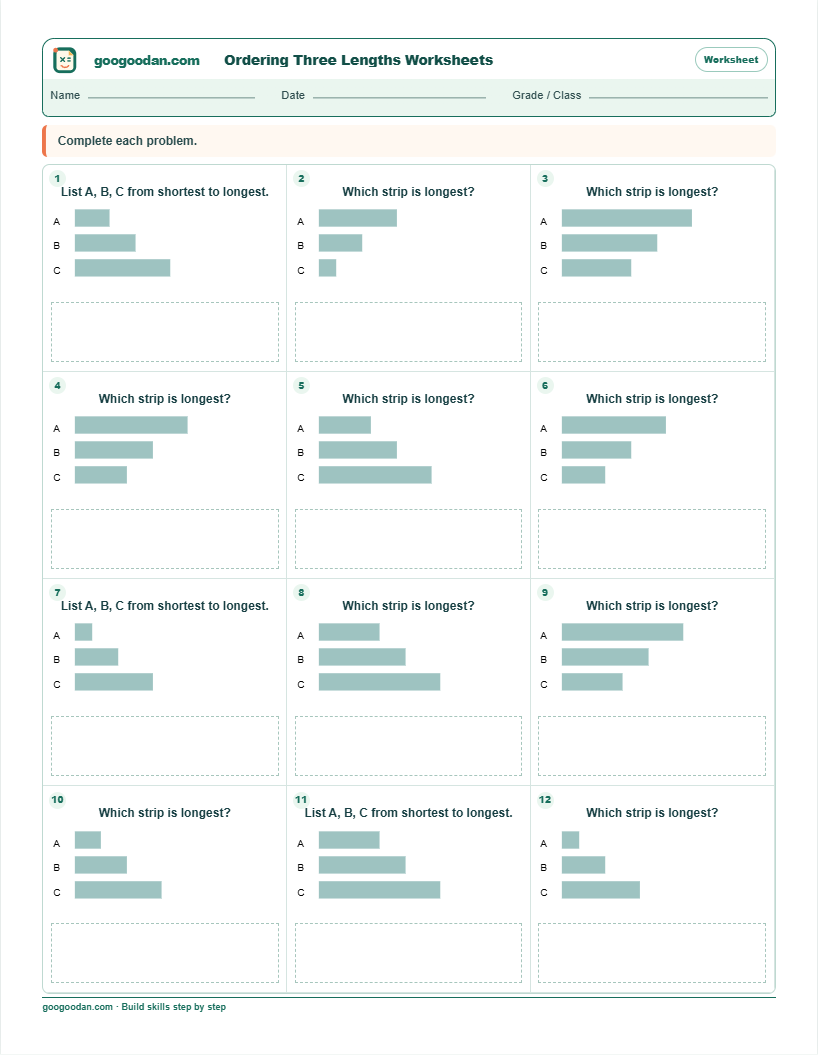 Ordering Three Lengths Worksheet: Shortest to Longest
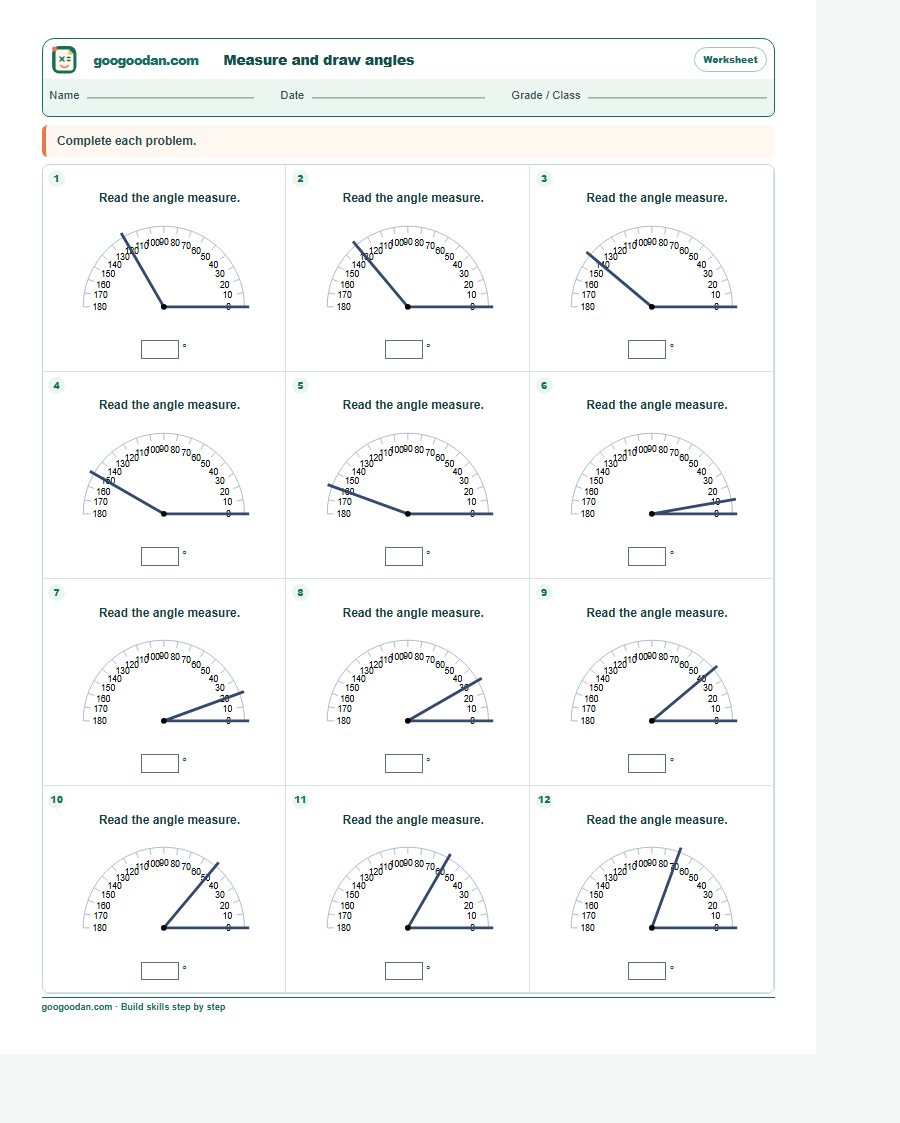 Reading Angles Worksheet: Write the Protractor Measurement
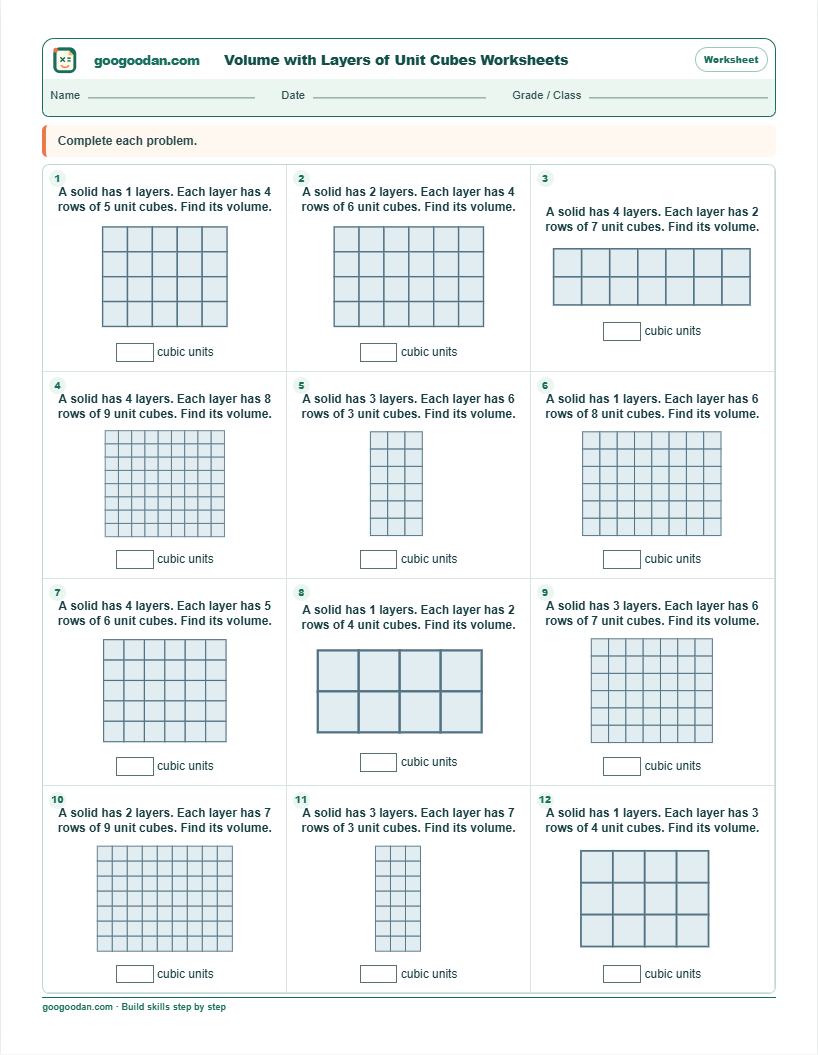 Volume Worksheet: Count Layers, Rows and Unit Cubes
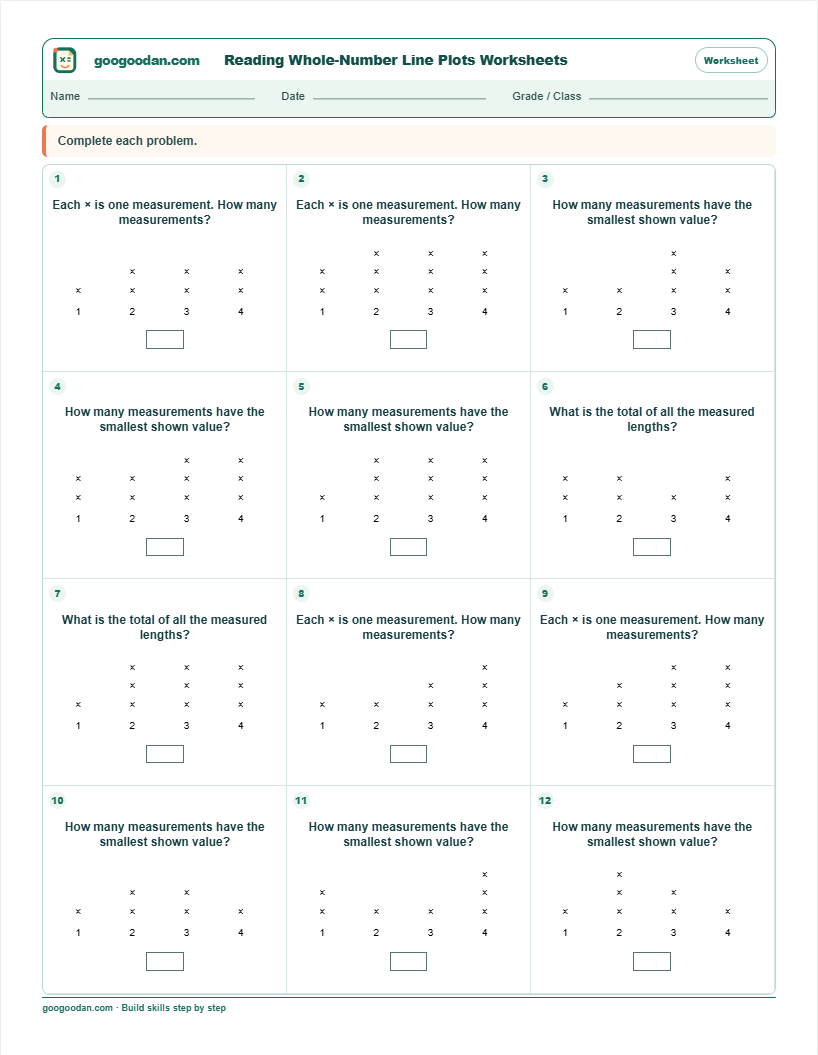 Whole Number Line Plots Worksheet: Count and Compare Data
More worksheet collections
- Shape Worksheets for Primary Maths Practice
- Foundation Maths Worksheets: Counting and Number Facts
- Measurement Worksheets for Primary Maths Practice
Choose measurement practice by the question
Measurement questions ask learners to interpret quantities and compare them. This collection includes activities such as reading clocks, comparing lengths and working with units. Read the title and examples to see which idea the page practises. A clock-reading sheet calls for attention to the hands; a length activity may ask for comparison or a suitable unit. Choose one kind of question at a time.
Read the scale or unit first
Before writing an answer, identify what the marks or labels mean. On a clock face, the shorter hand indicates the hour and the longer hand indicates minutes. If the minute hand points to 6, it marks 30 minutes past the hour shown by the shorter hand. For length, compare quantities expressed in the same unit before deciding which is greater. If units differ, convert one quantity carefully or use a labelled diagram to keep the comparison clear.
Open a sheet and try a few questions before printing a full set. New Numbers can create another set for repeat practice. Select Worksheet, Answer Key or both; use the answer page after the learner has attempted the questions. When printing, inspect the preview and check that any scale, clock face or measurement diagram remains legible on A4 paper. A diagram that is cropped or too small makes a measurement task harder to read.
Common sources of confusion
On analogue clocks, mixing up the hour and minute hands can produce a plausible but incorrect time. Read the longer hand first, then the shorter hand. For length comparisons, do not compare the numeral alone when units differ: 50 centimetres is not greater than 2 metres. Also keep track of whether the question asks for an estimate, an exact value or a comparison. These prompts require different responses even when they use similar diagrams.
Check a result against the picture and unit. A longer object should match the larger measured length when both use the same unit, and a time should agree with the hands. If the key differs, revisit the scale marks or units. Repeat a similar page until the learner can explain the answer, then move to another measurement idea.