Addition and Subtraction Worksheets
Start with sheets that use pictures and small numbers, then move to column methods once the number facts are secure. Each section mixes layouts, so you can choose horizontal questions, column questions, missing digits or error-fixing tasks.
Look at the carrying or exchanging in the title: some sheets have none, others need one or two. Open a sheet, press New Numbers for fresh questions, and print the answer page to check.
Addition Worksheets
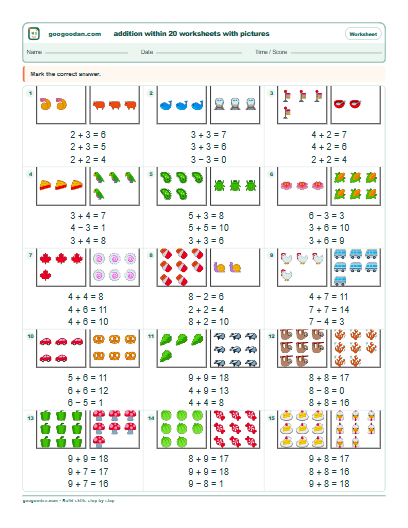 Picture Addition: Joining Groups, Choose Equations Worksheet
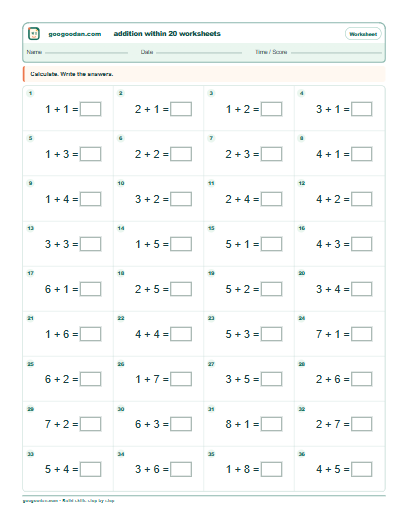 Addition to 9: Horizontal Worksheet
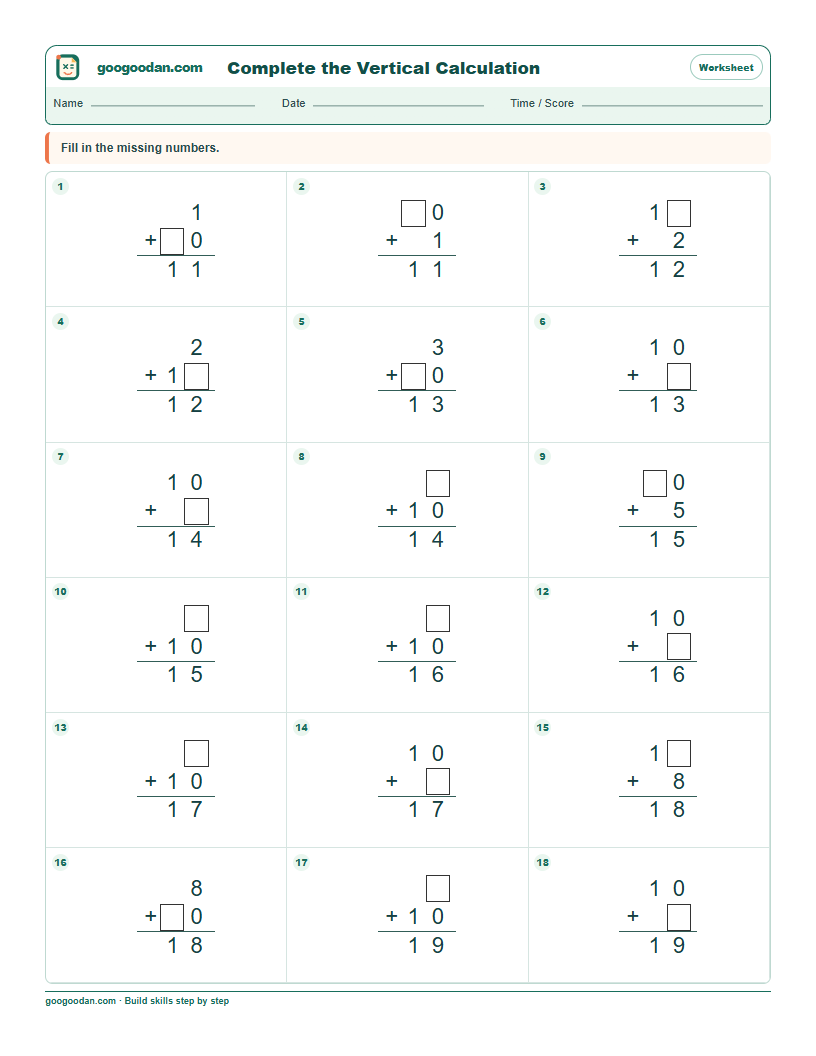 10 + 1-Digit Column Addition: Digit Blanks Worksheet
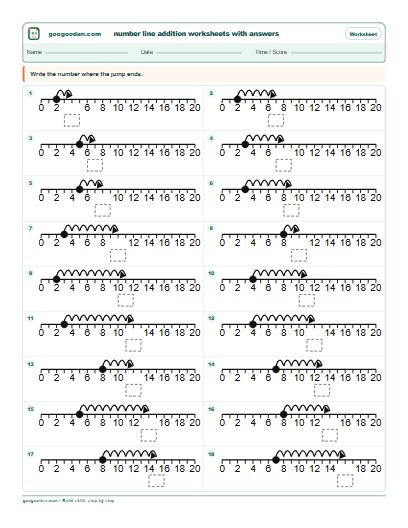 Number Line Addition: Counting On, Find Endpoints Worksheet
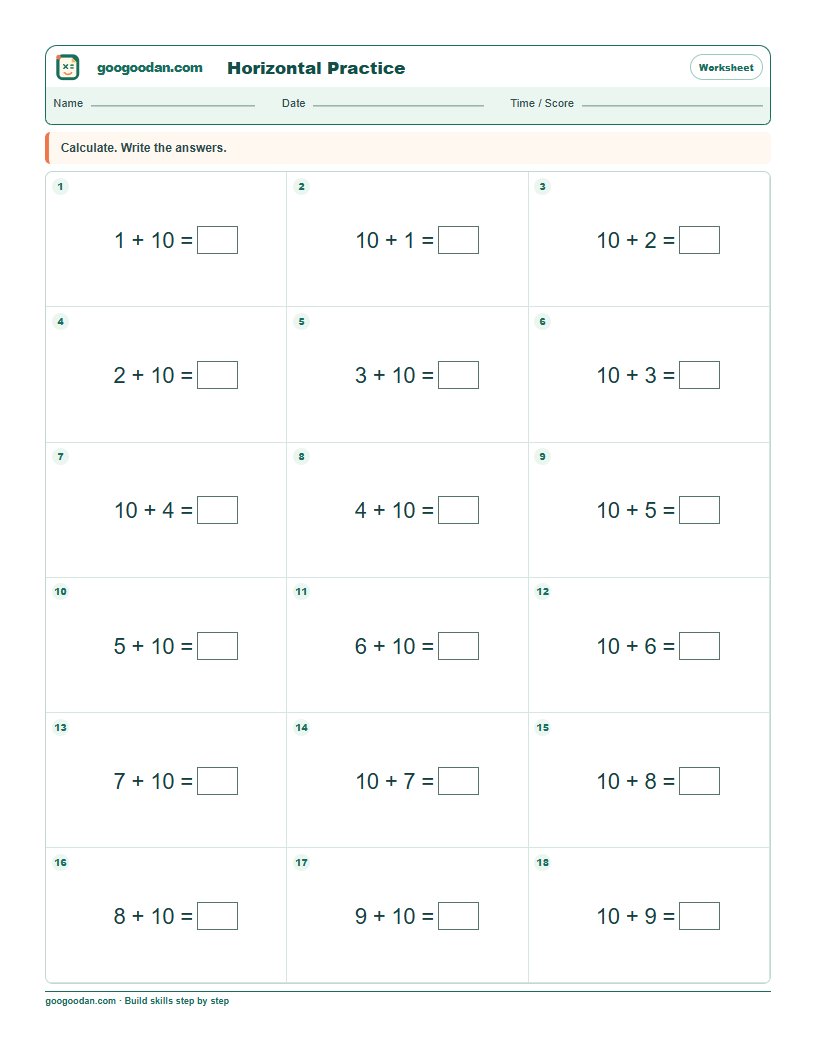 10 + 1-Digit Addition: Horizontal Worksheet
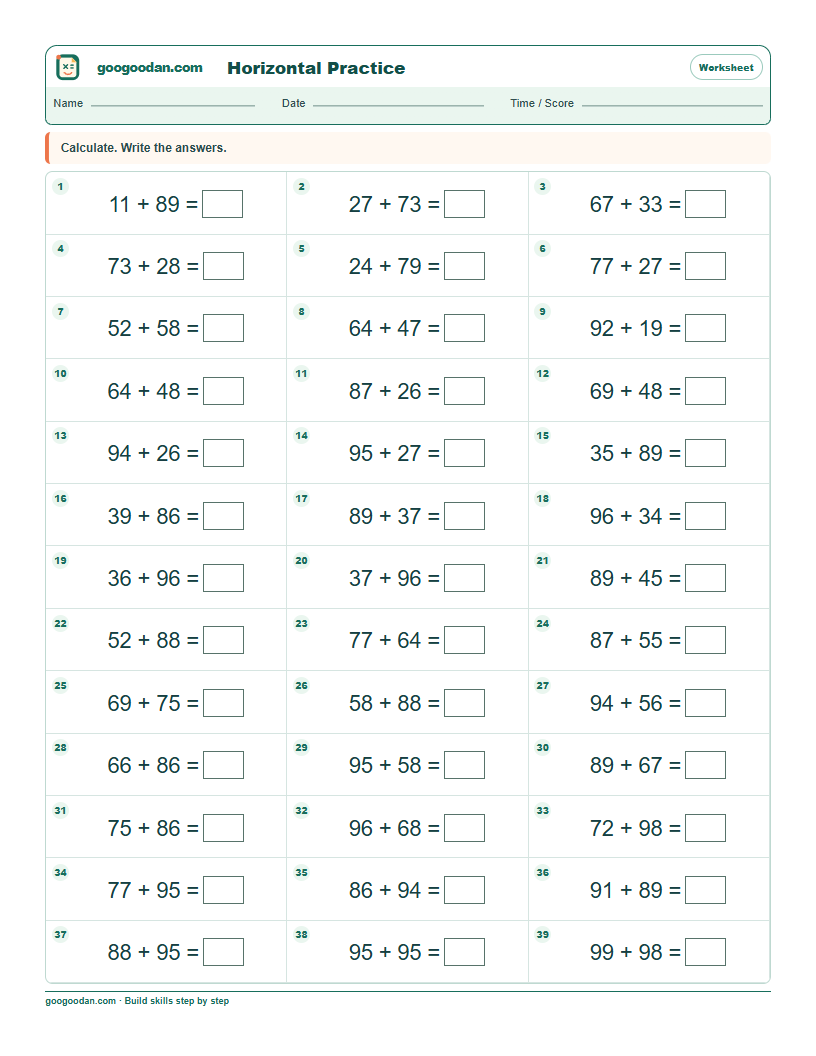 2-Digit Addition: Regrouping Twice, Horizontal Worksheet
Column Addition Worksheets
 Column Addition to 9 Worksheet10 + 1-Digit Column Addition: Digit Blanks Worksheet
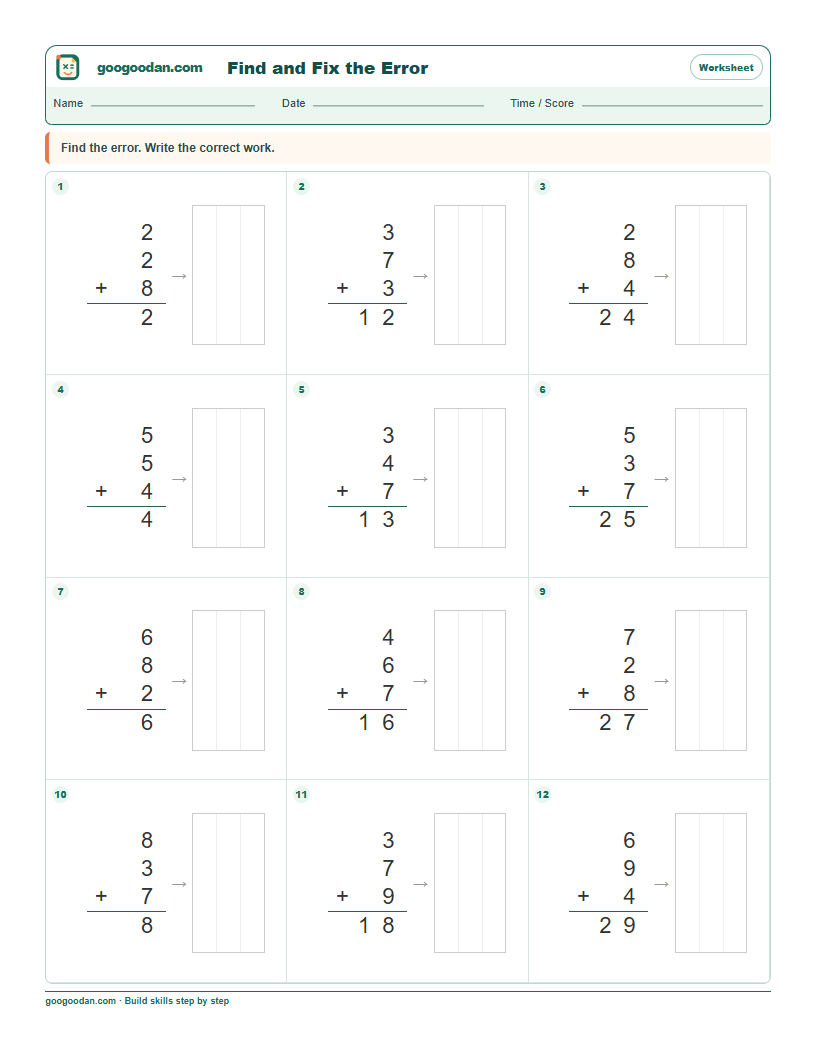 3-Number Column Addition: Make 10 First, Fix Errors Worksheet
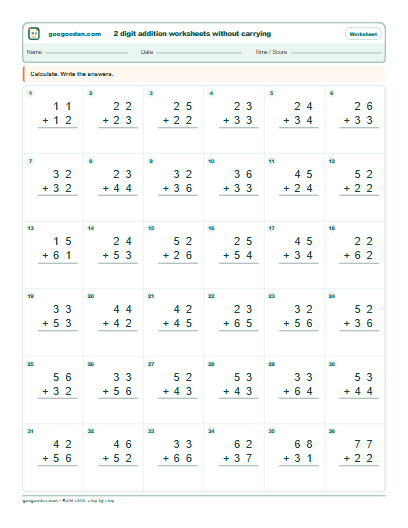 2-Digit Column Addition Worksheet: No Regrouping
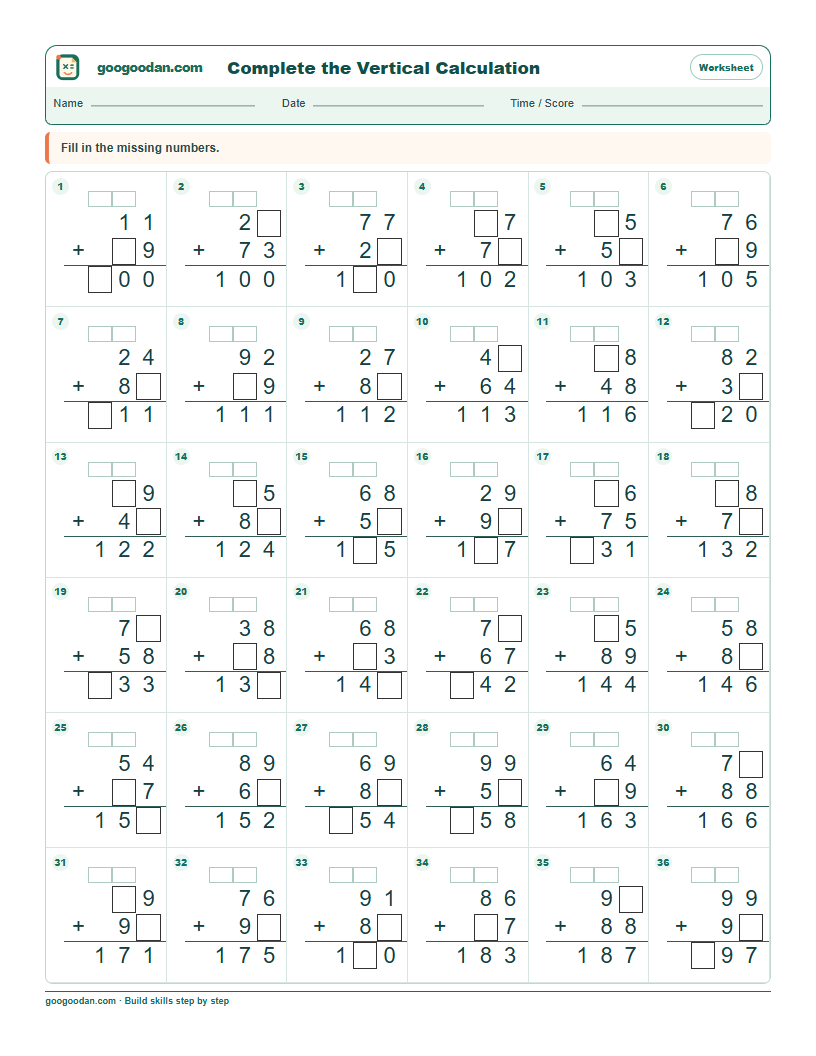 2-Digit Column Addition: Regrouping Twice, Digit Blanks Worksheet
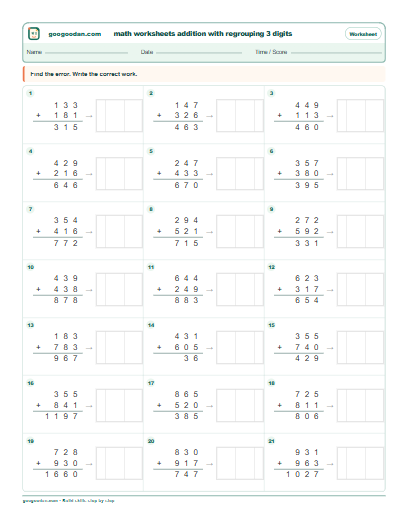 3-Digit Column Addition: Regrouping Once, Fix Errors Worksheet
Subtraction Worksheets
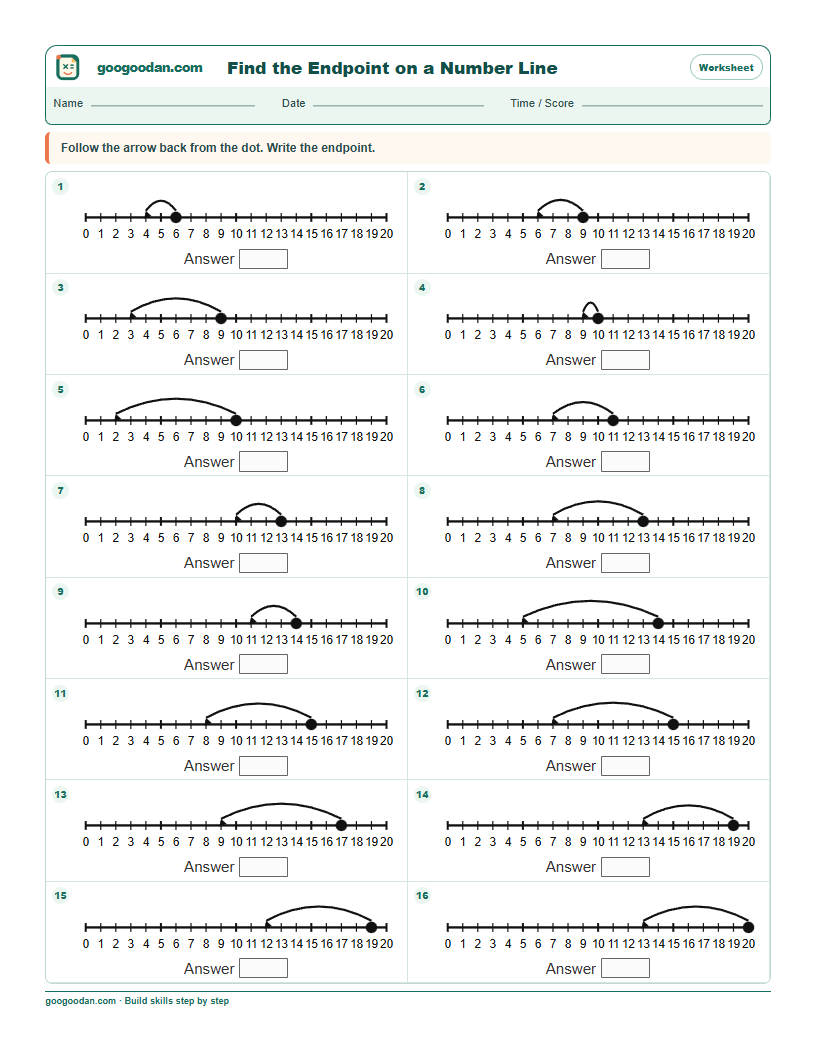 Number Line Subtraction: Counting Back, Find Endpoints Worksheet
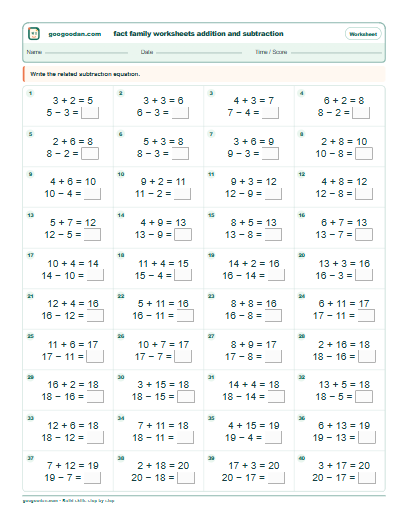 Addition and Subtraction Fact Families: Write Fact Pairs Worksheet
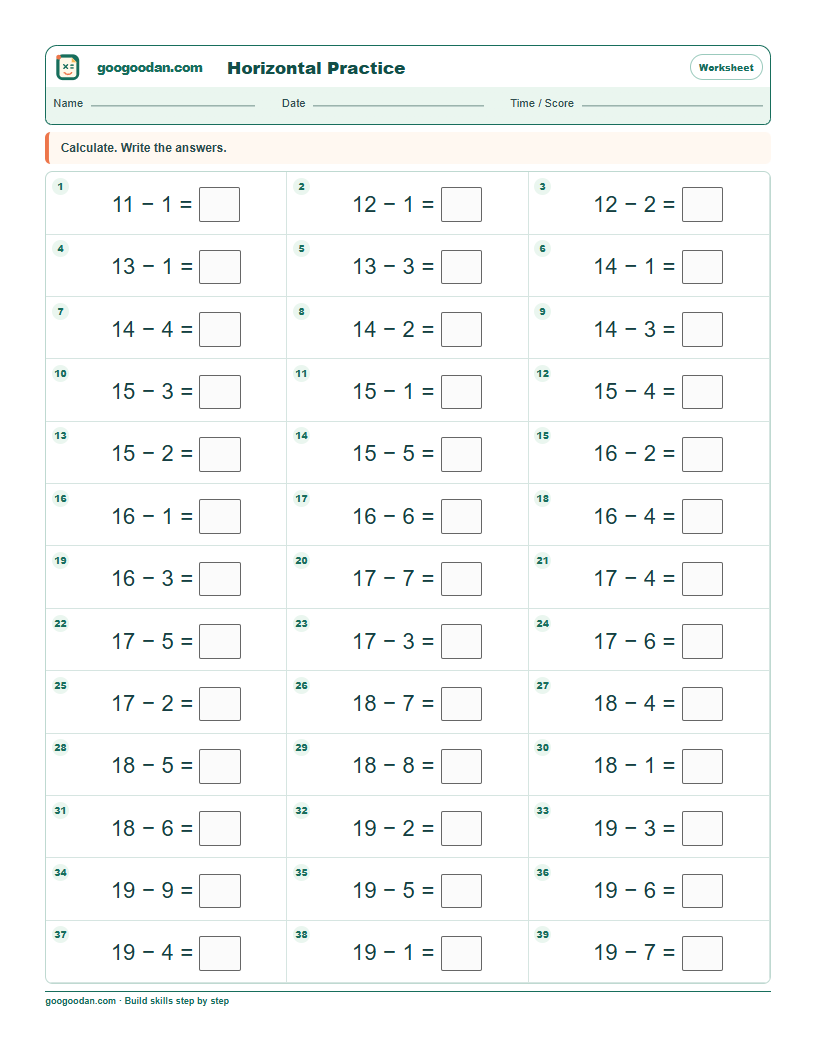 Teen Subtraction: No Regrouping, Horizontal Worksheet
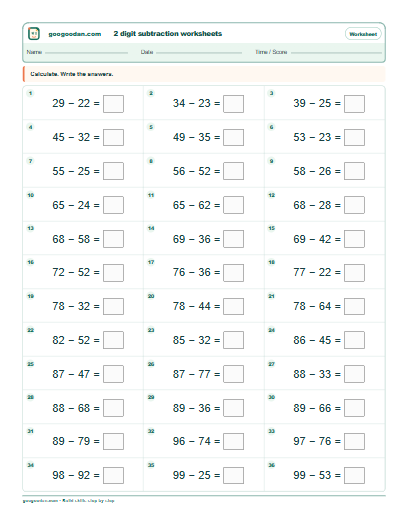 2-Digit Subtraction: No Regrouping, Horizontal Worksheet
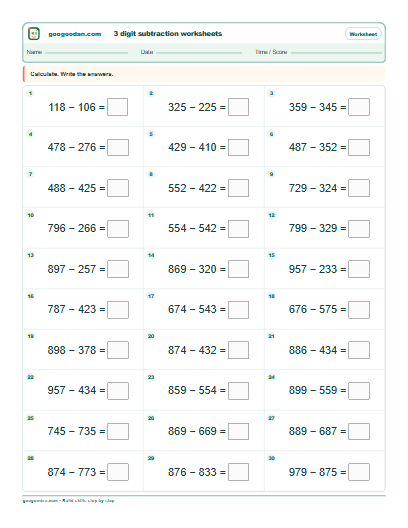 3-Digit Subtraction: No Regrouping, Horizontal Worksheet
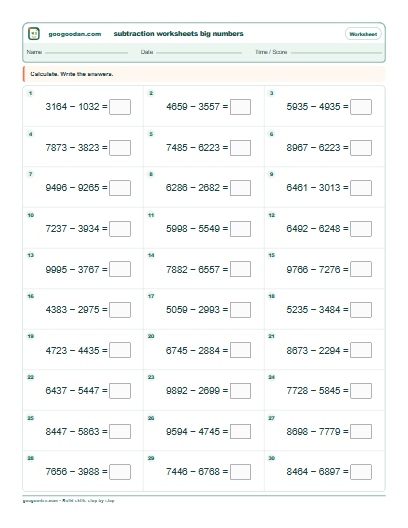 4-Digit Subtraction: Horizontal Worksheet
Column Subtraction Worksheets
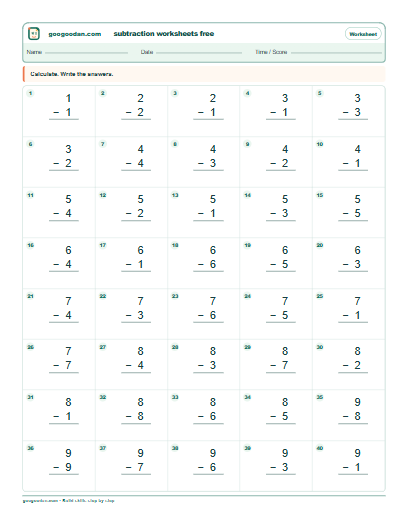 Column Subtraction within 9 Worksheet
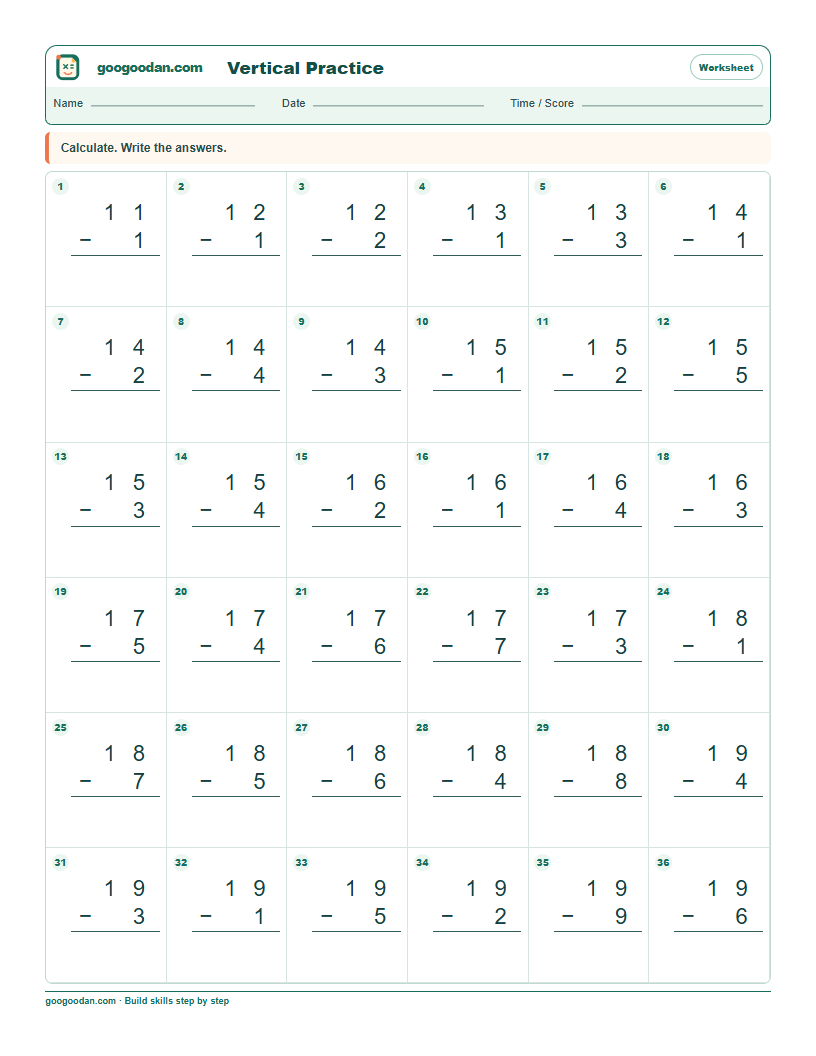 Teen Column Subtraction: No Regrouping Worksheet
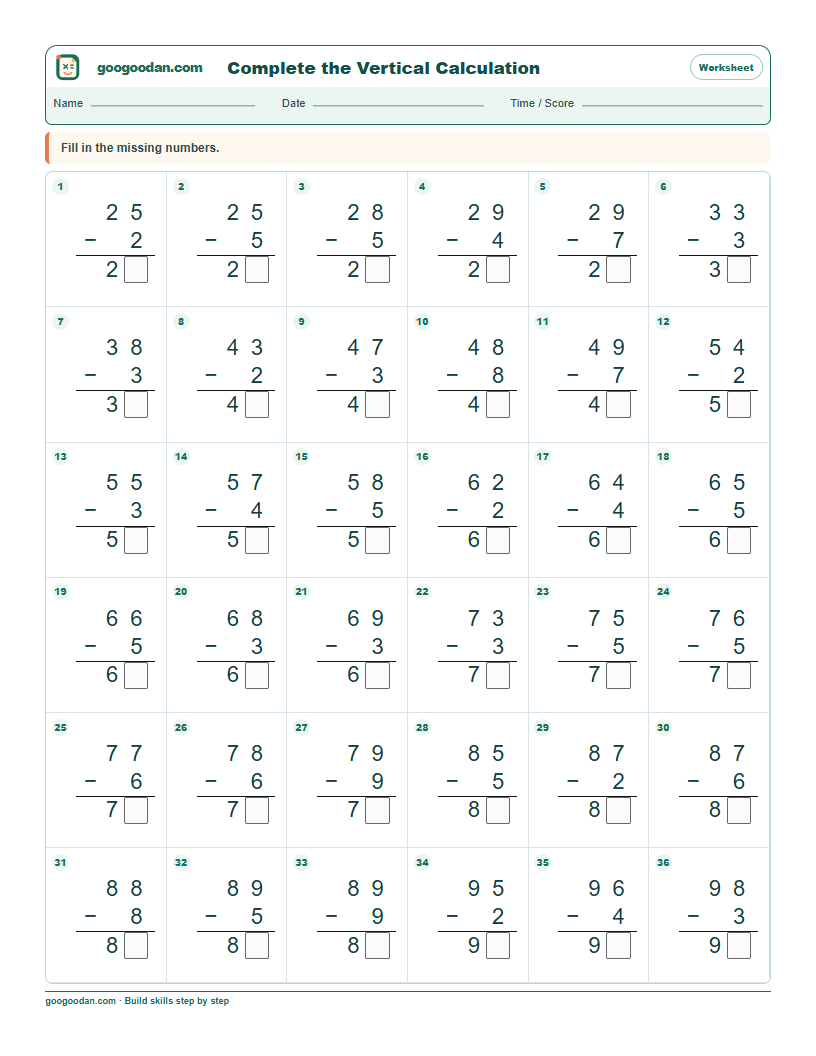 2-Digit − 1-Digit Column Subtraction: No Regrouping, Digit Blanks Worksheet
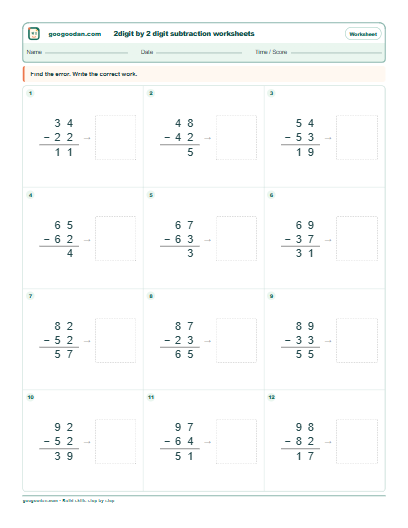 2-Digit Column Subtraction: No Regrouping, Fix Errors Worksheet
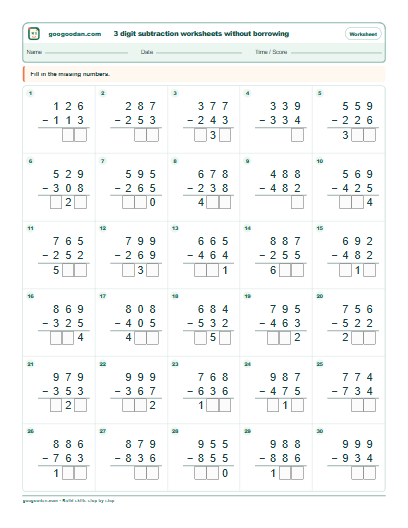 3-Digit Column Subtraction: No Regrouping, Digit Blanks Worksheet
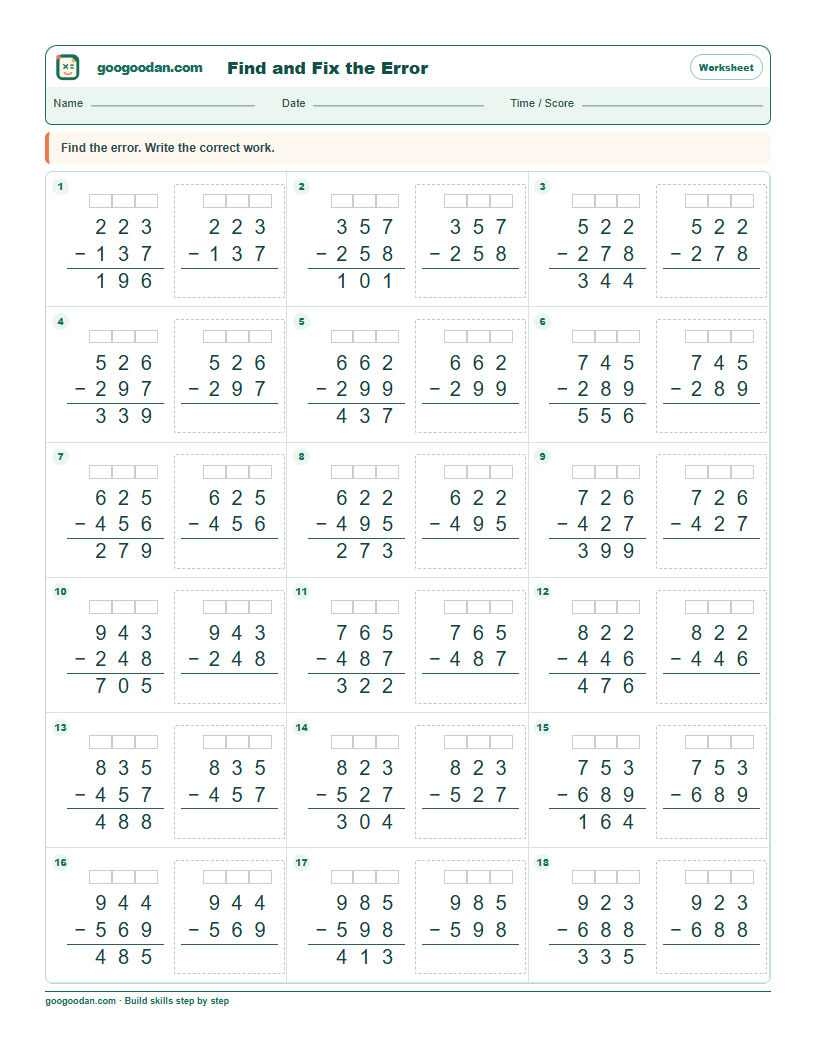 3-Digit Column Subtraction: Consecutive Regrouping, Fix Errors Worksheet
More worksheet collections
- Free Printable Maths Worksheets
- Times Tables Worksheets
- Multiplication and Division Worksheets
- Fractions and Decimals Worksheets
- Year 3 Maths Worksheets
- Shape Worksheets for Primary Maths Practice
- Measurement Worksheets for Primary Maths Practice
- Foundation Maths Worksheets: Counting and Number Facts
How to choose an addition or subtraction sheet
Use this collection to move between number facts and written methods at a pace that suits the learner. Begin with a sheet whose title and layout feel familiar. Picture questions and smaller numbers give room to focus on what the signs mean. When those are comfortable, choose a column sheet and decide whether carrying or exchanging should be included. The worksheet titles describe these differences, so check the wording before opening a page.
Pick a format, then practise
Horizontal questions keep the whole calculation in one line. Column layouts help learners keep place values aligned. Missing-digit activities ask them to reason backwards from a total or difference, while error-fixing tasks ask them to inspect someone else’s working. Try one format at a time before mixing them. On a selected sheet, choose New Numbers for another set. Select Worksheet to print the questions, Answer Key to check them, or both when a worked session is useful.
Check one example carefully
For 47 + 26, write the ones under the ones and the tens under the tens. Add 7 and 6 to make 13 ones: record 3 ones and regroup 1 ten. Then add 4 tens, 2 tens and the regrouped ten to get 7 tens. The answer is 73. For 72 − 38, exchange one ten for 10 ones: subtract 8 from 12, then subtract 3 tens from 6 tens. The result is 34. Comparing each place separately makes a misplaced digit easier to spot.
Common slips to catch
In column addition, a regrouped ten must be added to the next column. In subtraction, exchange only when the top digit is too small, and remember that the tens column is reduced by one after an exchange. Keep the answer key covered until a first attempt is complete; otherwise it is easy to copy an answer without checking the method. If a result seems unreasonable, estimate first: adding should not make a number smaller, and subtracting a positive amount should not make it larger.
Finish by checking answers with the inverse operation: add a difference back to the number subtracted, or subtract one addend from the total. Change format only after the learner can explain the method.