Fractions and Decimals Worksheets
Fractions come first: pictures, equivalent fractions and mixed numbers, then adding and subtracting with the same and different denominators. Decimals follow, from place value to the four operations.
Some of these sheets are hard, so read each title for the exact skill before printing. New Numbers gives fresh questions, and the answer page shows each result so you can check the working.
Fraction Basics Worksheets
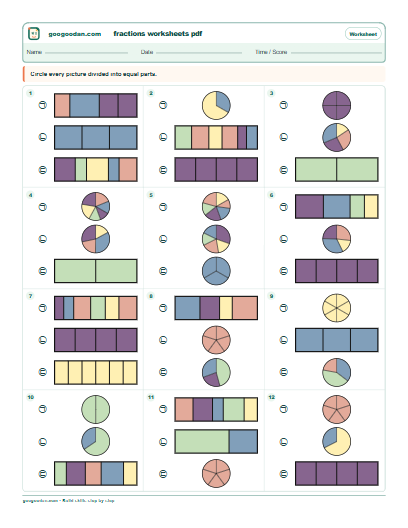 Fractions: Equal Parts, Choose Pictures Worksheet
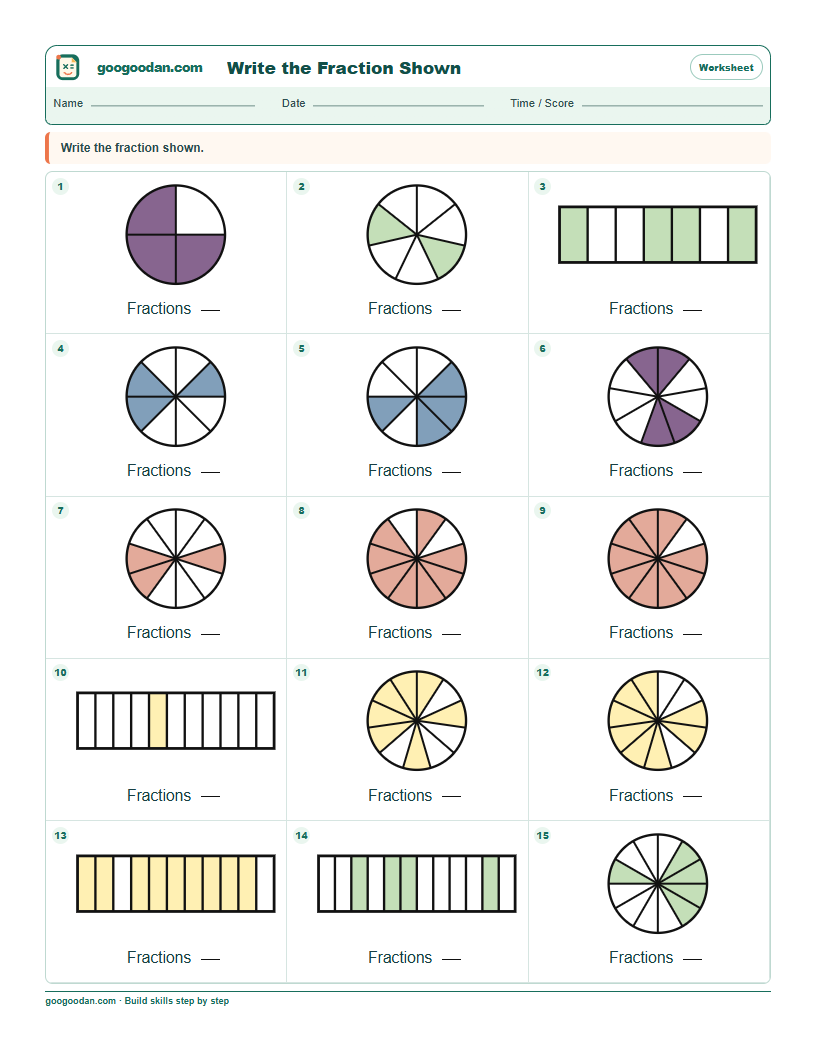 Picture Fractions: Read Models Worksheet
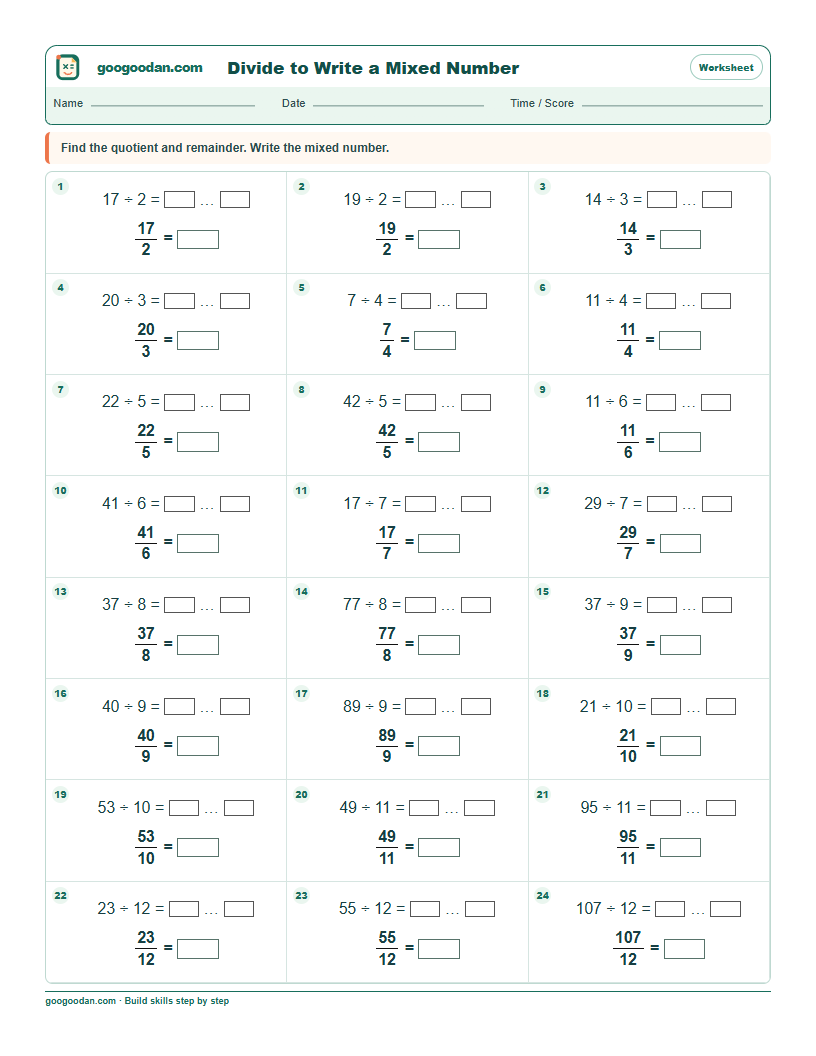 Improper Fractions to Mixed Numbers: Quotient and Remainder Worksheet
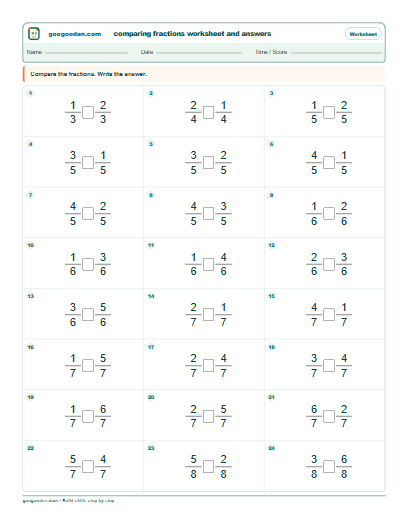 Comparing Like Fractions: Insert Signs Worksheet
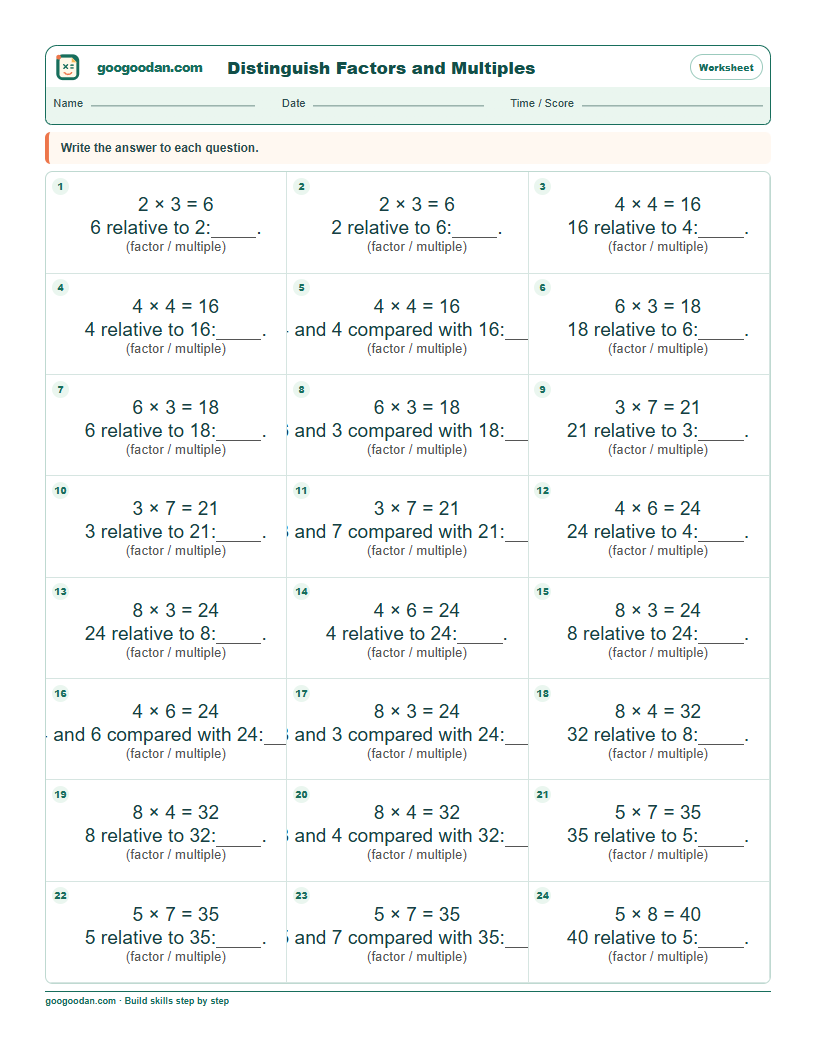 Factors and Multiples for Fractions: Classify Relations Worksheet
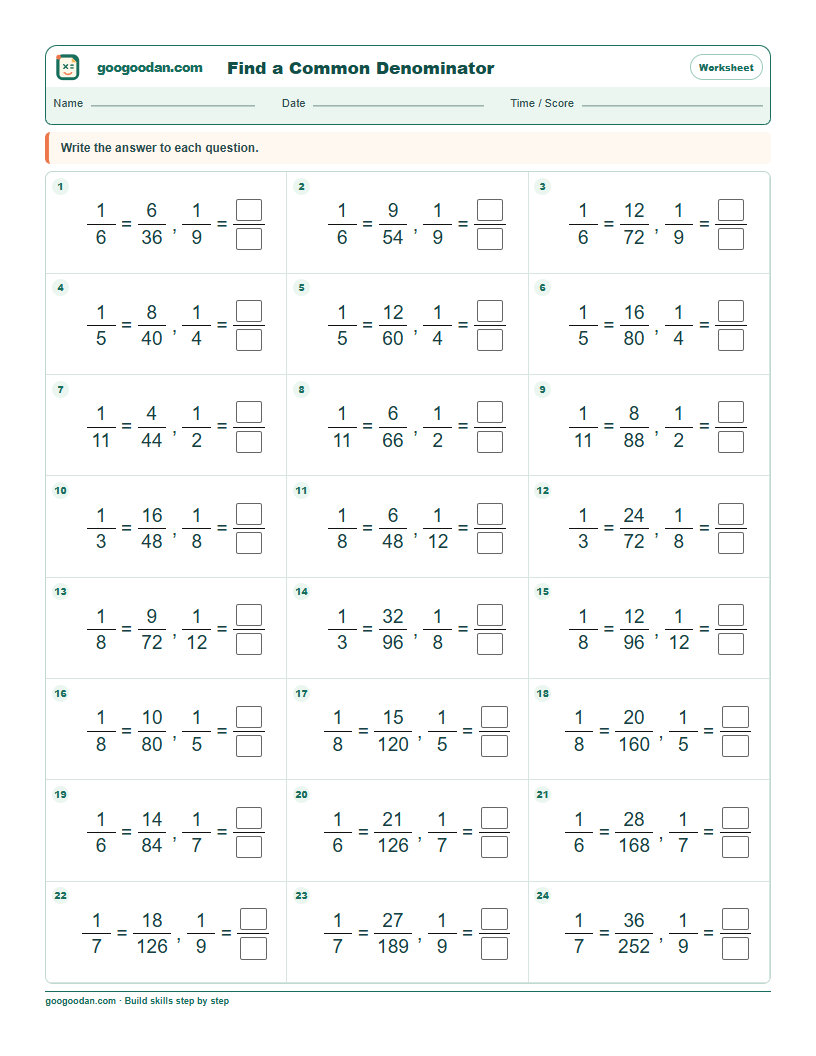 Common Denominators: Common Multiples, Find Denominators Worksheet
Adding and Subtracting Fractions Worksheets
 Adding Like Unit Fractions: Count Combined Pictures Worksheet
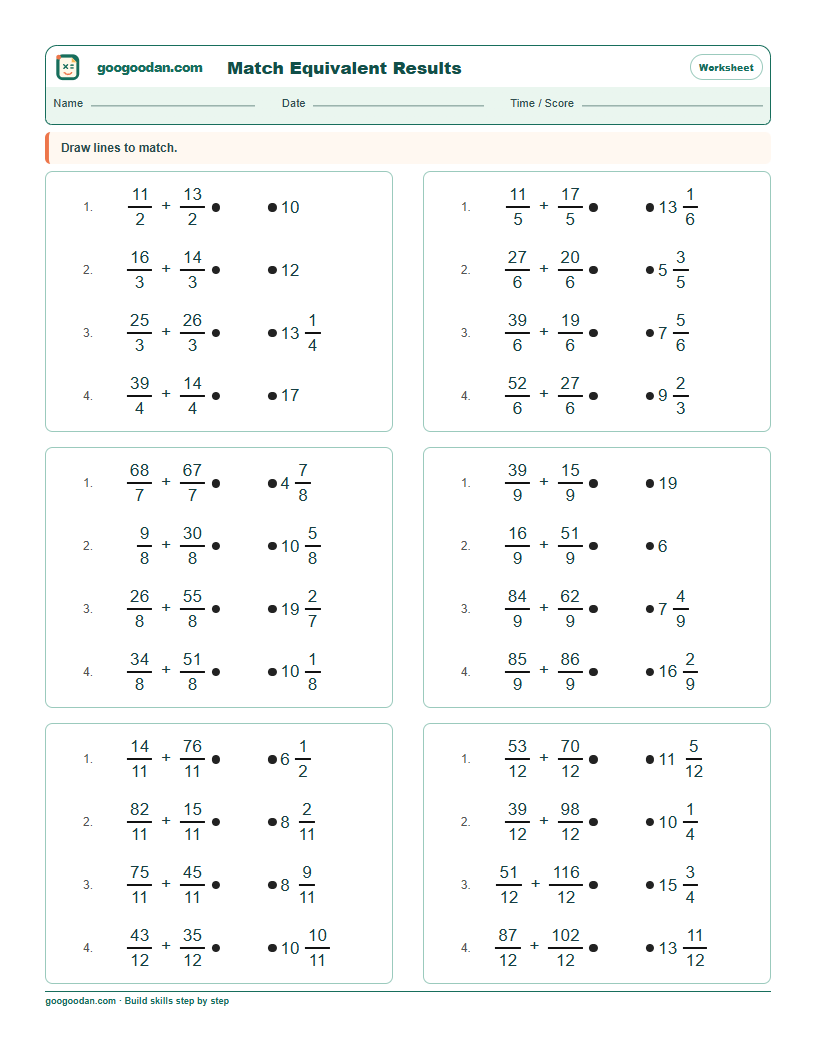 Like Improper Fraction Addition: Match Results Worksheet
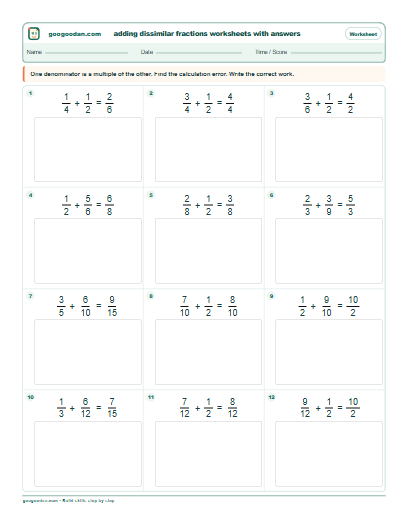 Proper Fraction Addition: Denominator Multiples, Fix Errors Worksheet
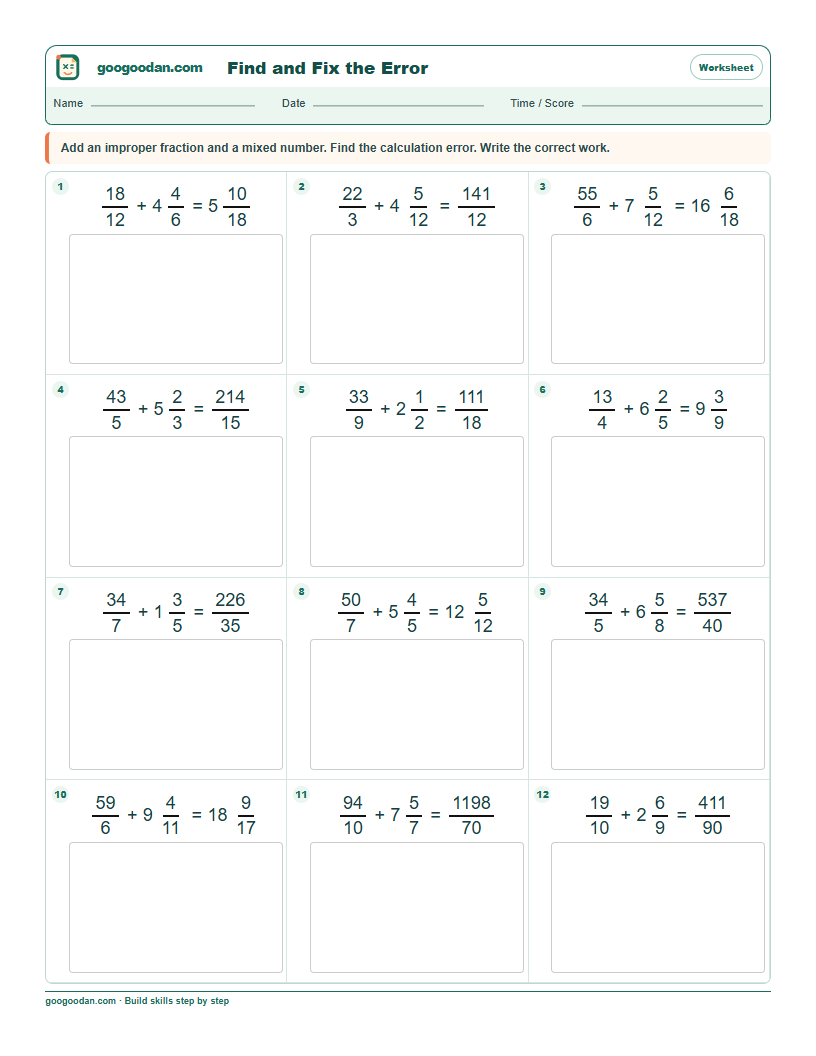 Unlike Improper + Mixed Fractions: Addition, Fix Errors Worksheet
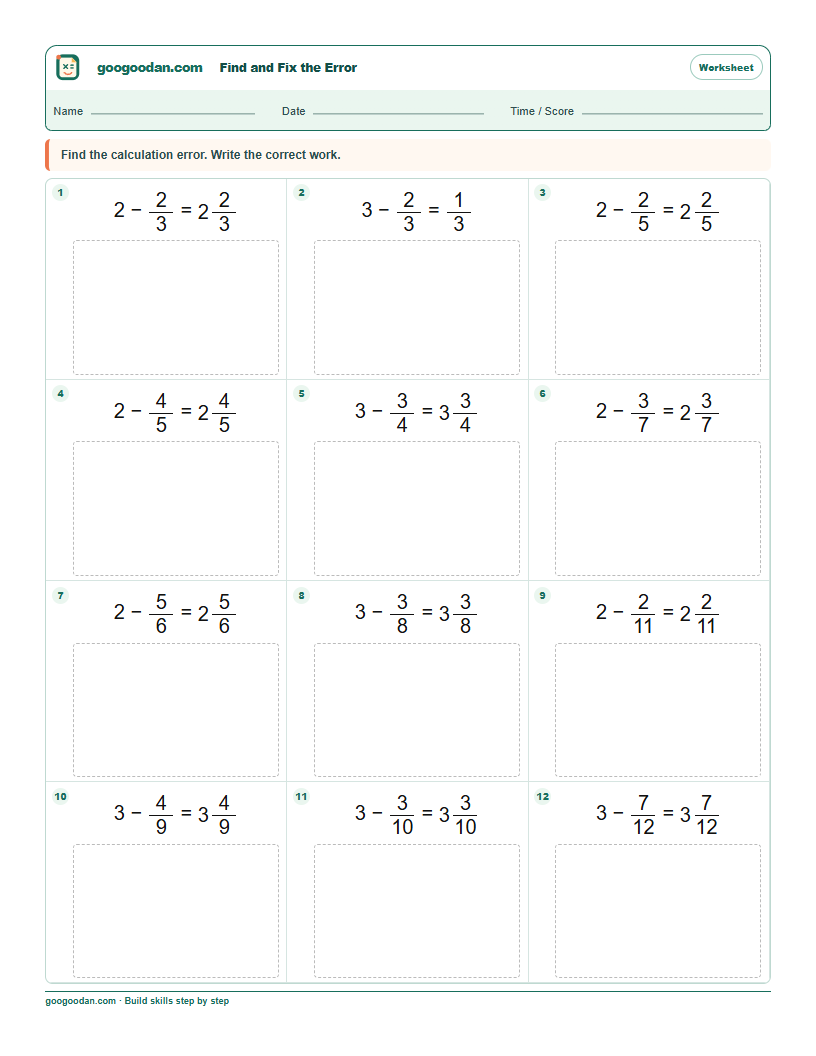 Whole Numbers − Like Proper Fractions: Fix Errors Worksheet
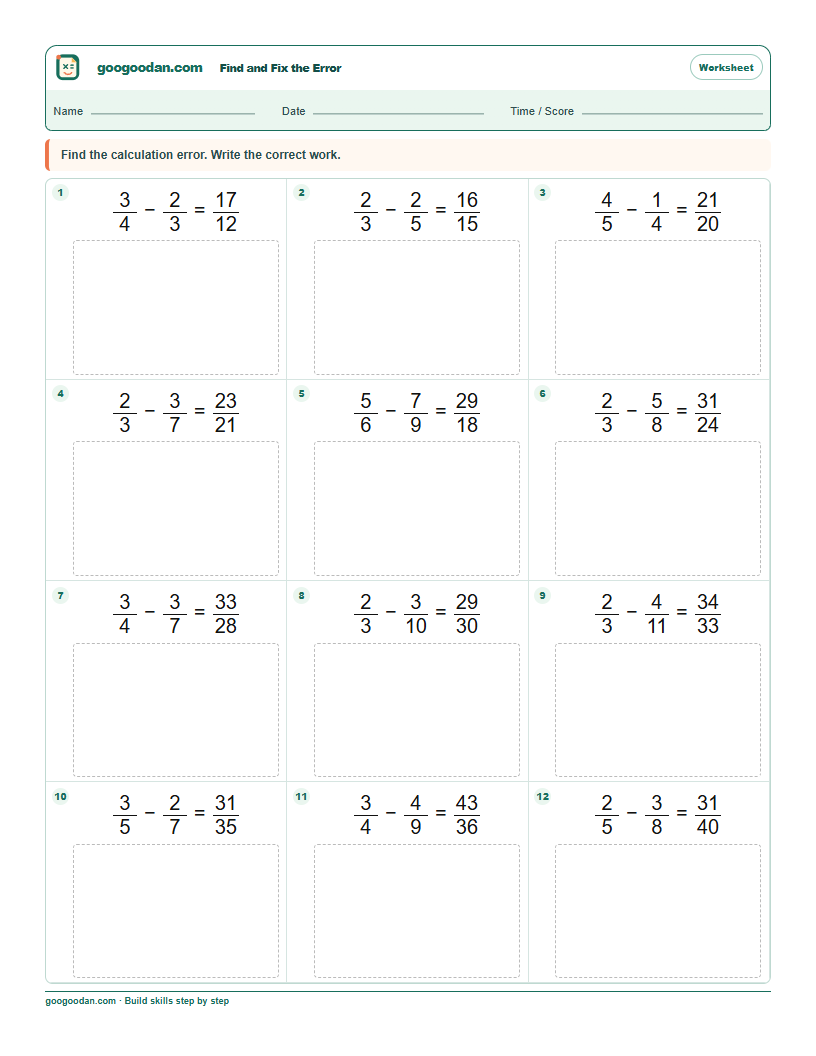 Proper Fraction Subtraction: Unlike Denominators, Fix Errors Worksheet
Multiplying and Dividing Fractions Worksheets
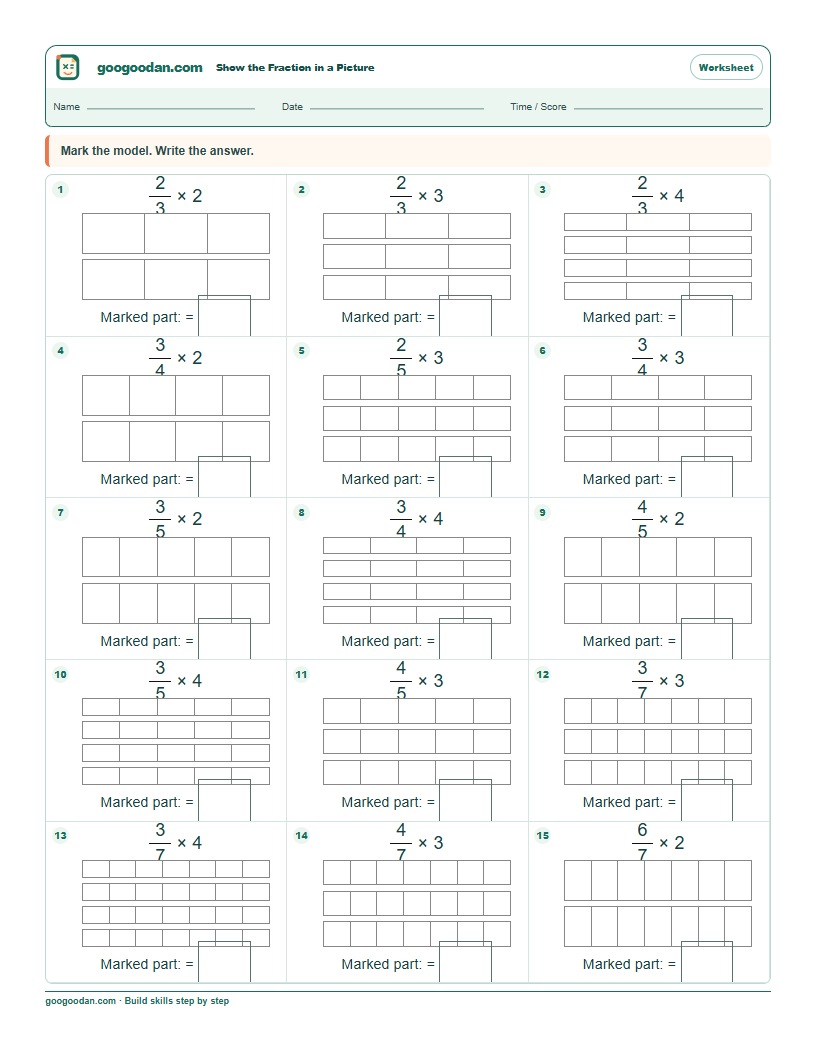
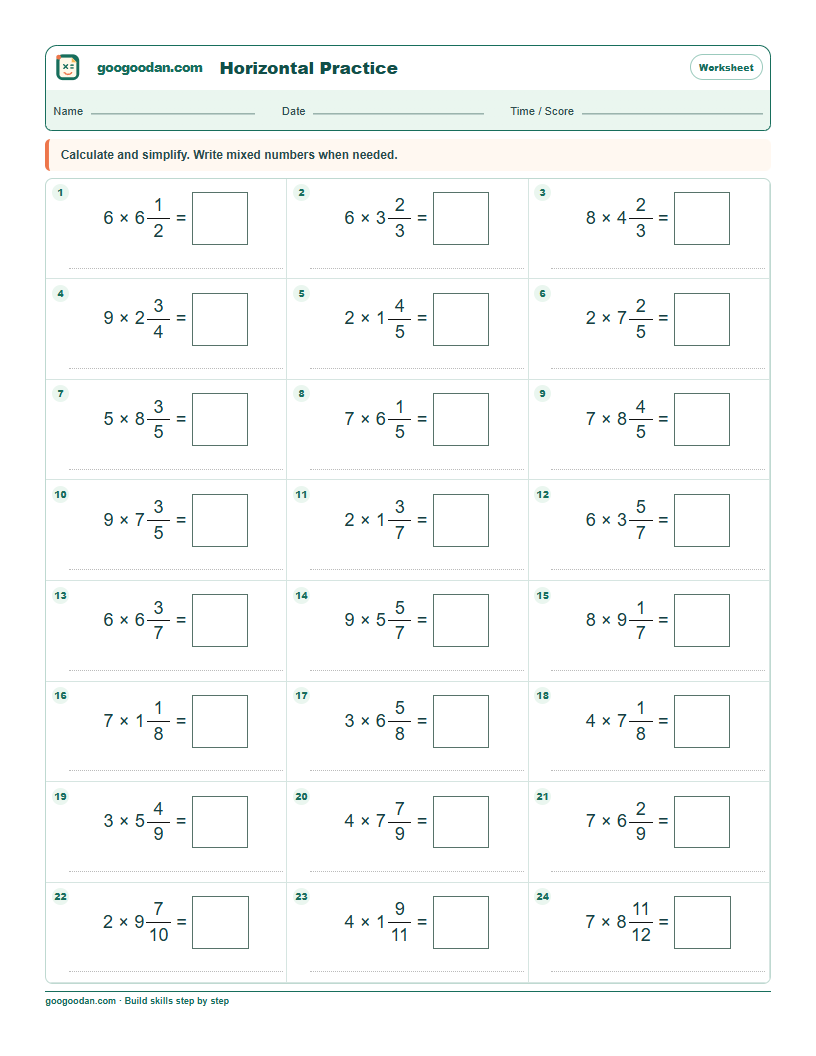
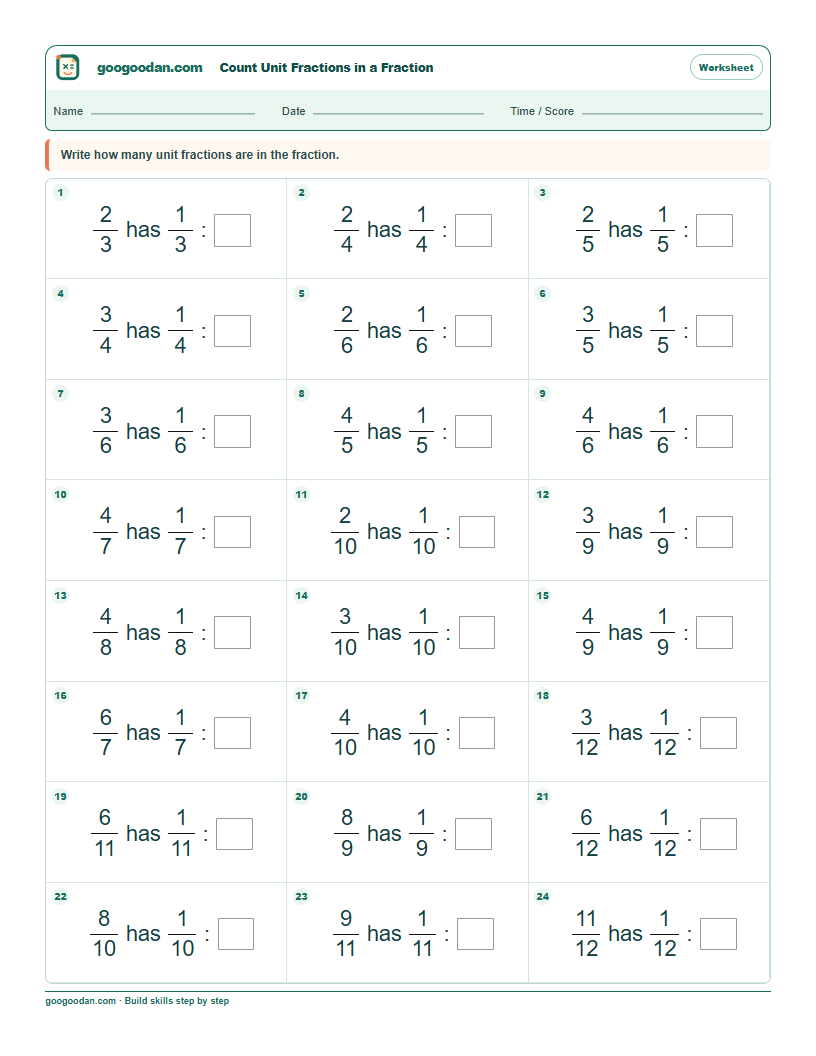
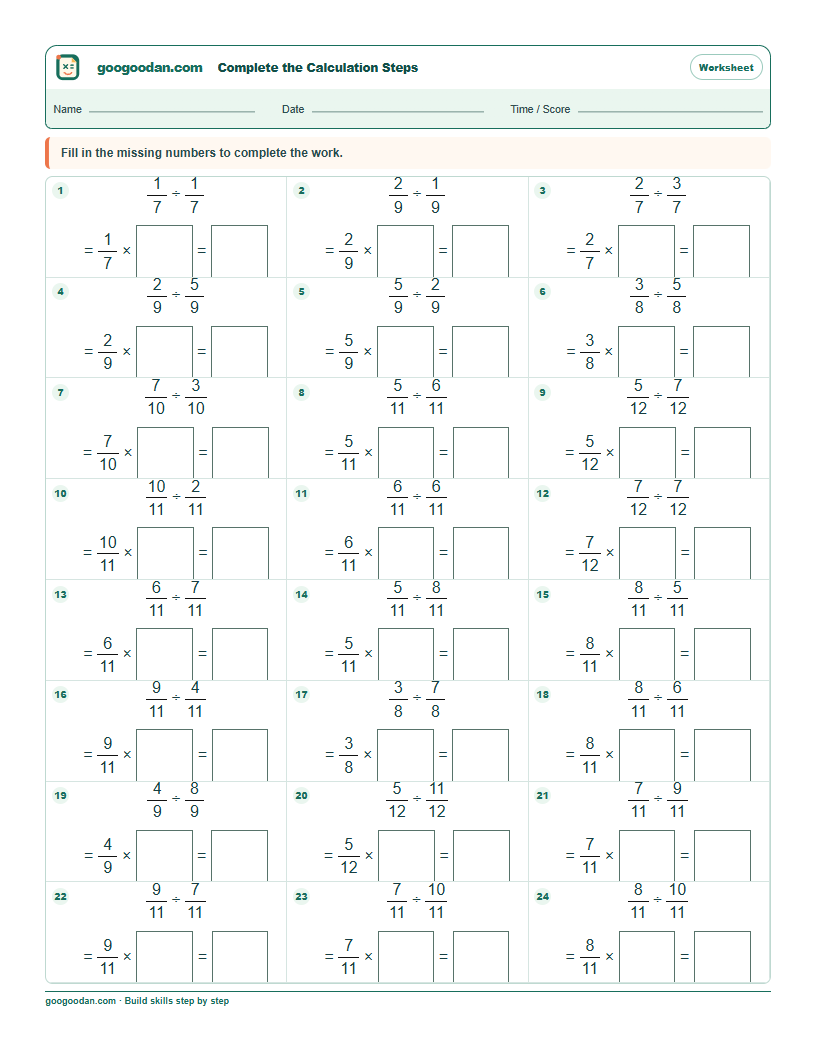
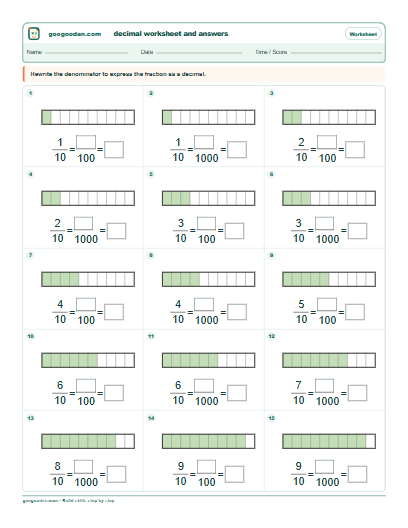
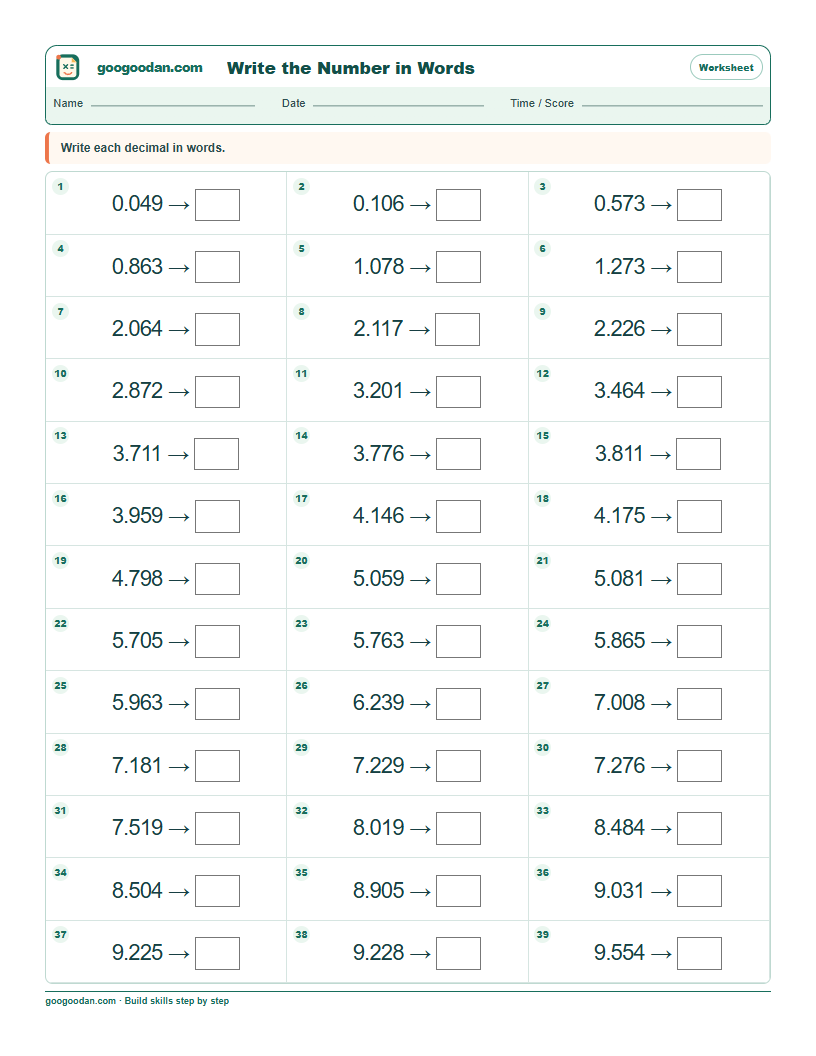
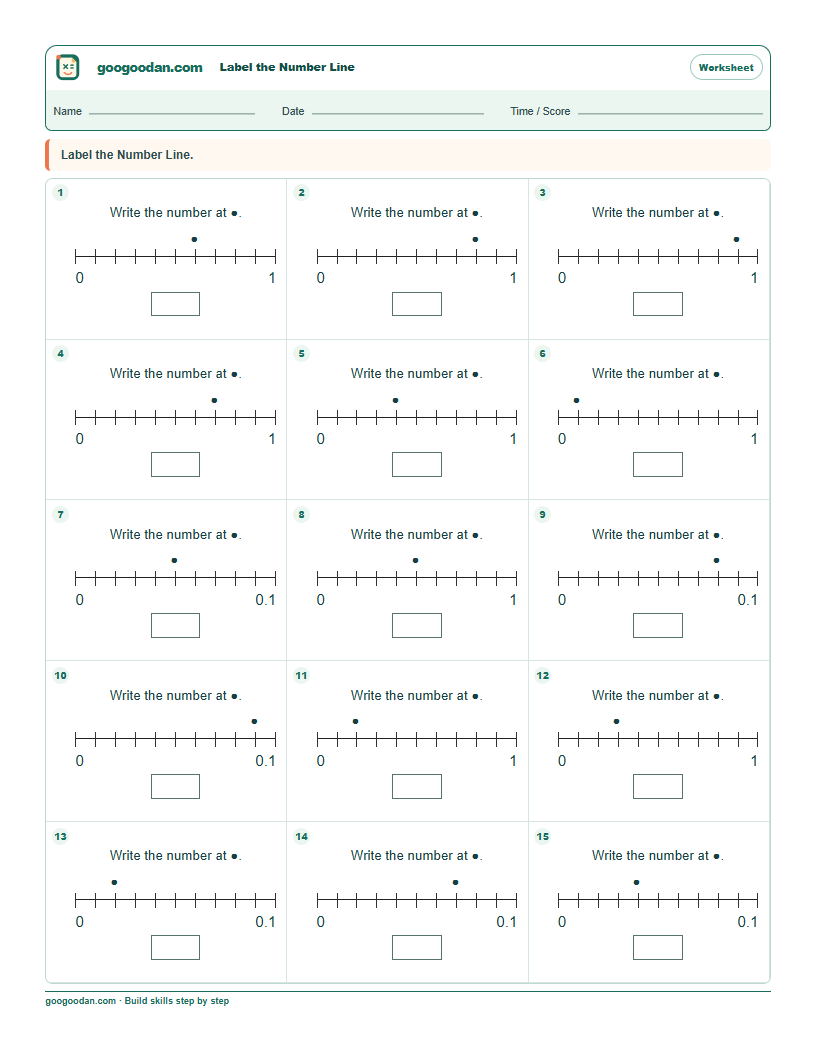
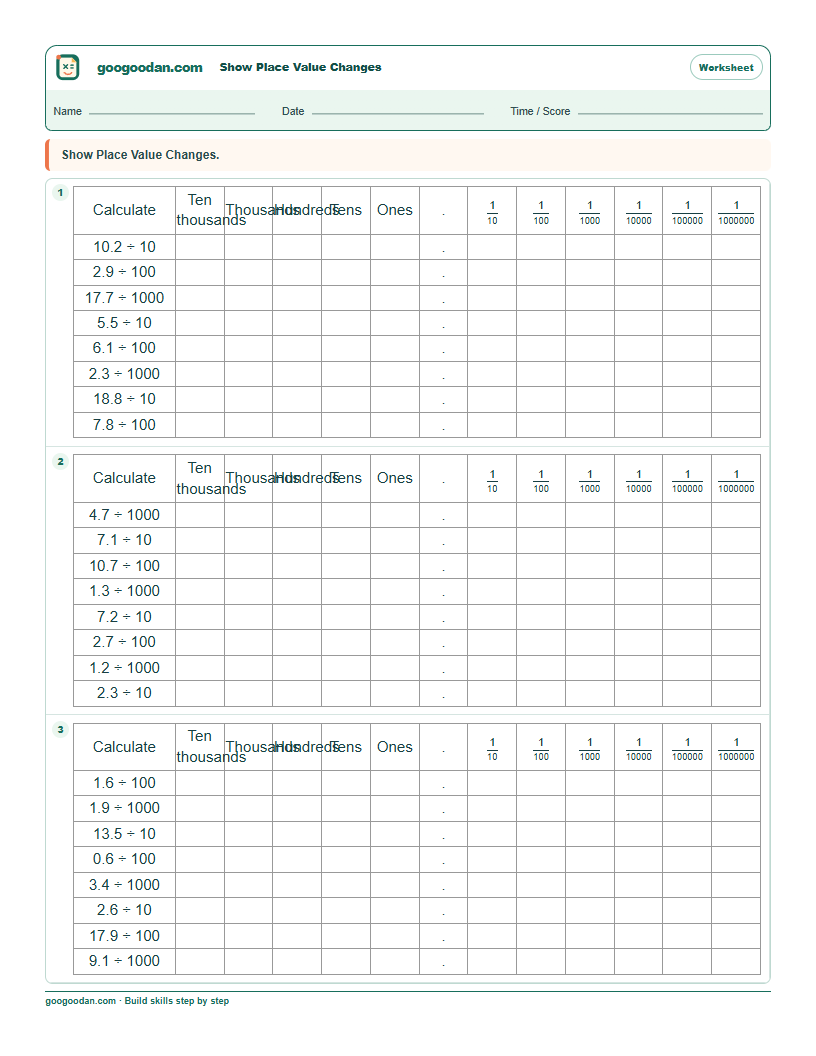
Decimal Place Value Worksheets
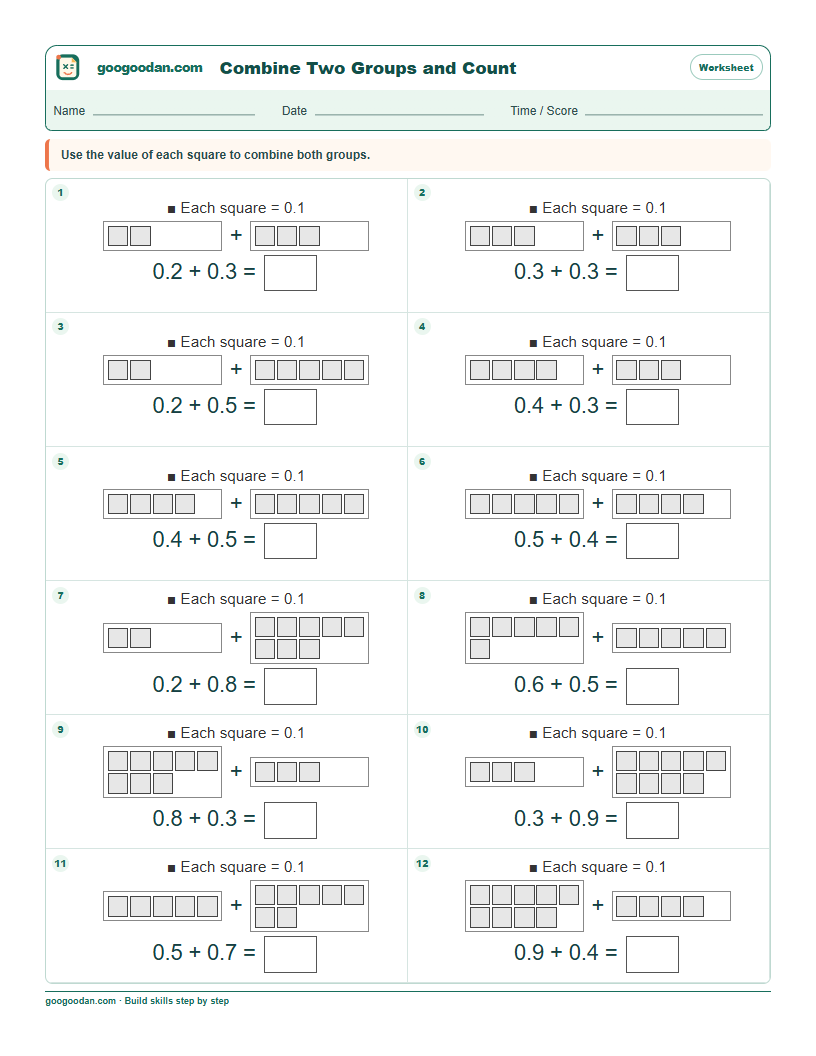
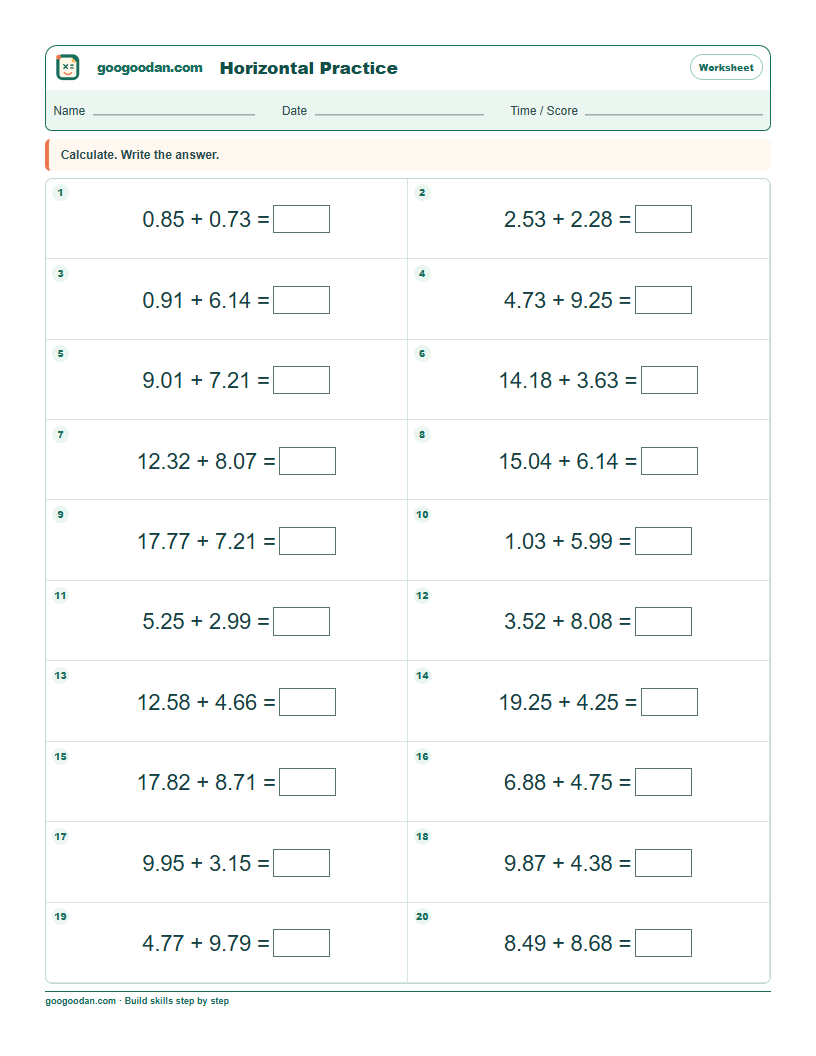
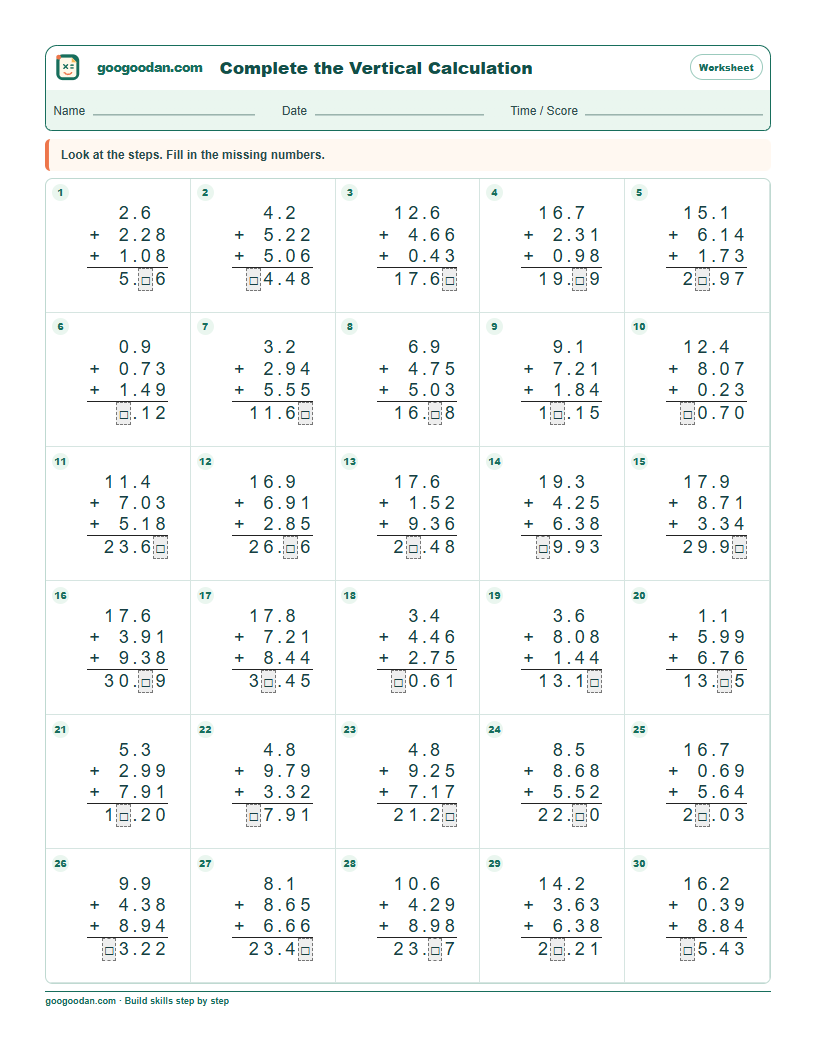
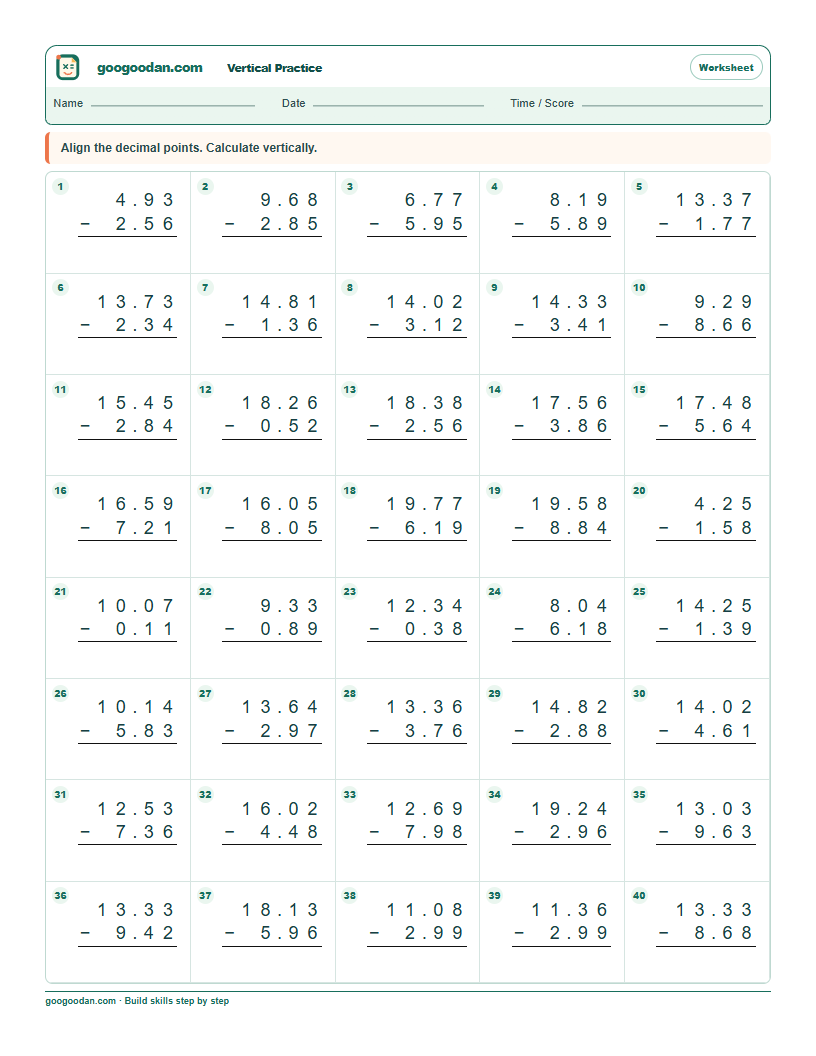
Adding and Subtracting Decimals Worksheets
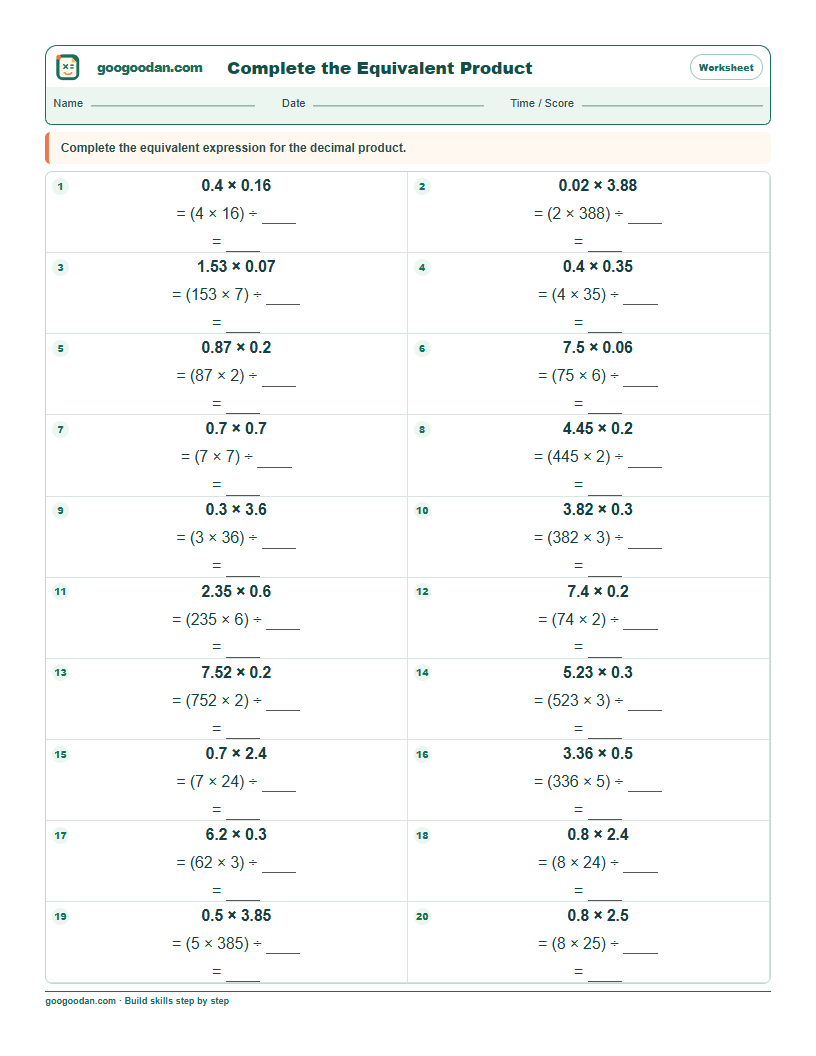
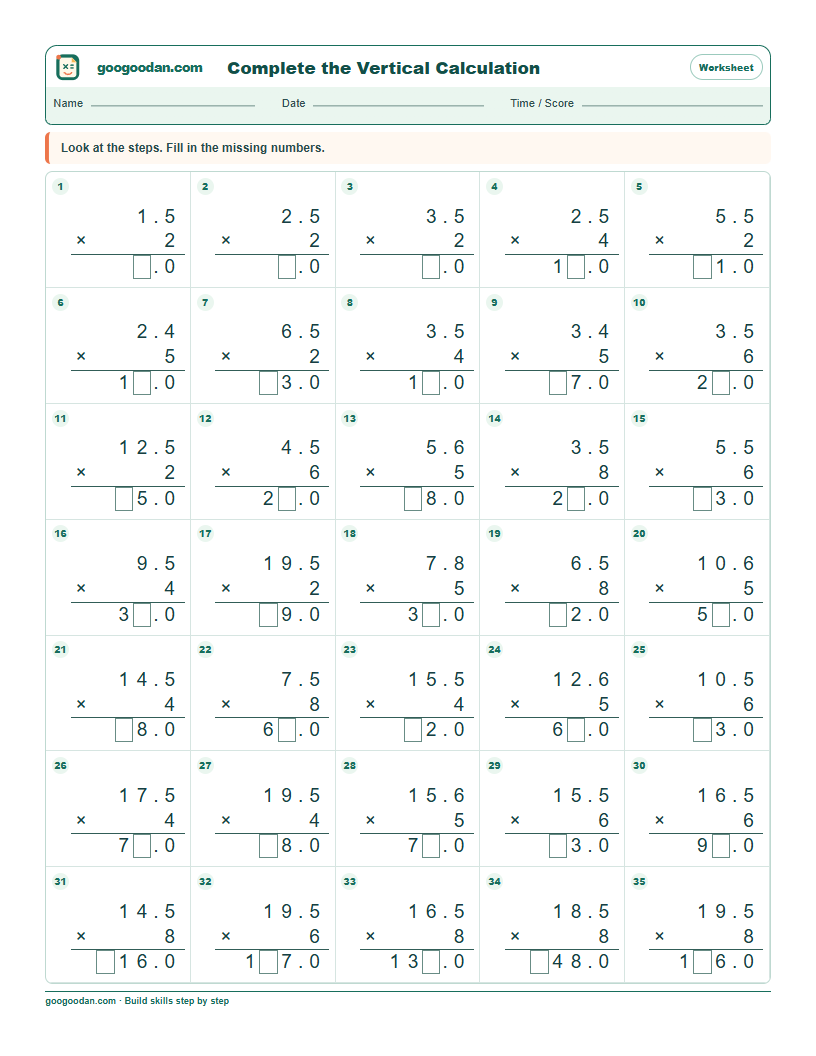
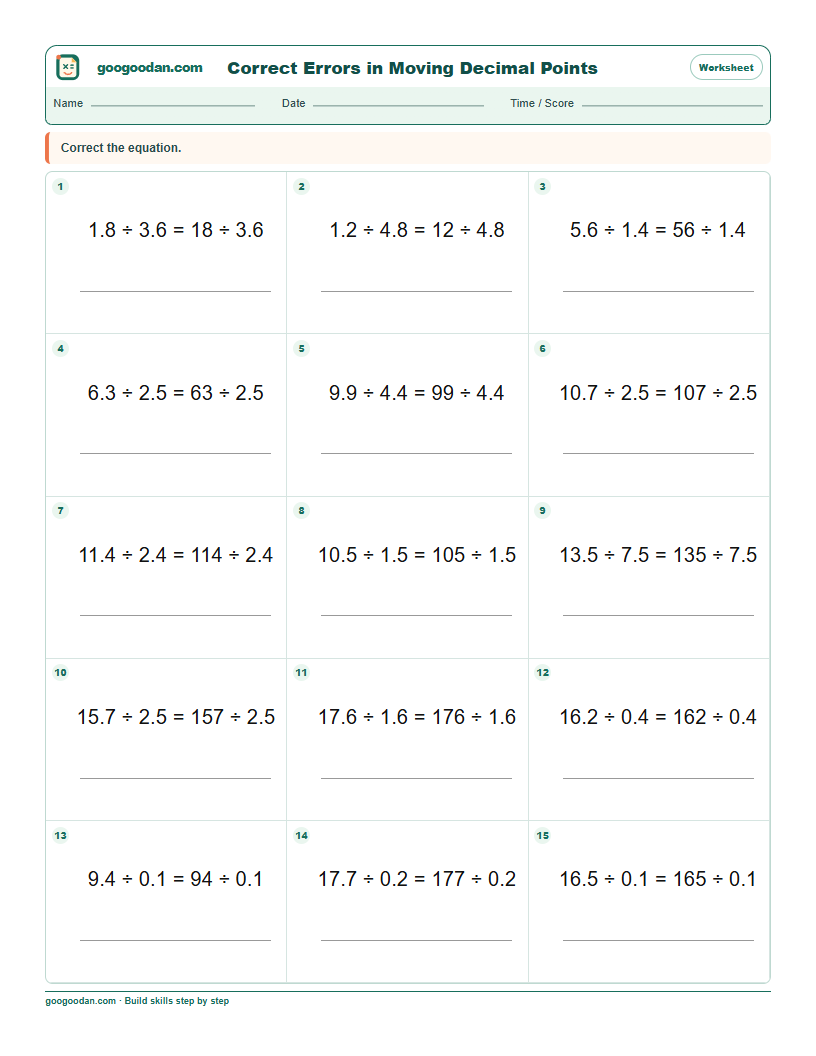
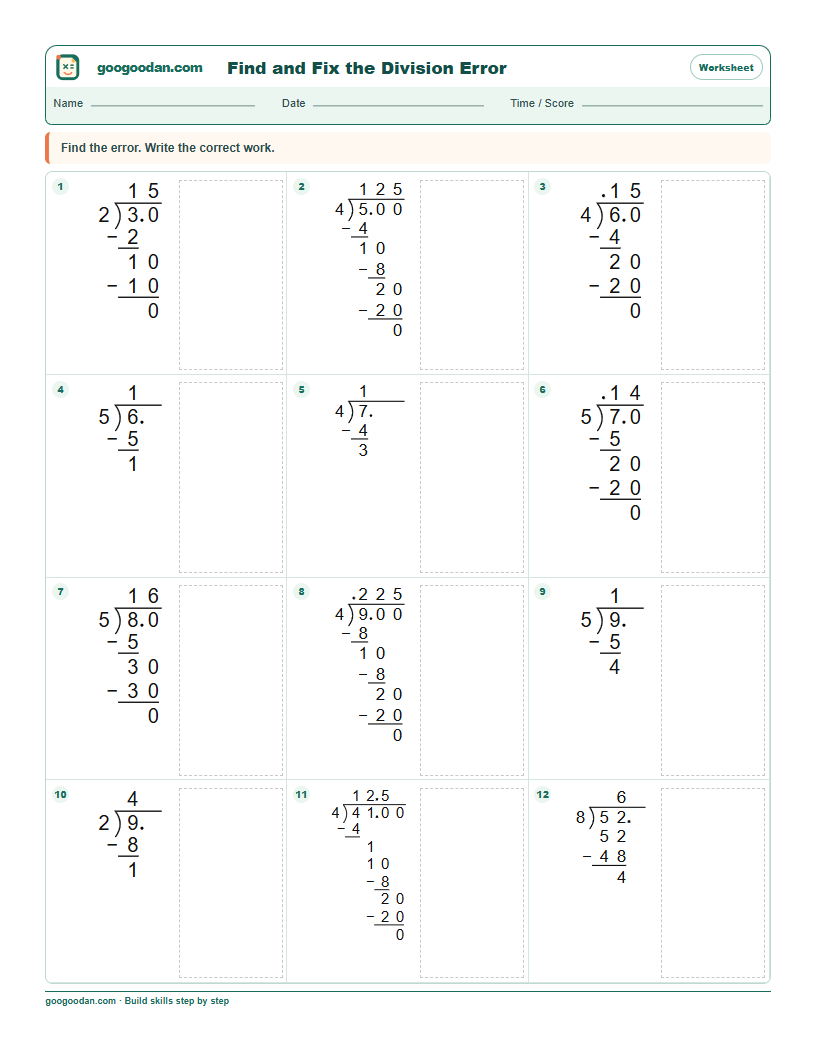
Multiplying and Dividing Decimals Worksheets
More worksheet collections
- Free Printable Maths Worksheets
- Times Tables Worksheets
- Addition and Subtraction Worksheets
- Multiplication and Division Worksheets
- Year 3 Maths Worksheets
- Shape Worksheets for Primary Maths Practice
- Measurement Worksheets for Primary Maths Practice
- Foundation Maths Worksheets: Counting and Number Facts
A sensible route through fractions and decimals
The collection spans several related ideas, so use the worksheet title to choose a precise starting point. A learner who is new to fractions can begin with pictures, equivalent fractions or mixed numbers before attempting operations. For decimals, place-value questions provide a useful base before addition, subtraction, multiplication or division. The page groups related sheets, but each activity can target a different step. Read the complete title and inspect a question before printing so the chosen page matches the intended practice.
Work an example before a full set
For equivalent fractions, 1/2 and 2/4 describe the same amount because both numerator and denominator were multiplied by 2. In addition, 1/4 + 2/4 = 3/4 because the parts are measured in fourths. When denominators differ, first make equivalent fractions with a shared denominator: 1/2 + 1/4 becomes 2/4 + 1/4 = 3/4. For decimals, line up the decimal points: 2.35 + 0.40 = 2.75. These examples show why the form of the question matters before choosing a method.
Open one worksheet, use New Numbers for another set if needed, and select Worksheet, Answer Key or both for printing. Have the learner write intermediate steps on the page or spare paper. The answer key confirms a result, but a matching answer alone does not show whether the method was sound. Compare one worked question with the key and explain each transformation before moving through the rest.
Frequent mistakes
Do not add denominators when adding fractions: fourths stay fourths in the example above. When simplifying, divide the numerator and denominator by the same factor. With decimals, align place values rather than lining up the final digits; a zero can be written as a placeholder when it makes columns easier to read. In multiplication or division, check the size of the answer against an estimate, because moving the decimal point without a reason can change the value greatly.
Choose a new topic only after the current one is understandable. If several errors come from the same step, return to the relevant picture or place-value page, then retry a fresh set. This keeps practice focused and makes the next worksheet choice clear.