
Writing Fractions From Shaded Shapes Worksheets
Help your student distinguish the whole, all equal parts, and shaded parts.
Teaching notes for parents and teachers
How to teach it
Point to the complete strip before counting. Record the total number of equal parts as the denominator and the shaded count as the numerator.
Example to work through together
Use the model below as you explain the example. Have your student point to the quantities as you discuss them.
Ask your student
Which number tells how many equal parts make the whole?
If your student needs help
If the student counts only unshaded parts for the denominator, trace the entire strip together.
Choosing and using the worksheet
Each set has six original strip pictures. The wholes have 2, 3, 4, 6, or 8 equal parts, with at least one shaded part and at least one unshaded part. The answer key names the pieces shown without simplifying. These are part-of-a-whole models, not number-line questions or a complete fraction assessment.
Make a practice set
Select the worksheet, answer key, or both. When both are selected, the answer key prints after the questions. Keep it separate if you want your student to work independently.
After your student finishes
Ask the child to explain both numbers in one answer. Then shade a different number of parts on an equal-part strip and describe what changes and what stays the same.
 Calculation practice
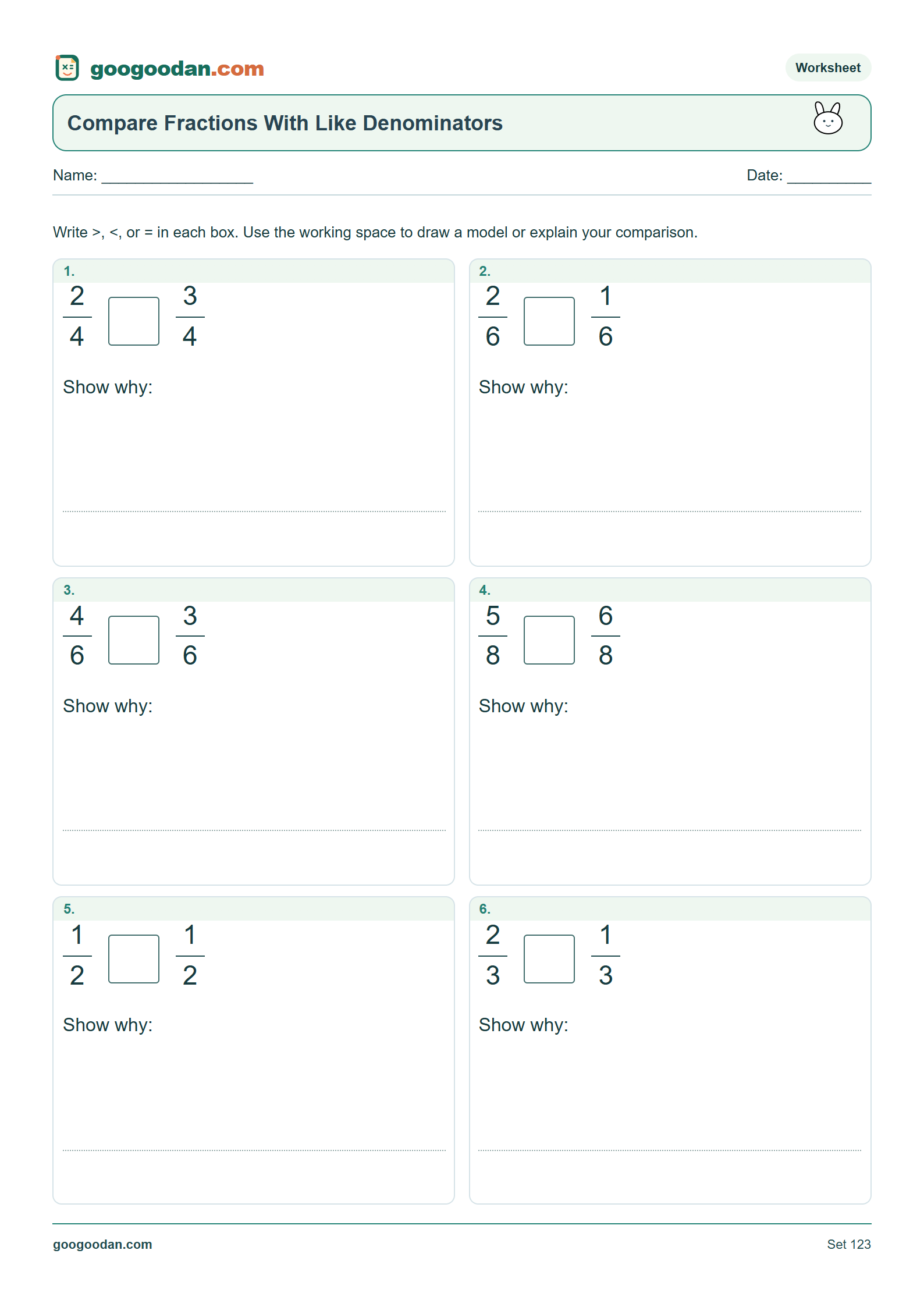
Comparing Fractions With the Same Denominator
Compare equal-sized parts using >, <, or = and explain your choice.
6 problems · Answer key included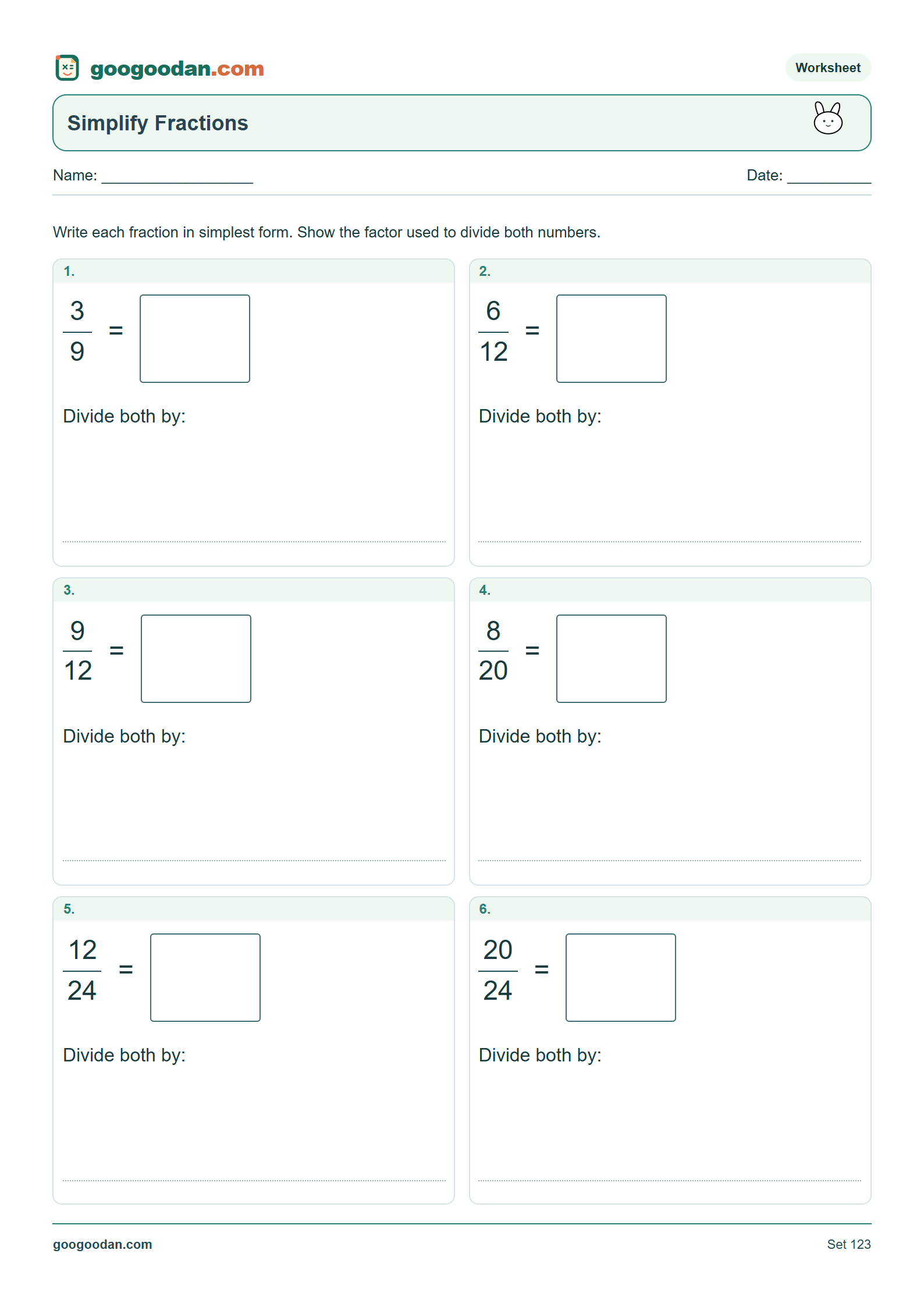 Calculation practice
Simplifying Fractions
Divide both numbers by a common factor while keeping the fraction value unchanged.
6 problems · Answer key included
More about fractions · Grade 3 worksheets
Grade 3 selected skill connection: 3.NF.A.1. See the Common Core standards for this grade. This worksheet does not cover every requirement in the standard.