
Odd and Even Numbers Worksheets Within 20
Use pairs to explain odd and even numbers.
Teaching notes for parents and teachers
How to teach it
Arrange counters in pairs. Discuss whether every counter has a partner before naming the number odd or even.
Example to work through together
Use the model below as you explain the example. Have your student point to the quantities as you discuss them.
8 = 4 + 4
Place one counter from each pair in a left-hand group and its partner in a right-hand group. Both groups contain four counters. An even total can be written as two equal whole-number addends.
Ask your student
Is there a counter left without a partner?
If your student needs help
If the student guesses from appearance, rearrange the counters and pair them again.
Choosing and using the worksheet
Each sheet has two classification questions, two draw-pairs questions, and two equal-addend questions. Numbers are from 1 through 20. A number may reappear in a different activity, and a set does not guarantee an equal number of odd and even examples.
Make a practice set
Select the worksheet, answer key, or both. When both are selected, the answer key prints after the questions. Keep it separate if you want your student to work independently.
After your student finishes
Check that every drawn object is used once. Ask how pairing connects an even total to two equal addends.
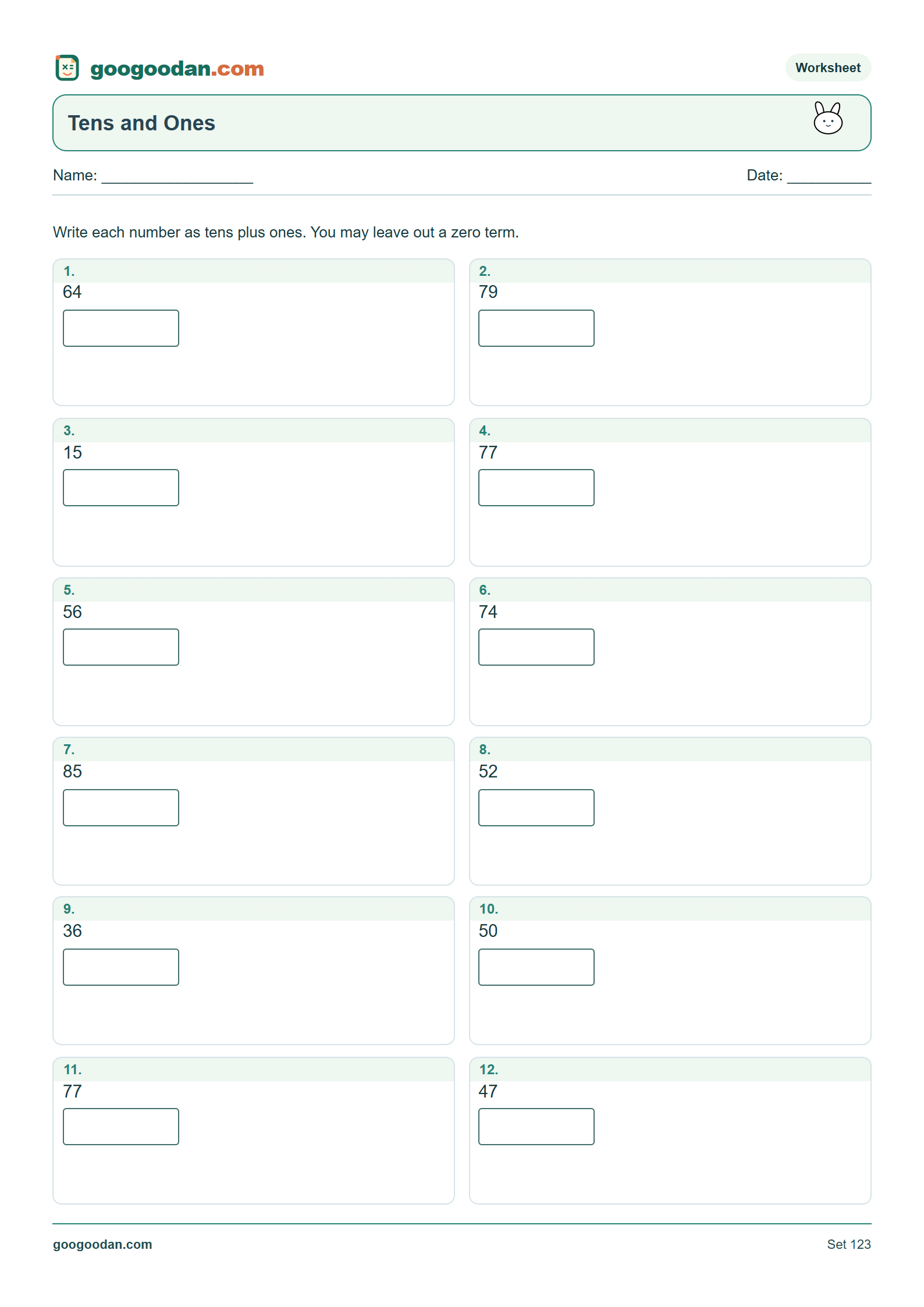 Calculation practice
Tens and Ones Expanded Form
Show the tens and ones in a two-digit number.
6 problems · Answer key included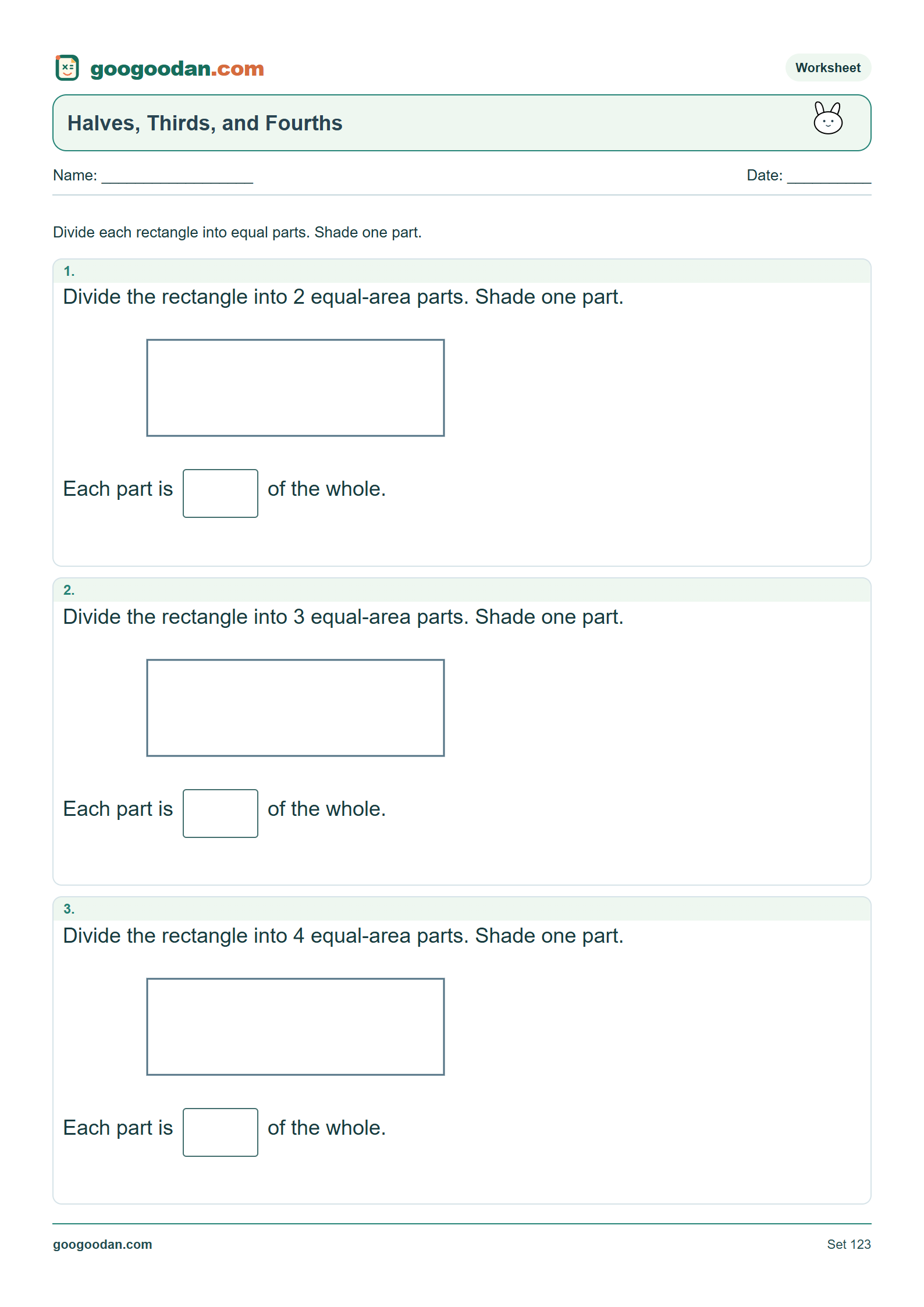 Drawing activity
Halves, Thirds, and Fourths
Divide rectangles into equal parts and shade one part.
3 problems · Answer key included
More about numbers · Grade 2 worksheets
Grade 2 selected skill connection: 2.OA.C.3. See the Common Core standards for this grade. This worksheet does not cover every requirement in the standard.